 Polski



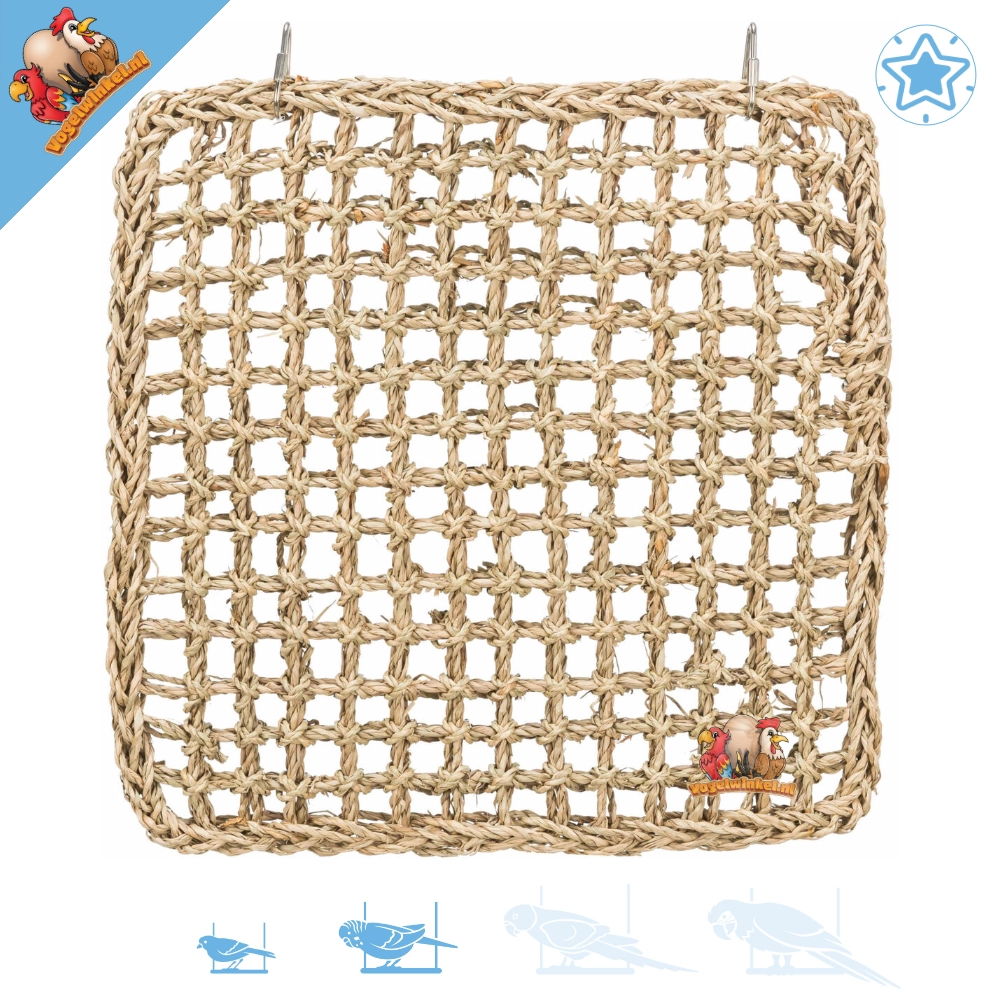
Seagrass Climbing Mat 30 cm for Birds & Rodents


- Dispatched from our own stock
- Personal & expert advice
- Always 100% rodent-friendly
- Ordered before 5 p.m., shipped the same day!
Trixie Seagrass Climbing Mat 30 cm for birds & rodents
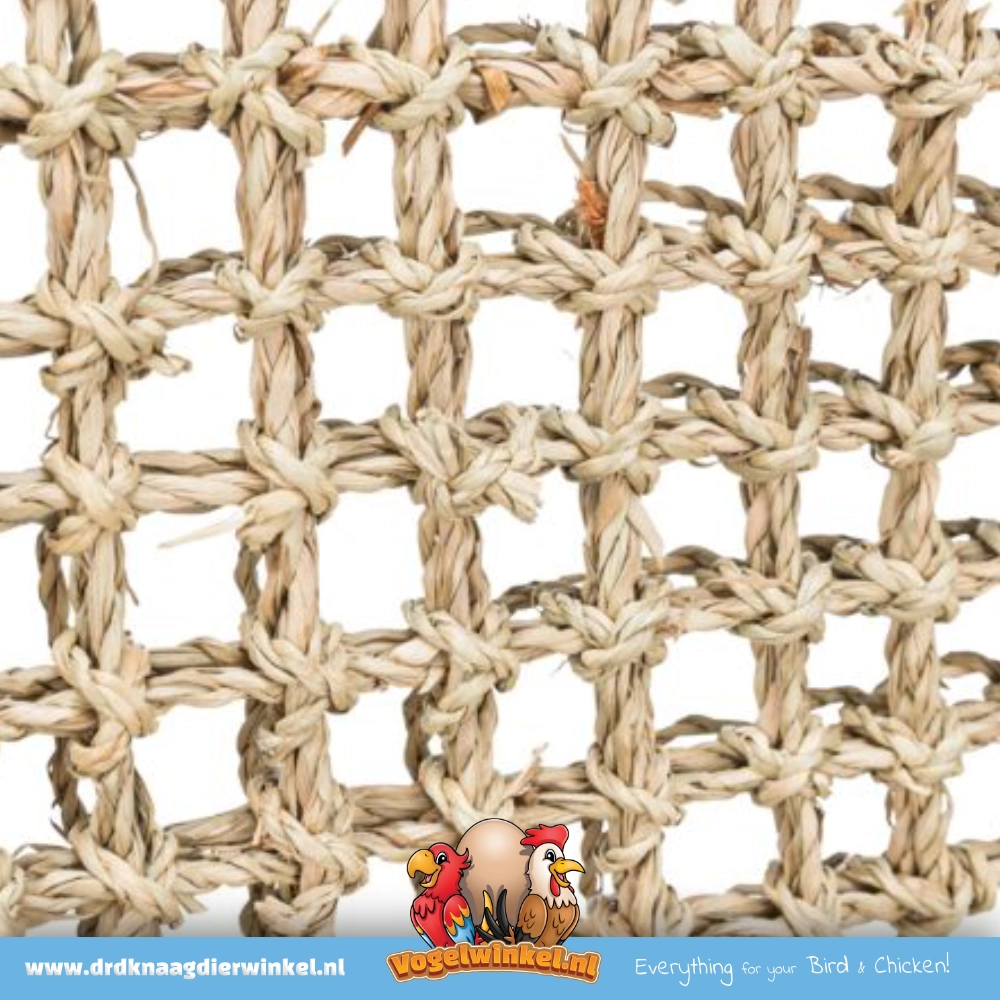
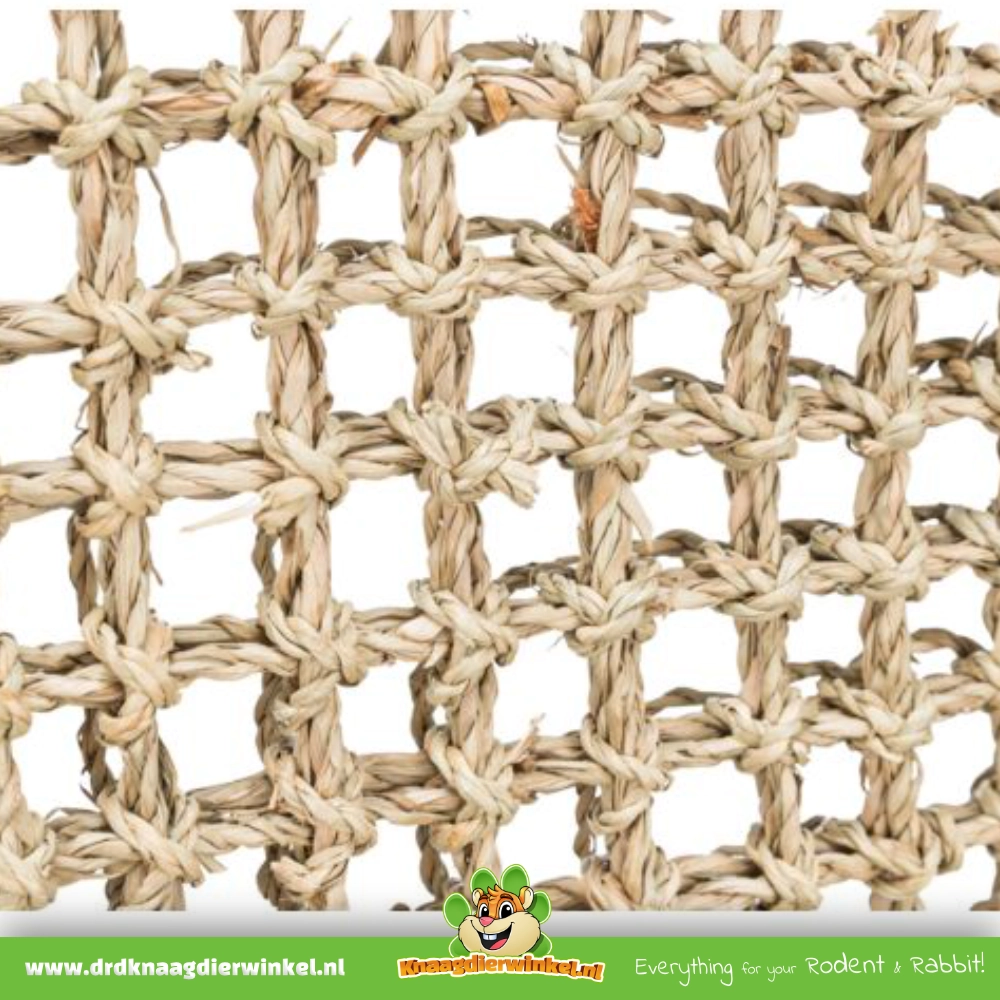
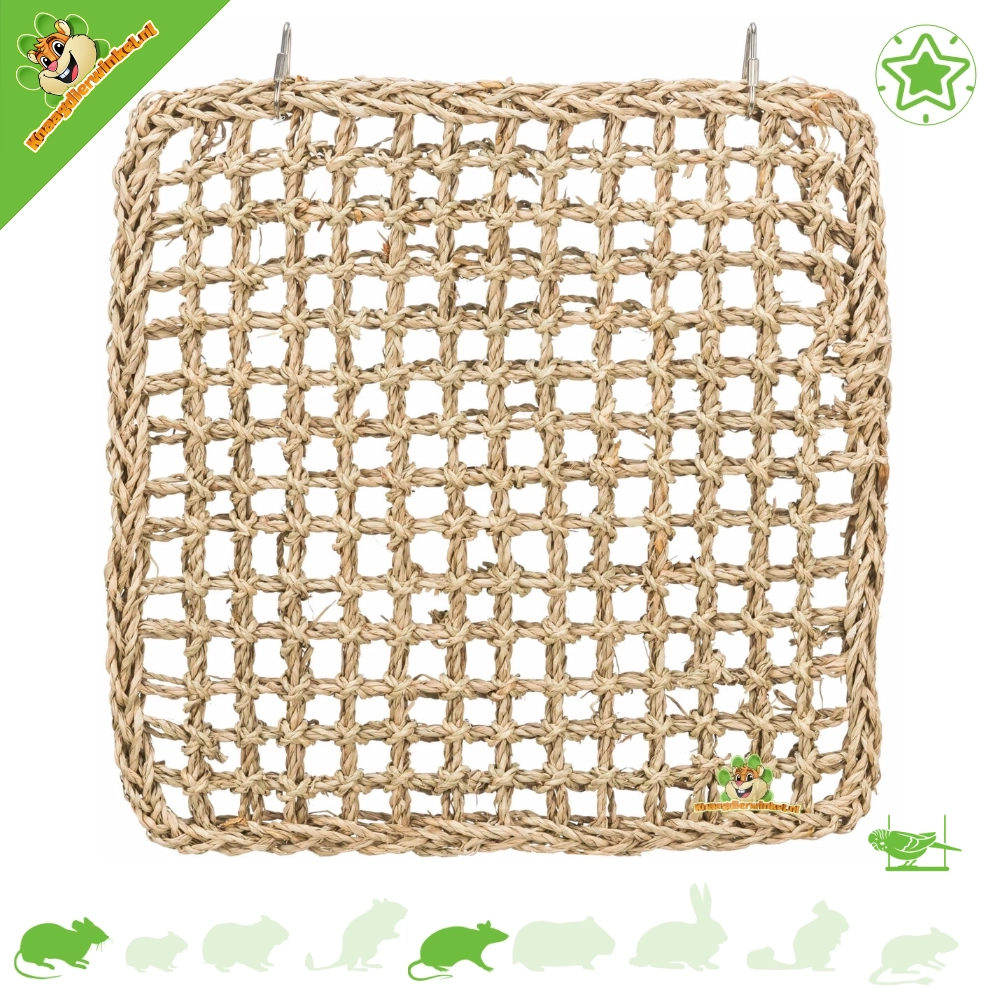
The Trixie Seagrass Climbing Mat 30 cm is a natural climbing and play mat for birds and small rodents who enjoy climbing, scrambling, exploring, and being active in their enclosure. The braided seagrass gives the mat a sturdy, natural structure that provides good grip for paws. This makes it a great product for adding extra exercise, variety, and enrichment to a cage, aviary, or rat enclosure.
With these types of products, DRD focuses primarily on the function within the enclosure: what does the product do for the animal, where is it convenient to place, and for which animals is it truly suitable? This seagrass climbing mat is particularly interesting as a compact hanging play element for birds, mice, rats, and pygmy rats. You can use it as a climbing aid, play element, gnawing structure, or as part of a natural setup. For birds, the mat is fun to hang from and clamber over; for rats, it can help make bars, platforms, or routes in the cage more interesting.
In short
- Made from natural seagrass
- Compact size of approx. 30 x 30 cm
- Suitable as a climbing and play element for birds, mice, rats, and pygmy rats.
- Helps make the stay more interesting and active
- Also fun as natural nibbling and discovery material
- Specialist since 2011: carefully selected for natural play behavior
Advantages of the Seagrass Climbing Mat
✔ Made from natural seagrass
✔ Encourages climbing, scrambling, and exploring
✔ Compact size for extra enrichment in the cage
✔ Suitable for birds and various small rodents
✔ Recommended by Weltvogelpark Walsrode
✔ Great to combine with other hanging toys for rodents
Why choose a seagrass climbing mat?
Many birds and rodents use their enclosure not only to eat and sleep, but also to move, explore, and create routes. It is precisely these small daily activities that make an enclosure more interesting. A seagrass climbing mat provides animals with an extra surface to climb on, walk across, or nibble on. This makes the layout less flat and more geared towards natural behavior.
For rats and pygmy rats, for example, the climbing mat can help make a wire wall or a route to a platform more fun. Rats are smart, active animals that enjoy climbing and exploring their surroundings. By adding a natural play element like this seagrass mat, you provide more variety in the layout. Combine the mat, for instance, with rat toys for playing and foraging , rat platforms and ladders, or soft resting spots at different levels.
For birds such as parakeets, budgies, cockatiels, and other large parakeets, the mat is a playful climbing element. Birds enjoy using their beaks and feet to climb, hold on, and explore materials. The natural seagrass makes the mat visually calm and fits beautifully into a natural bird or rodent enclosure.
For which animals is the Seagrass Climbing Mat suitable?
- Birds: suitable as a natural climbing and play element for parakeets, budgies, cockatiels, and large parakeets. Hang the mat securely and position it so that the bird can easily land, climb, and move away.
- Mouse: suitable as a compact climbing element or natural structure in a mouse enclosure. Preferably do not place the mat too high and ensure that mice can climb safely without a great fall height.
- Dwarf rat: suitable as a playful climbing structure, but always match it with the size and build of your dwarf rat. Dwarf rats can vary in size, so the setup must always suit the individual animal.
- Rat: very suitable as extra climbing aid along bars, at platforms, or as part of an active cage setup. The mat can help make routes more interesting and is enjoyed by many rats for climbing.
- Dwarf hamster and hamster: can be used low and stable as a natural structural or gnawing element, but not as a high-hanging climbing element. Hamsters are not true climbers like rats or birds, so avoid high setups and falling points.
- Gerbil: can be offered as natural destruction and exploration material. Gerbils gnaw enthusiastically, so the mat may wear out faster. Therefore, use it primarily as enrichment and check regularly.
For larger animals such as guinea pigs, rabbits, chinchillas, degus, and ferrets, this mat is less logical as a standard climbing product due to its compact size. For these animals, it is preferable to choose larger tunnels, platforms, bridges, or play elements that better suit their body size and movement patterns.
How do you use the Seagrass Climbing Mat?
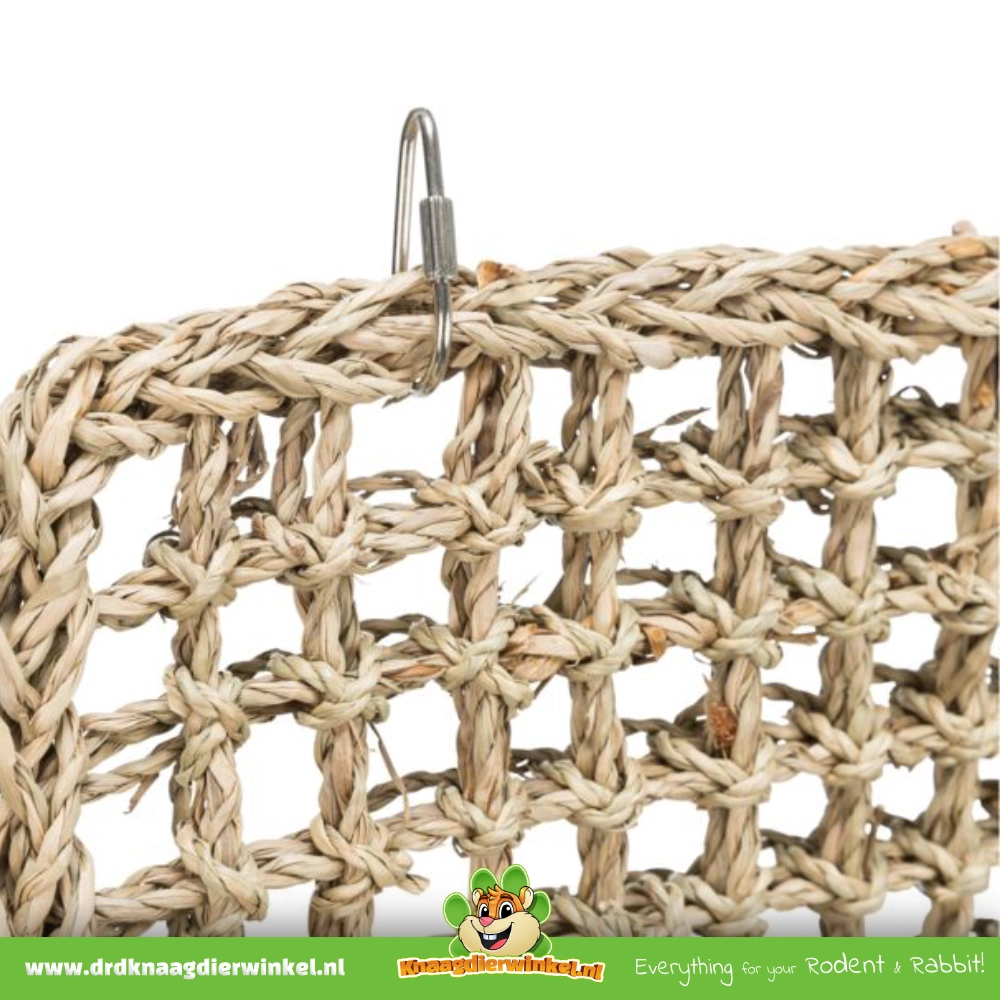
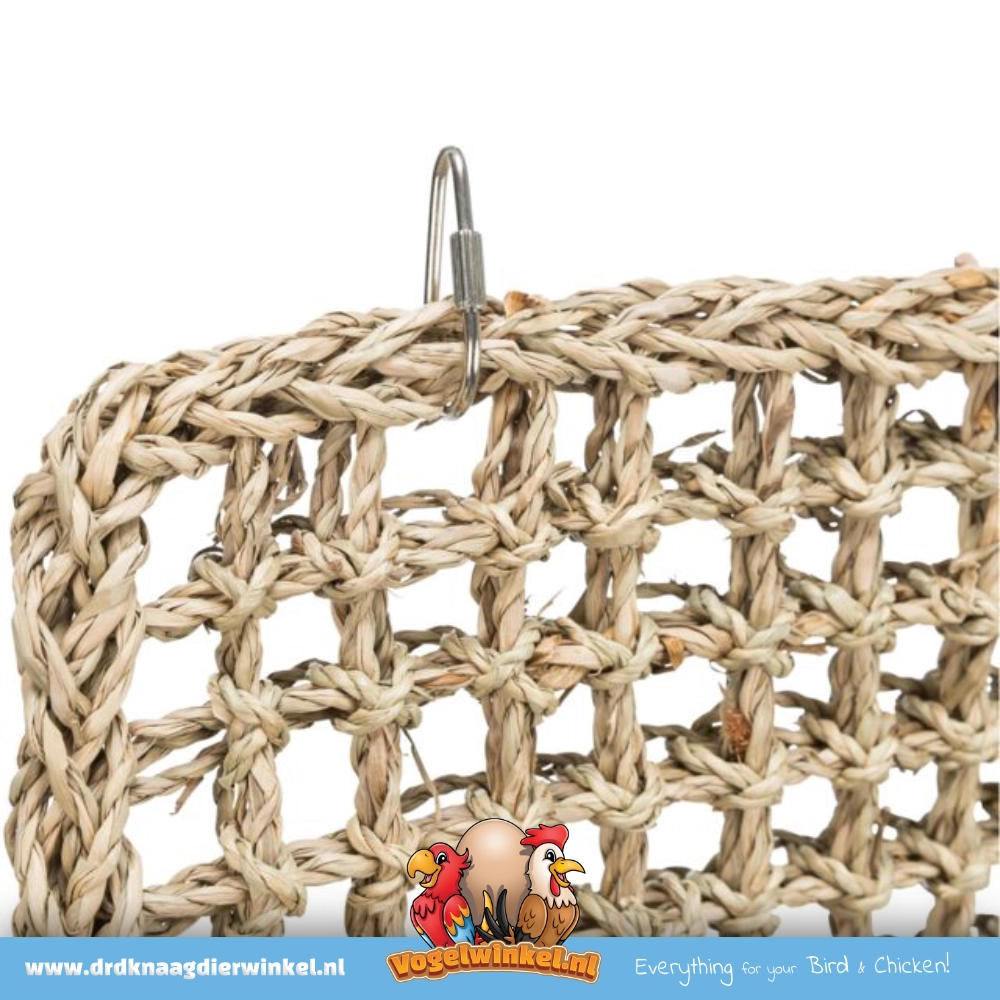
Securely hang the seagrass climbing mat from the bars of the cage, aviary, or enclosure. After hanging, check that the mat hangs stably and cannot rotate in a way that could trap the animal. For rats, for example, you can use the mat along a wire wall, next to a platform, or along a route they already enjoy climbing. For birds, the mat can be hung as a climbing wall or as a playful intermediate space in the cage.
For small rodents, it is preferable to place the mat low in the enclosure or against a wall, so that the product provides enrichment but does not create an unnecessary fall height. This is especially important for hamsters and gerbils, as they move differently than rats or birds. For a natural setup, you can combine the mat with platforms and ladders , tunnels, cork, natural bedding, or other gnawing material.
Material & dimensions
- Material: seagrass
- Dimensions: approx. 30 x 30 cm
- Brand: Trixie
- Use: climbing, scrambling, playing, nibbling, and natural enrichment
Seagrass has a natural appearance and therefore fits beautifully into a calm, natural interior. The material is intended to be explored by animals. This also means that gnaw marks are normal, especially with rodents that like to destroy or nibble.
Good to know
Offer the climbing mat under supervision and regularly check if the seagrass is still sturdy enough. Do you see loose parts, sharp edges, long loose fibers, or clear signs of wear? Then replace the mat in time. That is part of natural play materials: they are used, explored, and sometimes even deliberately destroyed.
Clean the mat with a dry brush or soft cloth. Because seagrass is a natural fiber material, prolonged wetting is not ideal. Therefore, it is better to place the mat in a dry spot in the enclosure and avoid using it as a toilet area or on a damp floor.
Frequently asked questions about the Seagrass Climbing Mat
Is this seagrass climbing mat suitable for rats?
Yes, this climbing mat is a nice addition to the cage for rats. You can use it along the bars, near a platform, or as an extra climbing route. Do check regularly for wear and tear, however, as rats can also nibble on the seagrass.
Can I use the climbing mat for pygmy rats?
Yes, that is possible. With dwarf rats, always pay close attention to the actual size of the animal, as dwarf rats can vary from one another. Hang the mat so that your dwarf rat can easily reach it and move around safely.
Is the climbing mat suitable for hamsters?
For hamsters, the mat can be used low in the enclosure as natural structure or gnawing material. Do not use it as a high-hanging climbing wall, as hamsters are not true climbers and could fall.
Is seagrass meant to be nibbled on?
Seagrass is a natural material that is explored and nibbled on by many animals. This is normal for this type of play material. Replace the mat when it is too worn or when loose parts appear.
How do I clean the climbing mat?
Brush the mat dry or wipe it gently with a soft cloth. Allow the mat to dry thoroughly if it has become damp, and do not place it in a wet or dirty spot in the enclosure.
Useful shopping links
- Hanging toys for rodents
- Rats playing & foraging
- Rat platforms & ladders
- Ratscaping inspiration
- Bird shop

| Material: | Seagrass |
| Dimensions (approx): | 30 x 30 cm |
| Diameter (approx): | ø |
| Suitable for: | Rodents, Mouse, Rat | Bird, Parakeet, Budgerigar, Cockatiel, Large Parakeets |
| Particularities: | - |
| Safety Information: | Offer only under supervision. Check regularly for wear and tear |




Ik vind dit product heel fijn voor mijn ratten omdat het hen helpt met het tralies te beklimmen. Ze gebruiken het veel.