 Polski



Cardboard Scratching Board Krabbed 45 cm
- Buy 2 for €12,34 each and save 5%
- Dispatched from our own stock
- Personal & expert advice
- Always 100% rodent-friendly
- Ordered before 5 p.m., shipped the same day!
- Customer service from 09:00 to 18:00
Cardboard Scratching Board Krabbed 45 cm for rodents and rabbits
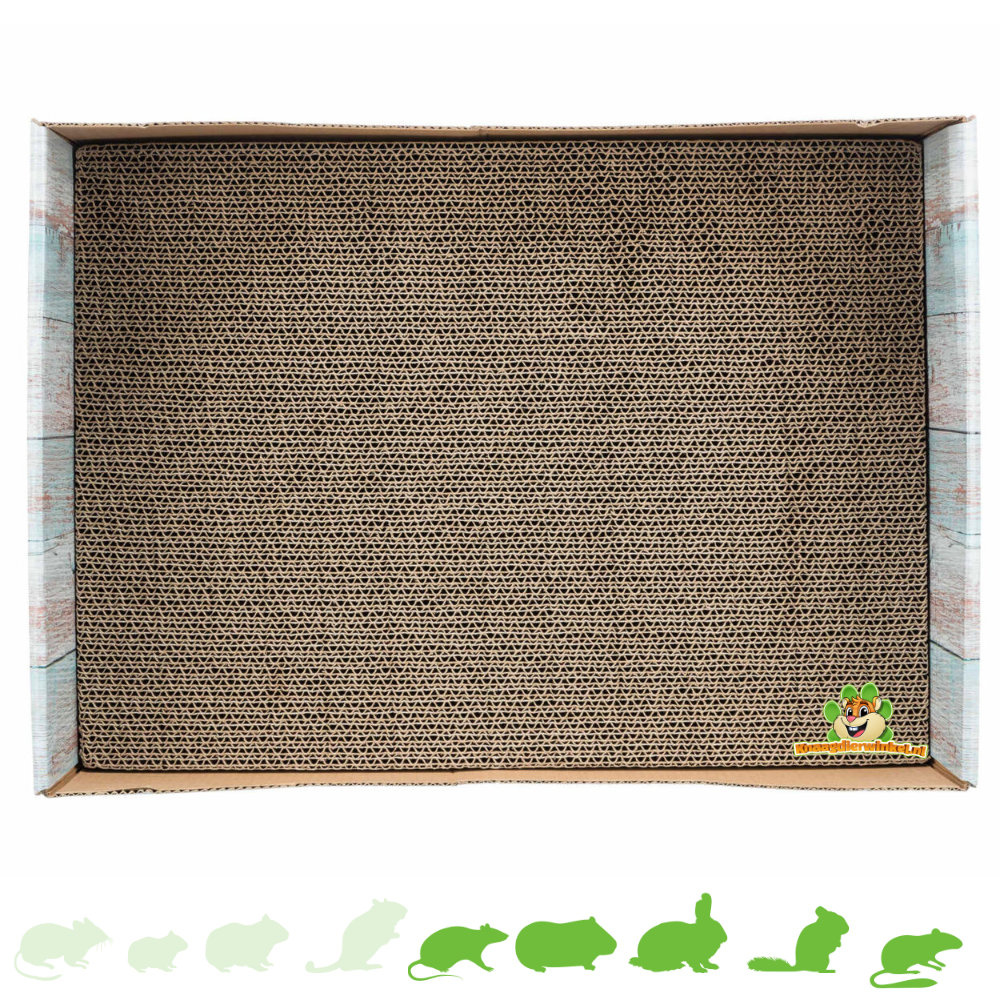
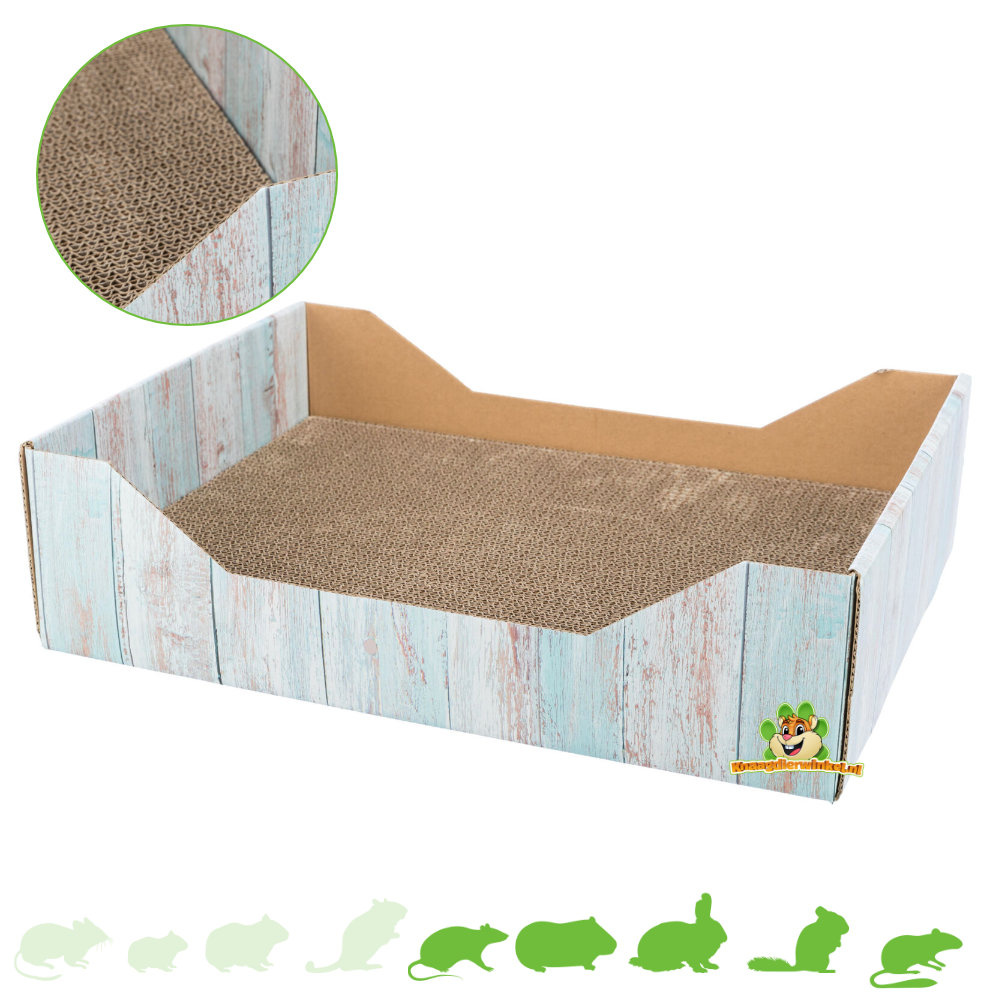
The Krabbed 45 cm Cardboard Scratching Board is a sturdy cardboard scratching and resting bed for rats, guinea pigs, rabbits, chinchillas, and degus. The ribbed cardboard structure invites scratching, nibbling, pulling, destroying, and exploring. Some animals use it primarily as play and destruction material, while others also enjoy lying on it.
With these types of products, DRD considers their role in the enclosure: the scratching bed is not a classic sleeping spot, but a combination of cardboard gnawing material, destructive fun, enrichment, and a sturdy resting place. It is especially useful for animals that enjoy playing with cardboard or for owners who want to offer extra variety in a run, free-roaming area, or spacious enclosure.
In short
- Cardboard scratching board and scratching bed of approx. 45 × 33 × 12 cm
- Suitable for rats, guinea pigs, rabbits, chinchillas, and degus
- Ribbed texture for scratching, nibbling, and exploring
- Can also be used as a low resting place or bed
- Nice as demolition and enrichment material
- Can help redirect scratching and gnawing behavior to an appropriate spot
- Made of cardboard and intended to wear out through use
Advantages of the Cardboard Crab
✔ Made of sturdy cardboard
✔ Ribbed texture for scratching, nibbling, and destroying
✔ Fun as enrichment in enclosure, run, or off-leash area
✔ Can also be used as a low bed or resting place
✔ Suitable for multiple larger rodents and rabbits
✔ Can contribute to natural wear of nails when animals scratch or walk over them
Why choose a cardboard scratching bed?
Many animals need something to explore, work on, or pull apart. Cardboard is a pleasant material for this: it is lightweight, has an interesting texture, and invites nibbling and destroying. The Cardboard Scratch Bed gives your animal a place where that behavior is actually allowed.
For rabbits, the scratching bed can help direct digging and scratching behavior to a fixed spot. For guinea pigs, it is primarily a fun resting and gnawing object. Rats can use it as shredding material, a resting place, or part of a play area. Chinchillas and degus may find the product interesting to work on, but extra supervision is important with these active rodents.
The scratching bed has raised edges, making it feel more like a low bed than a loose plank. As a result, it can also be a nice place to sit, lie down, or nibble for a while.
For which animals is the Cardboard Scratching Bed suitable?
- Rat: suitable as a cardboard destructible play element in a run, free-roaming area, or spacious enclosure. Rats can use the scratching bed to nibble, sit in, or pull material loose. Check regularly for loose pieces of cardboard.
- Guinea pig: suitable as a low resting place, scratching bed, or cardboard chew object. Guinea pigs can lie on it, sniff it, nibble on it, or walk over it with their paws.
- Rabbit: suitable as a scratching and gnawing bed in a run, rabbit room, or enclosure. Rabbits can use it to scratch, dig, destroy, or as a low resting place.
- Chinchilla: suitable as dry cardboard shredding and gnawing material under supervision. Chinchillas can actively gnaw, so check carefully for loose pieces and replace the scratching bed when it is too worn.
- Degu: suitable as destructive material and enrichment. Degus are avid gnawers and can quickly damage cardboard. Therefore, always use it under supervision and remove loose or broken parts.
For mice, dwarf hamsters, hamsters, and gerbils, this scratching bed is usually too large as a standard setup. These animals benefit more from smaller cardboard tunnels, diggable bedding, nesting material, hiding places, and species-specific landscaping materials.
Scraping, digging, and demolishing in a suitable place
Rabbits may scratch indoors on rugs, mats, furniture, or corners. Guinea pigs, on the other hand, may enjoy nibbling on cardboard or using it as extra texture in their enclosure. Rats, chinchillas, and degus often use cardboard as destructive material. With this scratching bed, you provide a clear object to which that behavior can be directed.
The scratching bed does not always completely solve unwanted gnawing or digging, but it can help as a positive distraction. For example, place it in a spot where your animal likes to be active, in a run, or near an existing play area. Combine it with other enrichment, such as tunnels, hay, herbs, gnawing material, or foraging toys.
Does your animal keep gnawing on furniture, rugs, or its enclosure? Then also consider the overall setup, amount of space, boredom, other animals, digging opportunities, and daily routine.
Use as a resting place or sunbed
Although this product is primarily intended as scratching and nibbling material, it can also be used as a low bed. The raised edge gives the scratching bed a sheltered feel, and some animals enjoy lying on it.
For guinea pigs and rabbits, the scratching bed can be a nice extra resting place in the run or rabbit room. For rats, it can serve as a temporary play bed in the free-roaming area. Please note: cardboard is cardboard. If it gets wet, dirty, or heavily chewed on, replacing it is the best option.
Cardboard: meant to wear out
A cardboard scratching post is not a product that will remain perfectly intact for years. On the contrary, it is intended to be used. Animals can scratch, nibble, pull at it, and break off pieces. That is part of the product's function.
How quickly it wears out depends on your animal. A rabbit can lie on it quietly and scratch occasionally, while a degu or rat might tear the scratching post apart more quickly. That is not a problem, as long as you regularly check that it remains safe.
Remove the scratching post when large loose pieces, sharp edges, wet spots, heavily soiled areas, or too many broken pieces appear.
Usage & placement
Place the Cardboard Scratch Bed in a dry, stable spot. Preferably use it in a run, loose-roaming area, or spacious enclosure where you can clearly see how your animal interacts with it. Do not place it in a wet litter corner or under a water bottle, as cardboard absorbs moisture and will quickly become dirty or limp.
For rabbits, you can place the scratching bed in a spot where they like to scratch or lie down. For guinea pigs, it works well as extra structure in the run. For rats, you can use it as a temporary shredding bed or play object outside the cage. Supervision is especially important for chinchillas and degus, as they can quickly damage cardboard.
Do not use the scratching bed as the sole form of enrichment. Combine it with hay, hiding places, tunnels, gnawing material, and appropriate foraging times. This gives your animal more choice and keeps the enclosure more interesting.
Nails and scratching behavior
The ribbed cardboard texture can contribute to slight natural wear on the nails when animals walk over or scratch them. That is a nice added benefit, but it does not replace regular nail checks.
For guinea pigs, rabbits, chinchillas, and degus, checking nails remains important. If nails become too long, targeted trimming or expert advice is necessary. Therefore, view the scratching bed primarily as enrichment with a practical additional benefit.
Cleaning and replacing
You can't really wash cardboard. Shake out loose crumbs, hay, or bedding, and wipe the scratching post clean with a dry cloth when necessary. If the cardboard becomes wet, dirty, or limp, replace it.
Check the scratching bed daily for avid gnawers. Look out for loose pieces, broken edges, and areas where animals dislodge a lot of material. Minor signs of wear are to be expected, but the product must remain safe.
Great to combine with
The Cardboard Scratching Bed fits well with natural enrichment, gnawing material, and destructive fun. You can combine it with:
- Destruction toys for rodents and rabbits
- Chewing material
- Cardboard toys
- Guinea pig playing and foraging
- Rabbits play and forage
- Rats play and forage
- Chinchilla playing and foraging
- Degu playing and foraging
Good to know
Offer the Cardboard Scratching Bed only under supervision and check regularly for wear. Cardboard is intended to be handled, but it must remain safe. Remove the scratching bed when it is wet, heavily soiled, excessively damaged, or gnawed to pieces. For small rodents such as mice, dwarf hamsters, hamsters, and gerbils, this product is usually too large as standard equipment.
Frequently Asked Questions
For which animals is the Cardboard Scratching Bed suitable?
The scratching bed is suitable for rats, guinea pigs, rabbits, chinchillas, and degus. Always use it under supervision and check regularly for wear.
What are the dimensions?
The dimensions are approximately 45 × 33 × 12 cm.
What is the scratching post made of?
The scratching bed is made of cardboard with a ribbed texture.
Is this scratching bed suitable for rabbits?
Yes, rabbits can use the scratching bed to scratch, nibble, destroy, or as a low resting place. Place it in a dry spot and check regularly to see if the cardboard is still safe.
Is this scratching bed suitable for guinea pigs?
Yes, guinea pigs can use it as a resting place, a chew object, or a play element in the run. Remove it when it is wet or heavily soiled.
Is this scratching bed suitable for rats?
Yes, rats can use the scratching post as destructive material, a play element, or a temporary resting place. Because rats can quickly damage cardboard, supervision is important.
Is this scratching bed suitable for chinchillas and degus?
Yes, it can be suitable as dry shredding and gnawing material under supervision. Chinchillas and degus can work through cardboard quickly, so check carefully for loose pieces and wear.
Does the scratching bed help prevent scratching of furniture or carpeting?
The scratching bed can help as a positive distraction, because your animal gets a place where scratching and nibbling are allowed. If the behavior keeps recurring, also look at space, boredom, digging opportunities, and other enrichment.
Can the scratching bed help with nail wear?
The ribbed structure can contribute to slight natural nail wear when animals walk or scratch on them. It does not replace regular nail checks.
When should I replace the scratching post?
Replace the scratching post when it is wet, limp, heavily soiled, too badly damaged, or gnawed to pieces. Large loose pieces or sharp edges are also a reason to remove it.
Useful shopping links
- Destruction toys for rodents and rabbits
- Chewing material
- Cardboard toys
- Guinea pig playing and foraging
- Rabbits play and forage
- Rats play and forage
The Krabbed 45 cm Cardboard Scratching Board is a fun choice when you want to give your pet a cardboard place to scratch, nibble, destroy, or rest. Due to its size, ribbed texture, and raised edge, it is especially suitable for rats, guinea pigs, rabbits, chinchillas, and degus who like to have something to do.
| Size (approx): | 45 × 33 × 12 cm |
| Suitable for: | Rodents, Rat, Guinea Pig, Rabbit, Chinchilla, Degu |
| Particularities: | - |
| Safety Information: | Offer only under supervision. Check regularly for wear and tear |
Mijn konijnen krabben of graven niet maar ze eten de plank op. Ook gebruiken ze hem als ligbed. Hij is breed genoeg om samen op te liggen en door de randen eromheen is het net een echt bed. Ik heb er meteen 3 bijbesteld.