 Polski



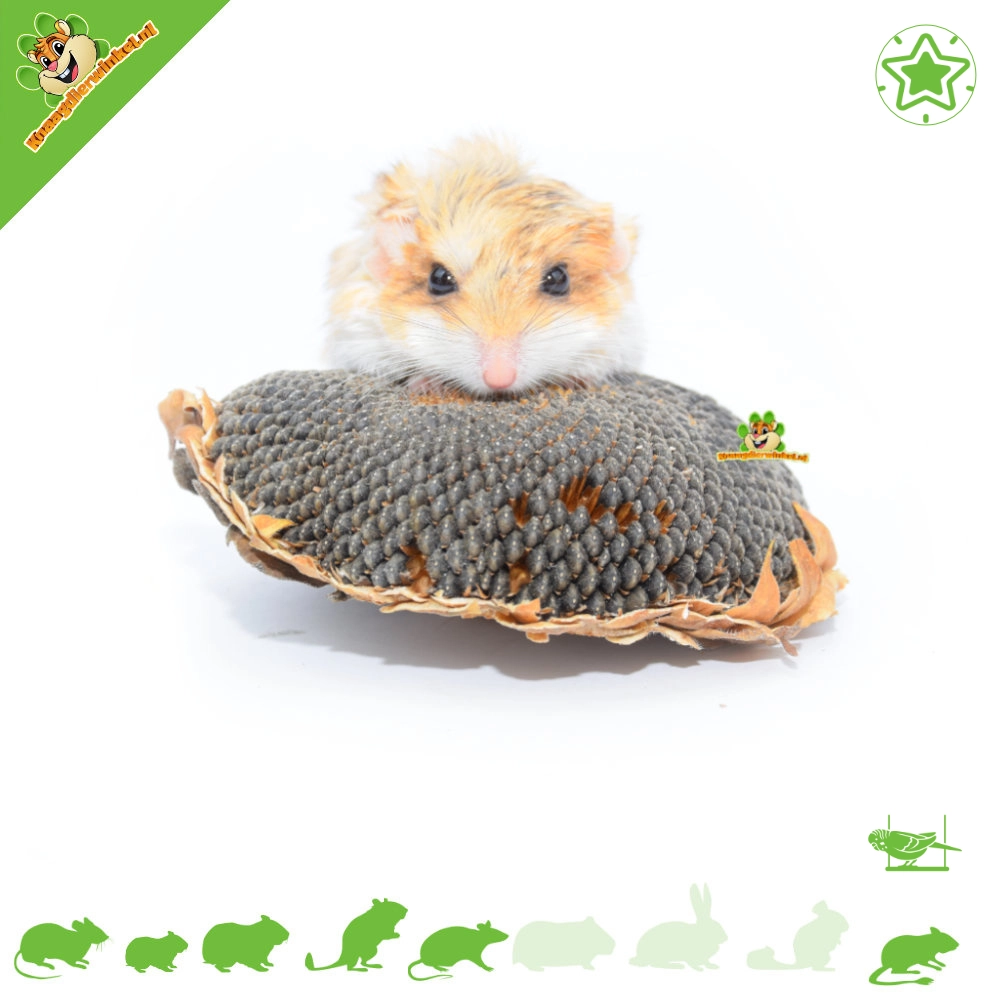
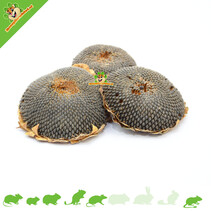
Dried Sunflower Heads 3 pieces


- Dispatched from our own stock
- Personal & expert advice
- Always 100% rodent-friendly
- Ordered before 5 p.m., shipped the same day!
- Customer service from 09:00 to 18:00
Getzoo Dried Sunflower Heads 3 pieces – natural foraging snack to harvest yourself
Getzoo Dried Sunflower Heads are a natural and interactive snack for rodents. Instead of loose sunflower seeds, your animals receive a whole dried sunflower head from which they can extract the seeds themselves. This immediately turns snacking into an activity: smelling, picking, nibbling, searching, and harvesting.
At DRD, when it comes to snacks, we look not only at taste but also at what a snack adds to your animal's behavior. These sunflower heads give your animal something to do and fit well with natural foraging. You can offer a whole head, break off a piece, or temporarily place the sunflower head in the enclosure as an activity.
In short
- 3 whole dried sunflower heads
- Natural foraging snack and activity
- Animals extract the seeds from the head themselves.
- Nice to lay down loose, hang up, or offer in pieces.
- With a natural hanging hole in the middle
- Hand-harvested and carefully dried
- Contents: approx. 3 pieces / approx. 200 grams
- Packaging/product indication dimensions: approx. 23 × 16 × 6 cm
- Composition: sunflower
- Type: complementary feed
Advantages of the Dried Sunflower Heads
✔ Natural snack with one recognizable ingredient
✔ Stimulates foraging, pecking, and harvesting seeds independently
✔ Provides longer-lasting activity than loose seeds
✔ Beautiful for hamsterscaping, gerbilscaping, and ratscaping
✔ Can also be offered in pieces for smaller animals
✔ Natural product: every sunflower head is slightly different
Why choose whole sunflower heads?
Individual snacks are eaten quickly, but a whole sunflower head requires more effort from your pet. The seeds are still inside the head, meaning your rodent has to pry them loose itself. This aligns nicely with natural foraging behavior and makes the snack time more active and interesting.
This is especially fun for hamsters, mice, and gerbils, as they enjoy collecting, hoarding, and searching for food. Rats can actively peck at it and play with it together. For degus, it is primarily a deliberate, small foraging treat where you carefully dose the amount.
Due to the drying process, the heads have an opening in the middle. You can use this opening to hang or secure the sunflower head. This makes it just a bit more challenging, as your animal has to work to reach the seeds.
For which animals are Dried Sunflower Heads suitable?
- Mouse: suitable as a natural foraging snack. For mice, it is better to break off a small piece so that the quantity remains manageable.
- Dwarf hamster: suitable as a conscious snack and enrichment for Russian dwarf hamsters, Campbell's dwarf hamsters, Roborovski dwarf hamsters, and Chinese dwarf hamsters. It is better to give a small piece than a whole head at once.
- Hamster: suitable for Syrian hamsters/golden hamsters as a snack to peck seeds out themselves. You can offer a whole cup temporarily or break off a piece.
- Gerbil: suitable as an active foraging snack. Gerbils often find picking, gnawing, and collecting interesting. Do check how much is actually eaten.
- Dwarf rat: suitable as an interactive snack and foraging activity. Dwarf rats can vary in size and eating behavior, so adjust the quantity according to the group.
- Rat: suitable as a shared foraging snack. Rats can work on it together, especially when you hang the head up or offer it in a foraging zone.
- Degu: suitable as a conscious, small foraging treat. Offer the sunflower head sparingly and let your degus mainly search and peck rather than eating a lot at once.
For guinea pigs, rabbits, and chinchillas, at DRD we prefer hay, herbs, leaves, flowers, and fiber-rich enrichment as the primary approach. A sunflower head is not the most logical daily snack for these animals. For birds, a dried sunflower head can also be interesting as a natural activity, depending on the bird species and the overall feeding pattern.
How can you offer the sunflower heads?
You can offer a sunflower head in various ways. The simplest way is to place it temporarily in the enclosure. Your animal can then smell it, nibble, and extract the seeds. If you want to make it a bit more challenging, you can hang the head or secure it through the natural hole in the center.
- Temporarily place a whole head in the enclosure for larger or active animals.
- Break off a piece for small animals such as mice and dwarf hamsters.
- Hang the cup up to make snack time more challenging.
- Use a small area in a foraging zone, digging box, or scape setup.
- Remove any residue when the cup has become largely empty, dirty, or damp.
Because sunflower seeds are naturally nutritious, offering them consciously is important. You don't always have to give a whole cup at once. For small animals, a small piece is often enough. For group animals, you can offer the cup temporarily and then remove it again, so that it remains a special activity.
Use in hamsterscaping and gerbilscaping
In a hamsterscaping or gerbilscaping enclosure, you can use a piece of sunflower head as edible enrichment. Place it, for example, near a cork tunnel, in a foraging corner, or partially among natural materials. This way, your animal really has to search and work for the seeds.
For hamsters, it is fun that they can collect the seeds themselves and take them to their stash. For gerbils, the picking and gnawing are particularly interesting. By not offering the sunflower head in the same spot as standard, it remains a varied discovery in the enclosure.
Use for rats and ratscaping
For rats, you can use a sunflower head as a shared foraging snack. For example, hang it up in the cage or place it in a digging or foraging tray. Rats are smart animals and often enjoy having to peck, pull, and search before they reach the seeds.
With a group of rats, it is helpful to monitor snack time. This way, you can see if all the animals can reach the food and if one animal isn't hogging everything. You can also break the head into pieces and offer them in multiple locations.
Composition & analysis
Composition: sunflower.
Analysis: not specified.
This snack consists of dried sunflower heads with seeds. This makes it a recognizable, natural snack where your animal has to work for the seeds. The power of this snack lies primarily in the combination of taste, smell, and activity: it is not only a tasty treat but also a way to stimulate natural foraging behavior.
Content & natural variation
- Contents: 3 whole sunflower heads.
- Weight: approx. 200 grams.
- Dimensions: approx. 23 × 16 × 6 cm.
Dried sunflower heads are natural products. Therefore, color, shape, size, and quantity of seeds may vary from head to head. This is inherent to this type of snack and makes every sunflower head slightly different. It is also possible that some seeds may come loose during transport or use.
Good to know
Dried sunflower heads are a supplementary snack and not a substitute for the daily basic diet. Use them primarily for enrichment, entertainment, and a mindful snacking moment. For small animals, you can break off a piece so that the quantity better suits the size of your animal.
Store the sunflower heads in a dry, cool, and tightly sealed place. Do not feed them if they have become damp or have an unusual smell. It is best to remove any leftovers that have become dirty from the enclosure.
Because animals extract the seeds from the head themselves, some mess may occur. This is part of natural foraging. Therefore, place the head in a location where you can easily check and clean it.
Useful shopping links
- Seeds & kernels for rodents
- Playing & foraging
- Hamster herbs and seeds
- Gerbil hay, herbs and seeds
- Rat herbs and seeds
- Ratscaping interior
- Getzoo assortment
Frequently Asked Questions about Dried Sunflower Heads
For which animals are dried sunflower heads suitable?
Dried sunflower heads are suitable for mice, dwarf hamsters, hamsters, gerbils, dwarf rats, rats, and degus. For small animals, it is preferable to give a piece rather than a whole head.
Are sunflower heads suitable for dwarf hamsters?
Yes, dwarf hamsters can be given a piece of sunflower head as a foraging snack. They can pick the seeds out themselves, which fits well with natural searching and gathering behavior.
Can my hamster have a whole sunflower head?
A Syrian hamster/golden hamster can temporarily be offered a whole head, but you can also break off a piece. This way, you keep the quantity better suited to your hamster and it remains a special snack moment.
Are sunflower heads suitable for rats?
Yes, rats can use sunflower heads as an interactive foraging snack. You can hang the head, place it in a foraging bin, or distribute it in pieces across multiple locations.
Are sunflower heads suitable for degus?
Yes, but offer them consciously and sparingly. For degus, use sunflower heads primarily as small foraging treats that require them to search and peck.
Are these sunflower heads suitable for guinea pigs and rabbits?
For guinea pigs and rabbits, we prefer hay, herbs, leaves, flowers, and fiber-rich enrichment as the main direction. A sunflower head is not the most logical daily snack for these animals.
How do I offer a sunflower head?
You can temporarily place the head in the enclosure, hang it through the hole in the middle, or break it into pieces. For small animals, a piece is often more practical than a whole head.
Why is there a hole in the middle?
The hole is created by the drying process and can be conveniently used to hang the sunflower head or secure it in the enclosure.
How many pieces are in the package?
The package contains 3 whole dried sunflower heads with a total weight of approximately 200 grams.
Can color and size vary?
Yes, sunflower heads are natural products. Color, shape, size, and quantity of seeds may vary per head. Some seeds may also come loose during transport or use.
With Getzoo Dried Sunflower Heads, you give your rodent a natural snack and an active foraging moment all in one. A great choice for owners who not only want to provide a tasty treat but are also looking for more activity, challenge, and natural behavior in the enclosure.
| Content (approx): | 3 whole sunflower heads | approx. 23 x 16 x 6 cm | about 200 grams |
| Composition: | Sunflower |
| Analysis: | - |
| Promotes Foraging: | Yes, by placing them in the enclosure, the animals will harvest the seeds themselves |
| Suitable for: | Rodents, Mouse, Dwarf Hamster, Hamster, Gerbil, Rat, Degu | Bird |
| Type: | supplementary pet food |
| Particularities: | Natural product, which means that color and shape may differ and deviate from the image |
| Disclaimer: | Not for food producing animals |


Hamster is er dol op
Muy buen producto. En buen estado y llegan 3 piezas con 3 formatos distintos