Polski



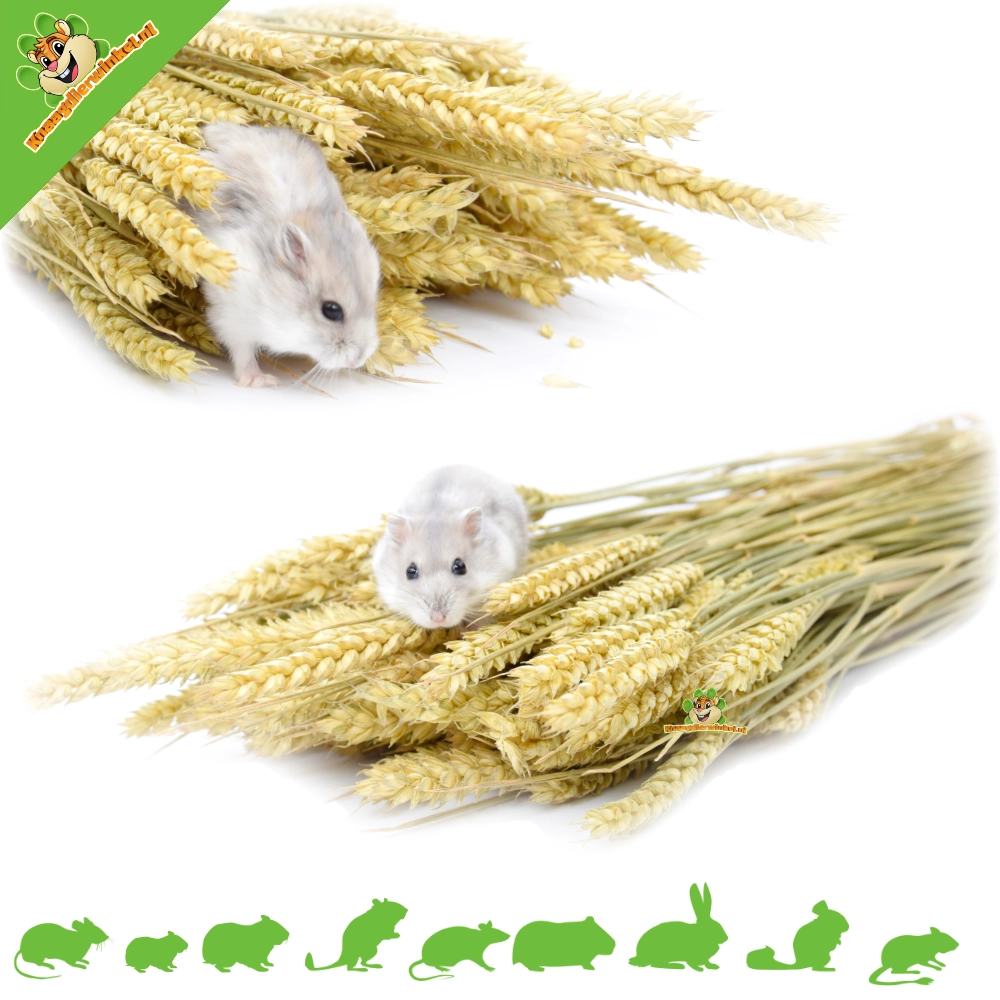
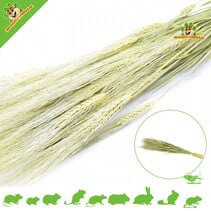
Green Wheat Ears Harvest 250 grams for rodents & birds
- Buy 2 for €8,50 each and save 5%
- Buy 4 for €8,06 each and save 10%
- Buy 8 for €7,61 each and save 15%
- Dispatched from our own stock
- Personal & expert advice
- Always 100% rodent-friendly
- Ordered before 5 p.m., shipped the same day!
Green Wheat Ears Harvest for small rodents
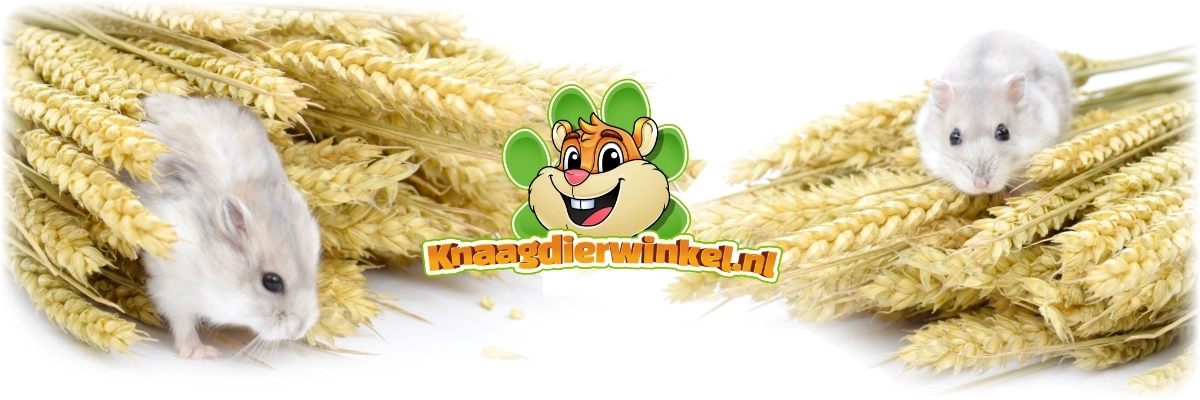
With Green Wheat Ear Harvest, you instantly add more structure, height, and natural foraging fun to your small rodent's enclosure. The green wheat ears have a fresh, natural look and are perfect for use in a hamsterscape, gerbilscape, or naturally decorated enclosure.
For small rodents such as mice, dwarf hamsters, hamsters, and gerbils, a wheat harvest is particularly interesting because the ears invite sniffing, searching, plucking, and exploring. Instead of offering loose grains in a bowl, your animal can engage with the ear itself. This makes the enclosure more varied and stimulates natural foraging behavior.
In short
- Green wheat ears harvest for small rodents
- Beautiful for hamsterscaping, gerbilscaping, and natural enclosures
- Stimulates sniffing, searching, plucking, and foraging
- Provides height, structure, and a fresh green appearance
- Can be placed in the bedding or secured with a clamp
- Nice as a natural variation alongside the normal basic diet
Advantages of Green Wheat Ear Harvest
✔ Natural wheat ears for wildlife conservation and forage enrichment
✔ Instantly gives the enclosure a field-like, natural appearance
✔ Ideal for stimulating searching and plucking behavior
✔ Combines beautifully with herbs, flowers, moss, cork, and wood
✔ Suitable as a natural supplement for small rodents and birds
Why choose Green Wheat Ears Harvest?
Green wheat ears are a great choice when you want to make the enclosure more natural and give your animal something to do. The ears create a field-like atmosphere while simultaneously offering a form of food enrichment. Your animal can examine the ear, pull on it, nibble on it, or detach the interesting parts itself.
Hamsterscaping and gerbilscaping revolve around an enclosure that aligns with natural behavior. Think of digging, hiding, creating routes, foraging, and being able to choose where your animal wants to search. Green wheat ears fit well with this, as you can easily create a small harvest field, grass border, or foraging corner with them.
Because wheat ears are grain-rich harvest materials, you use them primarily for variety and enrichment. They do not replace a complete basic diet, but they do make eating and exploring more interesting.
For which animals are Green Wheat Ears suitable?
Green Wheat Ear Harvest is especially suitable for small rodents and birds that enjoy playing with natural harvested materials.
- Mice
- Dwarf hamsters
- Hamsters
- Gerbils
- Dwarf rats
- Rats as natural enrichment and foraging material
- Birds
For guinea pigs, rabbits, chinchillas, and degus, wheat ears are not a staple food. For these animals, the emphasis lies primarily on hay, fiber-rich foods, and species-appropriate herbs. Therefore, it is preferable to use grain-rich harvested materials as limited variety when this fits within the total ration.
This is how you use Green Wheat Ears in the enclosure
You can offer Green Wheat Ear Harvest in various ways. In an enclosure with a deep layer of bedding, you can place the ears upright so that they protrude above the ground. This creates a natural mini-harvest field where your animal can walk, sniff, and pluck.
- Carefully push the stems into a firm layer of ground cover.
- Use the ears at the back or in the middle of the enclosure for extra depth.
- Form small groups for a natural field or harvest corner.
- Combine with cork, wood, moss, sand, and other natural harvested materials.
- If necessary, use a snack clip with wire cages.
- For glass, if necessary, use a suction cup with a clamp .
- Remove parts that become wet, dirty, or less fresh.
Use per animal species
Mouse
Mice love small routes, cover, and material to explore. Place the wheat ears in small groups along pathways or near a small house to create a natural foraging corner.
Dwarf hamster
Dwarf hamsters often find grain-rich harvesting materials interesting. Place the ears of grain, for example, near a sand bath area, at the back of the enclosure, or along a natural route, so that your dwarf hamster can search for and pick them itself.
Hamster
Golden hamsters enjoy investigating new materials and may move or push over stems. Place the seed heads firmly in the bedding and use them as natural border planting or a foraging spot in a spacious scape.
Gerbil
Gerbils dig and rearrange a lot. Therefore, place the wheat ears a little deeper in the bedding or use them as temporary enrichment. If the ears are dug up or gnawed to pieces, this is part of their natural exploratory behavior.
Dwarf rat and rat
Dwarf rats and rats are curious and enjoy exploring new materials. Use wheat ears, for example, in a foraging corner, on a platform, or as a natural activity. Keep in mind that they may move or destroy the stalks.
Guinea pig and Rabbit
The wheat ears are also very tasty for guinea pigs and rabbits.
Chinchilla and Rabbit
Offer as a snack only in small quantities.
Birds
You can offer wheat ears to birds as a natural change of pace and activity. Securely attach the ear so that your bird can thoroughly examine the harvest.
Compound
Composition: green wheat ear harvest.
Good to know: we fill based on appearance, not exact weight.
With our flower and harvest mixes, we deliberately do not look solely at weight. These products consist of natural parts such as flowers, leaves, stems, seeds, and harvest material. As a result, the weight per bunch or box may vary slightly, while the contents are appropriately filled in terms of size and appearance.
A bunch with more stems, slightly more leaves, or natural residual moisture may be heavier, but that does not automatically mean it looks more beautiful or fuller. Conversely, a lighter bunch may contain more airy ears or fine harvest material. We therefore look primarily at quality, variety, and a beautiful natural presentation.
This way, you receive a natural harvest that looks good, is pleasant to use in the enclosure, and matches the character of the product. Because these are natural products, color, structure, length, and composition may vary slightly from harvest to harvest.
Storing Green Wheat Ear Harvest
Store wheat ears in a dark, dry, and well-ventilated place. Avoid damp areas and direct sunlight to preserve the color, aroma, and texture as much as possible. Close the packaging tightly after use.
Important to know
- This is a natural product: color, shape, length, and structure may vary from bunch to bunch.
- Preferably use wheat ears in dry places in the enclosure.
- Remove ears that become wet, dirty, or less fresh.
- Dried stems can be brittle; check regularly for loose or sharp pieces.
- Offer harvested materials as a supplement alongside appropriate basic nutrition.
- For animals that are quick to eat, it is better to use small amounts at a time.
Frequently Asked Questions about Green Wheat Ear Harvest
Are Green Wheat Ears suitable for hamsterscaping?
Yes, green wheat ears are very suitable for hamsterscaping. The ears add height, structure, and a natural, field-like appearance to the enclosure, while allowing your hamster to sniff, pluck, and forage.
Can I use wheat ears for gerbilscaping?
Yes, wheat ears fit well into gerbilscaping. Gerbils love to dig and rearrange, so place the ears firmly in the bedding or use them as temporary enrichment.
Do wheat ears pose a challenge to rodents?
Yes, wheat ears provide an extra challenge because your animal has to search, pluck, and investigate it itself. That makes it more interesting than loose grains in a bowl.
How do I best offer Green Wheat Ears?
You can stick the ears into a deep layer of bedding, attach them to the bars with a snack clip, or place them on glass using a suction cup with a clip. Choose a sturdy spot and check regularly to ensure everything stays tidy.
Are wheat ears suitable for rabbits and guinea pigs?
Wheat ears are not a staple food for rabbits and guinea pigs. Because wheat is rich in grain, it is preferable to use it for these animals as a limited variation and only when it fits within the total ration.
Are Green Wheat Ears also suitable for birds?
Yes, wheat ears can also be offered to birds as natural enrichment and variety. Securely attach the ear so that your bird can examine the harvest properly.
Why can every forest look different?
Wheat ears are natural products. Color, length, volume, and structure can vary from harvest to harvest. We therefore assess primarily based on appearance, quality, and natural presentation.
How do I best store green wheat ears?
Store wheat ears in a dry, dark, and well-ventilated place. Avoid moisture and direct sunlight so that the harvest remains as good as possible.
Useful shopping links
- View hamsterscaping
- View gerbilscaping
- View all harvest products
- View play & foraging
- View natural rodent enclosure
- View Bird Shop
- Questions? Personal & expert advice
Specialist since 2011 • personal & expert advice • delivered from our own stock
| Content: | Bunch | 250 grams |
| Suitable for: | Rodents, Hamsterscaping, Mouse, Dwarf Hamster, Hamster, Gerbil, Rat |
| Particularities: | - |
| Disclaimer: | Not for food producing animals |