 Polski

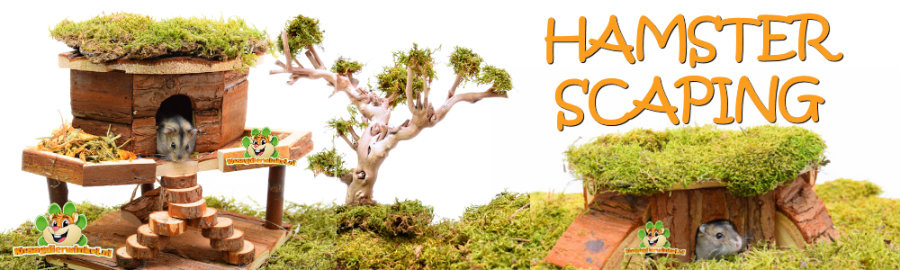
Hamsterscaping for Beginners – A Starter Guide to a Safe, Functioning Design
 Hamsterscaping is the smart and natural design of a hamster enclosure: not just "beautiful," but above all, logical for your hamster. Think of a deep digging layer, safe hiding places, a permanent sand bath area, and places to forage. This page is an information page (starting guide). Want to shop right away? Then check out our Hamsterscaping category . DRD Rodent Shop® has been a specialist since 2011 and helps you choose based on well-being, safety, and practicality.
Quick to:
- Getting started with hamster scaping (step-by-step)
- The 4 Zones Every Scape Needs
- Hamsterscaping supplies: what do you really need?
- Hamsterscaping a terrarium: what to look out for?
- Golden hamster vs. dwarf hamster: what changes?
- Common Mistakes (and How to Avoid Them)
- Maintenance & cleaning without demolishing everything
- Checklist for beginners
- Safety
- FAQ
✔ Beginner-proof
You start with 4 zones and 6 basic items. Then add the decor. This keeps things organized and hamster-proof.
✔ Works in everyday life
A beautiful scape is only truly good if you can maintain it with spot cleaning and fixed zones.
✔ Smart choices
With the right foundation (digging layer, hiding places, sand bath, running wheel) you often see more natural behaviour.
Getting started with hamster scaping (step-by-step)
- Choose the enclosure based on floor space and the ability to dig deep. See: Hamster Cage Selection Guide .
- Build the excavation layer with ground cover that can support tunnels. See: Ground cover selection guide .
- Create hiding places along the edges (houses/tunnels) so your hamster can run around under cover.
- A permanent sand bath area for care and maintenance. See: Sand bath selection guide .
- Running wheel + foraging : Running and searching are part of a "working" scape. See: Running wheel selection guide .
The 4 Zones Every Scape Needs
- Dig zone : deepest corner (the base of hamsterscaping).
- Rest zone : sleeping house + nesting place (least disturbance).
- Sand zone : fixed place (easy to sift/refresh).
- Running/foraging zone : exercise wheel + search activity (variety).
Hamsterscaping supplies: what do you really need?
This is the basic approach that almost always works well. You can find the complete overview in our shop:
- Ground cover (diggable, preferably tunnel-resistant)
- Hiding places (houses/tunnels, preferably multiple exits)
- Sand bath (fixed zone)
- Running wheel (suitable size + safe running surface)
- Nesting material (available in abundance)
- Foraging items (search/puzzle)
Hamsterscaping a terrarium: what to look out for?
Many people search specifically for "hamsterscaping terrarium." Glass can be very useful for a deep digging layer and clear zones, but pay extra attention to ventilation , placement (out of direct sunlight), and a stable structure . Start here with the basic selection: Hamster cage selection guide .
Golden hamster vs. dwarf hamster: what changes?
The basics remain the same (zones + safety), but the space requirements and layout may vary. For species-specific tips, please read: Golden hamster (Syrian hamster) information .
Common Mistakes (and How to Avoid Them)
- Too open design → add routes and cover along edges.
- Change everything at once → adjust 1 zone at a time (quieter and more organized).
- Decor before base → start with digging layer, hiding routes, sand bath, exercise wheel.
- Unstable height → make heavy parts stable and maintainable.
- No fixed sand zone → create one fixed spot, that reduces mess and maintenance.
Maintenance & cleaning without demolishing everything
Work with spot cleaning and fixed zones (sand bath/"toilet area"). Don't replace everything at once, but maintain it zone by zone. Want a practical approach with a fixed routine? See: Help with the setup (or ask your question via customer service ).
Hamster Scaping Checklist for Beginners
- ✔ Accommodation chosen with space for a deep digging zone
- ✔ Ground cover: diggable and easy to maintain
- ✔ At least 2–3 hiding places + routes along the edges
- ✔ Sand bath zone permanently installed
- ✔ Running wheel fitted and safely installed
- ✔ Foraging location(s): feed partly as search work
Prefer to arrange everything at once? Check out our Hamster packages .
Safety
- ✔ No sharp edges or unstable, heavy decor pieces
- ✔ Avoid strong-smelling materials and “fragrance fillings”
- ✔ Sand is a zone, not a complete soil filling
- ✔ Check wood/bridges regularly for wear and tear
FAQ – hamsterscaping
What is hamsterscaping?
Hamsterscaping is the natural and logical design of an enclosure with areas for digging, resting, sand bathing, and foraging.
What hamster scaping supplies do I need?
Start with ground cover (diggable), hiding places, a sand bath, a wheel, nesting material, and something to forage. Overview: Hamsterscaping shop .
Can hamster scaping be done in a terrarium?
Yes, that's perfectly possible. Pay extra attention to ventilation, space in the house, and a stable structure. Start with: hamster cage selection guide .
Do you also have hamster scaping examples and ideas?
Yes. See inspiration: Inspiration , basic hamster furnishings , and basic dwarf hamster furnishings .
Is there a hamster scaping package?
Yes, check out: hamster packages . Prefer personalized advice? See: help with furnishing .
What do people mean by “hamsterscaping IKEA”?
DIY solutions usually involve boxes/shelves. While possible, safety and ventilation are paramount. See also our DIY checklist on: Hamsterscaping IKEA & DIY .
Read more
- ✔ Specialist since 2011
- ✔ Practical selection aids and inspiration
- ✔ Personal advice via customer service
