 Polski

Guinea pig tunnels for shelter and pathways




- Voor 17 uur besteld, dezelfde dag verzonden!
- Rodent specialist since 2011
- Dispatched from our own stock



- Voor 17 uur besteld, dezelfde dag verzonden!
- Rodent specialist since 2011
- Dispatched from our own stock

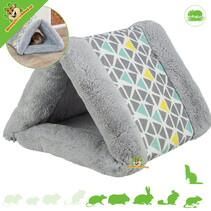
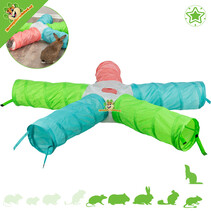



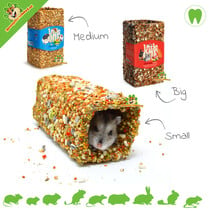
Guinea pigs choosing tunnels: hiding, walking, and exploring in the enclosure
 Guinea pig tunnels are much more than toys. For guinea pigs, tunnels are sheltered routes, quick passages, and nice places to get out of sight for a moment. Because guinea pigs are ground animals and naturally like to seek shelter, a tunnel can provide a lot of calm and structure in the enclosure.
A good guinea pig tunnel is spacious enough, stable, and easily accessible. Your guinea pig should be able to walk through it relaxed, without getting stuck or having to squeeze. In a spacious guinea pig cage , C&C guinea pig cage , or run, you can use tunnels to make open areas less intimidating.
At DRD Knaagdierwinkel®, we view tunnels as part of the complete enclosure setup. Does the tunnel suit the size of your guinea pigs? Do runways remain open? Can the tunnel be combined with guinea pig houses , bedding, hay racks, and foraging areas? This way, you aren't just choosing any tunnel, but a hiding route that truly makes sense within the enclosure. Specialist since 2011.
✓ Guinea pig tunnels for hiding, walking, exploring, and sheltered routes
✓ Practical for guinea pig cages, C&C enclosures, runs, and group enclosures
✓ Combines well with houses, hay racks, bedding, and foraging
✓ Selected by DRD Knaagdierwinkel® – Specialist since 2011
Quick links
In short • Why tunnels? • Types of tunnels • Which size? • Multiple guinea pigs • C&C setup • Tunnels & foraging • Handy combinations • FAQ
In short: which tunnel is suitable for guinea pigs?
A suitable guinea pig tunnel is spacious, stable, easily accessible, and matches the decor of the enclosure. Guinea pigs are not animals that like to squeeze through narrow tubes. Therefore, choose a tunnel that your guinea pig can easily walk through and where it will not get stuck on its back, belly, or sides.
For multiple guinea pigs, tunnels with two open ends are very practical. A guinea pig can always keep walking and does not have to back out of a closed hiding place. This is especially pleasant for groups, young animals, males, or guinea pigs that still need to get to know each other.
A tunnel works best when it is part of the route within the enclosure. For example, place it between a hutch and a hay corner, along an open area, or as a sheltered passage in a C&C enclosure. This way, the tunnel becomes not only fun but also functional.
More than enough
A guinea pig should be able to walk through the tunnel normally without getting stuck.
Two open sides
Open passageways provide a sense of calm, because a guinea pig can easily walk past or avoid them.
Logical place
A tunnel is supposed to improve routes, not block passage to hay, water, or cottages.
Why are tunnels good for guinea pigs?
Guinea pigs are curious, but also cautious. An open enclosure can feel intimidating, especially when there is little shelter. Tunnels make the enclosure clearer and give guinea pigs the opportunity to move around in a sheltered spot.
Tunnels can also help promote group calm. When there are multiple routes, guinea pigs do not have to rush past each other at a single narrow point. They can walk around each other, duck away briefly, or choose a different route. This fits well with an enclosure where freedom of choice is important.
Read more: Understanding guinea pig language , Pairing guinea pigs and Guinea pig cage selection guide .
Types of guinea pig tunnels
Not every tunnel serves the same role. One tunnel is primarily a passageway, while another is a soft resting place, a natural hiding place, or provides extra enrichment. By cleverly combining different types, you make the enclosure more interesting without overcrowding it.
| Tunnel type | Goes well with | What do you look out for? |
|---|---|---|
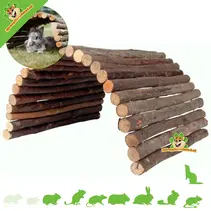
| Wooden tunnel | Sheltered route, natural design and chewable structure | Check regularly for sharp edges, splinters, and wear. |
| Fabric tunnel | Soft resting place, run or dry zone | Check for moisture, chewing, loose threads, and washability. |
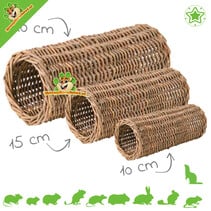
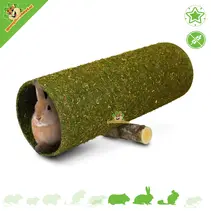
| Willow or grass tunnel | Naturally nibbling and hiding | Nice as an added enrichment, but it does not replace a spacious cottage. |
| Cork or bark tunnel | Natural appearance and sturdy shelter | Ensure sufficient diameter and stable placement. |
| Play tunnel or flexible tunnel | Run, run, and temporary enrichment | Use on dry areas and check regularly for rodent damage. |
What size tunnel does a guinea pig need?
Always choose a tunnel that suits the size of your guinea pigs. Guinea pigs vary in build and weight. A young or small guinea pig needs less space than a large adult male, but it is wise to choose a spacious one. In practice, a tunnel that just fits is often too cramped.
The opening must be wide enough for relaxed passage. Your guinea pig should not have to crawl, wriggle, or twist to get out. If in doubt, choose a larger one, especially when multiple guinea pigs use the same tunnel.
✓ Choose enough space for adult guinea pigs, not just for young animals.
✓ Check if your guinea pig can walk straight through it.
✓ Avoid narrow tubes that are more suitable for smaller rodents.
✓ Pay attention to large adult guinea pigs and males; they often need significantly more space.
✓ If in doubt, use a tunnel as an open bridge or shelter route instead of a narrow passage.
Guinea pig tunnels for multiple guinea pigs
Tunnels are especially handy for multiple guinea pigs, but they must be placed properly. A tunnel with a single narrow passage can actually become a blockage if one guinea pig gets stuck inside or occupies the entrance. Therefore, open tunnels and multiple routes are often preferable.
Use tunnels as connectors between resting places, not as the sole hiding place. Combine tunnels with multiple guinea pig houses , open space, and spaced-out food and hay areas. This allows guinea pigs to avoid each other more easily.
✔ Use multiple routes for groups.
✔ Choose open tunnels rather than cramped, closed tubes.
✔ Do not place tunnels directly in front of feed, water, or hay if they could get blocked there.
✔ Combine tunnels with multiple small houses and resting places.
✔ Watch out for chasing, claiming, or blocking at popular tunnels.
Guinea pig tunnels in a C&C enclosure
In a C&C guinea pig cage, tunnels can be used beautifully to connect zones. Think of a route from the hay corner to a resting spot, a sheltered passage along an open area, or a tunnel as an extra choice spot near a house.
Because C&C enclosures are often more spacious and modular, it is important not to fill every space. Preferably, place tunnels along edges, in corners, or as a short route between zones. This ensures that enough free floor space remains for walking and moving.
Handy extras: C&C guinea pig cages , C&C bedding , guinea pig floor mats and pee pads, and guinea pig cage selection guide .
Combining tunnels with foraging and enrichment
A tunnel can also be part of enrichment. For example, you can offer a few blades of hay, some herbs, or a small, safe snack moment near a tunnel. In this way, the tunnel becomes part of searching, sniffing, and quiet discovery.
Make sure the tunnel stays clean and dry. Preferably, do not place fresh vegetables or moist products inside a fabric tunnel or in a place where it gets wet quickly. Use tunnels primarily as a route and shelter, and place food or herbs in a spot you can easily monitor.
Guinea pig playing & foraging
For quiet searching, sniffing, and playing with food, herbs, or snacks.
Guinea pig herbs
Suitable as a fragrant supplement to hay, foraging, and quiet enrichment.
Guinea pig gnawing material
For natural variety and extra activity alongside tunnels and houses.
DRD makes the choice: tunnels as a route, not as standalone decoration.
At DRD, we view tunnels as part of the route within the enclosure. A tunnel must add something: shelter, passage, freedom of choice, or enrichment. Simply being “fun in the cage” is not enough.
Therefore, we advise looking at the layout first. Where is the hay? Where are the little houses located? Where do your guinea pigs often walk? Where does tension or a blockage occur? A tunnel works best when it adds calm or a sense of order precisely there.
Handy to combine with guinea pig tunnels
Shelter & rest
Guinea pig houses • Guinea pig cushions and baskets • Guinea pig hammocks
Stay & bottom
Guinea pig cage • C&C guinea pig cages • Guinea pig bedding • Guinea pig floor mats and pee pads
Nutrition & enrichment
Guinea pig hay • Guinea pig hay racks • Guinea pig playing and foraging • Guinea pig herbs
Behavior & decision support
Guinea Pig Language • Pairing Guinea Pigs • Guinea Pig Cage Selection Guide • What Do You Need for Guinea Pigs?
Checklist – choosing a guinea pig tunnel
✓ Is the tunnel spacious enough for an adult guinea pig?
✓ Can your guinea pig easily get through it without getting stuck?
✓ Does the tunnel have two open ends or a clear passage?
✓ Is the tunnel standing or lying stably?
✓ Will routes to hay, water, feed, and shelters remain open?
✓ Is the tunnel easy to inspect for dirt, moisture, and wear?
✓ Does the tunnel match the rest of your guinea pig enclosure?
Important to know
Regularly inspect tunnels for gnawing damage, sharp edges, loose threads, moisture, and dirt. Wear and tear is normal for natural tunnels, but remove any sharp or loose parts.
Do not use tunnels as the only hiding place. In addition, guinea pigs need sufficient houses, open running space, dry resting places, and multiple routes, especially when living with other guinea pigs.
Frequently asked questions about guinea pig tunnels
Do guinea pigs need tunnels?
Tunnels are not the only thing guinea pigs need, but they are very valuable. They provide shelter, make open areas less intimidating, and create extra routes within the enclosure.
Which tunnel is suitable for guinea pigs?
A suitable guinea pig tunnel is spacious, stable, and easily accessible. Your guinea pig must be able to walk through it easily without getting stuck or having to squeeze.
How big should a guinea pig tunnel be?
Choose one spacious enough for adult guinea pigs. The tunnel must be wide enough for them to walk through comfortably. If in doubt, choose a larger tunnel rather than a narrow tube.
Are small rodent tunnels suitable for guinea pigs?
Not always. Many tunnels for small rodents are too narrow for guinea pigs. Therefore, always check the size and choose a tunnel that really fits guinea pigs.
Where do you place a tunnel in the guinea pig cage?
Place a tunnel as a sheltered route between zones, for example between a hutch and the hay corner, along an open area, or in a C&C enclosure. Ensure that the tunnel does not block an important passageway.
Are tunnels useful for multiple guinea pigs?
Yes, tunnels can help create multiple routes. For groups, it is better to choose open tunnels and place multiple hiding places so that guinea pigs can easily avoid each other.
Can a tunnel fit in a C&C guinea pig cage?
Yes, tunnels are particularly useful in a C&C guinea pig cage for connecting zones. Place them so that enough free floor space remains.
Can you combine a tunnel with a small house?
Yes, that often works very well. A small house provides a fixed resting place, and a tunnel offers a sheltered route to or alongside it.
How do you keep a guinea pig tunnel clean?
Regularly check tunnels for droppings, urine, moisture, and gnawing damage. It is best to place fabric tunnels in dry places and wash them according to the product information.
What do you combine with guinea pig tunnels?
Combine guinea pig tunnels with houses, bedding, floor mats, C&C guinea pig cages, hay racks, foraging products, herbs, and sufficient open running space.
✓ Guinea pig tunnels for sheltered routes, hiding, walking, and exploring
✓ Handy for guinea pig cages, C&C enclosures, runs, and groups
✓ Can be combined with houses, bedding, hay racks, foraging, and resting places
✓ Ordered before 5 PM, shipped the same day
✓ Specialist since 2011
✓ Delivered from our own stock
Unsure which tunnel is best suited for your guinea pigs and enclosure? Feel free to contact us via our contact page . We are happy to help you decide.
