 Polski

Mouse information – care, housing, nutrition, behavior & health
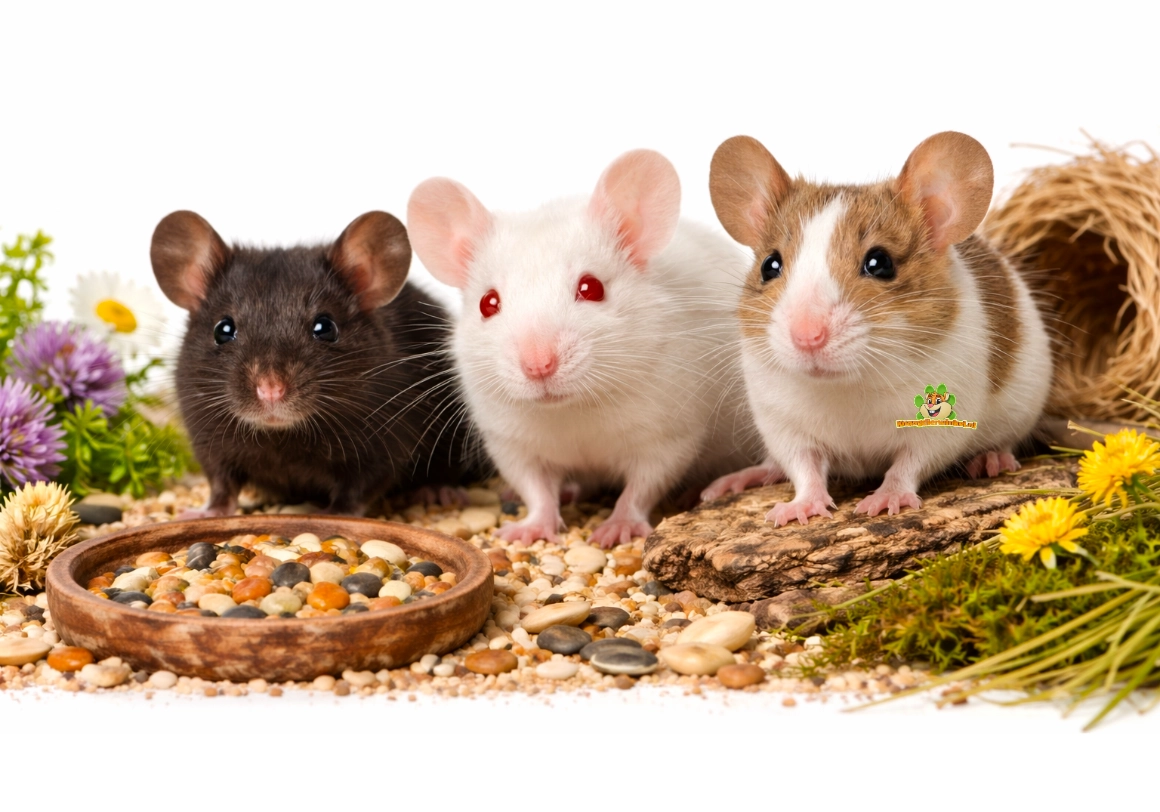 (Colored) mice are small, intelligent, and curious animals that are wonderful to observe: climbing, building, foraging, and seeking social contact. This page offers comprehensive information and will really help you get started: from group composition and housing to bedding, nesting material, nutrition, taming, and health. DRD Rodent Shop® has been a specialist since 2011 and is happy to help you choose based on well-being, safety, and a logically organized mouse world.
Directly to the Mouse shop:Mouse (all) · Mouse cages · Mouse bedding · Mouse food
Quick to:
- Mouse species (information)
- Behavior & What to Expect
- Keeping together & group composition
- Accommodation: dimensions, safety & climate
- Facilities: climbing, routes & enrichment
- Ground cover: diggable & low-dust
- Nesting material: building safely
- Nutrition: basics, proteins & snacks
- Taming & Handling
- Health: signals & prevention
- Useful shopping links (Mouse)
- FAQ
Mouse checklist (quick, good basic)
- ✓ Keep mice social: choose a suitable group composition and prevent stress.
- ✓ Choose an escape-proof enclosure with ventilation and plenty of climbing opportunities.
- ✓ Use low-dust, diggable ground cover (possibly cleverly mixed) for natural behaviour.
- ✓ Provide safe nesting material so they can build a warm, stable nest.
- ✓ Feed a complete mouse diet with controlled snacks and sufficient proteins.
- ✓ Daily enrichment: foraging, gnawing material and a logical layout.
✓ Social = peace
A suitable group with sufficient space and multiple “resources” prevents a lot of hassle.
✓ Climbing & building
Mice are real climbers and nest builders: provide routes, height, nesting material and hiding places.
✓ Dust-free & hygienic
Sensitive airways require dust-free floors, spot cleaning and a smart cleaning rhythm.
Mouse species – information per species
Within "Mice Information," we compile species-specific basic knowledge. This allows you to better tailor your setup and nutrition to your behavior and needs.
Behavior & What to Expect
Mice are active, curious, and often especially active at dusk and in the evening. They communicate extensively through scent, sounds, and body language. In a well-designed enclosure, you'll see typical behaviors such as climbing, running, nest-building, foraging, and "sleeping together."
Be mindful of odors: mice mark their surroundings. That's part of being a mouse. Spot cleaning and materials that retain less odor will help.
Keeping together & group composition (peace in the group)
Mice are social animals. In practice, a group of females often behaves most predictably. Unneutered males together often lead to serious conflicts. Some owners choose to keep one (neutered) male with several females; this requires proper guidance and a well-thought-out plan.
Rest rule: always offer multiple feeding stations, multiple hiding places, and plenty of space. Helpful tips include houses , food bowls , and tunnels .
Introducing new mice is easiest when the animals are young and are introduced in a calm, neutral setting. With adult groups, bonding can be more challenging; in that case, it's better to choose security (a stable group) than to force it.
Accommodation – dimensions, safety & climate
Mice need space to move and climb. Therefore, choose an enclosure with sufficient floor space, height, and, above all, escape-proof (small bar spacing/tight-fitting lids). Terrariums and well-ventilated cages are popular choices, as long as the ventilation and security are adequate.
Starting points: Mouse cages · Cage accessories .
Climate: Mice dislike drafts and are not fond of stuffy heat. A stable room temperature, good ventilation, and keeping them out of direct sunlight is usually the safest option. Be extra careful in summer (heat and high humidity).
Facilities – climbing, routes & enrichment
A mouse enclosure is only "finished" when there are logical routes: from hiding place to food, from platform to hammock, from tunnel to nest. Mice like to be able to move around without being exposed. Think of it in layers: bottom (burrows/nest), middle (tunnels), top (platforms/hammock).
Practical categories: Platforms & ladders · Hammocks · Tunnels · Play & foraging · Exercise wheels .
Ground cover – diggable & low-dust (important for respiratory tract)
Choose substrate that mice can dig in and create tunnels/nests in. You also want a low- dust substrate , as mice can have sensitive respiratory systems. Many keepers use a clever mix: a base layer that absorbs and a layer that builds and provides stability.
View: Mouse ground cover .
Practical cleaning: use spot cleaning (urinary tracts/food scraps) and avoid replacing "everything" every week; this can cause unrest due to a loss of scent in the group.
Nesting material – building safely (mice are real nest builders)
Mice like to build a warm, enclosed nest. Therefore, provide plenty of nesting material that is soft and easy to pull apart. Popular choices include paper-like materials, hay/fiber, and other brittle fibers that allow them to shape without getting stuck.
View: Mouse nesting material .
Nutrition – basics, proteins & snacks (control and variation)
In the wild, mice primarily eat seeds, grains, and plant parts, supplemented with small animal proteins (such as insects). At home, you want a complete, basic diet that meets their needs, supplemented with controlled variation. Note that "bowl empty" doesn't always mean "finished" (hoarding/hiding away does occur).
Starting points: Mouse food · Hay, herbs & seeds · Snacks · Dried fruit & vegetables .
Tip! For taming, something small and safe often works best, like millet or a mini snack. Keep portions small: the goal is to build trust, not "a lot of sugar."
Taming & Handling – Calm, Predictable and Stress-Free
Give new mice time to get used to their enclosure. Then establish a consistent routine: talk calmly, move slowly, and reward them when they make contact. Leave your hand in the enclosure, feed from your hand, and gradually increase the frequency.
Handy: make handling “easy” with routes and hiding places, so that mice don’t panic: tunnels · houses .
Please note (mild):
Don't try to "grab" from above. That feels like a bird of prey to prey. Instead, use lures, a tunnel/trough, or gently letting them step onto the animal.
Health – Signs, Prevention & When to Seek Advice
Common concerns in mice include respiratory problems (sneezing, wheezing, shortness of breath), skin/fur problems, bumps/tumors, weight loss, diarrhea, and not being themselves anymore. Because mice are small, they can deteriorate faster than you expect.
Useful: Mouse health · Mouse care .
Hygiene is prevention: keep water points clean, remove wet spots, and prevent excessive dust. If you experience persistent symptoms or significant shortness of breath, it's wise to seek advice promptly.
Useful Mouse shopping links (most relevant)
Layout & behavior:
Ground cover · Nesting material · Houses · Tunnels · Platforms & ladders · Hammocks · Exercise wheels · Play & foraging · Gnawing material
Power supply:
Mouse food · Hay, herbs & seeds · Snacks · Dried fruit & vegetables
Practical:
Mouse cages · Cage accessories · Food bowls · Drinking bottles & water bowls · Transport boxes · Packages
Seasonal: Winter products
For general background information you can also consult the LICG .
FAQ – Mice
What is most important for “happy mice”?
A suitable group, sufficient space, dust-free ground cover, safe nesting material, plenty of hiding places and daily enrichment (foraging/climbing/gnawing).
Which categories are most important for the design?
Ground cover, nesting material, houses, tunnels, platforms/hammocks, gnawing material and playing/foraging together form the “backbone”.
What is the fastest way to tame mice?
Calm, routine, and reward: let them initiate contact, feed from the hand, and gradually build up. Don't force; trust always wins.
Tip: Start from the main category:Mouse .
✓ Extensive information page (not just selection aid)
✓ Selection aid and range from specialist since 2011
✓ Practical tips for group peace, keeping dust low and enrichment

