 Polski







Have a question?
Have a question about this product? Please feel free to contact us, we will be happy to help you!

Have a question about this product? Please feel free to contact us, we will be happy to help you!
The Concrete Rodent & Rabbit Feeder Bowl is a heavy, stable feeder bowl for animals that like to move, lift, or tip over their bowl. Due to its weight, the bowl stays in place much better than a lightweight plastic or thin ceramic bowl. This makes this feeder bowl particularly handy for active rodents, rabbits, and true gnawers who like to “rearrange” their enclosure themselves.
At DRD, when it comes to feed bowls, we look not only at how nice they look, but especially at how they are used in practice. A feed bowl must suit the size of the animal, the amount of food, and the way the animal eats. This concrete feed bowl is available in a small and a larger size, making it easier for you to choose what suits your animal and enclosure.
✔ Remains firmly in place due to the weight
✔ Ideal for animals that like to move or tip over their food bowl
✔ Chew-resistant concrete, so also suitable for real rodents
✔ Available in a small and larger size
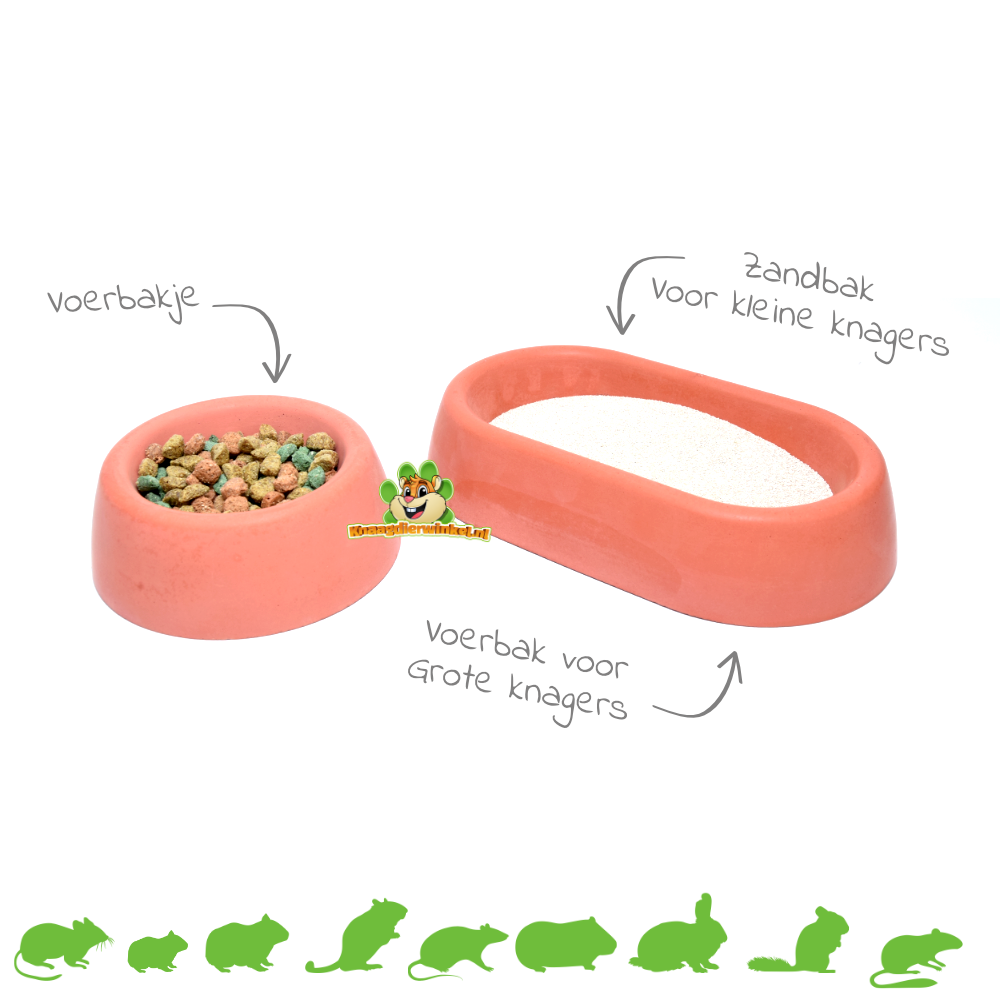
✔ Larger size also nice as a sturdy sandbox for small rodents
Some animals eat calmly from their bowls. Others pull, push, throw, or drag their food bowls through the enclosure. That can be funny to watch, but for daily care, a stable bowl is often much more practical. Food stays in one place better, the enclosure remains more organized, and you don't have to gather up spilled food as often.
Concrete is heavy and sturdy. As a result, this food bowl is particularly pleasant for animals that easily move a lightweight bowl. A concrete bowl is also a smart choice for rodents who find plastic or wooden bowls interesting to gnaw on. Moreover, the material fits beautifully into a natural interior, as it has a calm appearance and does not easily distract from wood, cork, bedding, and other natural materials.
The larger size has an additional advantage: for small rodents, it can also be used as a sturdy sand bath. Think of dwarf hamsters, hamsters, or gerbils, who need a stable container that does not immediately shift when they step in or dig.
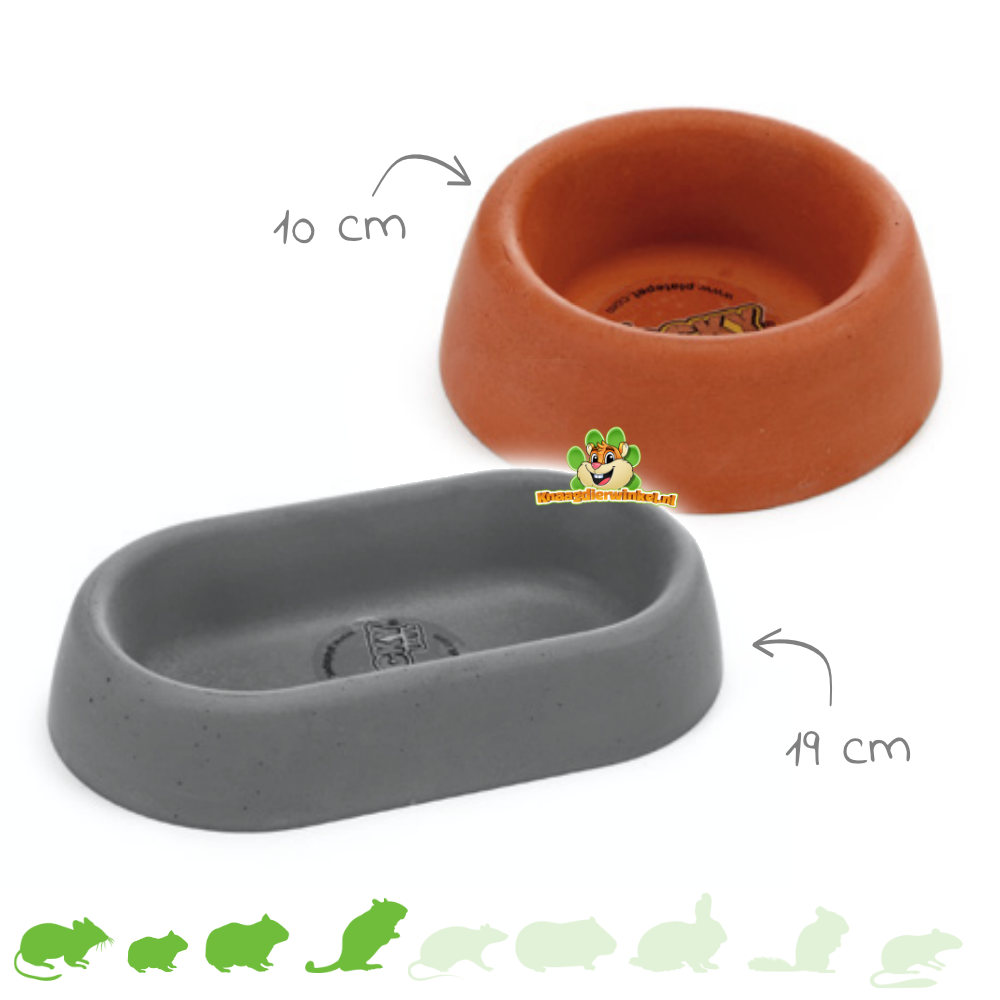
The Concrete Feeding Bowl is available in two sizes. Choose the size based on the animal, the portion size, and the intended use. For a small animal or a small portion, the compact size is often sufficient. For larger animals, group animals, or use as a sand bath, the larger size makes more sense.
| Mate | Usage |
| 10 × 10 × 5 cm | Compact food bowl for small rodents or small portions of food, herbs, or snacks. |
| 19 × 10 × 5 cm | Larger food bowl for larger animals, for eating together, or as a sturdy sandbox for small rodents. |
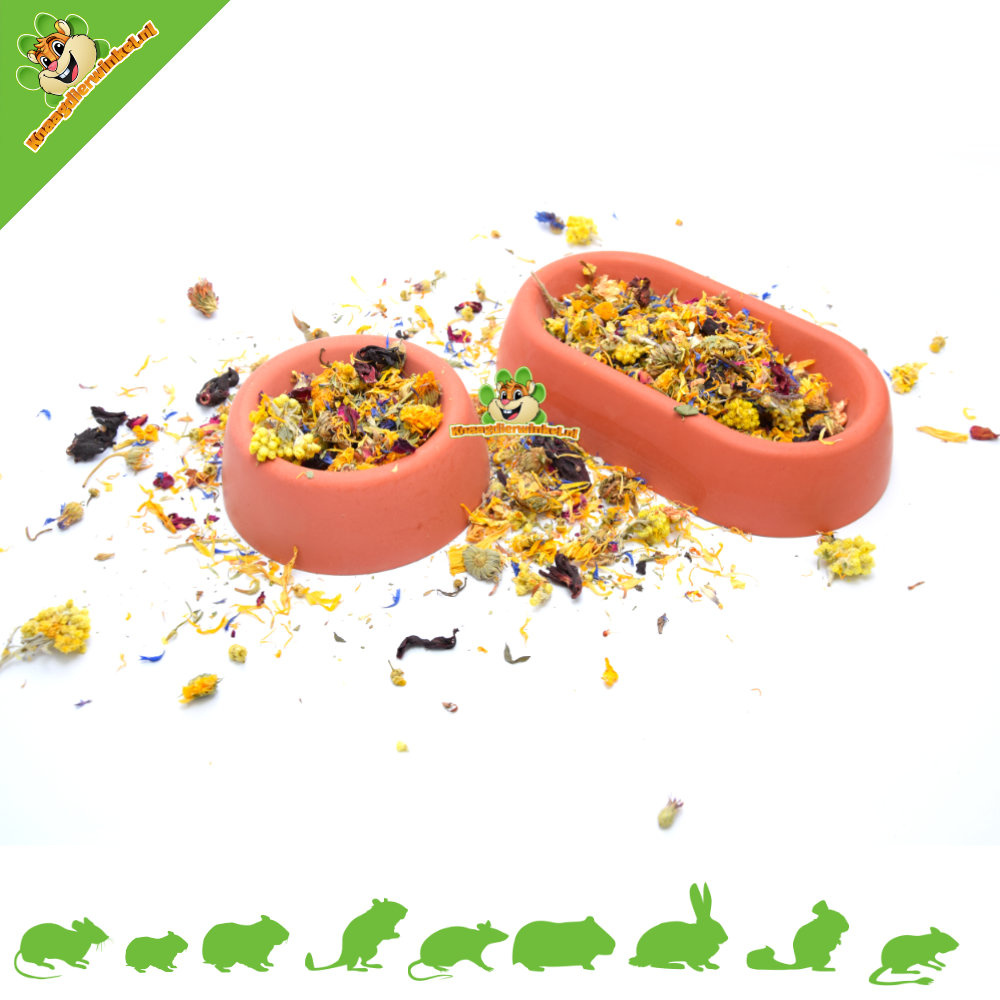
Use the Concrete Feeding Bowl for dry food, kibble, pellets, herbs, dried flowers, vegetables, or small snacks. Place the bowl on a flat surface so that it stands stably. Due to its weight, the bowl stays firmly in place, even when your pet bumps its paws against the edge or likes to push against the bowl.
For group animals such as rats, guinea pigs, rabbits, chinchillas, and degus, the larger size can be beneficial because multiple animals can access the bowl together more easily. This makes feeding more organized and provides more space while eating.
The larger size can also be used as a sturdy sand bath for small rodents. This is especially useful for dwarf hamsters, hamsters, and gerbils that enjoy digging or rolling in the sand. Because the tray is heavy, it stays in place better than many lightweight sand baths.
Use suitable rodent sand for this and place the tray on a stable spot in the enclosure. Change the sand regularly and remove dirt or bedding when necessary.
Material: concrete.
Dimensions: approx. 10 × 10 × 5 cm or 19 × 10 × 5 cm.
Use: food bowl for rodents and rabbits; larger size also suitable as a sturdy sand bath for small rodents.
Concrete is heavy, sturdy, and chew-resistant. As a result, this feeder is well-suited for animals that quickly move light materials or gnaw on them.
Empty the food bowl regularly and remove food residue. Dry residue can easily be tapped out or brushed away. With wet food or vegetables, it is advisable to clean the bowl in good time and let it dry thoroughly before refilling it.
Do you use the larger container as a sandbox? Sift or replace the sand regularly and clean the container whenever dirt or moisture gets into it. This keeps the feeding or sand area fresh and pleasant to use.
The concrete feeder is sturdy and stable, but due to its weight, it is best placed low and on a flat surface. Do not place the bowl in a location where it could fall from a height. Check the bowl for damage while cleaning to ensure it remains neat and pleasant to use.
A concrete feed trough is heavy and therefore stays in place better. This is useful for animals that quickly move, lift, or knock over light bowls.
For small animals and small portions, the 10 × 10 × 5 cm size is often sufficient. For larger animals, group animals, or use as a sandbox, you would prefer the 19 × 10 × 5 cm size.
Yes, for small rodents, the larger size can also be used as a sturdy sandbox. That is especially handy when you are looking for a sandbox that does not slide around easily.
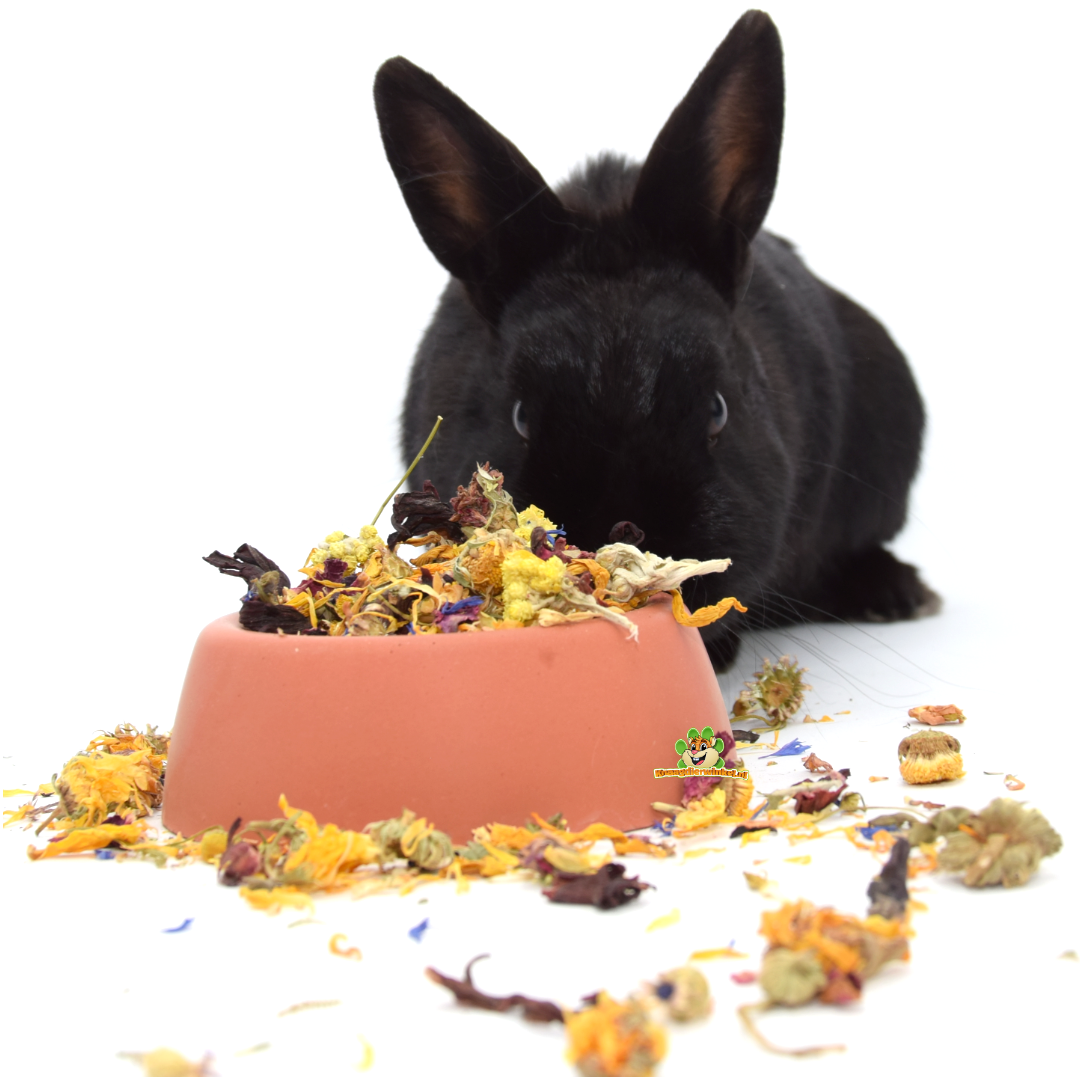
Yes, for rabbits, the larger size is particularly suitable as a sturdy food bowl for pellets, herbs, or vegetables.
Yes, concrete is a practical choice for real rodents like gerbils, chinchillas, and degus. The tray is heavy, sturdy, and chew-proof.
Remove food residue regularly. For wet food, clean the bowl and let it dry thoroughly before using it again.
The Concrete Rodent & Rabbit Feeder Bowl is a great choice if you are looking for a sturdy, quiet, and practical feeder bowl that won't easily slide around the enclosure. Thanks to its weight, chew-resistant material, and choice of two sizes, this bowl suits many animals and various feeding methods.
| Material: | Concrete |
| Dimensions (approx): | 10 x 10 x 5 cm | 19 x 10 x 5 cm |
| Diameter (approx): | ø |
| Content (approx): | - |
| Suitable for: | Rodents, Mouse, Dwarf Hamster, Hamster, Gerbil, Rat, Guinea Pig, Rabbit, Chinchilla, Degu |
| Particularities: | - |
| Safety Information: | Offer only under supervision. Check regularly for wear and tear |