 Polski

Dried plants – natural decoration & foraging fun for rodents


- Voor 17 uur besteld, dezelfde dag verzonden!
- Rodent specialist since 2011
- Dispatched from our own stock
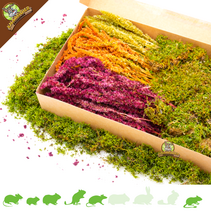
Dried plants – hamster scaping and foraging fun with a natural look
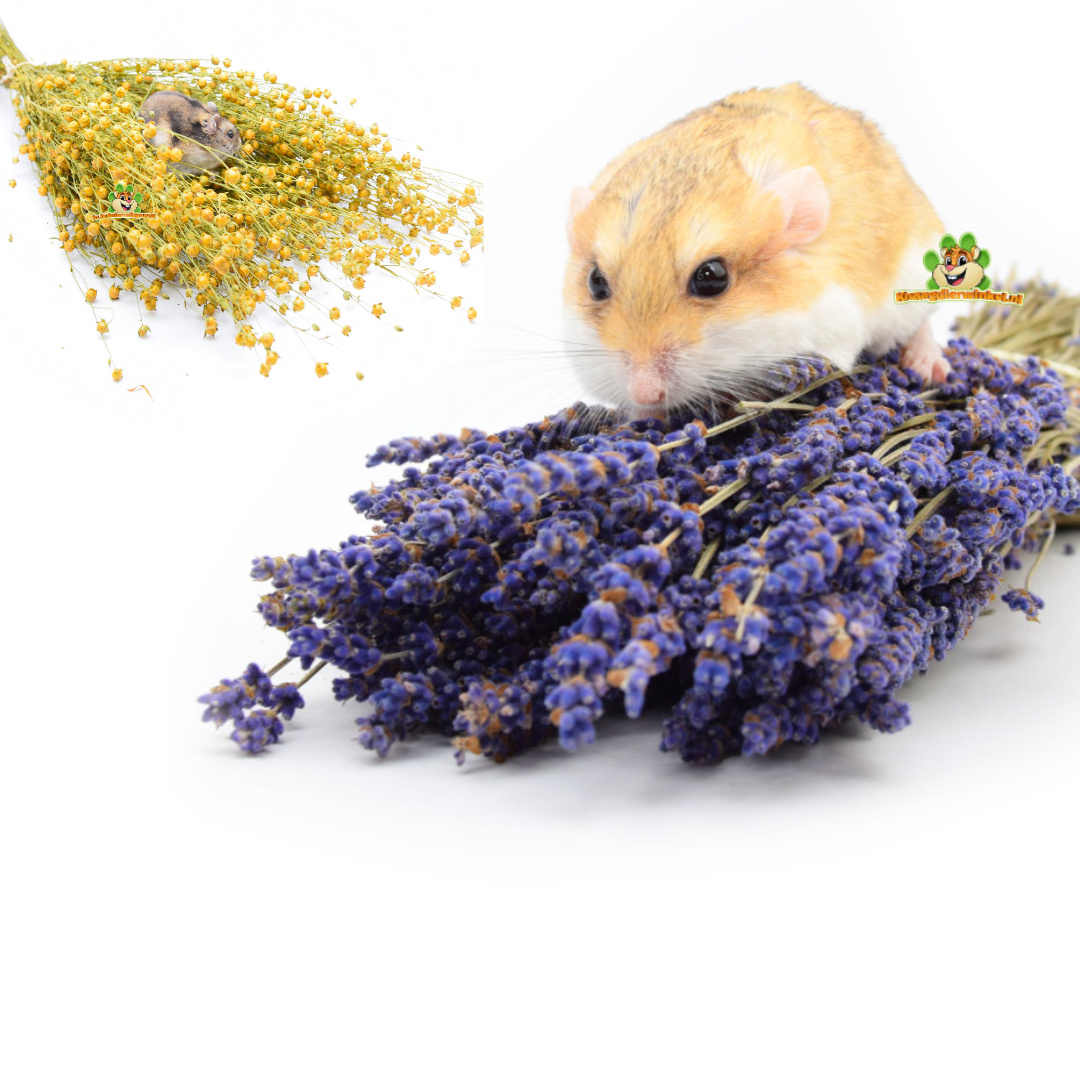 Dried plants are a simple way to make a habitat more natural and enjoyable. You can use them as decoration (hamster scaping), but also as enrichment: scattering, hiding, and "harvesting" them stimulates natural searching and picking behavior. In this category, you'll find various types of plants (such as flowers, herbs, grasses, and ears of corn) that you can use to vary the scent, texture, and experience. Specialist since 2011.
Complete your enclosure with plants as natural decoration. Combine them beautifully with ground cover and nesting material for a peaceful, natural base.
Scatter or hide small pieces so animals can search and pick. For an extra challenge, combine this with playing and foraging .
Alternate flowers, grasses, and ears of corn for different textures. This keeps things interesting and prevents everything from becoming "just decor." Tip: also create fixed routes with tunnels and hiding places.
Which dried plants are suitable for your animal?
Not every animal uses plants in the same way. Some primarily search and drag them , while others prefer to pick or use them as "decoration" around the nest. Helpful guidelines:
- Flowers – beautiful as decoration and fun to browse and take apart.
- Herbs – often popular for their scent; ideal for sprinkling in mini portions.
- Grasses & ears of corn – perfect for “harvesting”: picking, sorting, and gathering.
Want to combine plants with your daily feeding? Then also check out our food & snacks section for a logical mix of enrichment and routine.
How to use dried plants in the enclosure
You'll get the best results if you use plants in three ways. This way, it stays interesting, even in the long run:
- Sprinkle – a small amount loosely over the ground, so that animals will search for it themselves.
- Hiding – under a bridge, in a tunnel, or behind a house for additional “search routes.”
- Clustering – create one decorative corner (hamsterscaping) that you refresh weekly.
Combine this with a nice hiding place, for example with houses , so that your animal can rest in between and feel safe.
Foraging: more natural behavior with minimal effort
Foraging means actively searching for food and interesting scents. Dried plants are ideal for this because you can divide them into mini-portions and arrange them cleverly. Want to expand this further with puzzles and search materials? Then check out the games & foraging category.
Hamsterscaping tips: natural, calm yet challenging
For a beautiful and functional whole, it's helpful to work with zones: a quiet nesting zone, a foraging zone, and a route zone. Plants are primarily used as a finishing touch (top layer/corners) and as little surprises along the way.
- Create a decor corner and refresh it slightly instead of everything at once.
- Create routes with tunnels/bridges and sprinkle some very small plants along them.
- Use a soft base that grips well for spreading: ground cover helps with this.
Maintenance & hygiene
- Remove plants if they become damp or remain in one place for a long time.
- It is better to change small portions rather than everything at once (better for routine and odor recognition).
- Store plants dry , well sealed and out of direct sunlight to retain scent and structure.
Checklist: using dried plants wisely
Before you start (or if you want to refresh your hamster scaping), review this:
✔ You use small portions and vary in type/structure
✔ You combine scattering + hiding + one decorative corner (zones)
✔ Moist residues are removed and replaced in a timely manner
✔ There is plenty of hiding space (house/tunnel) next to the "open" decoration
✔ You store plants dry and closed
Safety
- Use only plants intended for animal feed/enrichment (no garden or craft supplies).
- Check for moisture and replace wet or compressed parts to prevent loss of quality.
- Introduce new plants slowly: start small and see what your pet likes.
FAQ – Frequently asked questions about dried plants
Are dried plants mainly decorative or also enriching?
Both. You use them as a natural finishing touch and as a foraging incentive (scattering/hiding), so animals can actively search and pick.
How often can I water dried plants?
Small portions and variety work best. Use it as a supplement to your routine and refresh leftovers that get soggy or sit around for a while.
Can I combine different types?
Yes, that's actually helpful: flowers for ambiance, herbs for scent, and grasses/ears of grass for "harvesting." Observe what your pet likes best.
What would be a good fit for a complete interior?
A solid foundation and clearly defined zones. Think of ground cover, hiding places, and routes with tunnels. This keeps things calm and challenging.
Where can I find more natural plants within this line?
View the main category: rodent plants .
Why buy dried plants from DRD Rodent Shop®?
✔ Smartly selected range for natural behaviour & variety
✔ Ordered before 5 PM = shipped the same day
✔ Delivered from our own stock
✔ Questions? View customer service
