Polski



Amaranth Mix Harvest Package (Red, Orange & Green)
- Dispatched from our own stock
- Personal & expert advice
- Always 100% rodent-friendly
- Ordered before 5 p.m., shipped the same day!
- Customer service from 09:00 to 18:00
Rodent Grocer Amaranth Mix Harvest Package
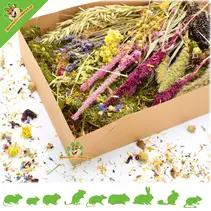
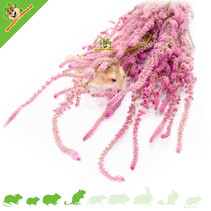
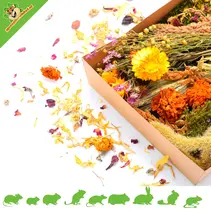
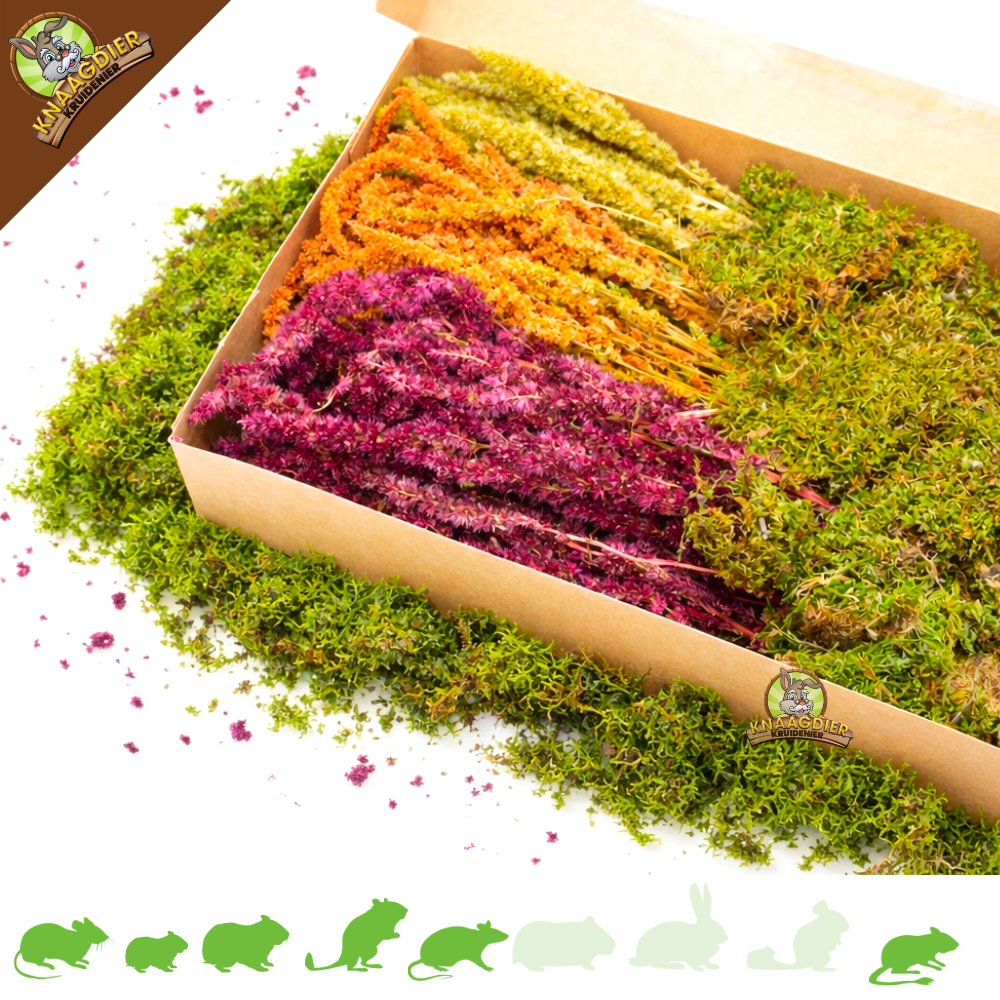
With the Knaagdier Kruidenier Amaranth Mix Harvest Pack, you instantly add height, color, and natural depth to your small rodent's enclosure. In this box, you will find three beautiful colors of amaranth: red, orange, and green. You can use the stems as natural decoration and enrichment in the enclosure, for example by placing them upright in the bedding.
Amaranth works beautifully in hamsterscaping and gerbilscaping, as you can easily create a small forest, a shrub zone, or a natural backdrop with it. The stems provide structure in the enclosure and give your animal spots to walk through, sniff, and explore.
In short
- Box with three colors of amaranth: red, orange and green
- Beautiful for hamsterscaping, gerbilscaping, and natural enclosures
- Ideal for creating a mini-forest, shrub zone, or natural backdrop
- Adds height, color, and depth to the enclosure
- For many small rodents, amaranth often remains standing neatly longer than some other harvested varieties.
- Playpen size: 37 × 25 cm
Advantages of the Amaranth Mix Harvest Package
✔ Three colors in one pack for instantly more variety in the scape
✔ The stems are beautiful to use as small trees or shrubs
✔ Helps create zones, routes, and sheltered spots
✔ Suitable for natural setup, foraging, and exploration
✔ Custom-made and cleaned of leaves, so you can use the stems immediately
Why choose Amarant Mix Oogst?
With hamsterscaping and gerbilscaping, it is not just about how an enclosure looks, but also about how your animal can use it. Amaranth helps you easily create height variations, pathways, and shelter. By placing the stalks in groups, a natural landscape is created where your animal can forage.
You can use the three colors scattered for a playful effect, or group them together for a full shrub zone. Amaranth adds a lot of depth, especially at the back or in the middle of the enclosure. It looks natural without the enclosure immediately becoming too busy.
Moreover, amaranth is a fine choice if you would like to enjoy the harvest in the enclosure for a bit longer. Many small rodents often leave amaranth untouched longer than some other harvest types. Of course, this varies by animal: some animals nibble on it, pull it loose, or use it as extra enrichment. That, too, is part of natural behavior.
For which animals is Amarant Mix Oogst suitable?
This amaranth harvest is particularly suitable as natural enrichment and decoration for small rodents who enjoy exploring, foraging, and investigating their enclosure.
- Mice
- Dwarf hamsters
- Hamsters
- Gerbils
- Dwarf rats
- Rats as natural enrichment in the enclosure
For guinea pigs, rabbits, chinchillas, and degus, amaranth is not a substitute for hay or fiber-rich staple food. For these animals, the emphasis lies primarily on hay, suitable herbs, and species-appropriate food.
This is how you use amaranth in the substrate.
You can incorporate amaranth into the enclosure in various ways. The most beautiful effect is achieved by placing multiple stems with small spaces in between. This creates a natural forest effect that your animal can walk through.
- Choose a spot where you want to create height and depth, for example at the back or in the middle of the enclosure.
- Push the stems a few centimeters into the ground cover so that they stand firmly.
- Use bedding that “compacts” well, such as cotton bedding or another firm layer of bedding material.
- Place multiple stems together for a shrub zone or spread them out for an airier landscape.
- Combine amaranth with tunnels, houses, cork, grapevines, herbs, or other harvesting material.
- Remove parts that become wet, dirty, or less fresh.
Use per animal species
Mouse
Mice love routes, cover, and small hiding places. Plant amaranth in small groups to create natural bushes they can walk through. Some mice pull off small pieces or use the material in their nesting behavior.
Dwarf hamster
Dwarf hamsters appreciate shelter and clear pathways. For example, place amaranth along a small house, near a sand bath area, or at the back of the enclosure for added depth. Many dwarf hamsters leave the stems fairly intact, but they will of course also nibble on them or investigate them.
Hamster
Golden hamsters like to create their own paths and chambers in their enclosure. Amaranth works well as border planting along a pathway or as a natural background. Place the stems firmly in the bedding so they stay in place better when your hamster digs or walks past.
Gerbil
Gerbils dig a lot and enjoy rearranging their enclosure. Therefore, place the stems a little deeper in the bedding and preferably choose a spot where digging is less intensive. If the amaranth is dug up or gnawed to pieces, your gerbil will still have benefited from it as enrichment.
Dwarf rat and rat
Dwarf rats and rats are curious and enjoy exploring new materials. Use amaranth, for example, in a corner, on a platform, or as natural decoration at a foraging area. Keep in mind that rats may move, nibble on, or take away stems.
Compound
Composition: Red amaranth, orange amaranth and green amaranth.
Good to know: we fill based on appearance, not exact weight.
With our flower and harvest mixes, we deliberately do not look solely at weight. These products consist of natural parts such as flowers, leaves, stems, seeds, and harvest material. As a result, the weight per box may vary slightly, while the contents are appropriately filled in terms of size and appearance.
A box with more stems, slightly more leaves, or natural residual moisture may be heavier, but that does not automatically mean it looks more beautiful or fuller. Conversely, a lighter box may contain more airy flowers, plumes, or fine harvest material. We therefore fill boxes based on a beautiful, full appearance and primarily assess the quality, variety, and overall look of the bunch.
This way, you receive a natural mix that looks good, is pleasant to use in the enclosure, and matches the character of the product. Because these are natural products, color, structure, length, and composition may vary slightly from harvest to harvest.
Important to know
- This is a natural product: color, shape, length, and structure may vary from bunch to bunch.
- Dried stems can be brittle. This is part of the natural dried harvest.
- Preferably use amaranth in dry areas of the enclosure.
- Replace parts that get wet, dirty, or dusty.
- Check regularly for loose or sharp pieces caused by breakage and remove them.
Frequently asked questions about Amaranth Mix Harvest
Is the amaranth harvest intended for eating or for decoration?
You use amaranth primarily as natural decoration and enrichment in the enclosure. Nibbling, exploring, and moving it around are often part of this. The goal is for your animal to have more to discover and for the enclosure to feel more natural.
Can I use amaranth for hamsterscaping?
Yes, amaranth is very suitable for hamsterscaping. By placing the stems upright in the bedding, you can easily create a mini-forest, shrub zone, or natural background.
Is amaranth also suitable for gerbilscaping?
Yes, amaranth fits well into gerbilscaping. Gerbils dig and rearrange a lot, so preferably place the stems somewhat more firmly and deeper in the bedding. If they dig up or destroy the amaranth, that is also a form of enrichment.
How do I get the most beautiful forest look in the enclosure?
Use multiple stems together and plant them in the ground cover with small spaces between them. By alternating red, orange, and green, you immediately create more depth and a more natural effect.
Why is this box not filled to exact weight?
With naturally harvested products, weight does not always indicate appearance or quality. More stem, leaf, or natural residual moisture can make a box heavier, whereas airy stems can actually be lighter. Therefore, we fill boxes to ensure a beautiful, full presentation in a fixed size.
Can I reuse amaranth after a cleaning?
That is often possible, as long as the stems remain clean, dry, and tidy. Has the amaranth become damp, does it smell different, or is it severely damaged? Then it is better to replace it.
In which bedding does amaranth stand best?
Amaranth stands best in ground cover that provides sufficient grip. Cotton ground cover often works well for this, but other sturdy ground covers can also work well if you plant the stems deep enough.
Useful shopping links
| Content: | Red amaranth, green amaranth, orange amaranth, dried moss |
| Suitable for: | Rodents, Hamsterscaping, Gerbilscaping, Ratscaping, Mouse, Dwarf hamster, Hamster, Gerbil, Rat, Guinea pig, Rabbit, Chinchilla, Degu |
| Particularities: | - |
| Disclaimer: | Not for food producing animals |