Polski




Have a question?
Have a question about this product? Please feel free to contact us, we will be happy to help you!

Have a question about this product? Please feel free to contact us, we will be happy to help you!
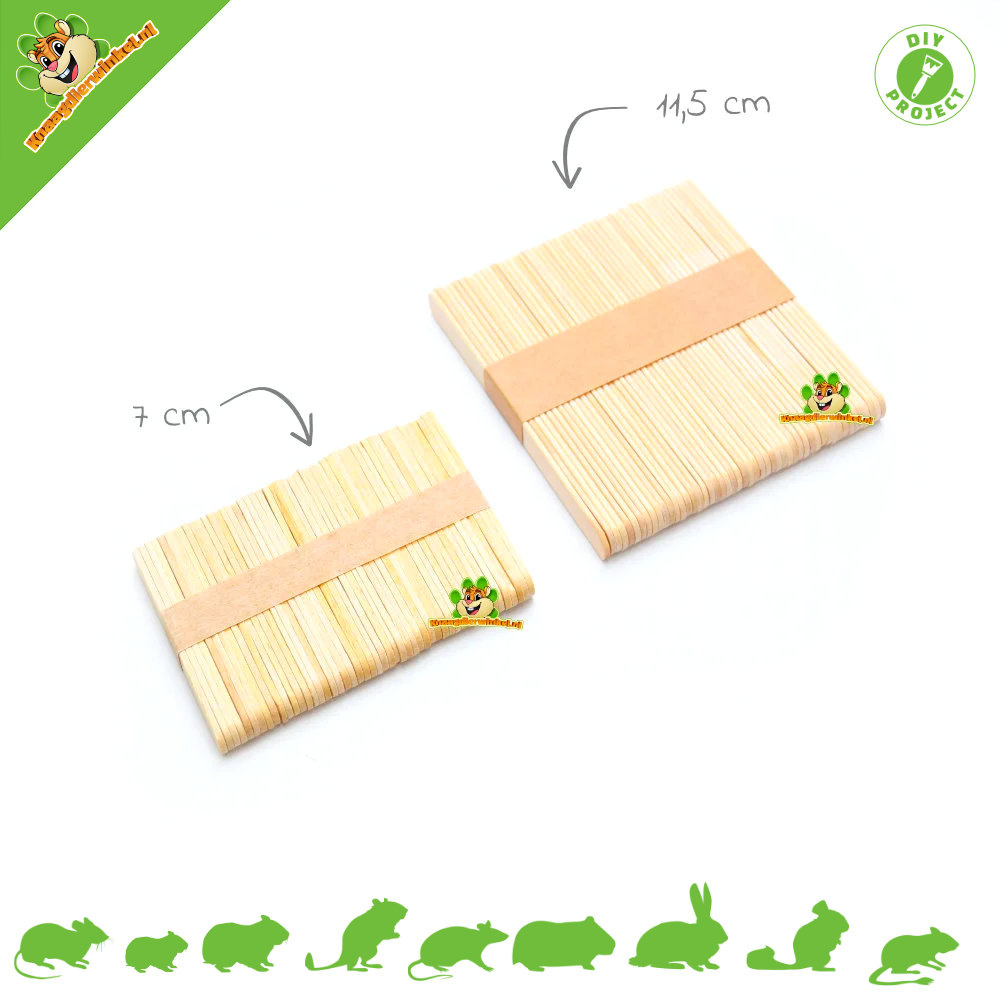
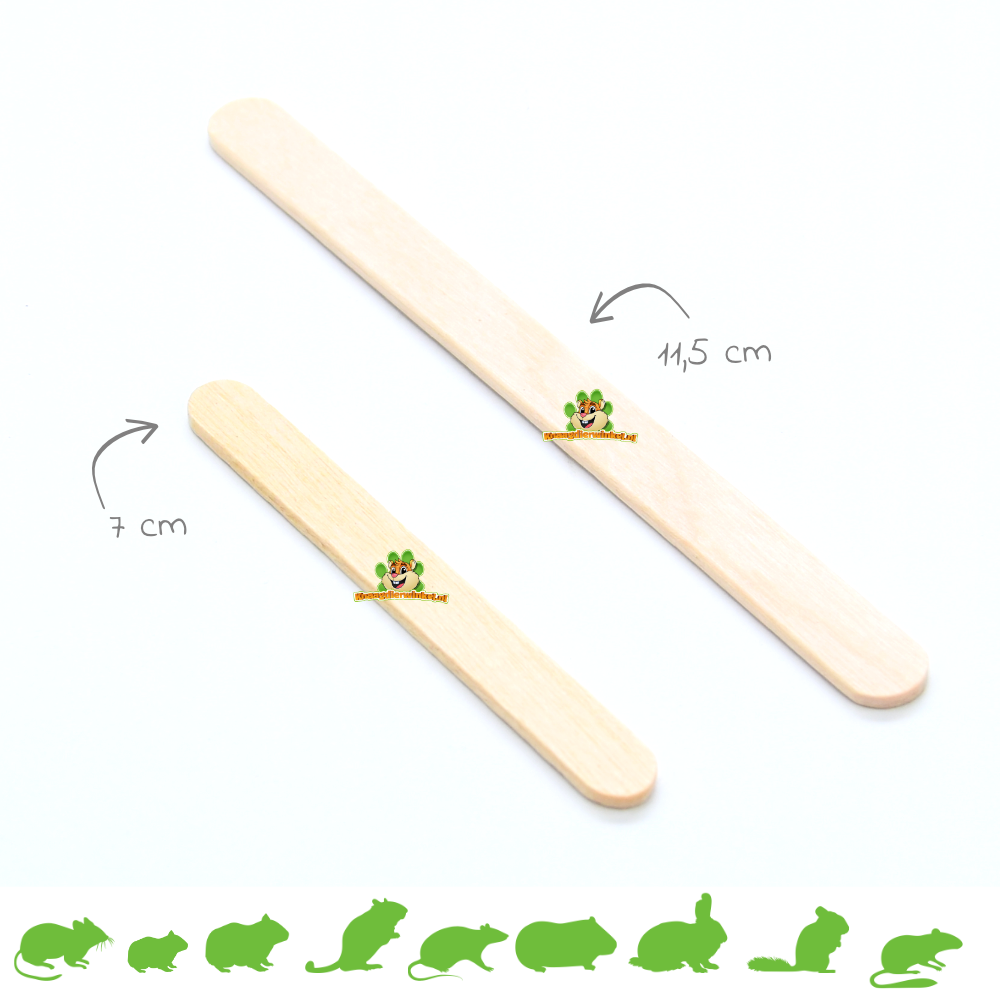
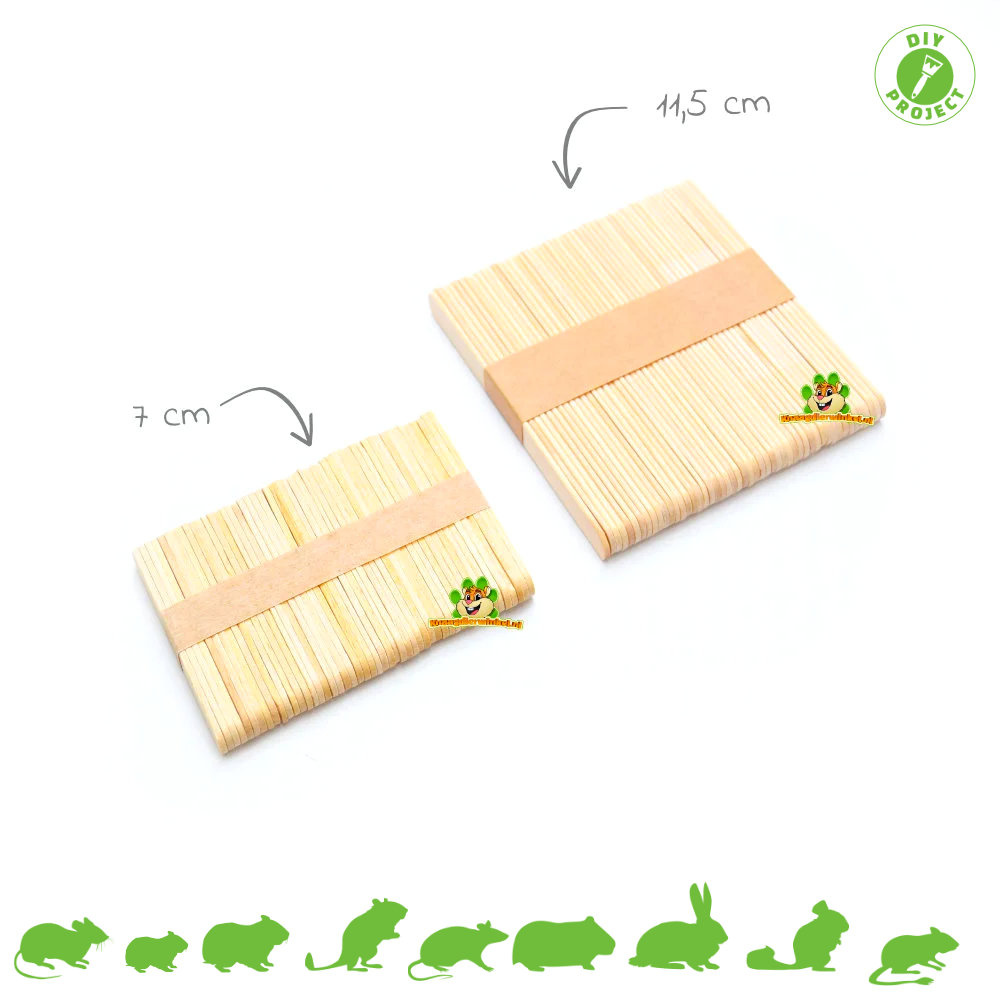
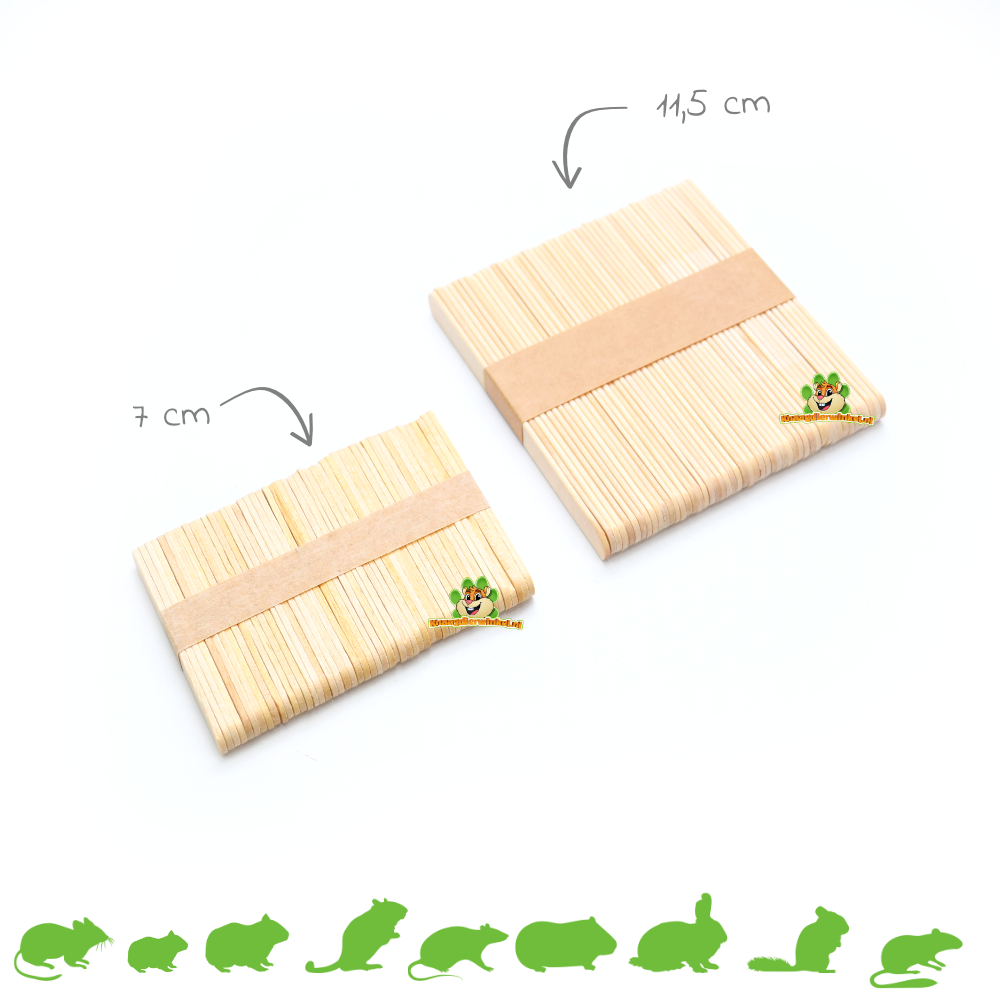
With these DIY ice cream sticks, you can create fun little projects for your rodent enclosure yourself. Think of bridges, fences, platforms, mini houses, decorations for hamsterscaping, or creative elements for a gerbilscape. The sticks are made of beech wood and have a convenient size of 11.5 cm, making them easy to incorporate into small and medium-sized DIY projects.
For pet owners who enjoy making things themselves, wooden popsicle sticks make a great base. They are easy to build with, combine, and customize. This way, you can create something that fits exactly your enclosure, your theme, and the space you have. This is handy when standard products don't quite fit or when you want to make a scape more personal.
✔ Creative base: ideal for making small bridges, fences, houses, or scenery decorations yourself.
✔ Made of beech wood: a natural wood type with a calm appearance that fits beautifully in a rodent enclosure.
✔ Great for hamsterscaping: handy for making matching parts yourself for a natural hamster setup.
✔ Also suitable for gerbilscaping: great for creative decoration, small constructions, and thematic scapes.
✔ Value pack: with 50 sticks, you have enough material for multiple small projects.
DIY products are ideal when you like to have a say in the design of the enclosure yourself. Not every enclosure is the same, and not every animal uses the space in the same way. With loose wooden sticks, you can make something yourself that suits your terrarium, cage, gerbilarium, or run.
For hamsterscaping and gerbilscaping, popsicle sticks, for example, are handy for building small decorative elements. Think of a mini bridge, steps, a small fence, finishing around a platform, or a small decorative house. This way, you can give a scape more depth and make elements exactly to size.
The sticks are also handy for owners who like to repair or modify. Sometimes you want to make an existing item sturdier, finish an edge, or replace a small part. In those cases, it is nice to have a set of wooden sticks in stock.
Always make constructions suitable for the animal. For small animals, you can work more delicately; for larger or stronger animals, sturdiness is more important. Do not use the sticks for tall or load-bearing structures if you are not sure whether they are sturdy enough.
First, decide what you want to make and place the sticks in position dry before securing them permanently. This way, you can immediately see if the shape is correct and if the project fits in the enclosure. Work slowly and ensure the structure becomes stable.
For DIY projects, use only materials suitable for use in an animal enclosure. Always allow glue or fasteners to dry completely before placing the item with your animal. Afterwards, check that no sharp edges, protruding points, or loose parts have formed.
Combine these sticks, for example, with products from our DIY category , hamsterscaping , gerbilscaping , and natural decor .
Due to their size, the sticks are easy to incorporate into small projects. The pack of 50 is handy when you want to make multiple parts or like to have some extra material on hand.
Composition: beech wood.
Beech wood has a calm, natural appearance and is well-suited for small DIY projects. Because wood is a natural material, color and texture may vary slightly from stick to stick.
The DIY Popsicle Sticks are intended as crafting material for creative projects. Always carefully check homemade items before placing them in the enclosure. Check for stability, sharp edges, loose parts, and any glue residue. If a DIY item becomes wet, dirty, unstable, or heavily chewed to pieces, remove it from the enclosure. For load-bearing platforms, high bridges, or structures from which your animal could fall, it is better to choose sturdier materials and an extra safe construction.
You use them to make small wooden projects yourself, such as bridges, fences, houses, decorations, or finishing touches for hamsterscaping and gerbilscaping.
The sticks are made of beech wood.
The sticks are 11.5 cm long.
The package contains 50 wooden ice cream sticks.
Yes, they are very suitable for hamsterscaping. For example, you can make small bridges, fences, borders, or decorative elements with them.
Yes, you can use them for gerbilscaping and DIY projects. Just keep in mind that gerbils like to explore and can work with wood.
The sticks are handy for small decorative parts. For large or load-bearing structures, sturdier material is usually a better choice.
Pay particular attention to stability, sharp edges, loose parts, and the fasteners used. Only place a homemade item in the enclosure when everything is sturdy and completely dry.

| Material: | Beech wood |
| Dimensions (approx): | 7 cm | 11,5 cm |
| Diameter (approx): | ø |
| Suitable for: | rodents, DIY |
| Particularities: | - |
| Safety Information: | Offer only under supervision. Check regularly for wear and tear |