 Polski

Dried Guinea Pig Leaves – natural leaf snacks for foraging
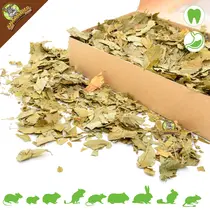
Dried peach leaves (100 or 400 g) for rabbits and rodents. Delicious in hay or as a bedding mix. Specialist since 2011.
Read more
Crispy pear leaves as a leaf topping for hay and foraging fun. Handy for scattering, hiding, or using in hamster/gerbil scaping. Available in 100g, 500g, and 1kg.
Read more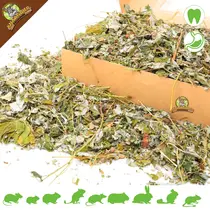
100% dried raspberry leaves as a tasty leafy variety. Ideal in hay, as a scattering mix, or as a hiding place for foraging. Available in 150 and 400 grams.
Read more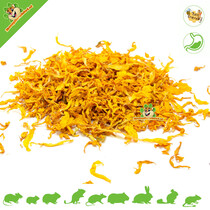
Sunflower Leaves 70 grams for rodents and rabbits. A natural leaf/blossom variety to enrich hay, scatter around, and stimulate foraging.
Read more
Dried guinea pig leaves – light variety for sniffing, foraging, and nibbling
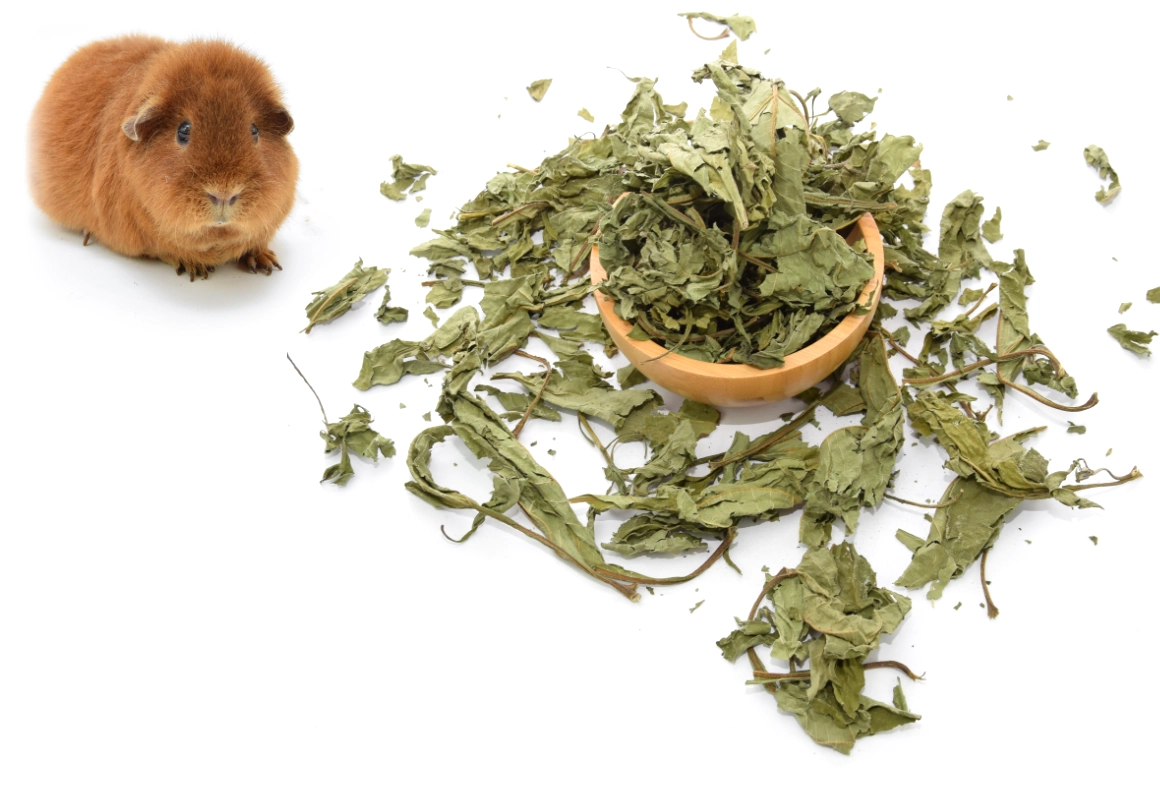 Dried guinea pig leaves are ideal if you want to easily add more scent, texture, and variety to the enclosure. You can mix the leaves with the hay, spread them on a low sniffing spot, or use them as a light topping. This gives your guinea pig something to quietly search for, smell, and nibble on.
In this category, you will find various types of dried leaves, such as leaf mixes, strawberry leaves, apple tree leaves, dandelion leaves, walnut leaves, and other leaf varieties. The exact types vary per product, but the role remains clear: natural enrichment alongside the daily base of guinea pig hay and suitable guinea pig food .
At DRD Knaagdierwinkel®, when it comes to dried leaves, we focus primarily on practical use. Are they easy to scatter? Do they provide enough texture? Can you combine them well with hay, herbs, and foraging? This way, you don't just choose leaves as a snack, but as a small enrichment moment that truly adds something to your guinea pigs' day. Specialist since 2011.
Quick links:
Why leaves? | Which type do you choose? | How do you use leaves? | Enriching hay | Foraging | Smart combining | Checklist | FAQ
Dried leaves provide structure without having to immediately use heavy snacks.
Mix a small amount of leaves into the hay to encourage sniffing and searching.
Scatter leaves in low, open spots and turn eating into a quiet foraging moment.
Why give dried leaves to guinea pigs?
Dried leaves are well-suited to guinea pigs who enjoy sniffing, selecting, and nibbling. Leaves are often light, fragrant, and easy to distribute throughout the enclosure. This makes them ideal for creating short foraging moments without complicating daily feeding.
The main advantage of leaves is their structure. They are different from loose herbs, flowers, and pellets. Precisely because of this, you can use them effectively to provide more variety within the same basic diet: hay, guinea pig food, and small supplementary products.
Guinea pig herbs → | Dried guinea pig herbs → | Dried guinea pig flowers →
Which dried guinea pig leaves do you choose?
Not every leaf has the same scent, texture, or application. Some leaves are coarse and crunchy, while others are finer and easier to mix with hay. Therefore, choose based on the moment of use: do you want to enrich hay, stimulate foraging, or offer a light leaf snack?
✔ Leaf mix: handy when you want to offer multiple textures and scents right away.
✔ Fruit tree leaves: interesting as a light variation alongside hay and herbs.
✔ Herb leaves: often more aromatic and pleasant as sniffing or topping material.
✔ Coarse leaves: great when you really want to give your guinea pigs something to explore and nibble on.
Start slowly with new types of leaves. This way, you can clearly see which leaves your guinea pigs like and which texture best suits your enclosure.
How do you use dried guinea pig leaves?
It is best to use dried leaves in small, scattered pieces. A handful in a single pile is often less interesting than a small amount distributed throughout the hay or over a sniffing spot. This way, guinea pigs really have to search, and the moment remains engaging for longer.
✔ Through the hay: loosely mix leaves through a hay rack or hay rack.
✔ As a topping: sprinkle a small amount over hay, herbs, or a feeding area.
✔ For foraging: distribute leaves in low, safe places in the enclosure.
✔ For a snack: choose coarser leaves or leafy twigs when you want more texture.
Enrich hay with dried leaves
Dried leaves are great for making hay more interesting. Mix a small amount into the hay so your guinea pigs have to search, sniff, and select. This works especially well for guinea pigs who enjoy playing in the hay but sometimes need a little extra stimulation.
With multiple guinea pigs, it is helpful to mix leaves into the hay in more than one spot. This allows each animal to access it more calmly and prevents one guinea pig from hogging all the tasty leaves.
Guinea pig hay → | Guinea pig hay racks → | Guinea pig food bowls →
Use dried leaves for foraging
Guinea pigs are ground animals. Therefore, foraging works best in low, stable places. Scatter leaves among the hay, in a snuffle mat, on a treat plate, or in a low search corner. This way, your guinea pigs can sniff and search peacefully without having to climb.
Leaves are also useful for making an existing foraging game a bit more attractive. For example, combine a few leaves with dried herbs or flowers. Keep the quantity small so that it remains an extra foraging moment and doesn't become a full food bowl.
Guinea pig play & foraging → | Snuffle mats → | Guinea pig herbal toys →
Cleverly combining dried leaves
Dried leaves combine beautifully with hay, loose herbs, flowers, herb roots, and small guinea pig snacks. You can use leaves as a base for a sniffing corner and add a few herbs or flowers for extra scent and color.
Do you want more chewable texture? Then also consider dried branches, stems, or herb roots. Do you prefer more scent and color? Then dried flowers and herbs are a better fit. This way, you build up a varied yet manageable enrichment moment step by step.
Dried guinea pig herbs → | Dried guinea pig flowers → | Dried guinea pig branches and stems → | Dried guinea pig herb roots → | Guinea pig snacks →
DRD chooses: leaves as a light structure in the enrichment
At DRD, we view dried leaves primarily as a light structural enrichment. They are easy to scatter, combine well with other materials, and are suitable for making hay or a sniffing area more interesting.
The power lies in using it sparingly. Not a container full of leaves, but a little mixed in with the hay, in a sniffing area, or combined with herbs and flowers. This keeps the base calm, while still giving your guinea pig more to discover.
Checklist – using dried guinea pig leaves
✔ Use leaves as a supplement, not as the main food.
✔ Mix small amounts with hay to encourage sniffing and searching.
✔ Choose a leaf mix if you want to offer multiple scents and textures right away.
✔ Use coarse leaves or leafy twigs if you are looking for more of a nibble texture.
✔ Remove damp, soiled, or buried residue in time.
✔ Store dried leaves in a dry, cool, and tightly sealed place.
Good to know
Dried leaves do not replace hay, guinea pig food, or daily vitamin C. Introduce new types of leaves gradually and observe your guinea pigs closely to see how they react. Is your guinea pig suddenly eating less, not at all, or clearly differently than normal? Then contact a veterinarian.
FAQ – frequently asked questions about dried guinea pig leaves
What do you use dried guinea pig leaves for?
Dried guinea pig leaves are used as a light supplement to hay and guinea pig food. They are suitable for enriching hay, sniffing, foraging, nibbling, and small moments of variety.
Can you mix dried leaves with hay?
Yes, that is a nice way to use leaves. Loosely mix a small amount through the hay so your guinea pigs can search and sniff around quietly.
Which dried leaves are suitable for guinea pigs?
Choose leaves intended for guinea pigs and small herbivores. Consider suitable leaf varieties such as leaf mixes, fruit tree leaves, herb leaves, and other product types within this category.
Are leaves better than herbs or flowers?
Not better, but different. Leaves primarily provide structure and a nibbling experience. Herbs often offer more aroma and flavor. Flowers add color and subtle topping variations. You can also combine them.
How many dried leaves may a guinea pig?
Use leaves in small quantities as a supplement. Start slowly with new types and let hay and guinea pig food remain the basis.
Can you use leaves for foraging?
Yes, dried leaves are very suitable for foraging. Scatter them in hay, in a sniffing mat, on a treat plate, or on a low foraging spot.
What do you do if your guinea pig leaves the leaves?
That can happen. Try a different type of leaf, mix a small amount into the hay, or combine leaves with herbs or flowers. Remove any residue if it becomes damp or dirty.
How do you store dried guinea pig leaves?
Store dried leaves in a dry, cool, and tightly sealed place. This way, the aroma, texture, and quality are better preserved.
Replace dried leaves in guinea pig food?
No, dried leaves are a supplement. The foundation remains hay, suitable guinea pig food, daily attention to vitamin C, and a clear feeding routine.
✔ Dried guinea pig leaves for hay, sniffing, foraging, and nibbling
✔ Light structural enrichment alongside guinea pig food, herbs, and flowers
✔ Specialist since 2011, delivered from our own stock
Ordered before 17:00, shipped the same day | Delivered from own stock | Specialist since 2011
