 Polski



Rock Cave House for Mice, Hamsters, and Gerbils


- Dispatched from our own stock
- Personal & expert advice
- Always 100% rodent-friendly
- Ordered before 5 p.m., shipped the same day!
Rock Cave for mice, hamsters, and gerbils
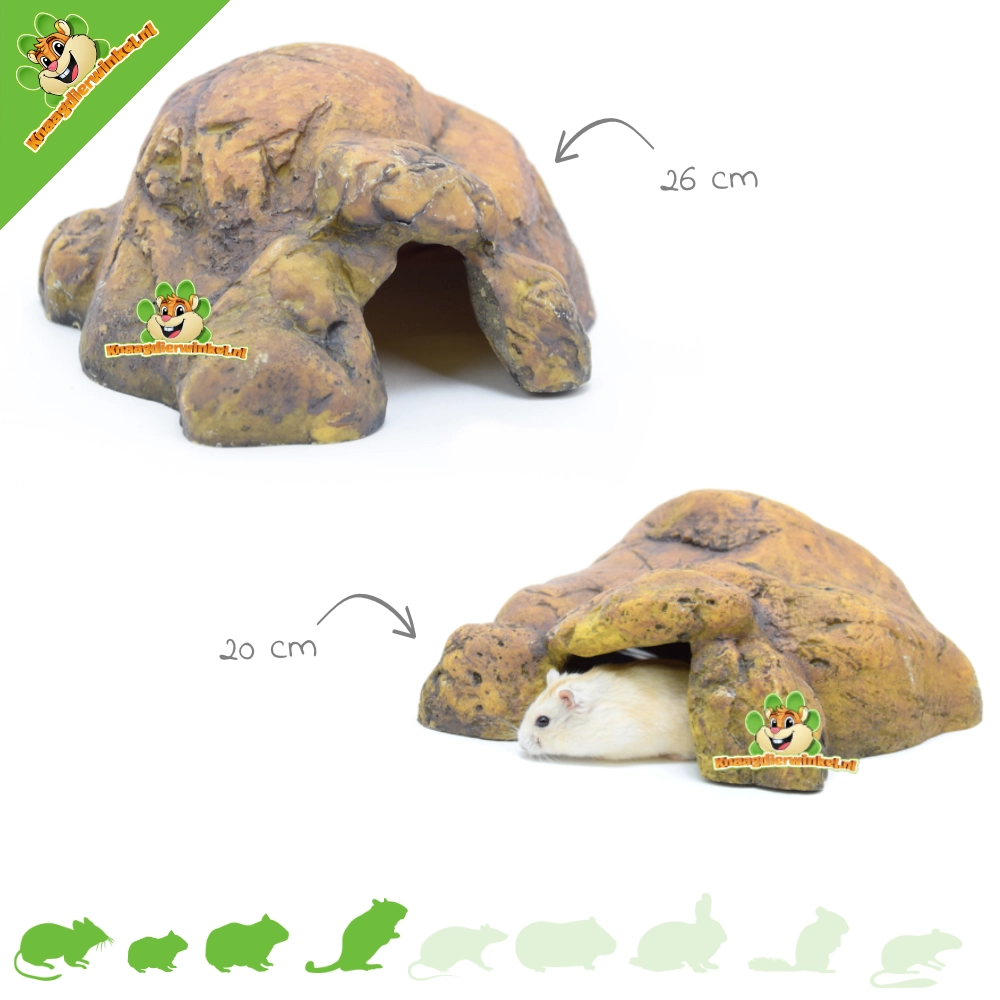
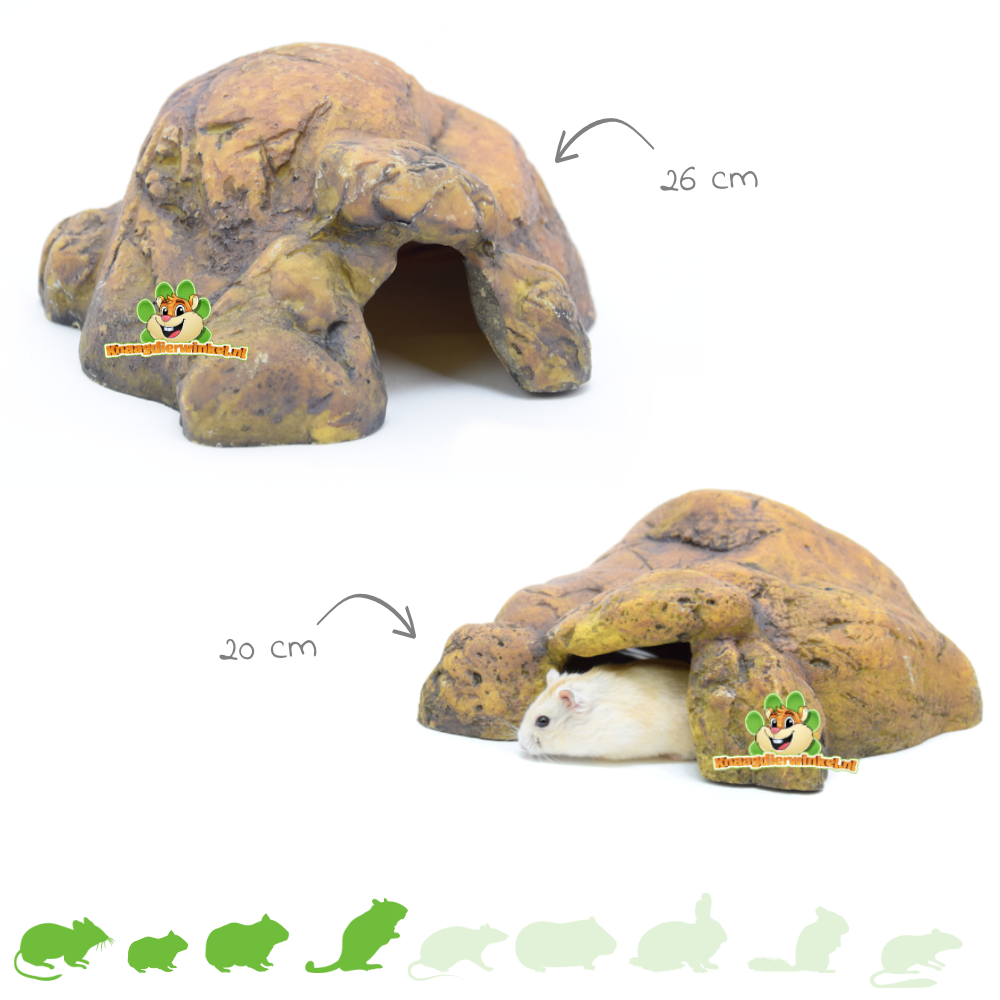
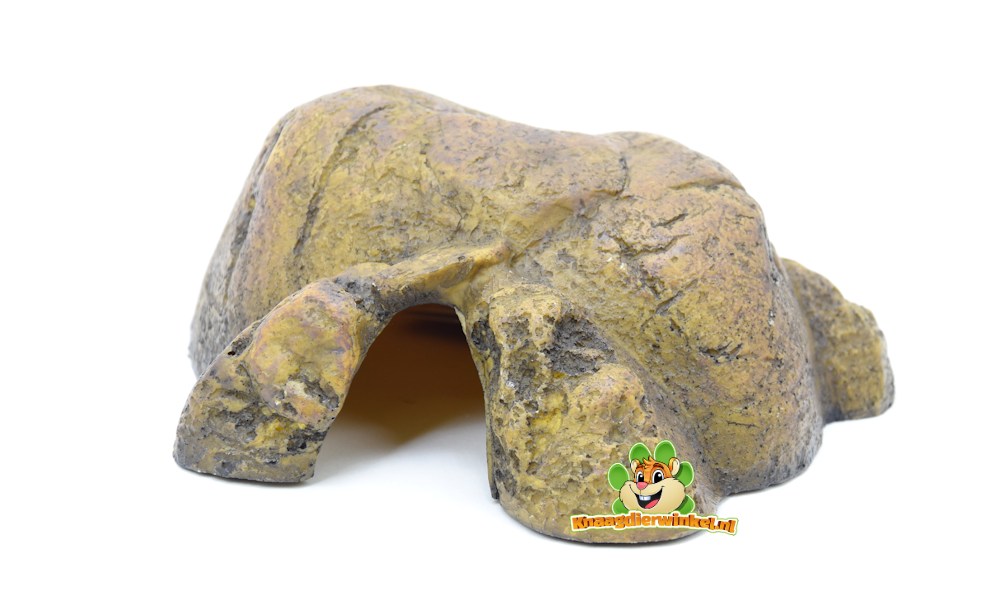
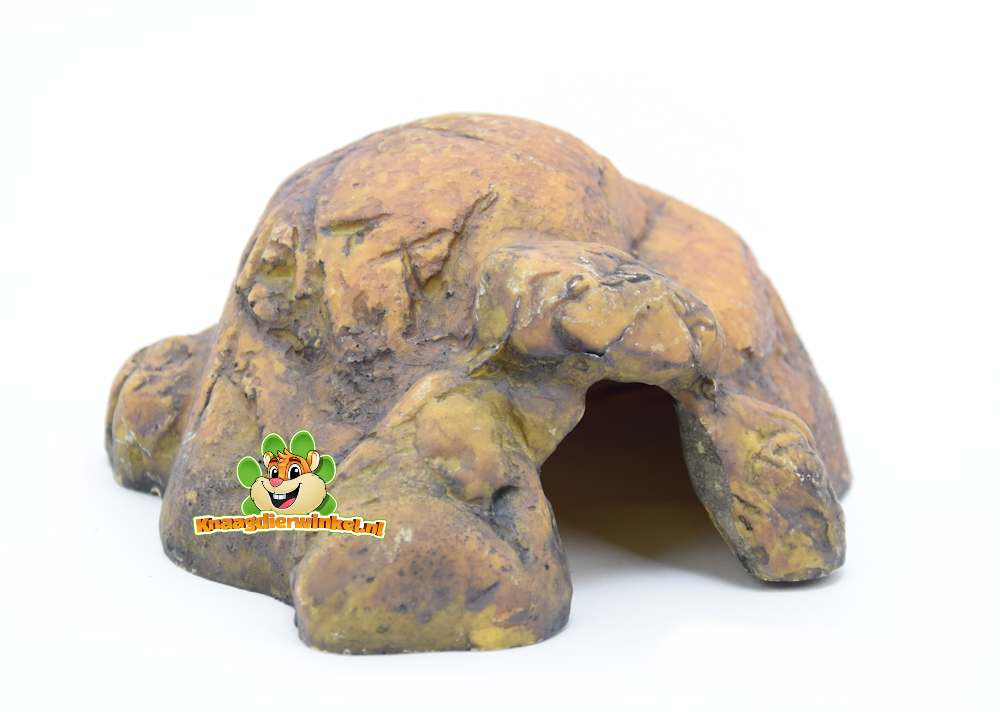
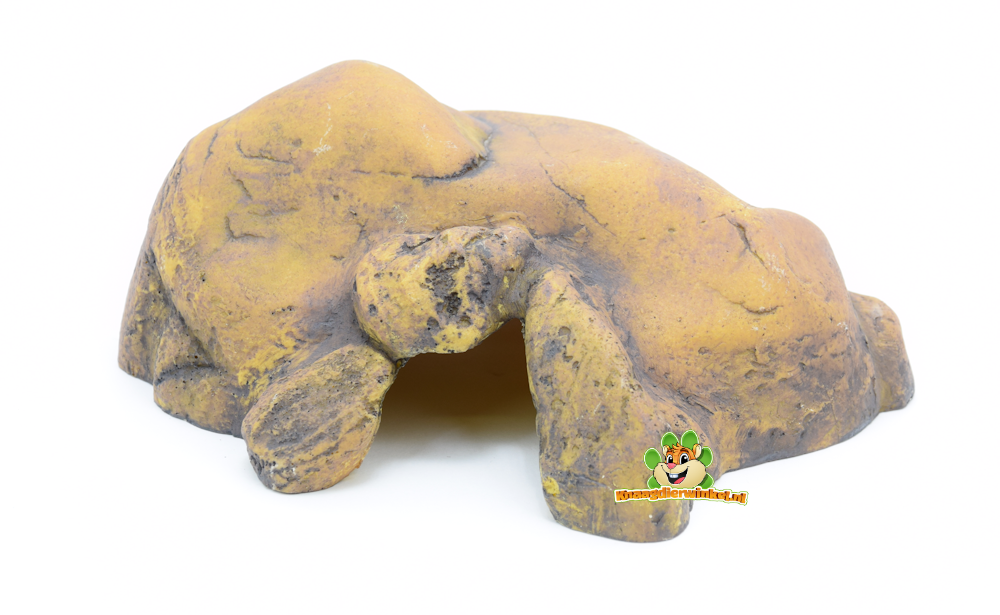
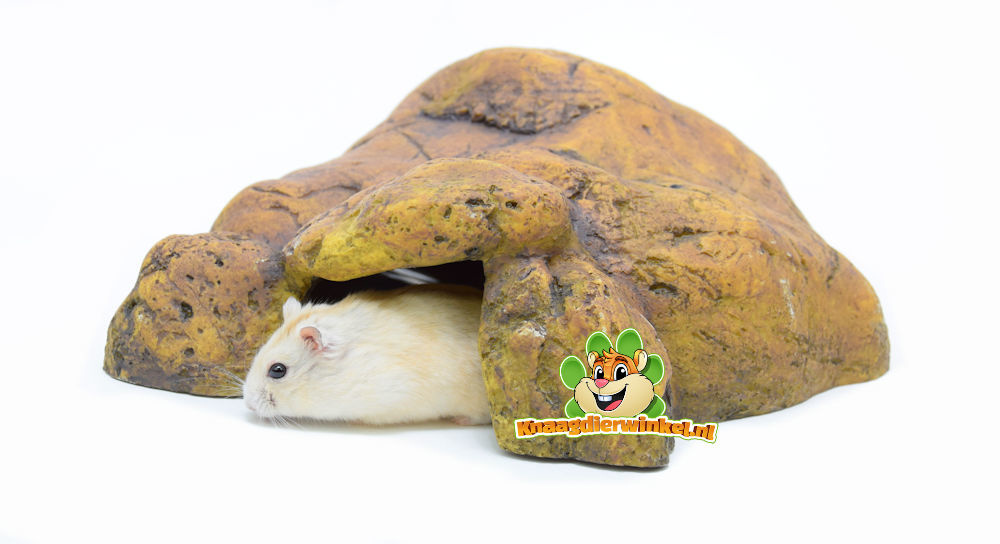
The Rock Cave is a natural-looking hideout for small rodents. Thanks to its rock shape, this house fits beautifully into a natural interior, hamsterscaping, or gerbilscaping. Your animal can shelter underneath it, walk around it, or use the cave as a quiet spot in the enclosure.
When it comes to houses, DRD always considers size, function, and placement. This Rock Cave has an open bottom, allowing you to place it nicely on or partially in the bedding. This makes it especially handy in an enclosure with a deep burrowing layer, as your animal can use the subsurface itself as the base of the hiding place.
In short
- Rock cave as a shelter for small rodents
- Made of polystyrene
- Open bottom
- Available in sizes M and L
- Suitable for mice, dwarf hamsters, hamsters, and gerbils
- Beautiful for hamsterscaping, gerbilscaping, and natural decor.
- Easy to clean with lukewarm water
Advantages of the Rock Cave
✔ Natural rock look for a tranquil interior
✔ Nice hiding place for small rodents
✔ Open bottom, handy on or in the bedding
✔ Available in two sizes
✔ Polystyrene is hard and easy to clean
✔ Combines well with hamsterscaping , gerbilscaping , and natural rodent decor
Why choose a rock cave?
A hiding place is an important part of a well-designed enclosure. Small rodents appreciate having multiple sheltered spots where they can sit out of sight for a while. The Rock Cave provides that shelter while simultaneously creating a natural look.
Due to the rock shape, the little house looks less like a standalone object and more like part of the landscape. This is especially beautiful in a hamster terrarium, gerbil enclosure, or natural setup with bedding, sand, cork, moss, tunnels, and other landscaping materials.
The open bottom makes the cave practical to use. You can place it directly on the bedding, partially bury it, or incorporate it into a scape. This allows your animal to pull bedding inside itself or use the cave as part of an existing digging or walking route.
Which size do you choose?
| Mate | Dimensions | Opening | Practical use |
|---|---|---|---|
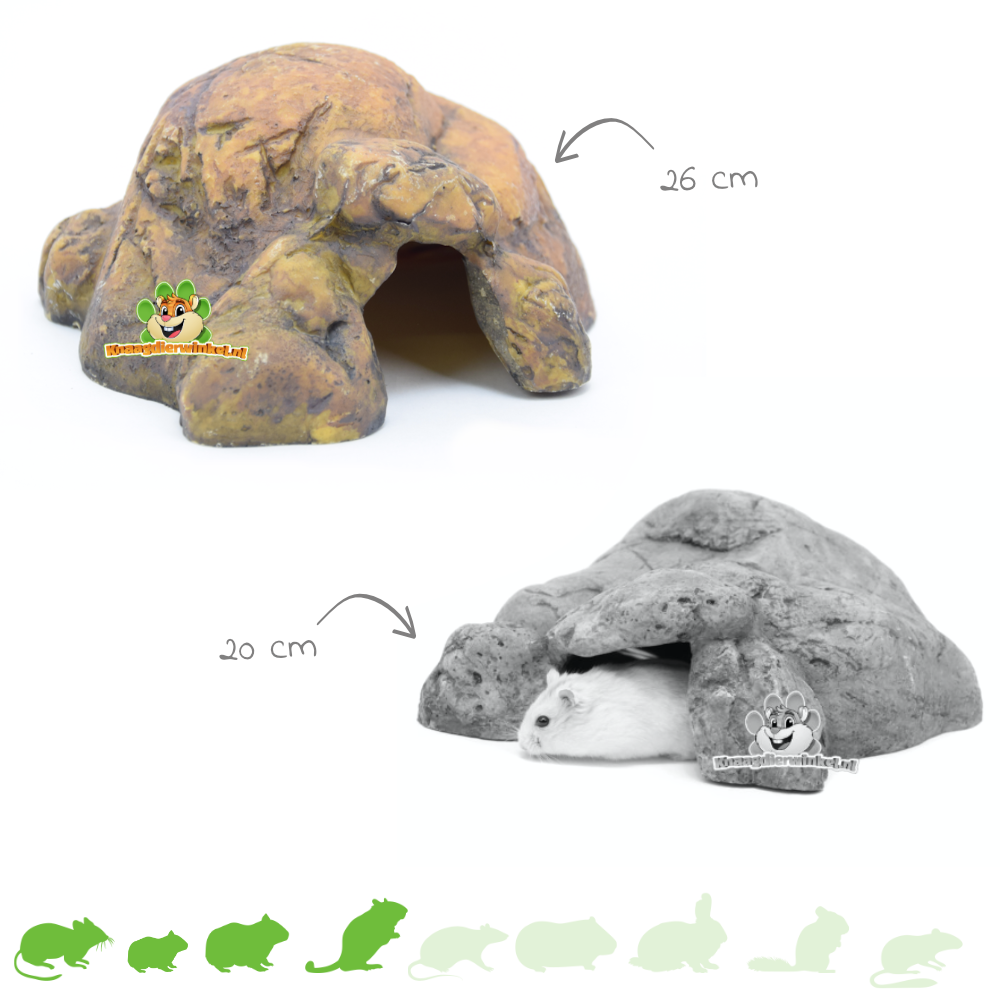
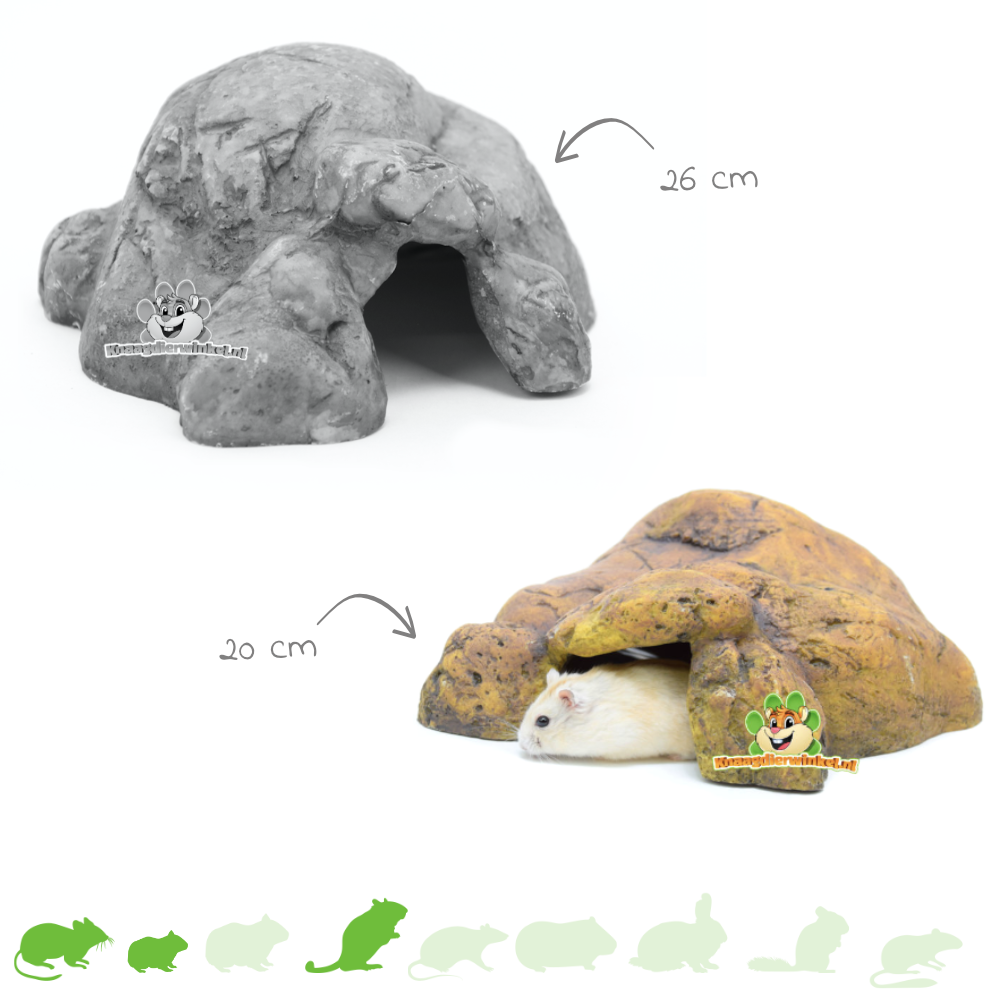
| M | approx. 20.5 × 19 × 8.5 cm | approx. 4 cm | For small animals such as mice and dwarf hamsters. Also nice as an extra hiding place in a natural setting. |
| L | approx. 26 × 19 × 10 cm | approx. 5 cm | For hamsters and gerbils, depending on body size and use. For larger hamsters, always check that the opening fits comfortably. |
Always choose the size based on the size of your animal, the opening, and the function within the enclosure. A house must be easily accessible and stand stably. For larger Syrian hamsters, the L-size is particularly logical, but even then, it remains important to consider the body size of your own hamster.
For which animals is the Rock Cave suitable?
- Mouse: suitable as a hiding place, group spot, or part of a natural pathway. The M-size is often a nice option for mice.
- Dwarf hamster: suitable as a natural hiding place in hamsterscaping. The open bottom makes the house fun to place on or partially in the bedding.
- Hamster: suitable as a rock cave or extra hiding place. For larger hamsters, preferably choose the L size and check if the opening is wide enough for your animal.
- Gerbil: suitable as a hiding place and landscaping element. Gerbils dig actively, so place the cave securely and check regularly to ensure it has not been undermined.
For rats, pygmy rats, guinea pigs, rabbits, chinchillas, degus, and ferrets, this cave is too small to serve as a proper hiding place. For these animals, it is preferable to choose larger houses, tunnels, or hiding places that suit their body size and movement patterns.
How do you use the Rock Cave?
Place the cave low and stable in the enclosure. You can place it on the bedding, partially bury it, or combine it with tunnels, cork, and natural decorations. Thanks to the open bottom, your animal can pull bedding inside itself or use the space under the cave as a sheltered spot.
For hamsters, the cave looks nice next to a sand bath, tunnel, or digging zone. For gerbils, you can use the cave as part of a sturdy scape, but keep in mind that gerbils like to dig and can undermine the furnishings. Therefore, press the cave firmly into the bedding or place it on a stable surface.
Do not use the Rock Cave as a high climbing object. Place it low in the enclosure and prevent your animal from falling down from the cave. This way, the little house remains primarily a nice hiding place and a beautiful decorative element of the interior.
Beautiful for hamsterscaping and gerbilscaping
The Rock Cave fits beautifully into a natural interior. Thanks to its rocky look, it combines well with deep bedding, moss, sand, cork, tunnels, and other decorative landscaping materials. This gives the enclosure more depth and makes it feel less bare.
For hamsterscaping, you can use the cave as a hiding place in a quiet corner or as part of a route. For gerbilscaping, the cave can help make the setup sturdier and more interesting, as long as it remains stable.
A nice styling tip: थोड़ा सा सा सा सा थोड़ा सा थोड़ा हैं के लिए
Material & dimensions
- Product: Rock Cave
- Material: polystyrene
- Open bottom: yes
- Size M: approx. 20.5 × 19 × 8.5 cm, opening approx. 4 cm
- Size L: approx. 26 × 19 × 10 cm, opening approx. 5 cm
- Use: shelter, rock decoration and landscaping element
- Suitable for: mice, dwarf hamsters, hamsters and gerbils
Polystyrene is a hard and dimensionally stable material. It is intended as a shelter and decoration, not as gnawing material. Many small rodents find hard artificial material less interesting to gnaw on than wood, willow, or cork. However, do check the cave regularly for damage, sharp edges, or wear.
Cleaning & maintenance
Clean the Rock Cave with lukewarm water. Preferably do not use harsh cleaning agents, as these can leave an odor or damage the material. Let the cave dry thoroughly before placing it back in the enclosure.
Because polystyrene absorbs moisture and odor less quickly than many natural materials, this little house is practically easy to keep clean. After cleaning, also check immediately whether the edges and opening are still nice and smooth.
Easy to combine with
The Rock Cave is at its best in an enclosure with multiple natural elements. Combine it with substrate, tunnels, sand, moss, and natural decorations to create a complete scape.
- Hamster houses for extra hiding places
- Hamsterscaping products for natural decor
- Gerbil houses for natural gerbil enclosures
- Gerbilscaping products for sturdy scapes
- Natural rodent setup
Good to know
Offer the Rock Cave only under supervision and check regularly for wear or damage. Place the cave stably and low, especially for animals that like to dig or move bedding. If the house becomes loose or is undermined, reposition it firmly.
Use the cave as a hiding place and decorative landscaping element, not as a high climbing structure. For a complete enclosure, a combination of sufficient bedding, hiding places, a sand bath, gnawing material, and foraging opportunities remains important.
Frequently asked questions about the Rock Cave
Which size Rock Cave should I choose?
For mice and dwarf hamsters, size M is often a good option. For hamsters and gerbils, size L is usually more practical, depending on the size of your animal and the layout of the enclosure.
Is the Rock Cave suitable for dwarf hamsters?
Yes, the Rock Cave is suitable for dwarf hamsters. Thanks to the open bottom, you can neatly integrate the house into the bedding, so it looks natural and feels sheltered.
Can a Syrian hamster use this cave?
That depends on the size of your hamster. For a Syrian hamster, preferably choose size L and check carefully whether the opening of approx. 5 cm fits your animal comfortably.
Is the Rock Cave suitable for gerbils?
Yes, gerbils can use the Rock Cave as a hiding place or landscaping element. Place it securely, as gerbils actively dig and can undermine decorations.
Does the Rock Cave have a bottom?
No, the Rock Cave has an open bottom. That is handy when you want to place the little house on or partially in the ground cover.
Is polystyrene suitable for a rodent enclosure?
Polystyrene is a hard and dimensionally stable material suitable for use as a hiding place and decoration. It is not gnawable material, so check regularly to ensure the product remains in good condition and remove it if damaged.
How do I clean the Rock Cave?
Clean the cave with lukewarm water and let it dry thoroughly before putting it back. Preferably do not use harsh cleaning agents.
Useful shopping links
The Rock Cave is a great choice for owners looking for a natural hiding place for mice, dwarf hamsters, hamsters, or gerbils. Thanks to its rock look, open bottom, and two available sizes, this house fits well into hamsterscaping, gerbilscaping, and other natural enclosures.
| Dimensions (approx): | M: 20,5 x 19 x 8,5 cm | L: 26 x 19 x 10 cm |
| Openings (approx): | M: 4 cm | L: 5 cm |
| Material: | Polystyrene |
| Open Bottom: | Yes |
| Suitable for: | Rodents, Mouse, Dwarf Hamster, Hamster, Gerbil |
| Particularities: | - |
| Safety Information: | Offer only under supervision. Check regularly for wear and tear |



Leuk item maar de platte rots waarbij hamsters ook hun nagels aan slijten is favoriet.
Ziet er leuk uit. Veel ruimte voor de hamsters lekker holletje en makkelijk schoon te maken
Onze Syrische hamster is erg blij met deze rots. Goed schoon te houden en een heerlijke plek om te slapen en hamsteren.