Polski



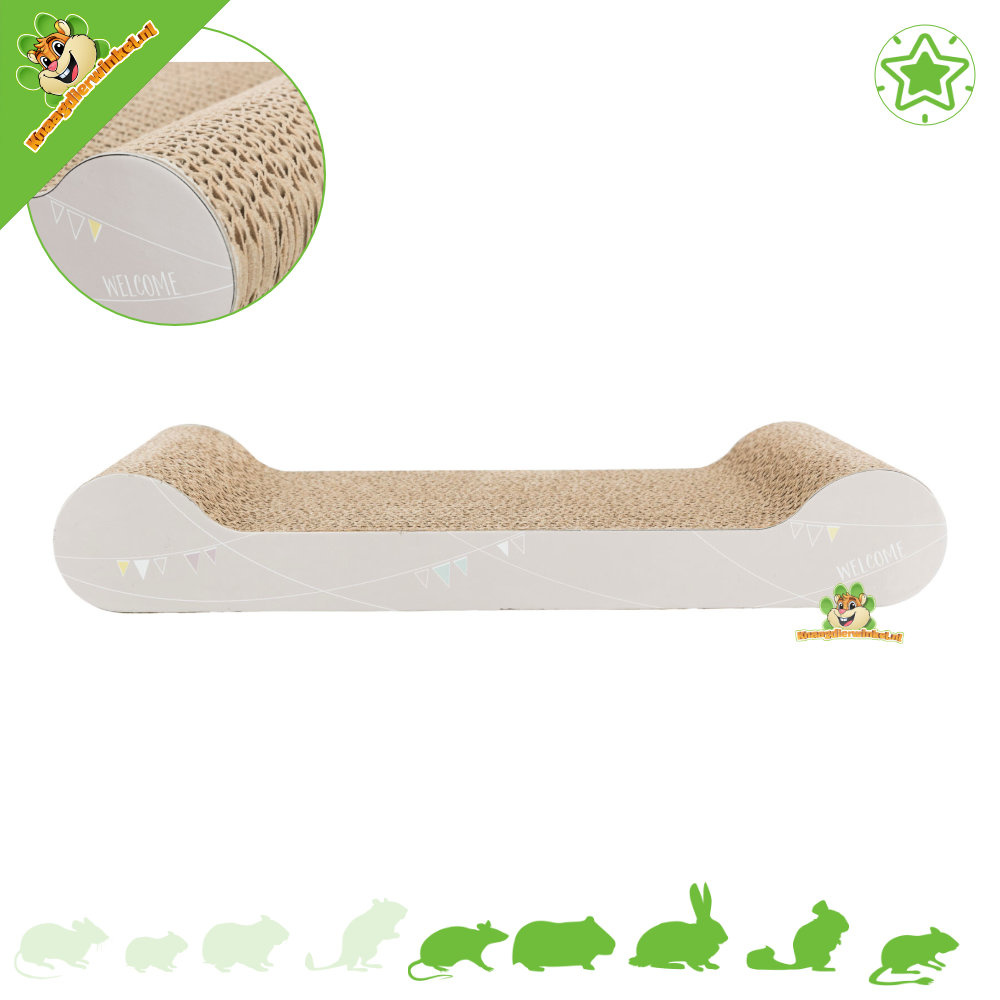
Cardboard Scratching Board 49 cm for Rabbits and Rodents
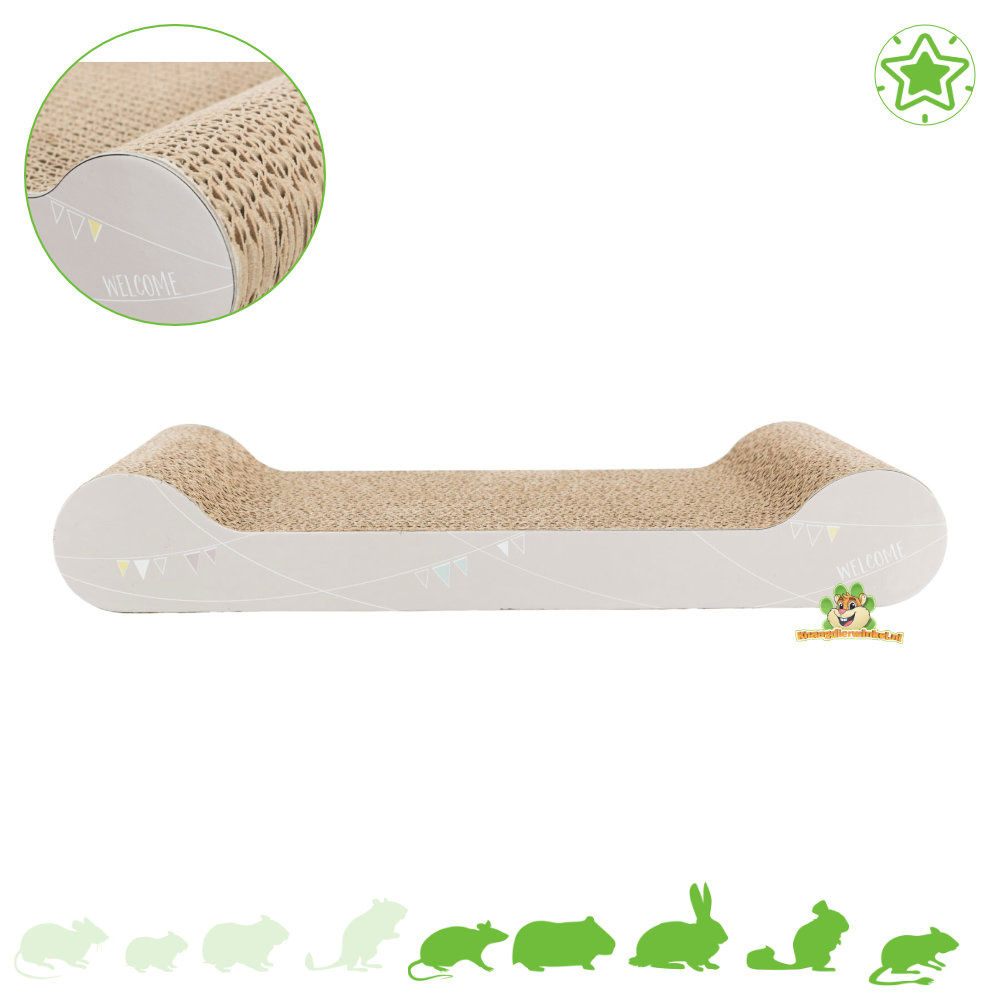
- Buy 2 for €6,60 each and save 5%
- Dispatched from our own stock
- Personal & expert advice
- Always 100% rodent-friendly
- Ordered before 5 p.m., shipped the same day!
Trixie Cardboard Scratching Board 49 cm for Rabbits and Rodents
The Trixie Cardboard Scratching Board 49 cm is a simple yet very fun scratching, gnawing, and destroying spot for rabbits and larger rodents. Thanks to the ribbed cardboard structure, animals can scratch, sniff, nibble, and examine the material piece by piece.
DRD chooses cardboard shredding material because it suits animals that like to have something to do with their noses, paws, and teeth. Rabbits, in particular, can derive great pleasure from having their own place to scratch or destroy. Guinea pigs, rats, chinchillas, and degus can also use the scratching board as a change of pace in their enclosure or during safe outdoor run time.
In short
- Cardboard scratching and shredding board for rabbits and rodents.
- Product name: Cardboard Scratching Board 49 cm.
- Dimensions according to specifications: approx. 38 × 6 × 18 cm.
- Material: cardboard.
- Ribbed structure for scratching, nibbling, and exploring.
- Can contribute to natural nail wear due to scratching and movement.
- Suitable for rats, guinea pigs, rabbits, chinchillas, and degus.
- Offer only under supervision and check regularly for wear.
Pros
✔ Made of cardboard with a ribbed texture
✔ Fun to scratch, nibble, and destroy
✔ Provides variety during the enclosure or while out running
✔ Great for rabbits with digging and scratching behavior
✔ Also suitable for guinea pigs, rats, chinchillas, and degus
✔ Lightweight material that is easy to move
! Cardboard is demolition material: check regularly and replace when necessary
Why choose a cardboard scratching board?
Many rabbits have a tendency to dig, scratch, push, or pull on materials. This is part of their natural behavior. With a cardboard scratching board, you give your rabbit its own space where this behavior can be used in a positive way.
The ribbed cardboard texture makes the board interesting under paws and teeth. Some animals scratch at it, while others mainly gnaw or pull off pieces of cardboard. That is exactly the purpose of destructible material: your animal gets to play with it.
This scratching board is therefore not a permanent piece of furniture, but a product for everyday use. If the board gets wet, dirty, or damaged too much, replace it. This keeps the enclosure tidy and ensures the toys remain safe to use.
For which animals is the Cardboard Scratching Board suitable?
- Rabbit: very suitable as a scratching, digging, and destroying site. Rabbits can use the board to scratch with their front paws, pull on it, or gnaw on it.
- Guinea pig: suitable as cardboard play material and a resting/sniffing spot. Not every guinea pig will actively scratch, but many find the texture interesting to explore.
- Rat: suitable as cardboard shredding and exploration material, especially during outdoor run or in a safe play area. Rats can move, investigate, and gnaw on the material.
- Chinchilla: suitable under supervision as cardboard gnawing and shredding material. Check regularly to ensure that no small, wet, or soiled remnants are left behind.
- Degu: suitable as destructive material for active rodents. Degus can work through cardboard quickly, so supervision and monitoring are important.
For mice, dwarf hamsters, hamsters, and gerbils, this scratching board is usually quite large and less logical as primary enrichment. For these animals, smaller cardboard tunnels, digging zones, bedding, sand baths, and natural furnishings often suit their size and behavior better.
Use for rabbits
For rabbits, the Cardboard Scratching Board is especially fun as a scratching and digging spot. Place the board in a place where your rabbit likes to be active, for example in the run, rabbit room, or outdoor area. Some rabbits will start scratching on it immediately, while others will first use it as a sniffing or gnawing spot.
The scratching board can also help reduce unwanted scratching of carpeting, baseboards, or furniture, because you offer an attractive alternative. To do this, place the board specifically in a spot where your rabbit normally likes to start digging or scratching.
- Place the board on a dry, flat surface.
- Use it as a scratching post in the run or rabbit room.
- Move the board when your rabbit likes to scratch in another spot.
- Check daily whether the cardboard is still neat.
- Replace the board when it is wet, dirty, or too badly damaged.
Use for guinea pigs
Guinea pigs are usually not true scratchers like rabbits, but they may find cardboard interesting to investigate, nibble on, or use as a raised platform or resting place. The ribbed texture provides just a little extra stimulation under the paws and can spark curiosity.
Place the scratching board for guinea pigs in a dry spot, not directly under a water bowl, hay rack, or toilet area. If the cardboard gets wet or dirty, remove it. Cardboard should remain clean and dry.
Use for rats
Rats are curious and enjoy working with materials they can investigate, move, or destroy. This cardboard scratching board can therefore be fun during outdoor play or in a play corner. You can also combine it with tunnels, digging boxes, and other Ratscaping materials.
Supervision is important with rats, as some rats quickly tear cardboard apart. This is allowed, but remove loose, wet, or dirty pieces. Use cardboard primarily as temporary enrichment, not as permanent bedding or a permanent element in a wet area.
For use with chinchillas and degus
Chinchillas and degus are active gnawers. For these animals, the cardboard scratching board can be interesting as material for destruction and gnawing. The ribbed structure provides grip and invites exploration.
Because chinchillas and degus can damage cardboard quite quickly, regular checks are important. Remove loose scraps when they become too small, wet, or dirty. Replace the scratching board as soon as it is no longer neat or stable.
Can the scratching board help with nail wear?
By scratching and moving over the ribbed structure, the scratching board can contribute to the natural wear of the nails. However, view it as support, not as a replacement for nail checks. It remains important to check the nails regularly, especially for rabbits, guinea pigs, and older animals.
If nails become too long, grow crooked, or get caught, a scratching board alone is not enough. Nail care is necessary then. So use the board primarily as enrichment and as an extra surface for the paws to keep actively occupied.
Why cardboard is so fun as demolition material
Cardboard is lightweight, easy to work with, and attractive to many animals to pull at or gnaw on. This makes it very suitable as temporary destruction material. It gives your animal something that is allowed to be destroyed, making the environment more interesting.
Destructive behavior is not always “naughty behavior.” Often, it is actually a form of occupation, exploration, and natural behavior. By deliberately offering suitable material to destroy, you give your animal a better choice than furniture, rugs, or parts of the enclosure.
How do you offer the Cardboard Scratching Board?
Place the scratching board on a dry, flat spot where your animal can easily reach it. You can place the board loosely or intentionally use it in a spot where your animal likes to scratch or dig. For rabbits, for example, this could be in a run-out corner or near a spot where they normally like to work on the floor.
- Lay the scratching board down dry and flat.
- Combine with tunnels, digging material, or other enrichment.
- Remove loose, wet, or dirty pieces.
- Replace the board when it is unstable, wet, or too damaged.
Tip: Place the scratching board for rabbits in the spot where they like to scratch with their front paws. This way, you turn recurring behavior into a pleasant and allowed playtime.
Cleaning and replacing
Cardboard cannot really be cleaned like ceramic, wood, or plastic. Therefore, it is important to keep the scratching board dry and replace it in a timely manner. If the board becomes wet, dirty, or severely damaged, remove it from the enclosure.
- Check daily on animals that are destructive.
- Remove wet or dirty parts immediately.
- Do not use the board in a toilet area or next to a water basin.
- Replace the plank when it is worn down too far.
- Do not let your animal play with sharp, loose, or dirty scraps.
Dimensions and specifications
Product: Cardboard Scratching Board 49 cm
Brand: Trixie
Material: cardboard
Dimensions according to specifications: approx. 38 × 6 × 18 cm
Use: scratching board, shredding material, gnawing material, and enrichment
Suitable for: rats, guinea pigs, rabbits, chinchillas, and degus
Good to know
- Check regularly for wear and loose cardboard pieces.
- Remove wet, dirty, or severely damaged cardboard.
- Use the board as demolition and scratching material, not as a food product.
- Do not place the shelf directly near a water basin or toilet area.
- Check very carefully for strong destroyers like degus and chinchillas.
- Replace the scratching board when it is no longer neat or stable.
Frequently Asked Questions
For which animals is the Cardboard Scratching Board suitable?
The scratching board is suitable for rats, guinea pigs, rabbits, chinchillas, and degus. Rabbits, in particular, can make good use of the board for scratching, digging, and destroying.
How big is the Cardboard Scratching Board?
The product name states 49 cm. The specifications on the product page list the dimensions as approx. 38 × 6 × 18 cm.
Is the scratching board primarily intended for rabbits?
Yes, the scratching board makes perfect sense for rabbits because they enjoy scratching, digging, and working with materials. Other larger rodents can also use the board for demolition or gnawing.
Does the scratching board help wear down nails?
The ribbed structure can contribute to natural nail wear when your pet scratches on it or moves over it frequently. It does not replace regular nail checks.
Can my pet destroy the cardboard?
Yes, this product is specifically intended as demolition and scraping material. However, check regularly and remove wet, dirty, or loose pieces that are too small.
Can the scratching board stay in the enclosure?
That is fine as long as the board remains clean, dry, and intact enough. For animals that are prone to destruction, it is better to check the board regularly or offer it temporarily during outdoor run.
Is the scratching board suitable for small rodents?
For small rodents such as mice, dwarf hamsters, hamsters, and gerbils, this scratching board is usually quite large. Smaller cardboard tunnels, digging zones, and natural furnishings are often more suitable for these animals.
Useful shopping links
- Destruction toys for rodents and rabbits
- Paper and cardboard for rodents
- Rabbits playing & foraging
- Rabbit digging box
- Chewing material for rabbits
- Guinea pig playing & foraging
- Rats playing & foraging
- Ratscaping
- Chinchilla toys
- Degoe toys
- Ask DRD for personal advice.
✓ Specialist since 2011 • personal & expert advice • delivered from our own stock
| Size (approx): | 38 × 6 × 18 cm |
| Suitable for: | Rodents, Rat, Guinea Pig, Rabbit, Chinchilla, Degu |
| Particularities: | - |
| Safety Information: | Offer only under supervision. Check regularly for wear and tear |