 Polski

Guinea pig teeth – teeth, molars, hay and signs to look out for
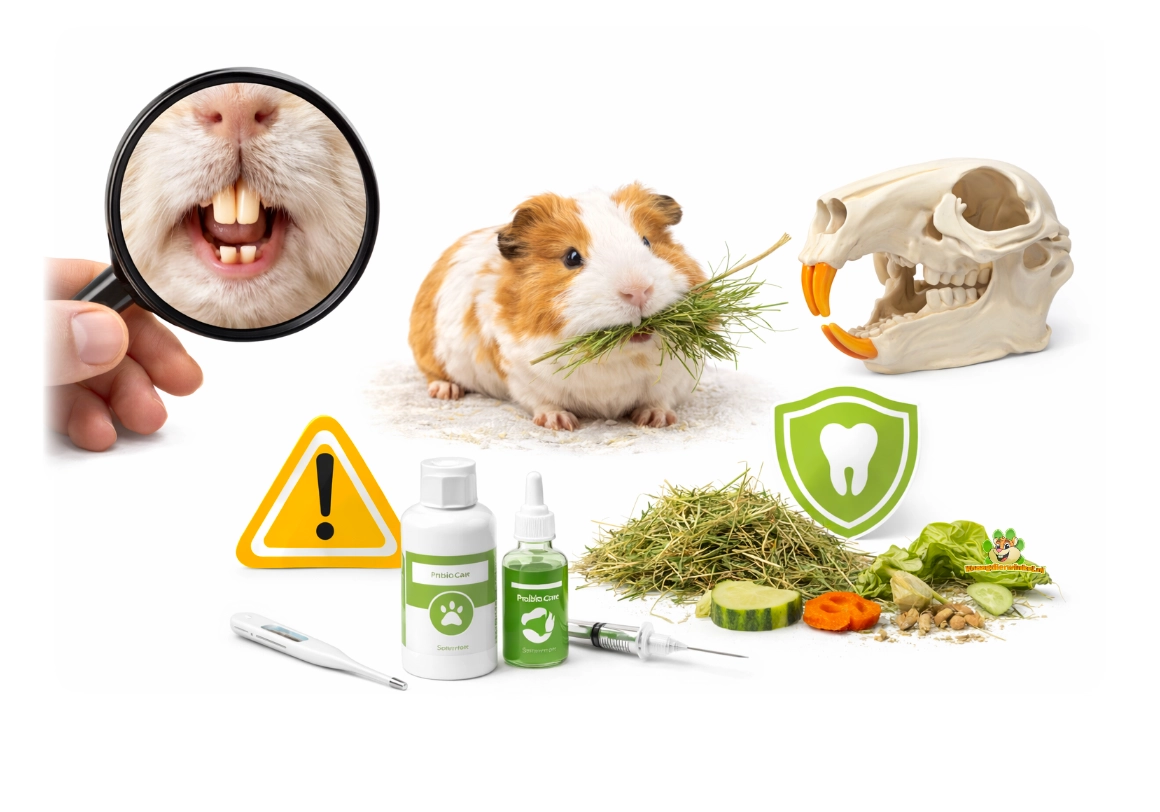 A guinea pig's teeth deserve close attention. Guinea pigs have teeth and molars that continue to grow. By chewing frequently, especially on fiber-rich hay, their teeth and molars wear down naturally. Therefore, guinea pig hay is not a treat, but a daily foundation for nutrition, digestion, and dental health.
Dental problems in guinea pigs are not always immediately visible in the front teeth. The molars can also cause problems, which you, as an owner, cannot properly inspect yourself. Therefore, pay particular attention to eating behavior: is your guinea pig eating less hay, dropping pellets, chewing differently, drooling, or losing weight? If so, it is wise to have a veterinarian take a look quickly.
At DRD Knaagdierwinkel®, we view guinea pig teeth from the perspective of daily practice: offering good hay, appropriately portioning guinea pig food, not forgetting vitamin C, monitoring eating behavior, and recognizing signals in time. This way, dental care becomes not a separate topic, but part of the daily guinea pig routine. Specialist since 2011.
Quick links:
Answer first | How do teeth work? | Hay & wear | Signs | Causes | Do not self-treat | Daily routine | Common mistakes | Checklist | FAQ
Answer first: what do you look for in the guinea pig's teeth?
Guinea pigs have continuously growing teeth and molars. Eating plenty of hay is important, as prolonged chewing helps with natural wear. Dental problems are often noticeable because a guinea pig eats less hay, chews differently, drools, loses weight, or drops food.
✔ Hay should always be readily available.
✔ Eating less hay is an important signal to take seriously.
✔ Drooling, weight loss, chewing crookedly, or dropping food can indicate pain or dental problems.
✔ You cannot properly assess the teeth at home.
If in doubt, if the dog is not eating, or if there is a clear change, have the teeth checked by a veterinarian.
How does a guinea pig's teeth work?
Guinea pigs have incisors at the front and molars at the back of the mouth. Both continue to grow. Your guinea pig uses the incisors primarily to bite off food. The molars grind the food finely. It is precisely this prolonged grinding that is important for proper wear of the molars.
Because the molars are located at the back, you usually don't see problems there yourself. A guinea pig can still look reasonably normal on the outside, while chewing is already painful. That is why eating behavior is so important: what does your guinea pig still eat, what does he leave uneaten, and does eating suddenly take longer than normal?
| Element | Function | What do you look out for? |
|---|---|---|
| Incisors | Biting off and grabbing food | Misalignment, breaking off, becoming too long, or not being able to latch on properly |
| To elect | Grinding hay and feed | Eating less hay, drooling, losing weight, chewing differently, or dropping food. |
| Jaw movement | Prolonged grinding and wear | Eating more slowly, chewing only one side, or stopping hard/fibrous foods |
Hay: the most important helper for guinea pig teeth
Hay is the basis of the guinea pig diet and plays a major role in chewing. Prolonged chewing on fiber-rich hay results in many grinding movements. It is precisely these grinding movements that help the molars wear down naturally.
Pellets, soft vegetables, and snacks require less chewing than hay. Therefore, it is important that your guinea pig not just “eats something,” but actually continues to eat enough hay. A guinea pig that still takes soft food but leaves the hay untouched may have dental or pain issues.
✔ Offer hay generously and daily.
✔ Keep hay dry, fresh, and easily accessible.
✔ Use multiple hay stations for multiple guinea pigs.
✔ Check daily whether your guinea pig takes hay and actually chews.
Make hay more attractive with a good hay corner, hay rack, or a small amount of suitable herbs.
Guinea pig hay → | Guinea pig hay racks → | Guinea pig herbs →
Signs of dental problems in guinea pigs
Dental problems can start subtly. A guinea pig may still walk to the food bowl and show interest, yet still be unable to chew properly. Therefore, pay attention to small changes in eating behavior, weight, and chewing technique.
| Signal | What could it mean? | What are you doing? |
|---|---|---|
| Eat less hay | Chewing fiber can be painful or difficult. | Have your teeth and health checked |
| Dropping food | Difficulty grasping, chewing, or swallowing | Observe carefully and contact the veterinarian. |
| Drooling or a wet chin | May be associated with pain, mouth problems, or difficulty swallowing. | Have a veterinarian assess |
| To fall off | Insufficient intake, pain or illness | Weigh and have the cause investigated |
| Chewing crookedly or slowly | Possible pain or uneven wear | Don't wait |
| Lethargy or fewer droppings | Reduced food intake can have consequences quickly. | Contact a veterinarian |
Guinea pig not eating → | Guinea pig health → | Guinea pig language →
Possible causes of dental problems
Dental problems can have various causes. Sometimes a lack of hay or insufficient chewing plays a role. Sometimes there is misalignment, hereditary predisposition, trauma, pain, disease, or problems with vitamin C. Therefore, it is important not only to examine the front teeth, but to take the whole animal and its complete diet into account.
✔ Too little hay or too few prolonged chewing movements.
✔ Misalignment of teeth or molars.
✔ Pain, trauma, or previous damage to the mouth or jaw.
✔ Selective eating, causing hay intake to decrease.
Insufficient vitamin C or general health problems can also affect immunity, recovery, and eating behavior.
Vitamin C for guinea pigs → | Guinea pig food selection guide → | Guinea pig food and nutrition →
Dental problems: what shouldn't you do yourself?
Do not cut, file, or correct guinea pig teeth yourself. Dental problems are painful and can be deeper than what appears on the outside. Tooth problems, in particular, are difficult to assess properly at home. A veterinarian can better examine the teeth, mouth, weight, condition, and the cause of the poor appetite.
✔ Do not cut or file teeth yourself.
✔ Don't wait when your guinea pig eats less or loses weight.
✔ Do not use soft food or force-feeding as a substitute for examination.
If in doubt, have a veterinarian with experience with guinea pigs take a look.
Special food and force-feeding → | Guinea pig transport box → | Guinea pig care →
Daily routine for healthier guinea pig teeth
You cannot “brush” a guinea pig’s teeth like humans, but you can establish a routine that supports chewing and control. The basics consist of plenty of hay, appropriate guinea pig food, vitamin C, water, good hay spots, and daily observation of eating behavior.
✔ Check daily if your guinea pig is eating hay.
✔ Replace hay that is wet, trampled, or dirty.
✔ Dose pellets so that hay remains the basis.
✔ Optionally use herbs or leaves to make hay more interesting.
Weigh your guinea pig regularly so that weight loss is noticed sooner.
Guinea pig hay racks → | Guinea pig food bowls → | Guinea pig drinking bottles and water bowls →
Common mistakes regarding guinea pig teeth
Dental problems are sometimes recognized late because a guinea pig still shows interest in food. These are pitfalls you would rather avoid:
✔ Thinking that the front teeth look good and that the teeth are therefore in order.
✔ View eating less hay as pickiness.
✔ Give soft food without having the cause of the chewing problem assessed.
✔ Not weighing yourself regularly, so slow weight loss is only noticed late.
✔ Waiting too long to drool, a wet chin, or dropping food.
Reliance too much on gnawing material, whereas molars wear down primarily from grinding on fiber-rich food such as hay.
Smartly support guinea pig teeth with diet and setup
A dental-friendly routine starts with easy access to hay. Do not place hay in one small spot where dominant group members can block access. With multiple guinea pigs, multiple hay spots or a wide hay corner often work better.
Chewing material can be fun as enrichment and for natural play, but it does not replace hay. For guinea pig teeth, prolonged chewing and grinding are particularly important. Therefore, view chewing material as a supplement to a good hay diet, not as a solution to dental problems.
Guinea pig gnawing material → | Guinea pig snacks → | Guinea pig play and foraging →
DRD chooses: eating behavior is dental information
At DRD, when examining guinea pig teeth, we look not only at the teeth but primarily at eating behavior. Hay consumption, chewing, weight, droppings, and interest in food together reveal a lot about how your guinea pig is doing.
The power lies in early recognition. If you see what is normal for your guinea pig every day, small changes will stand out more quickly.
Checklist – checking guinea pig teeth via behavior
✔ Does your guinea pig eat plenty of hay daily?
✔ Does your guinea pig chew normally and not crookedly or noticeably slowly?
✔ Does your guinea pig not drop food from its mouth?
✔ Is the chin dry and do you see no drool?
✔ Does the weight remain stable?
✔ Are droppings normal in number, shape, and size?
Do you contact a veterinarian if your pet eats less, loses weight, drools, or has trouble chewing?
Good to know
This page helps you recognize signs regarding your guinea pig's teeth, but it does not replace a dental examination. Is your guinea pig eating less, not eating hay, drooling, losing weight, chewing differently, or becoming lethargic? Contact a veterinarian.
Would you like to read up on general background information about guinea pigs? Then also check out the LICG guinea pig information at licg.nl.
FAQ – frequently asked questions about guinea pig teeth
Do guinea pig teeth keep growing?
Yes, guinea pigs' teeth and molars continue to grow. Therefore, prolonged chewing, especially on hay, is important for natural wear.
Why is hay important for guinea pig teeth?
Hay provides plenty of chewing and grinding movements. These movements primarily help the molars wear down naturally.
How do you recognize dental problems in a guinea pig?
Watch out for eating less hay, drooling, wet chin, weight loss, dropping food, chewing crookedly, eating more slowly, smaller droppings, or lethargy.
My guinea pig still eats vegetables but no hay; is that a problem?
Yes, that is an important signal. Soft vegetables can sometimes still be managed, while chewing hay is painful. Have the teeth and health checked.
Can you tell for yourself if a guinea pig's molars are good?
No, the molars are located deep in the mouth and cannot be properly assessed at home. A veterinarian can examine the mouth and molars better.
Can you trim guinea pig teeth yourself?
No, do not trim or file teeth yourself. This can cause pain, fractures, or additional problems. Have dental problems assessed by a veterinarian.
Does gnawing material help with dental problems?
Chewing material can be fun enrichment, but it does not replace hay. For the molars, prolonged chewing on fiber-rich food such as hay is most important.
Can vitamin C affect teeth?
Vitamin C is important for guinea pigs and plays a role in their overall health. Provide special guinea pig food and good nutrition, and consult a veterinarian if in doubt.
When should you go to the vet for your guinea pig's teeth?
Contact us if your guinea pig eats less, does not take hay, drools, loses weight, chews differently, drops food, becomes lethargic, or poops less.
What do you combine with good dental care?
Combine good dental care with plenty of hay, hay racks, appropriate guinea pig food, vitamin C, daily check-ups, regular weighing, and prompt veterinary care at the first signs.
✔ Guinea pig teeth explained with teeth, molars, hay, signs, and practical daily check
✔ Convenient to combine with guinea pig hay, hay racks, vitamin C, food, and health check
✔ Specialist since 2011, delivered from our own stock
Ordered before 17:00, shipped the same day | Delivered from our own stock | Specialist since 2011
