 Polski

Guinea pig not eating – what does this mean and what can you do immediately?
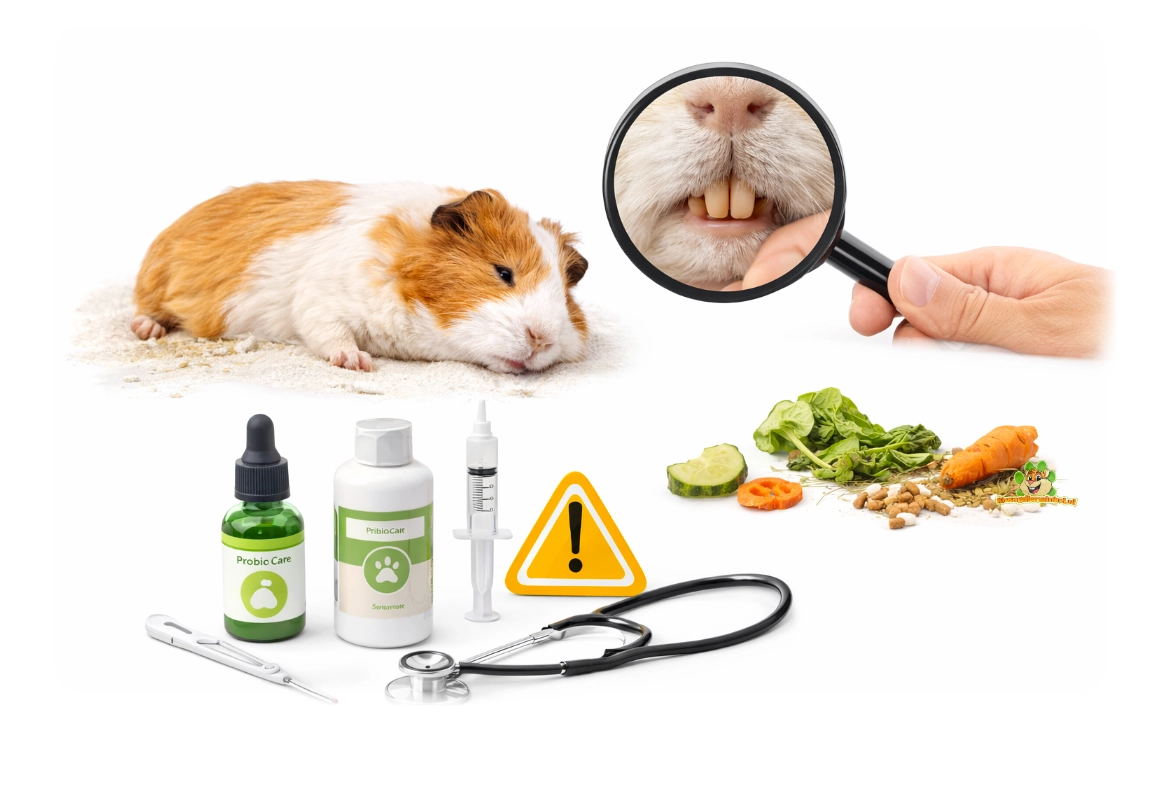 A guinea pig that is not eating or is clearly eating less is always an important signal. Guinea pigs should continue eating throughout the day, especially hay. When a guinea pig stops eating, takes less hay, refuses pellets, becomes lethargic, or produces fewer droppings, waiting is not a good idea. Contact a veterinarian if there is no eating or a clear decline.
On this page, you can read about the important signs, potential contributing factors, and practical steps you can take while contacting the veterinarian. Consider checking if your guinea pig is still eating hay , if it is still producing droppings, if it appears to be in pain, and if there are any signs of dental problems , abdominal pain, stress, or illness.
At DRD Knaagdierwinkel®, we view “guinea pig not eating” as an alarm signal, not just a simple feeding issue. Products such as specialty foods and force-feeding can be supportive, but they never replace looking for the root cause. Specialist since 2011.
Quick links:
Answer first | Important signs | What to do immediately? | Possible causes | Force feeding | Teeth & hay | Daily check | Common mistakes | Checklist | FAQ
Answer first: what do you do if your guinea pig doesn't eat?
Is your guinea pig not eating, clearly eating less, or not taking hay? Then contact a veterinarian. Guinea pigs can deteriorate rapidly when food intake stops or decreases significantly.
✔ Check immediately if your guinea pig is taking hay, pellets, vegetables, and water.
✔ Check if there are still droppings and if they are smaller, drier, or less numerous.
✔ Watch out for lethargy, hunching over, teeth grinding, drooling, altered chewing, or signs of abdominal pain.
✔ Call a veterinarian and explain since when your guinea pig has not been eating or has been eating less.
Use special food or force-feeding only as support and preferably in consultation with the veterinarian.
Important signs when a guinea pig is eating less
Not eating is often not the only signal. Look at the whole picture: hay intake, pellets, vegetables, water, droppings, posture, sounds, breathing, and behavior. A guinea pig that normally comes straight to food and now remains sitting still may already be showing a significant difference.
| Signal | Why is this important? | What are you doing? |
|---|---|---|
| Don't eat hay | Hay is the fiber base and important for chewing and bowel function. | Call the vet and have the teeth/intestines assessed. |
| Fewer or no droppings | May indicate reduced food absorption or bowel function | Do not wait; note since when this has been going on |
| Sitting sluggishly or hunched over | May be consistent with pain, illness, or stomach problems | Call the vet and keep warm/calm |
| Drooling or chewing differently | May be consistent with dental problems or pain in the mouth | Have your teeth checked by a veterinarian |
| Grinding teeth or squeaking when touched | Can indicate pain | Do not force it; consult a veterinarian |
| Bloated or painful stomach | Can be serious and requires prompt assessment | Call the vet urgently |
Guinea pig language → | Guinea pig health → | Guinea pig teeth →
What can you do immediately while you are on the phone with the vet?
The most important step is to contact a veterinarian. In addition, you can start gathering information and keep your guinea pig as calm as possible. This helps the veterinarian assess more quickly what might be wrong.
✔ Note when your guinea pig last ate normally.
✔ Check hay, pellets, vegetables, water, and droppings.
✔ Weigh your guinea pig when you can do so quietly, so you can report any weight loss.
✔ Keep your guinea pig warm, quiet, and out of drafts.
✔ Prepare a transport box for a vet visit.
If necessary, offer familiar hay or favorite vegetables, but do not wait if your guinea pig is not eating.
Guinea pig transport box → | Guinea pig hay → | Guinea pig food and nutrition →
Possible causes why a guinea pig is not eating
There are many possible causes for not eating. Therefore, it is important not to just think of “he doesn’t like the food”. A guinea pig may stop eating due to pain, dental problems, stomach problems, stress, illness, bladder problems, vitamin C deficiency, or recovery after surgery.
| Possible cause | What can you see? | Why a veterinarian? |
|---|---|---|
| Dental problems | Eating less hay, drooling, chewing differently, losing weight | The teeth and mouth must be properly assessed. |
| Stomach ache or gas | Puffing up, few droppings, signs of pain, unwillingness to move | Bowel problems can quickly become serious |
| Pain or injury | Walking differently, whining, stiffening, isolating | Pain must be treated and the cause found. |
| Stress or change | Hiding, eating less, tension in the group | Stress may play a role, but illness must be ruled out. |
| Vitamin C deficiency | Poor appetite, rough coat, pain signals, sensitivity | The deficiency and cause must be seriously assessed. |
| Bladder or urine problems | Pain during urination, wet hindquarters, blood, restlessness | Research is needed to find the correct cause. |
Vitamin C in guinea pigs → | Guinea pig bladder problems → | Guinea pig language →
Special diets and forced feeding: when do they come into play?
When a guinea pig is not eating, supplementary feeding may be necessary to support food intake. Special food or force-feeding is a tool in this process, not a substitute for a visit to the veterinarian. The cause of the lack of appetite must always be investigated.
Preferably use force-feeding after consulting a veterinarian. This is important because not every situation is the same. Incorrect feeding can pose risks for a seriously ill, distressed, severely weakened, or poorly swallowing guinea pig. The veterinarian can indicate which food, quantity, and approach are appropriate.
✔ Forced feeding supports absorption, but does not automatically resolve the cause.
✔ Consult a veterinarian regarding quantity, frequency, and product choice.
✔ Pay attention to swallowing, breathing, stress, and signs of abdominal pain.
Do not force your guinea pig if it is short of breath, lethargic, or unresponsive.
Guinea pig special diet and force-feeding → | Guinea pig care → | Guinea pig health →
Guinea pig does not eat hay: also consider the teeth
Eating hay requires many chewing movements. When a guinea pig eats less hay, it can be an early sign that chewing is painful or difficult. Dental problems are not always visible in the front teeth; the molars can also cause problems, which you, as an owner, usually cannot see very well yourself.
Pay extra attention if your guinea pig still tries pellets or soft vegetables but leaves the hay untouched. Drooling, a wet chin, weight loss, slow eating, dropping food from the mouth, or chewing crookedly are also signs to have the teeth checked.
✔ Eating less hay can be an early warning sign.
✔ Drooling, weight loss, or changes in chewing require a dental check-up.
✔ The molars cannot be properly assessed at home.
Have the teeth and general health assessed by a veterinarian.
Guinea pig teeth → | Guinea pig hay racks → | Guinea pig food selection guide →
Daily check: this is how you notice changes sooner
You won't prevent all problems, but you can spot changes sooner. Precisely because guinea pigs can hide illness or pain, daily checks are very valuable. Check appetite, hay intake, droppings, water intake, activity, and behavior every day.
✔ Does your guinea pig come to food normally?
✔ Is enough hay being eaten?
✔ Are the droppings normal in number, shape, and size?
✔ Is your guinea pig moving like usual?
Weigh your guinea pigs regularly so that weight loss is noticed sooner.
Guinea pig food bowls → | Guinea pig drinking bottles and water bowls → | Guinea pig hay racks →
Common mistakes when a guinea pig doesn't eat
With a guinea pig that isn't eating, time is of the essence. These are mistakes you'd rather avoid:
✔ Thinking that your guinea pig will “just start eating again tomorrow”.
✔ Try new food alone without having the cause assessed.
✔ Do not check if more droppings are coming.
✔ Fail to notice that hay is refused before soft food.
✔ Force-feeding without knowing if your guinea pig can swallow properly or what the cause is.
Mistaking a quiet, puffed-up guinea pig for a guinea pig that is simply resting.
Guinea pig not eating: using products smartly without missing the cause
Products can help make care and support practical. Think of specialty food, a good transport box, hay, hay racks, feed bowls, water bowls, and grooming products. However, when there is no eating, the cause remains the most important factor. A product is support, not a diagnosis.
Therefore, always follow two tracks: arrange a medical assessment and, in the meantime, ensure your guinea pig remains calm, warm, and safe. Note down what you observe so that you can clearly explain to the veterinarian what has changed.
Specialty food and force-feeding → | Guinea pig transport box → | Guinea pig care → | Guinea pig herbs →
DRD chooses: not eating is not ordinary food refusal
At DRD, when a guinea pig stops eating, we always look beyond taste or food choice. Not eating can indicate pain, dental issues, a stomach problem, stress, or illness. Therefore, acting quickly is important.
The key lies in early recognition: hay intake, droppings, weight, posture, and behavior often reveal a lot before a guinea pig appears clearly sick.
Checklist – guinea pig not eating or eating less
✔ Is your guinea pig not eating at all or clearly eating less?
✔ Does your guinea pig still eat hay, pellets, vegetables, and water?
✔ Are there still droppings and do they look normal?
✔ Is your guinea pig lethargic, puffed up, in pain, short of breath, or acting differently than normal?
✔ Do you see drooling, altered chewing, weight loss, or food falling out of the mouth?
✔ Have you called a veterinarian and clearly explained since when this has been going on?
Do you use special nutrition only as a support and not as a replacement for testing?
Good to know
Is your guinea pig not eating, eating much less, not pooping, or becoming lethargic? Contact a veterinarian. This page helps you recognize signs and organize steps, but it does not replace a medical examination.
Would you like to read up on general background information about guinea pigs? Then also check out the LICG guinea pig information at licg.nl.
FAQ – frequently asked questions about a guinea pig that isn't eating
What should you do if a guinea pig isn't eating?
Contact a veterinarian. In the meantime, check if your guinea pig is still eating hay, pellets, vegetables, or water, and if there are still droppings.
Is it bad if a guinea pig doesn't eat for a few hours?
Not eating or clearly eating less is always important in guinea pigs. Do not wait too long, especially if your guinea pig is also lethargic, pooping less, or seems to be in pain.
Why doesn't my guinea pig eat hay anymore?
Not eating hay can be associated with dental problems, pain, stomach issues, or illness, among other things. Because hay is so important, it is wise to have a veterinarian take a look quickly.
My guinea pig still eats vegetables but no hay; is that bad?
Yes, that is an important signal. Soft vegetables can sometimes still be managed, whereas chewing hay is painful or too difficult. Be sure to have the teeth and general health checked.
When do you force-feed a guinea pig?
Force-feeding may be necessary when a guinea pig does not eat on its own, but preferably use this in consultation with a veterinarian. The cause of the failure to eat must always be investigated.
Can a guinea pig stop eating due to stress?
Stress can play a role, for example after moving, bonding, noise, or a change in living environment. However, if the animal is not eating, you must also rule out pain, dental issues, stomach problems, and illness.
What does it mean if a guinea pig doesn't eat and doesn't poop?
That is a serious sign. Contact a veterinarian immediately, as reduced food intake and fewer droppings can indicate problems with bowel function.
Can a vitamin C deficiency cause a guinea pig to eat less?
A vitamin C deficiency can contribute to health problems and poor appetite. Therefore, always look at the overall diet and have symptoms assessed by a veterinarian.
What should I take to the vet?
Take your guinea pig with you in a safe transport box, preferably with some hay. Tell us when he started eating less, what he is still eating and what he isn't, what his droppings are like, and whether you notice any weight loss.
What do you combine with caring for a guinea pig that isn't eating?
Combine prompt veterinary care with a transport crate, recommended special diet, good hay, water stations, feed bowls, gentle warmth, and daily monitoring of weight and droppings.
✔ Guinea pig not eating or eating less: signs, possible causes, and immediate steps clearly explained
✔ Convenient to combine with specialty food, transport box, hay, dental information, and health check
✔ Specialist since 2011, delivered from our own stock
Ordered before 17:00, shipped the same day | Delivered from our own stock | Specialist since 2011
