Polski



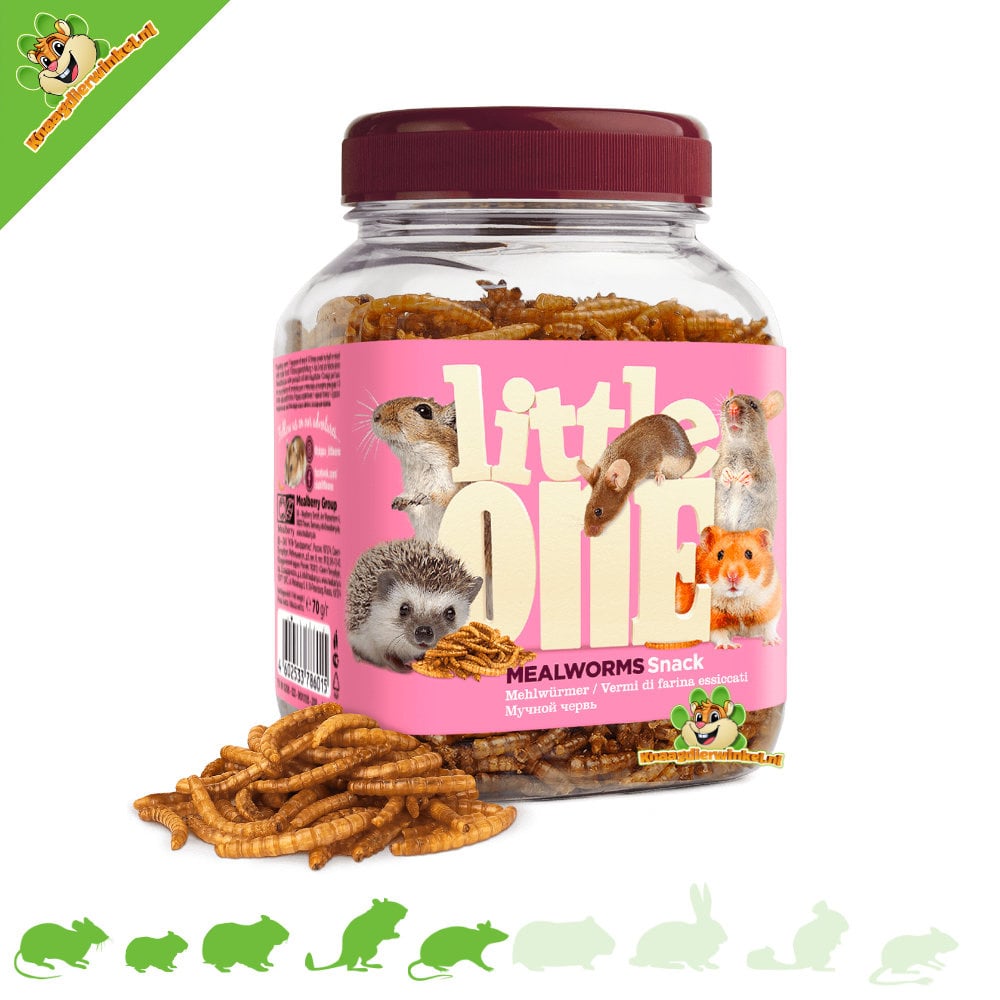
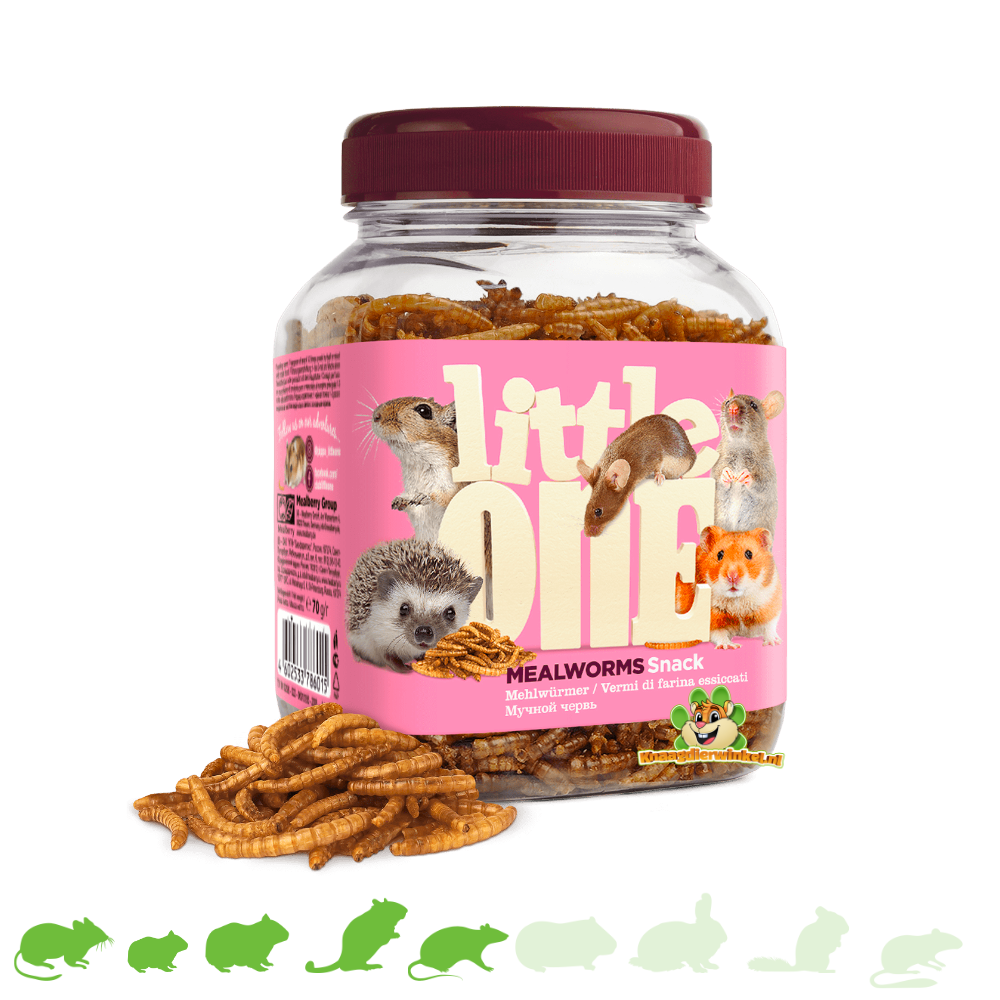
Little One Dried Mealworms for Small Rodents and Birds


- Dispatched from our own stock
- Personal & expert advice
- Always 100% rodent-friendly
- Ordered before 5 p.m., shipped the same day!
- Customer service from 10:00 to 17:00
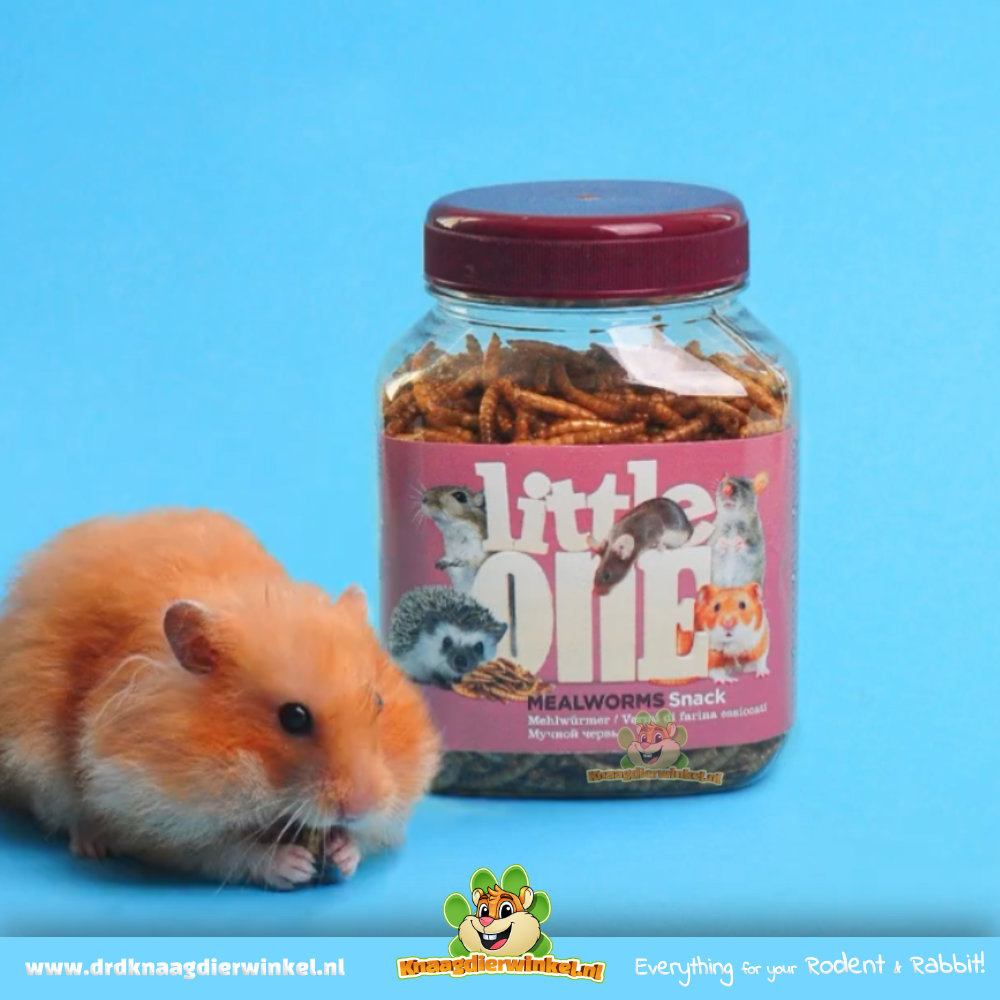
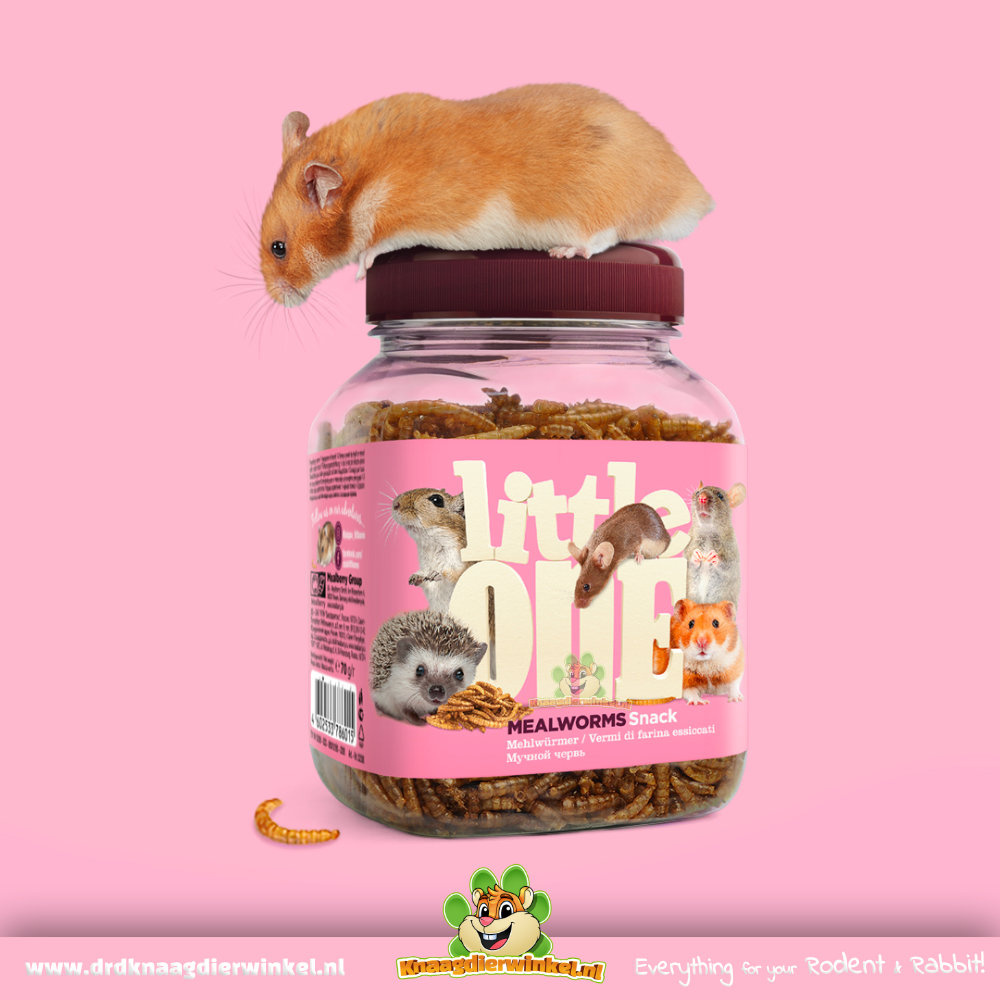
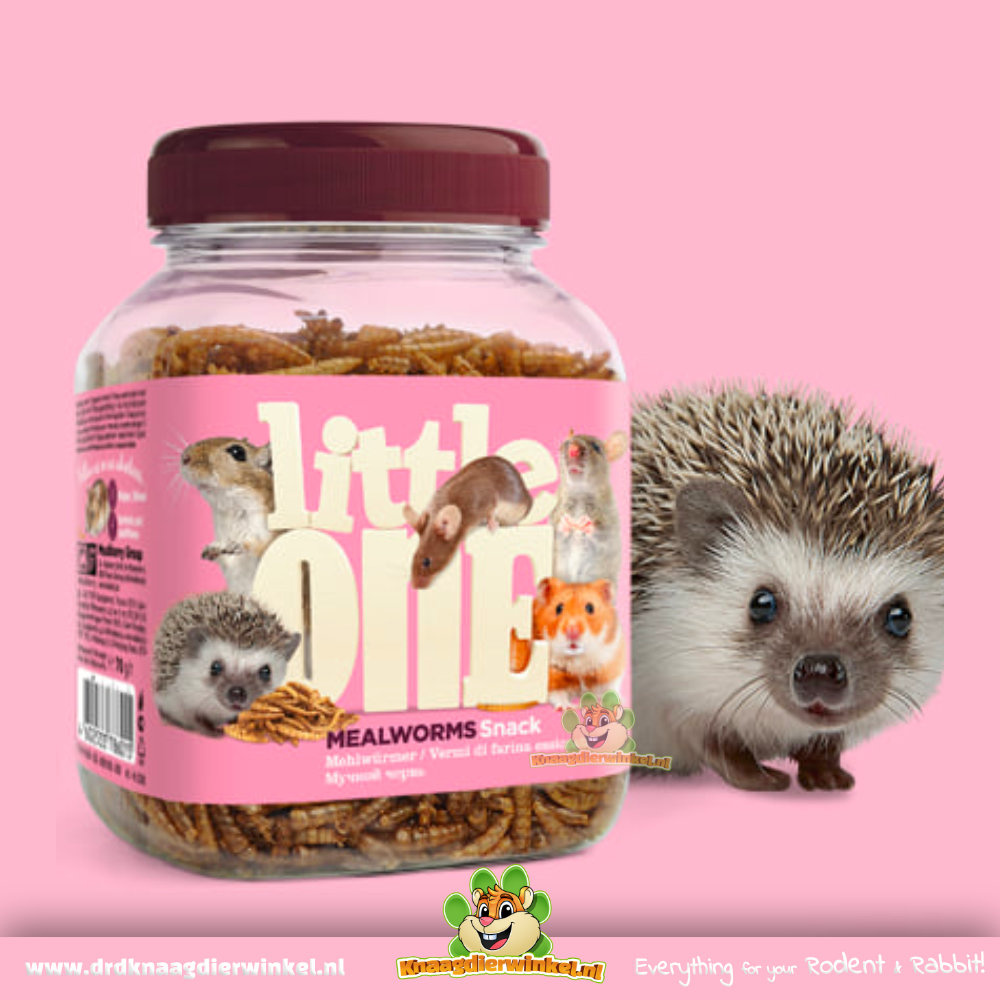
Little One Dried Mealworms 70 grams – protein-rich snack for small omnivorous rodents and birds
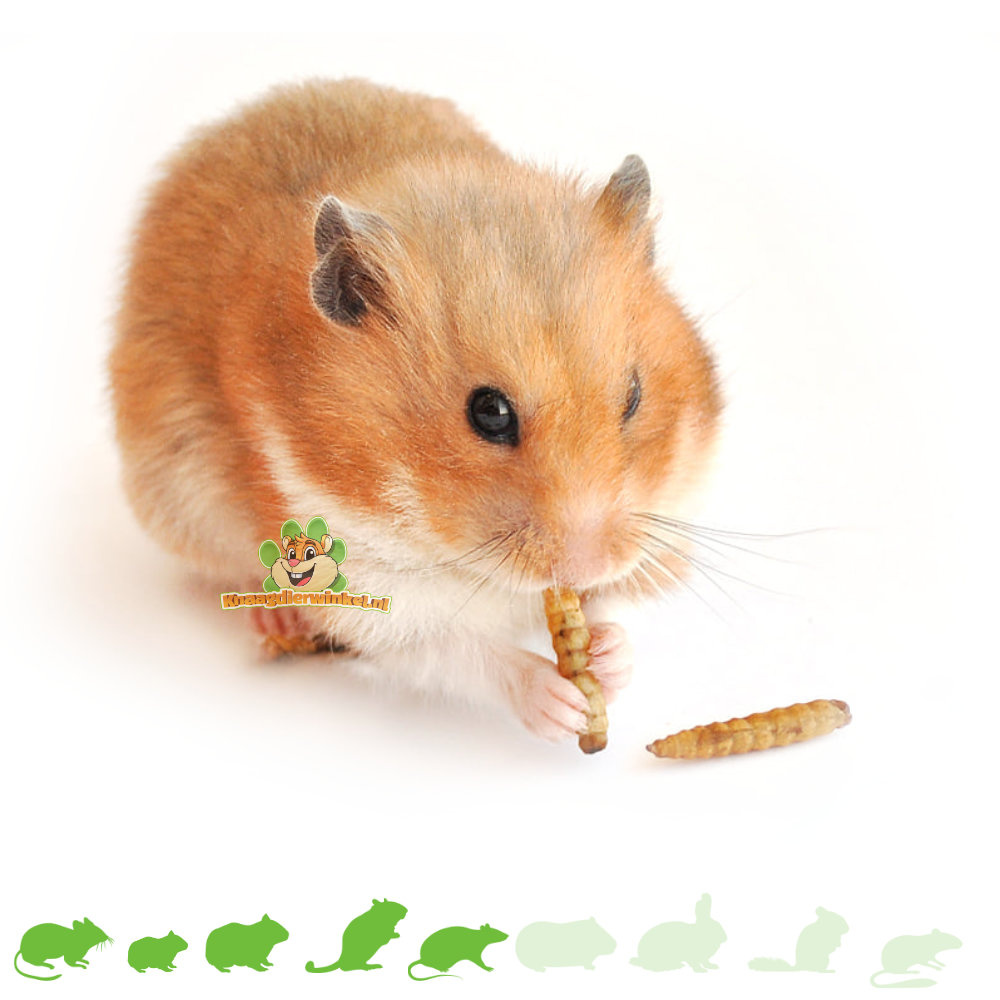
Little One Dried Mealworms are dried insects for small omnivorous rodents and birds. Mealworms are naturally rich in animal protein and fat, making them ideal for use as a conscious snack, protein boost, or foraging reward alongside the daily basic diet.
At DRD, when it comes to animal proteins, we focus primarily on the right animal group. These mealworms are suitable for animals that naturally eat animal proteins or insects, such as mice, dwarf hamsters, hamsters, gerbils, dwarf rats, and rats. For guinea pigs, rabbits, chinchillas, and degus, you would prefer plant-based snacks such as herbs, leaves, flowers, or fiber-rich snack varieties.
In short
- Dried mealworms for omnivorous small rodents and birds
- Contents: approx. 70 grams
- 100% dried mealworms
- Rich in animal protein
- Ideal for mixing, scattering, or hiding as a foraging moment.
- Complementary feed in addition to the daily basic diet
Pros of Little One Dried Mealworms
✔ Protein-rich snack of dried mealworms
✔ Suitable for small omnivorous rodents
✔ Nice to use as a foraging reward
✔ Handy to mix with food, herbs, or a sniffing spot
✔ Great choice for owners who want to offer animal proteins in a targeted way
Why choose Dried Mealworms?
Dried mealworms are a practical way to offer animal protein to animals that are nutritionally compatible. They have a distinct smell and texture, making them quickly appealing to many small rodents. You can feed them separately, mix them into their food, or use them as a small reward while foraging.
For hamsters, dwarf hamsters, mice, and gerbils, mealworms are especially useful as a protein-rich snack alongside their regular food. For rats and dwarf rats, you can use them in a snuffle mat, digging box, or cardboard search game. This way, you turn a small snack into an active search moment.
Because mealworms are rich, feed them consciously and in moderation. They are not a staple food, but a supplementary snack that is particularly valuable as variety, a reward, or a targeted source of protein.
For which animals are Little One Dried Mealworms suitable?
- Mouse: suitable as a small, protein-rich snack. Hide a few mealworms in a sniffing corner, food bowl, or among bedding.
- Dwarf hamster: suitable as a supplementary source of animal protein. Give a small amount and use the mealworms, for example, in a hamsterscaping foraging area.
- Hamster: suitable as a protein-rich snack alongside hamster food, herbs, and other appropriate snacks. Especially useful for hiding or offering directly.
- Gerbil: suitable as a source of animal protein and a foraging snack. Insects are also a logical addition to the diet for species such as the fat-tailed gerbil.
- Dwarf rat: suitable as a snack and foraging reward. Because dwarf rats can vary among themselves, adjust the quantity according to size, group size, and other diet.
- Rat: suitable as a protein-rich snack. Rats can search for, pick up, and eat the mealworms in a sniffing mat, digging box, or Ratscaping zone.
Dried mealworms can also be used for wild birds as a supplementary protein-rich snack. For guinea pigs, rabbits, chinchillas, and degus, mealworms do not make sense in the daily diet; for these animals, it is preferable to choose hay, herbs, leaves, flowers, and suitable plant-based snacks.
Use & offer
Use Little One Dried Mealworms as a supplementary snack. The manufacturer recommends a guideline of approximately 1 teaspoon, 1 to 3 times per week for small animals. Always adjust the amount according to the animal species, size, age, condition, and other diet.
You can offer the mealworms separately, mix them with the food, or hide them in a foraging area. For small animals, a small amount is often enough. For rats, for example, you can scatter them in a snuffle mat or digging box so that searching becomes part of the snack time.
Always give animal protein consciously. Especially for small animals, “a little” is often sufficient. Store the snack in a dry, tightly sealed container so that the mealworms remain crunchy and neat.
Foraging tips
- For hamsterscaping: hide a few mealworms among herbs, hay, or bedding.
- For gerbilscaping: scatter a small amount in a digging zone or foraging area.
- For Ratscaping: use mealworms in a snuffle mat, cardboard box, or digging box.
- For birds: offer small portions at a clean feeding spot.
Compound
Composition: dried mealworms.
Analysis
Analysis: crude protein 55%, crude fat 24%, crude fiber 4%, crude ash 3%.
This analysis shows that dried mealworms are rich in animal protein and fat. Therefore, you use them primarily as a targeted snack, reward, or protein supplement alongside regular food.
Good to know
Little One Dried Mealworms are a complementary pet food. Use them alongside the daily basic food suitable for your animal. For omnivorous small rodents, mealworms can be a nice change of pace, but the basis always remains the species-specific main food.
It is best not to give mealworms in unlimited quantities. Due to their high protein and fat content, small portions are usually sufficient. Also, check whether your animal is eating the mealworms properly and remove any leftovers when they have become old, dirty, or damp.
Useful shopping links
- Animal proteins for rodents
- Insect snacks
- Hamster animal proteins
- Hamster snacks
- Gerbil snacks
- Rat snacks
- Playing and foraging
- Mealberry / Little One range
Frequently asked questions about Little One Dried Mealworms
For which animals are dried mealworms suitable?
Dried mealworms are suitable as a supplementary snack for mice, dwarf hamsters, hamsters, gerbils, pygmy rats, rats, and wild birds. They are especially suitable for animals that can naturally eat animal protein or insects.
Are mealworms suitable for guinea pigs, rabbits, chinchillas, or degus?
No, for these animals we prefer plant-based snacks such as herbs, leaves, flowers, or fiber-rich snack varieties. Mealworms are primarily intended for omnivorous small rodents and birds.
How many mealworms can you give?
The manufacturer recommends approximately 1 teaspoon, 1 to 3 times per week. For small animals, a small amount is often sufficient. Adjust the portion to your animal and the rest of its diet.
Can you mix mealworms into the food?
Yes, you can mix a small amount into the food. It is even more fun to hide them in a sniffing spot, digging box, or foraging corner, so that your animal has to actively search for them.
Why are mealworms richer than regular snacks?
Mealworms contain a lot of animal protein and fat. As a result, they are nutritious and appealing, but also something to offer consciously and in moderation.
Are mealworms suitable for hamsterscaping?
Yes, you can hide a few mealworms in a hamsterscaping enclosure, for example among herbs, hay, or bedding. That way, it becomes a little search.
How do you store dried mealworms?
Store the packaging in a dry, cool, and tightly sealed place. This will keep the mealworms crunchy, clean, and pleasant to offer.
With Little One Dried Mealworms, you provide small omnivorous rodents and birds with a protein-rich snack that can easily be used as a foraging moment. A great choice for owners who want to offer targeted animal protein and make snack time a bit more active.
| Content (approx): | 70 grams |
| Composition: | Dried Mealworms |
| Analysis: | crude protein: 55% crude fat: 24% crude fiber: 4% ash: 3% |
| Promotes Foraging: | Yes |
| Suitable for: | Knaagdieren, Muis, Dwerghamster, Hamster, Gerbil, Rat | Garden bird |
| Type: | supplementary pet food |
| Particularities: | - |
| Disclaimer: | Not for food producing animals |