Polski



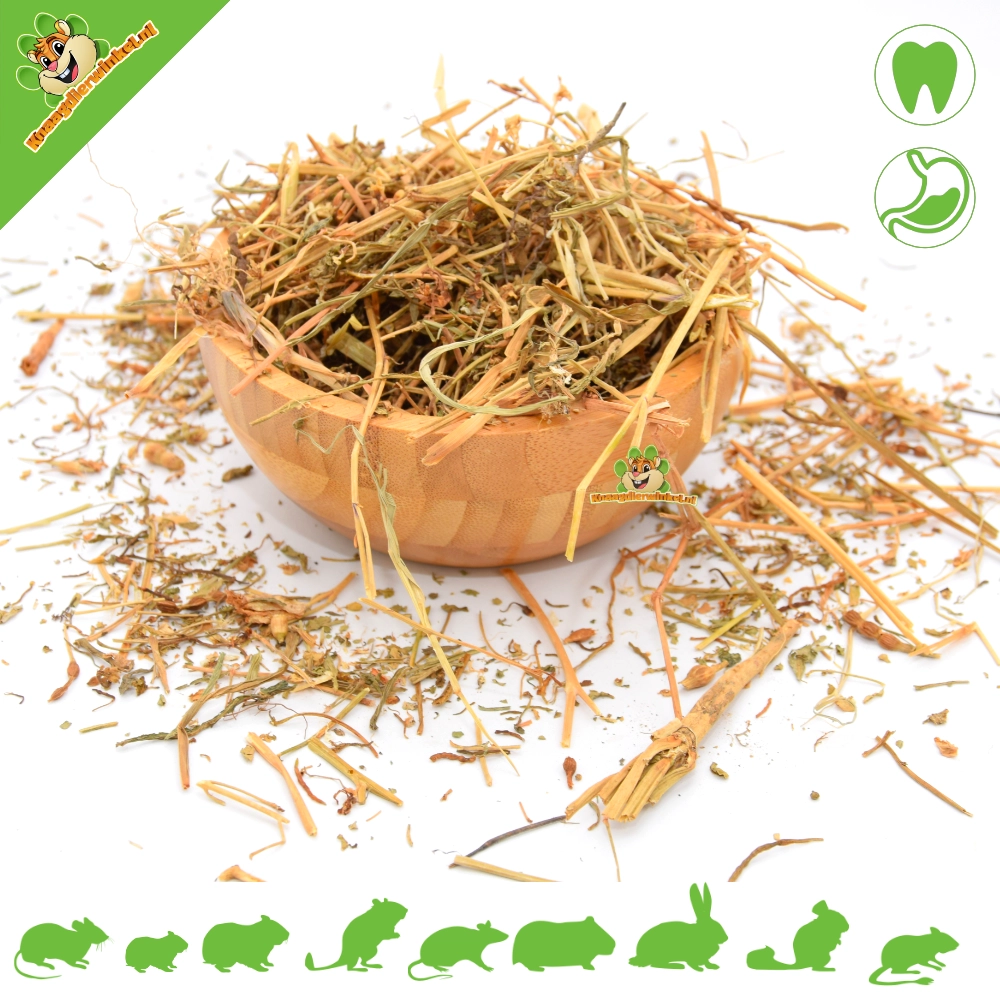
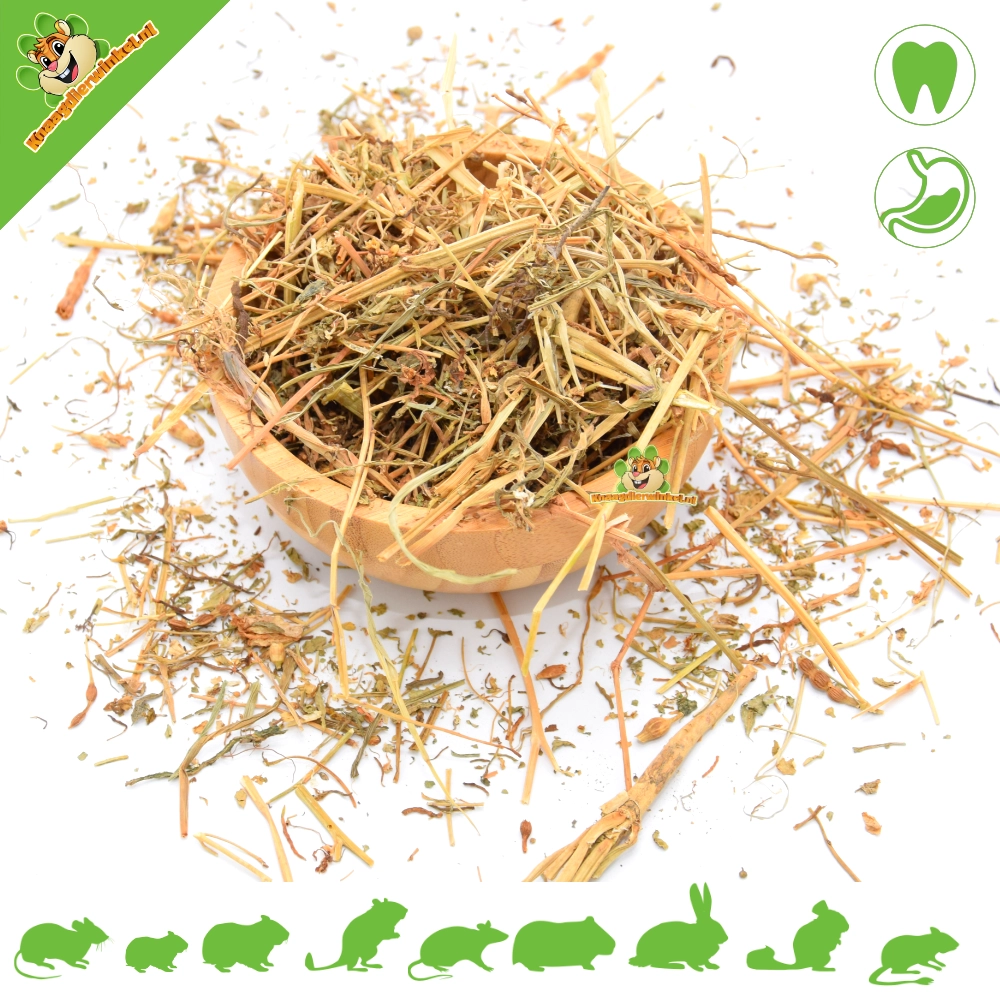
Dried Common Rocket (Heeskruid) 50 grams
- Buy 2 for €4,70 each and save 5%
- Dispatched from our own stock
- Personal & expert advice
- Always 100% rodent-friendly
- In stock soon!
Dried Rocket – herbal variety for hay, foraging, and natural enrichment
Dried Rocket, also known as Marshmallow, is a lesser-known herb, but precisely for that reason, it is a wonderful addition for owners who want to offer more variety. It is not a standard snack like a biscuit or treats, but a natural herbal supplement with scent, texture, and a spicy appearance. You can use it to make hay more appealing, to fill a foraging area, or to let your animal discover something new in a calm way.
Common rocket fits well into a natural feeding routine in which hay, herbs, leaves, flowers, and small portions of snacks alternate. Especially for animals that enjoy searching, sniffing, and eating selectively, a distinctive herb like marshwort can provide just that little bit of extra interest. At DRD, with these types of herbs, we focus primarily on the practical added value: what does it add to the daily offering, how can you use it, and for which animals does it make sense?
In short
- Dried common rocket, also known as marsh rocket
- Spicy supplement for rodents and rabbits
- Great for enriching hay, herb mixes, or foraging areas.
- Adds extra fragrance, texture, and natural variation
- Suitable as a complementary feed, i.e. as an extra alongside the daily base.
Why choose Dried Common Rocket?
✔ Lesser-known herb variety for extra variety
✔ Interesting due to aroma, texture, and spicy taste experience
✔ Nice to mix with hay and stimulate foraging behavior
✔ Fits well into a natural herbal routine
✔ Handy for foraging, sniffing areas, and edible enrichment
Common rocket is a herbaceous plant belonging to the cruciferous family. For most pet owners, the name sounds somewhat less familiar than, for example, dandelion, nettle, or marigold. Yet, it is precisely this variety that is interesting, because animals in the wild do not encounter exactly the same plant structures every day. By alternating different herbs, you make the offering of hay and greens richer, more varied, and more interesting.
The advantage of an herb like common rocket lies primarily in its use. You don't need to give large quantities. A small sprig mixed with hay, a little in a herb mix, or some loose in a foraging corner is enough to get your animal searching and sniffing. This way, eating becomes not just about ingesting, but also about being occupied.
How do you use a regular rocket in the enclosure?
You can offer dried common rocket in various ways. Sprinkle a small amount through the hay, place some among a clump of herbs, or hide it in a foraging toy. For hamsters, gerbils, mice, and rats, you can also sprinkle a small amount through the bedding or in a sniffing area. For guinea pigs, rabbits, chinchillas, and degus, mixing it with hay is often the most logical method, as it further stimulates foraging within the hay.
Always start with a small amount when introducing a new herb. This allows your animal to gradually get used to the smell and taste. Some animals pick it out immediately, while others need some time to recognize a new herb as an edible addition.
For which animals is Dried Rocket suitable?
- Mouse: suitable as a small herbal supplement in a foraging corner or mixed with other dried herbs.
- Dwarf hamster: a small amount of common rocket can be used as a sniffing and foraging herb in a natural setting.
- Hamster: suitable as a herbaceous variation, for example by placing a small tuft in a foraging area or in the hay.
- Gerbil: interesting as a dry herbal structure to discover, shred, and search for among other natural materials.
- Dwarf Grate: suitable as a small herbal supplement, for example in a sniffing mat, foraging tray, or among other dried herbs.
- Rat: Rats are curious eaters and can use common rocket as a change of pace during a foraging session.
- Guinea pig: suitable for mixing with hay, so that your guinea pig has to search more and the hay becomes more interesting.
- Rabbit: suitable as a herbal supplement mixed into hay or as part of a varied herbal routine.
- Chinchilla: suitable as a small, dry herbal supplement. Offer consciously and in limited quantities as part of a calm, fiber-rich routine.
- Degu: suitable as a small herbal supplement and foraging herb. Offer consciously and combine especially with hay and other suitable dry herbs.
Composition & analysis
Composition: common rocket, marshwort.
Analysis: not specified.
Common rocket is particularly interesting as a natural herbal variation. The added value lies not in a complex analysis, but in the way you offer it: as a fragrant addition to hay, as part of a herbal mix, or as a brief foraging activity in the enclosure.
Good to know
Dried Common Rocket is a complementary feed. Therefore, use it as an extra, spicy supplement alongside the daily basic diet suitable for your animal. For hay-eating animals such as guinea pigs, rabbits, chinchillas, and degus, good hay remains the basis. For small omnivorous rodents such as mice, hamsters, gerbils, and rats, common rocket is particularly suitable as a small extra during a varied feeding time.
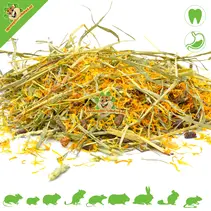
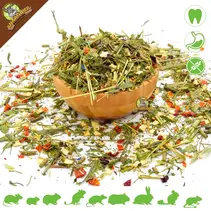
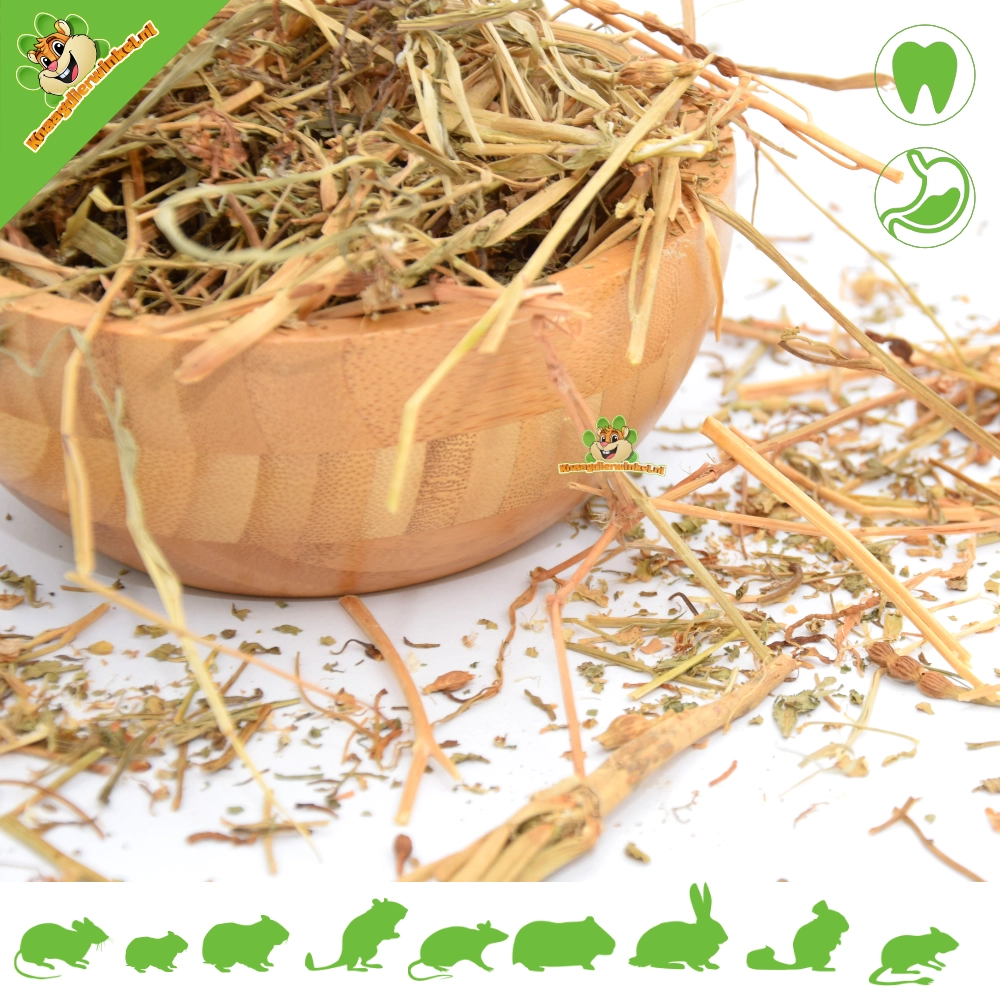
Because this is a naturally dried herb, color, aroma, texture, and leaf size may vary slightly from harvest to harvest. This is characteristic of pure herbs and makes every package just a little bit different.
Nice to combine with
- Rodent and rabbit herbs
- Dried herbs and roots
- Hay for rodents and rabbits
- Playing and foraging
- Guinea pig herbs
- Rabbit herbs
Frequently asked questions about Dried Rocket
What is common rocket or marshwort?
Common rocket is a herbaceous plant also known as hoarseness. In dried form, it is used as a natural herbal supplement for variety, fragrance, and texture.
Why would I give this herb if my animal doesn't know it?
It is precisely lesser-known herbs that can be interesting as a variation. You do not use them as a main component, but as a small addition to make hay, herb mixes, or foraging areas more attractive.
How many regular rockets can I give?
Give a small amount at a time, for example a small tuft mixed into the hay or among other herbs. When introducing new herbs, building up gradually is always best.
Can I mix common rocket with hay?
Yes, that is actually a nice way to use it. By mixing a little regular rocket into the hay, you encourage your animal to search, sniff, and select more.
Is regular rocket suitable for rabbits and guinea pigs?
Yes, common rocket can be offered to rabbits and guinea pigs as a herbal supplement. For example, mix it with the hay or offer a small amount as part of a varied herbal meal.
Is this a medicinal herbal mix?
No, this dried common rocket is offered as a complementary feed and natural herbal variety. We make no medical claims; use it primarily for variety, foraging, and enriching hay.
Dried Rocket is a great choice if you want to look beyond the most common herbs and offer your animal more natural variety. Thanks to its herbaceous scent, dry texture, and versatile applications, rocket is well-suited for hay enrichment, foraging, and creating a varied herbal routine.
| Content (approx): | 50 grams |
| Composition: | Common Rocket (Herb Bennet) |
| Analysis: | - |
| Promotes Foraging: | Yes |
| Suitable for: | Rodents, Mouse, Dwarf Hamster, Hamster, Gerbil, Rat, Guinea Pig, Rabbit, Chinchilla, Degus |
| Type: | supplementary pet food |
| Particularities: | - |
| Disclaimer: | Not for food producing animals |