 Polski



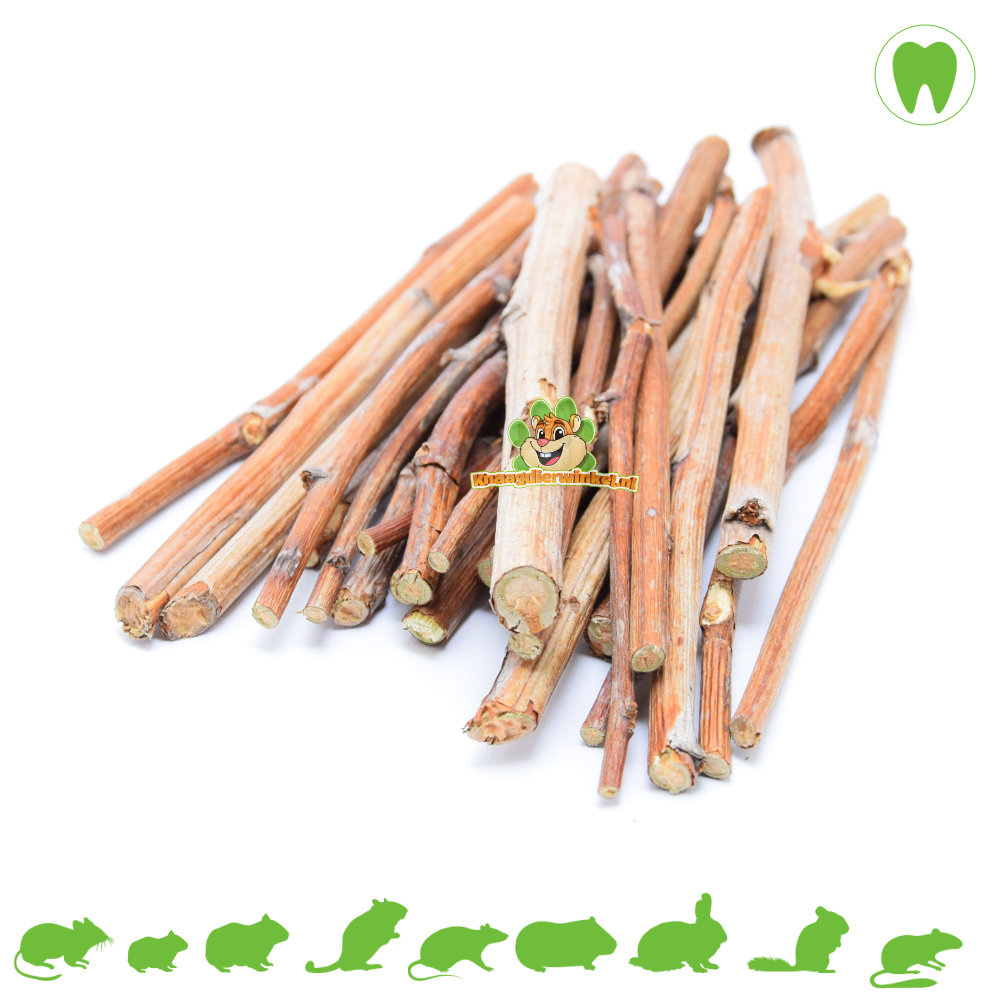
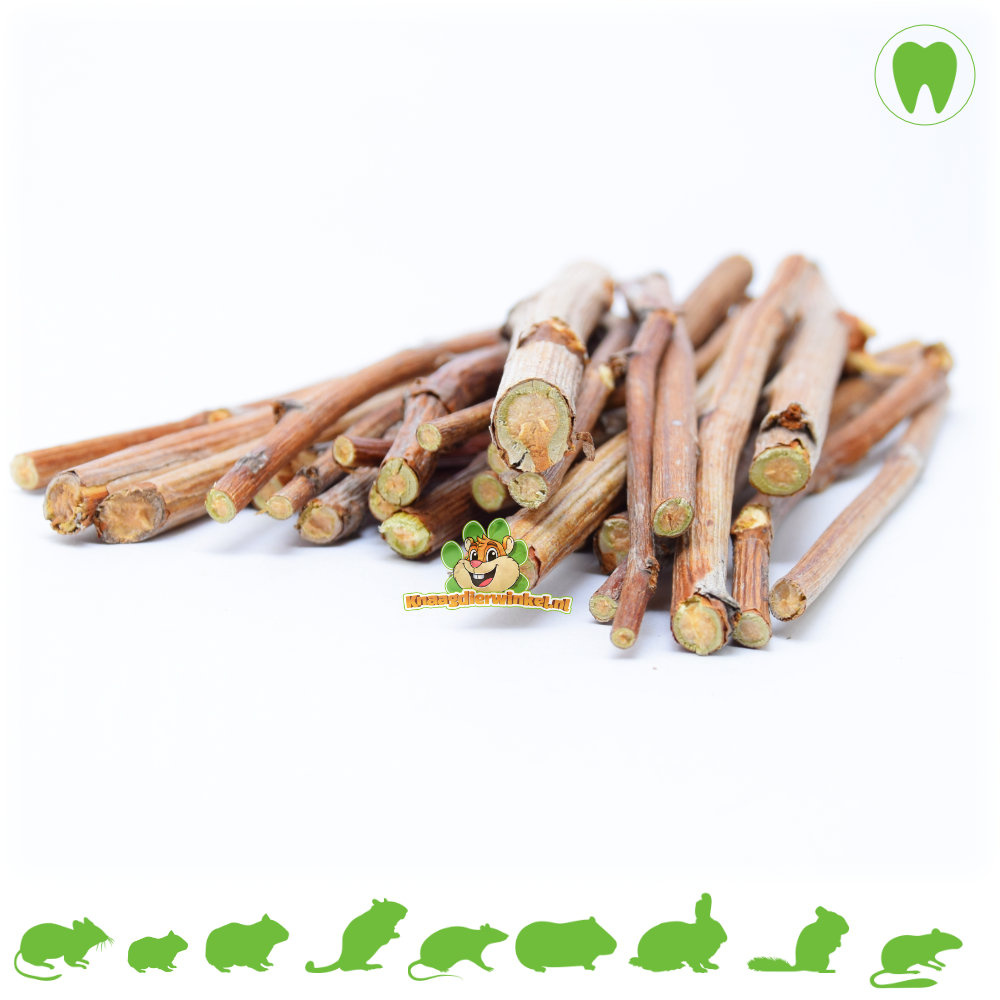
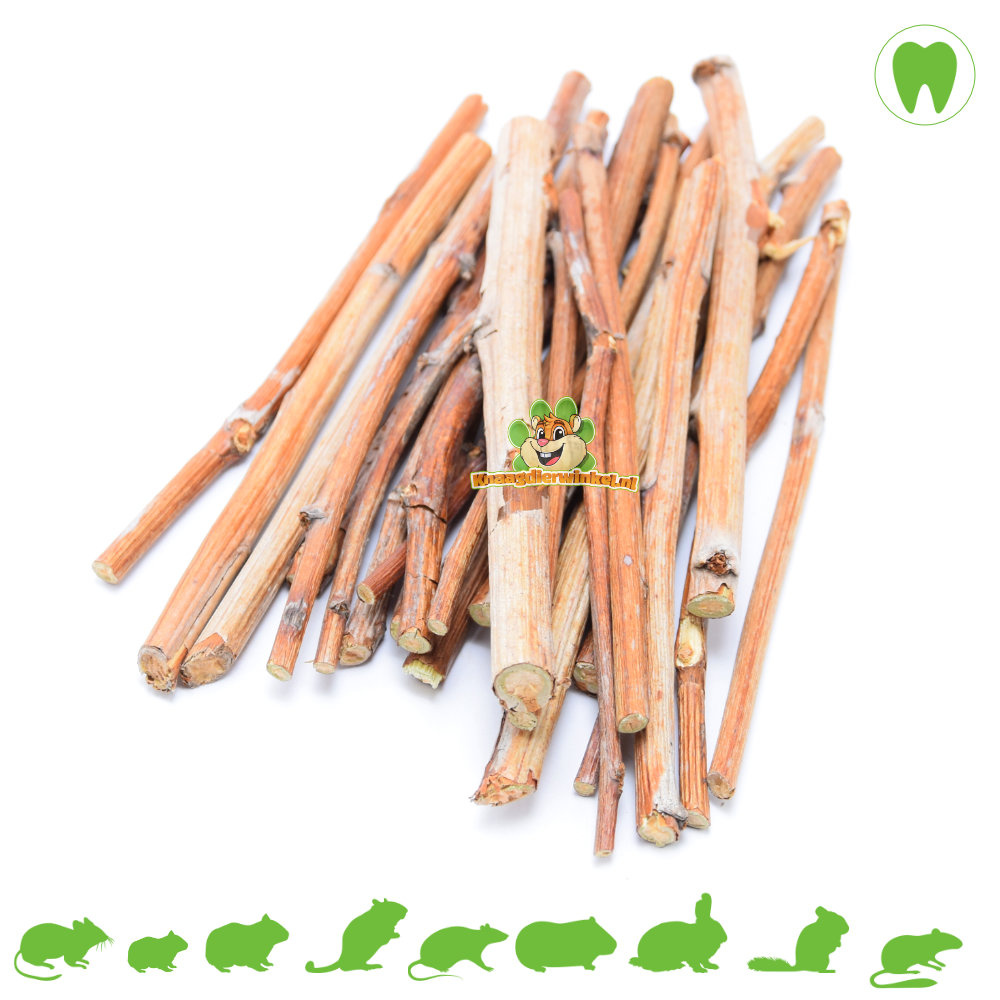
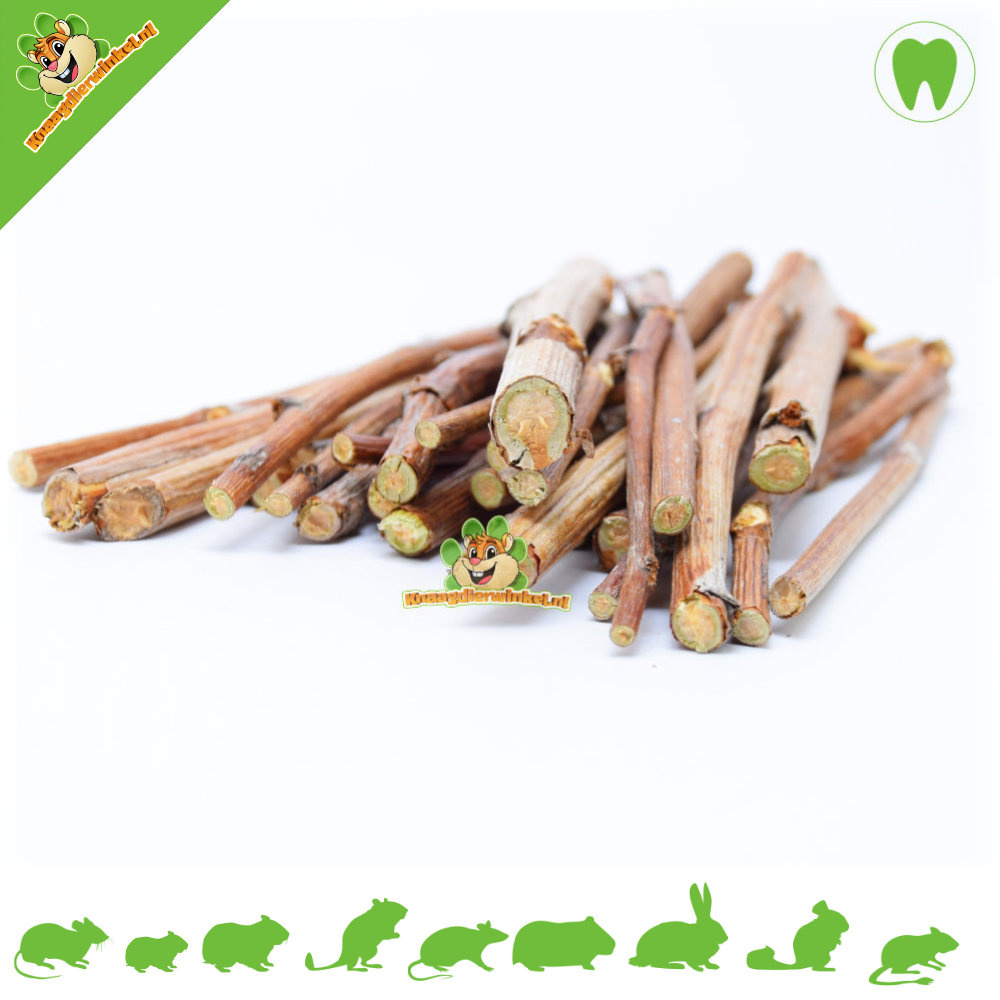
Raspberry stalks for rodents and rabbits


- Dispatched from our own stock
- Personal & expert advice
- Always 100% rodent-friendly
- Ordered before 5 p.m., shipped the same day!
Raspberry Sticks for Rodents & Rabbits 50 g
Raspberry stalks are natural stalks from the raspberry plant for rodents and rabbits. You use them as gnawing material, a foraging stimulus, and natural variety in the enclosure. Your animal can sniff, nibble, drag, and explore them, and quietly occupy itself with the sturdy stalk structure.
These raspberry sticks are especially great for owners looking for natural chewing material that can simply be given as is. You don't need to make the sticks smaller or modify them; even small animals can explore and work with them in their own way. At DRD, when it comes to chewing material, we look not only at the material itself but also at its use: can your animal keep occupied with it, does it fit natural behavior, and does it provide enough structure to remain interesting? These raspberry sticks fit the bill perfectly.
The package contains 50 grams. Because this is supplementary food and natural gnawing material, you give it as an extra alongside the normal feeding pattern. At 1 gram per day, one package lasts approximately 50 days. At 2 grams per day, that is approximately 25 days. At 4 grams per day, that is approximately 12 days.
✓ In short
- Natural raspberry stalks for rodents and rabbits
- Complementary feed and natural gnawing material
- Suitable to give as is.
- No need to resize or adjust
- Great for nibbling, dragging, sniffing, and foraging
- Fits with natural decor, hamsterscaping, gerbilscaping, and ratscaping
- Packaging: 50 grams
Advantages of Raspberry Stems
✔ Natural raspberry chewing material
✔ Simply give as is to all suitable animals
✔ Sturdy stem structure to nibble on and explore
✔ Stimulates foraging, sniffing, and natural gnawing behavior
✔ Suitable for small and larger rodents and rabbits
✔ Practical 50-gram pack for many natural gnawing moments
Why choose Raspberry Sticks?
Raspberry stalks are ideal when you are looking for a natural gnawing material that is easy to use. You place the stalks in the enclosure and your animal decides for itself what to do with them: nibble on them, pull on them, drag them, hide them, or quietly investigate them.
That makes raspberry sticks different from an ordinary snack eaten by hand. Your animal spends more time on them and uses the sticks in a way that aligns with natural behavior. Small rodents may carry the sticks away or incorporate them into their enclosure, while larger animals such as rats, guinea pigs, rabbits, chinchillas, and degus may actively gnaw on them.
Because Raspberry Sticks are supplementary food, do not feed them as the main food. Think of them as a natural extra for gnawing, scent, texture, and variety. Precisely because you can simply offer them as they are, they are easy to use in almost any enclosure.
For which animals are raspberry stalks suitable?
Raspberry stalks are suitable as natural gnawing material and additional variety for all the mentioned rodents and rabbits. You do not need to make the stalks smaller; just give them as they are and let your animal discover for itself what it wants to do with them.
- Mouse: suitable as natural stem material to investigate, move, and nibble on.
- Dwarf hamster: suitable as a fragrant gnawing and exploration stimulus in a natural setting.
- Hamster: suitable as a natural stick to nibble on, move around, or use in the enclosure.
- Gerbil: very fun as shredding and gnawing material; gerbils can actively work the stems.
- Dwarf gratin: suitable as a natural gnawing and foraging stimulus, tailored to the actual size of your animal.
- Rat: suitable as sturdy stem material to hold, examine, and gnaw on.
- Guinea pig: suitable as natural gnawing material alongside hay, guinea pig food, and herbal varieties.
- Rabbit: suitable as a natural stick to nibble on, play with, and explore.
- Chinchilla: suitable as natural gnawing material alongside hay, herbs, leaves, and branches.
- Degu: suitable as a fiber-rich gnawing and stem variation alongside hay and appropriate basic food.
Usage & dosage
Provide Raspberry Sticks as an additional snack, gnawing material, and natural enrichment. You can simply place the sticks loosely in the enclosure, stick them through the hay, or place them in a foraging corner. There is no need to make them smaller; animals can nibble on the sticks themselves or use them in their own way.
Do you want to make the stalks extra interesting? Then place them in various spots in the enclosure, for example near the hay corner, in a sniffing box, or among natural materials. This way, your animal has to search, and a gnawing moment immediately becomes a small activity.
If you use the sticks mainly as a standalone gnawing stimulus, the package will often last a long time. However, if you have multiple animals or real destroyers such as gerbils, rats, chinchillas, or degus, the package may run out faster.
✓ How long does one package last?
Raspberry sticks contain 50 grams. The duration of use depends on how much you give at a time and how actively your animal gnaws on them. Because this is supplementary food and gnawing material, give small amounts alongside the daily base.
| Usage | Amount per day | Use per package |
|---|---|---|
| Sparse snacking moment | 1 gram per day | about 50 days |
| Average use | 2 grams per day | about 25 days |
| Extended gnawing and foraging time | 4 grams per day | about 12 days |
This is a practical guideline. Give raspberry stalks as a supplement, not as a replacement for main feed, hay, or the daily basic diet.
Compound
Raspberry.
Analytical constituents
Not given up.
What does this compound mean?
The composition is straightforward: raspberry. It involves stems of the raspberry plant, which you use as natural gnawing material and additional variety.
The sturdy stem structure makes this product practical to use. You can offer the stems loose, place them in the hay corner, or use them in a natural setup. Because you do not need to break or modify them, they are easy to use for both small and larger animals.
Good to know
- This is supplementary food and natural gnawing material, not a main food.
- You can simply give the stems as they are; there is no need to cut them into smaller pieces.
- Suitable for all mentioned rodents and rabbits.
- Great for nibbling, dragging, sniffing, investigating, and foraging.
- Natural stems may vary slightly in color, thickness, and structure per harvest.
- Store the raspberry stalks in a dry, cool, and tightly sealed place.
- Remove any residue when it has become damp or dirty.
Frequently asked questions about Raspberry stalks
Are raspberry stalks the staple food?
No, raspberry sticks are supplementary food and natural gnawing material. Use them alongside suitable main food and hay.
How much is in the package?
The packaging contains 50 grams of raspberry stalks.
Should I make the stems smaller?
No, that is not necessary. You can simply give the raspberry stalks as they are. Your animal can nibble, pull, drag, and explore on its own.
How long does one package last?
At 0.5 grams per day, one package lasts approximately 100 days. At 1 gram per day, that is approximately 50 days. At 2 grams per day, that is approximately 25 days.
Can I put raspberry stalks in the hay?
Yes, that works well. Place the stalks in between or next to the hay so that your animal can find, investigate, and nibble on them.
For which animals are raspberry stalks suitable?
Raspberry stalks are suitable for mice, dwarf hamsters, hamsters, gerbils, dwarf rats, rats, guinea pigs, rabbits, chinchillas, and degus.
Are raspberry stalks suitable for guinea pigs and rabbits?
Yes, guinea pigs and rabbits can use raspberry stalks as natural gnawing material and variety alongside hay and appropriate food.
Are raspberry stalks suitable for chinchillas and degus?
Yes, chinchillas and degus can use raspberry stalks as natural stalk and gnawing variety alongside hay, herbs, leaves, and branches.
What is the composition?
The composition is raspberry.
Are analysis values known?
No, no analysis values have been provided for this product.
How do I store raspberry stalks?
Store the stems in a dry, cool, and tightly sealed place. This way, the aroma and texture are preserved as well as possible.
Useful shopping links
- View gnawing material
- View gnawing wood & branches
- view raspberry products
- View dried branches & stems
- View hamster gnawing material
- View rat gnawing material
- View rabbit gnawing material
Raspberry stalks are a great choice for owners looking for natural gnawing material that is easy to offer. Simply place the stalks in the enclosure, near the hay corner, or in a natural setup. This provides your animal with a quiet gnawing moment featuring scent, texture, and the pleasure of natural foraging.
| Content (approx): | 50 grams |
| Composition: | Raspberry |
| Analysis: | - |
| Promotes Foraging: | Yes |
| Suitable for: | Rodents, Mouse, Dwarf Hamster, Hamster, Gerbil, Rat, Guinea Pig, Rabbit, Chinchilla, Degu |
| Type: | supplementary pet food |
| Particularities: | - |
| Disclaimer: | Not for food producing animals |
Onze ratten vinden dit geweldig! Veel lekkerder dan de wilgentakjes die ik ze normaal voorschotel. Deze dingen worden vrij snel helemaal verorberd door ze, de stukjes stengel vind ik óveral door de woonkamer en in hun hok. De chinchilla's snoepen er ook van, maarja, die bijten natuurlijk álles wat ze voor hun kiezen krijgen, kapot.
Prima product. Onze ratjes zijn er niet wild van, maar knabbelen er af en toe wel aan.