Polski



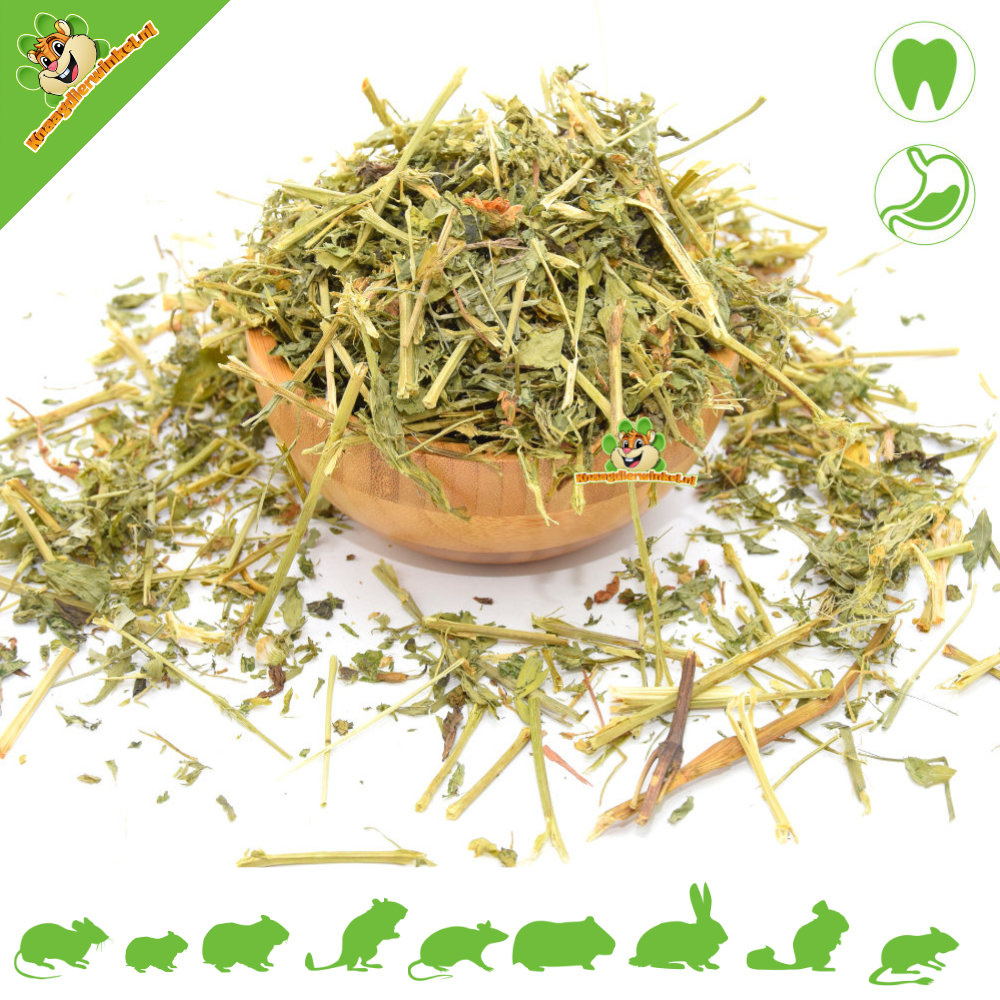
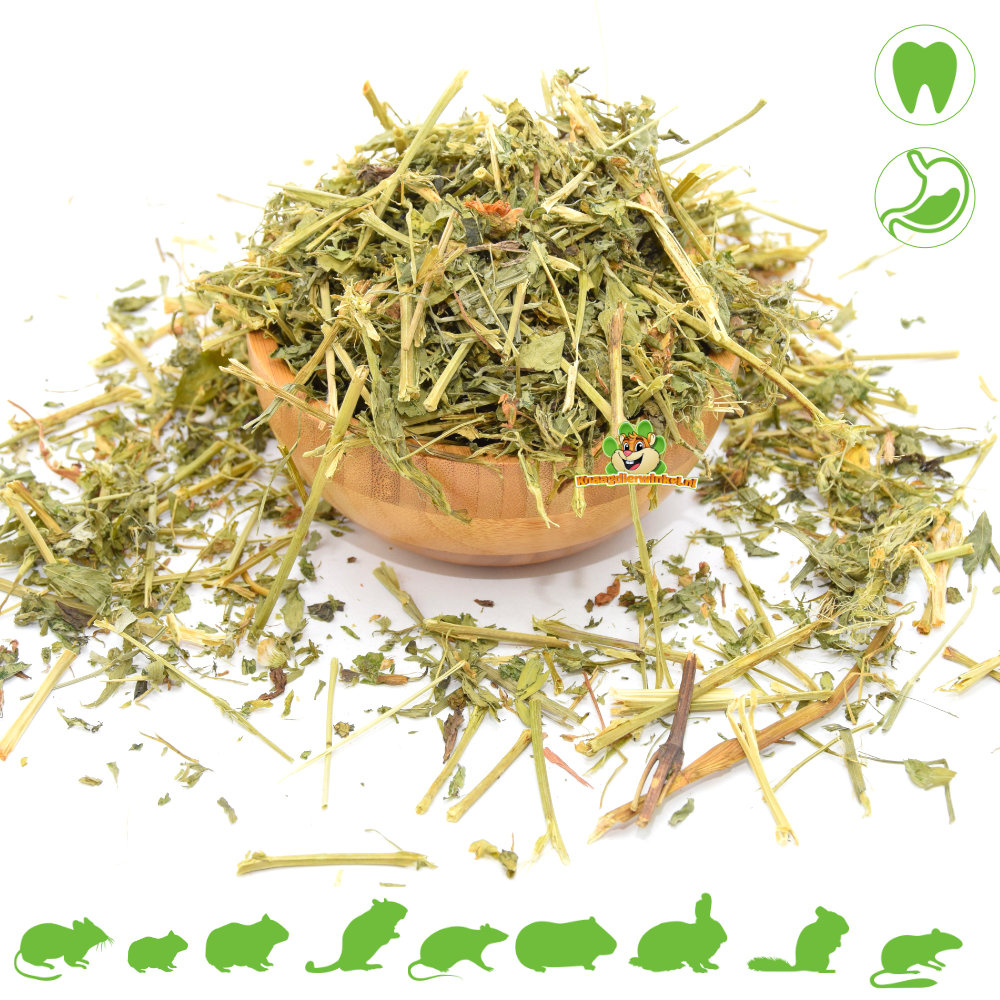
Dried Lucerne (Alfalfa) 100 grams


- Dispatched from our own stock
- Personal & expert advice
- Always 100% rodent-friendly
- In stock soon!
- Customer service from 09:00 to 18:00
Rodent Grocery Dried Lucerne 100 g
Rodent Herbalist Dried Lucerne, also known as alfalfa, is a natural herbal and fiber variety for rodents and rabbits. You use the lucerne as a supplementary snack and foraging variety, for example by mixing a small amount with the hay, hiding it in a sniffing spot, or offering it as a green foraging treat.
This alfalfa is especially nice for owners looking for a recognizable green variety with scent, texture, and chewability. Your pet can sniff it, pluck at it, pick out pieces, and quietly engage in foraging. At DRD, when it comes to herbs, we look not only at taste but also at use: can your pet forage with it, is it easy to dose, and does it fit a mindful herb moment? This dried alfalfa aligns perfectly with that.
✓ In short
- Dried lucerne / alfalfa for rodents and rabbits
- Supplementary feed
- Suitable for making hay more interesting
- Great for sniffing, searching, plucking, and foraging
- Practical as a small topping, herb extra, or foraging snack.
- Also nice for a snuffle mat, snack board, foraging bowl, or natural decor.
- Packaging: 100 grams
Advantages of Dried Lucerne
✔ Natural green alfalfa variety with aroma and texture
✔ Also known as alfalfa
✔ Fun to give loose, mix in hay, or hide
✔ Stimulates searching, sniffing, and calmly choosing
✔ Suitable as a small supplementary herb and fiber variation
✔ Practical 100-gram pack for many small foraging moments
The Rodent Herbalist®
De Knaagdier Kruidenier® is the premium private label of DRD Knaagdierwinkel®, featuring natural herbs, flowers, leaves, vegetables, and mixes carefully selected for rodents and rabbits. The emphasis is on natural variety, hay enrichment, foraging, and edible enrichment: DRD chooses what truly feels right for animal and owner.
Why choose Knaagdier Kruidenier Dried Lucerne?
Dried alfalfa is a great choice when you are looking for a green, natural supplement that is easy to dose. The texture is different from fine herbs, making it fun to mix with hay, place in a sniffing area, or offer specifically as a small snack.
For guinea pigs and rabbits, you can mix a small amount into the hay or place it in a foraging bowl. For chinchillas and degus, alfalfa serves as a suitable green variation alongside hay, herbs, leaves, and branches. For mice, dwarf hamsters, hamsters, gerbils, pygmy rats, and rats, you can use small portions in a sniffing corner, snack board, or natural-style setup.
Because Dried Lucerne is a complementary food, you should not feed it as the main food. Think of it as a natural extra for scent, texture, sniffing, and variety. This lucerne really comes into its own in small quantities.
For which animals is alfalfa suitable?
Knaagdier Kruidenier Dried Lucerne is suitable as a supplementary herbal and fiber variety for rodents and rabbits. Always adjust the quantity to the animal species, size, and normal feeding pattern.
- Mouse: provide small amounts as sniffing and herb variety in a foraging area.
- Dwarf hamster: suitable as a small natural variation to search for and explore.
- Hamster: suitable as additional herbal variation in a sniffing corner or as a foraging layer.
- Gerbil: nice as a natural sniffing and exploring mix between hay or bedding.
- Dwarf rat: suitable as a small foraging stimulus, tailored to the actual size of your animal.
- Rat: suitable as a scented sniffing variation in a foraging bin or Ratscaping corner.
- Guinea pig: suitable for enriching hay and adding extra scent, texture, and variety to the hay corner.
- Rabbit: suitable as a supplementary green variety alongside hay and appropriate rabbit food.
- Chinchilla: suitable as a small, conscious variation alongside hay, herbs, leaves, branches, and appropriate basic food.
- Degu: suitable as a deliberate variation in herbs and fiber during a fiber-focused diet and foraging moments.
Usage & dosage
Give dried alfalfa as additional herbal and fiber variety. Use a small amount for small animals. For larger animals, you can mix some alfalfa into the hay, place it in a sniffing mat, or distribute it over a foraging bin.
Do you want to use alfalfa for foraging? Then distribute small amounts in different places in the enclosure, among the hay, in a sniffing mat, or on a treat board. This way, your animal has to search, and a moment with green herbs immediately becomes a small activity.
If you use the lucerne mainly as a topping for hay, the package will last longer. If you use it as a more extensive foraging moment for multiple animals, the package will be used up faster.
✓ How long does one package last?
Knaagdier Kruidenier Dried Lucerne contains 100 grams. The duration of use depends on how much you give at a time. Because this is supplementary food, small amounts are usually sufficient.
| Usage | Amount per day | Use per package |
|---|---|---|
| Sparing use of topping | 1 gram per day | about 100 days |
| Average use of herbs | 2 grams per day | about 50 days |
| Wider foraging time | 5 grams per day | about 20 days |
This is a practical guideline. Give lucerne as a supplement, not as a replacement for main feed, hay, or the daily basic diet.
Compound
Lucerne.
Analytical constituents
Not given up.
What does this compound mean?
The composition is straightforward: lucerne. Lucerne is also known as alfalfa and is used as a green herb and fiber variation alongside the normal feeding pattern.
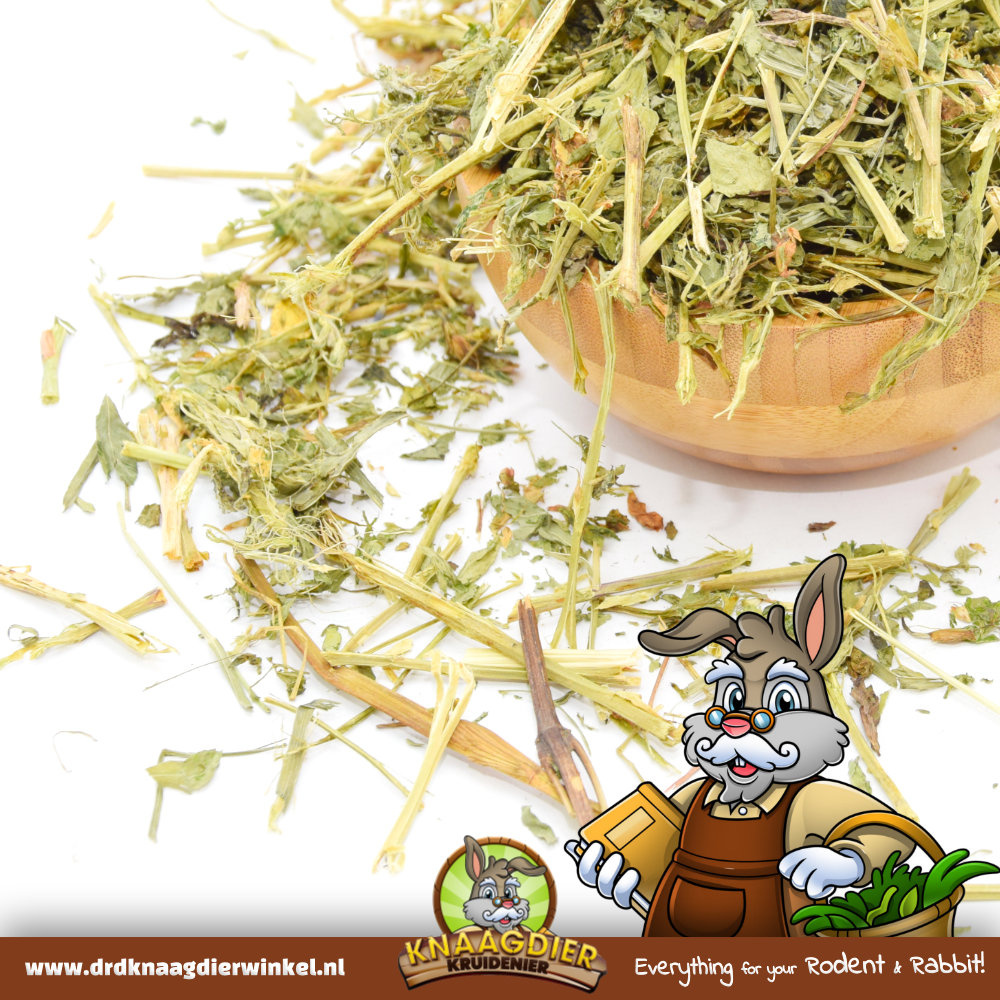
The structure makes this alfalfa practical to use: you can mix small quantities with hay, provide it specifically as a green herb supplement, or use it in a sniffing area. This makes it ideal for use as a hay topping, snack supplement, or foraging material.
Good to know
- This is supplementary food, not a main food.
- Give small quantities alongside appropriate main feed and, for herbivores, unlimited hay.
- Portion small portions for small animals.
- Use small amounts, optionally in a snuffle mat, snack plate, or foraging bowl.
- Natural herbs can vary slightly in color, scent, and texture from harvest to harvest.
- Store the alfalfa in a dry, cool, and tightly sealed place.
- Remove any residue when it has become damp or dirty.
Frequently Asked Questions about Dried Lucerne
Is Dried Lucerne the main feed?
No, Dried Lucerne is a supplementary feed. Use it as a variation of herbs and fiber alongside suitable main feed and hay.
Is lucerne the same as alfalfa?
Yes, lucerne is also called alfalfa. It is the same plant name that is often used in food and herbal products.
How much is in the package?
The packaging contains 100 grams of dried alfalfa.
How long does one package last?
At 1 gram per day, one package lasts approximately 100 days. At 2 grams per day, that is approximately 50 days. At 5 grams per day, that is approximately 20 days.
Can I mix alfalfa with the hay?
Yes, that is a nice way to use it. Distribute small amounts among the hay so that your animal has to actively search for it.
For which animals is this suitable?
Dried alfalfa is suitable as a supplementary variety for mice, dwarf hamsters, hamsters, gerbils, dwarf rats, rats, guinea pigs, rabbits, chinchillas, and degus.
Is alfalfa suitable for guinea pigs and rabbits?
Yes, guinea pigs and rabbits can use alfalfa as a hay topping, herbal supplement, or small foraging stimulus alongside hay and appropriate food.
Can I use this for foraging?
Yes, distribute small amounts in a sniffing mat, treat board, foraging bin, or mixed in with the hay. This way, you immediately turn a herb moment into a foraging moment.
What is the composition?
The composition is alfalfa.
Are analysis values known?
No, no analysis values have been provided for this product.
How do I store dried alfalfa?
Store the product in a dry, cool, and tightly sealed place. This will help preserve the scent, color, and texture as much as possible.
Useful shopping links
- View all rodent & rabbit herbs
- View dried herbs & roots
- view lucerne / alfalfa products
- view guinea pig herbs
- Viewing rabbit herbs
- view chinchilla herbs
- View Degoe herbs
Knaagdier Kruidenier Dried Lucerne is a great choice for owners looking for a green, natural herbal and fiber variation for hay, sniffing spots, and foraging moments. Give a small amount as a topping, mix it through the hay, or hide pieces while foraging. This way, you instantly turn a simple green herbal moment into a quiet little activity.
| Content (approx): | 100 grams |
| Composition: | Alfalfa |
| Analysis: | - |
| Promotes Foraging: | Yes |
| Suitable for: | Rodents, Mouse, Dwarf Hamster, Hamster, Gerbil, Rat, Guinea Pig, Rabbit, Chinchilla, Degu |
| Type: | supplementary pet food |
| Particularities: | - |
| Disclaimer: | Not for food producing animals |