 Polski



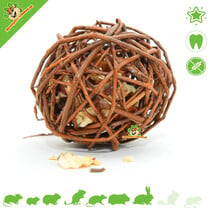
Wooden Foraging Play & Snack Ball 8 cm


- Buy 2 for €5,69 each and save 5%
- Dispatched from our own stock
- Personal & expert advice
- Always 100% rodent-friendly
- Ordered before 5 p.m., shipped the same day!
- Customer service from 09:00 to 18:00
Trixie Wooden Foraging Play & Snack Ball 8 cm
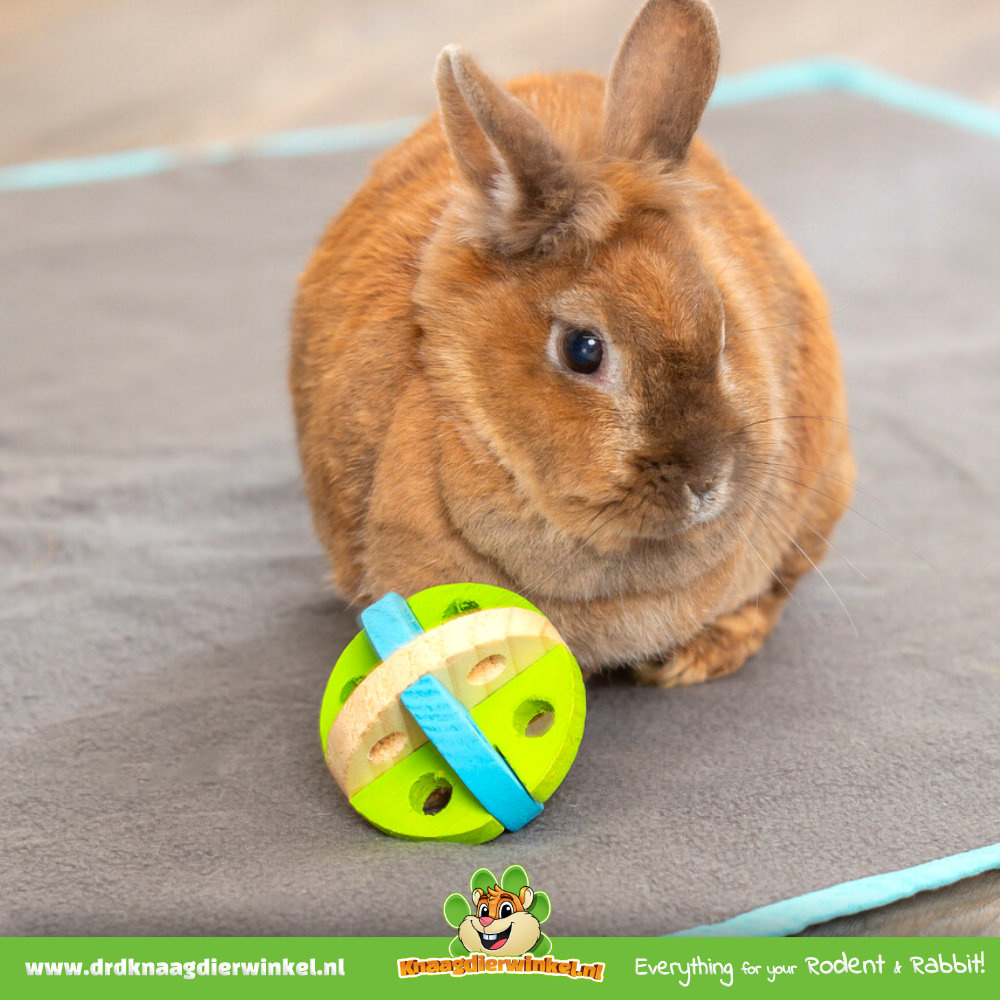
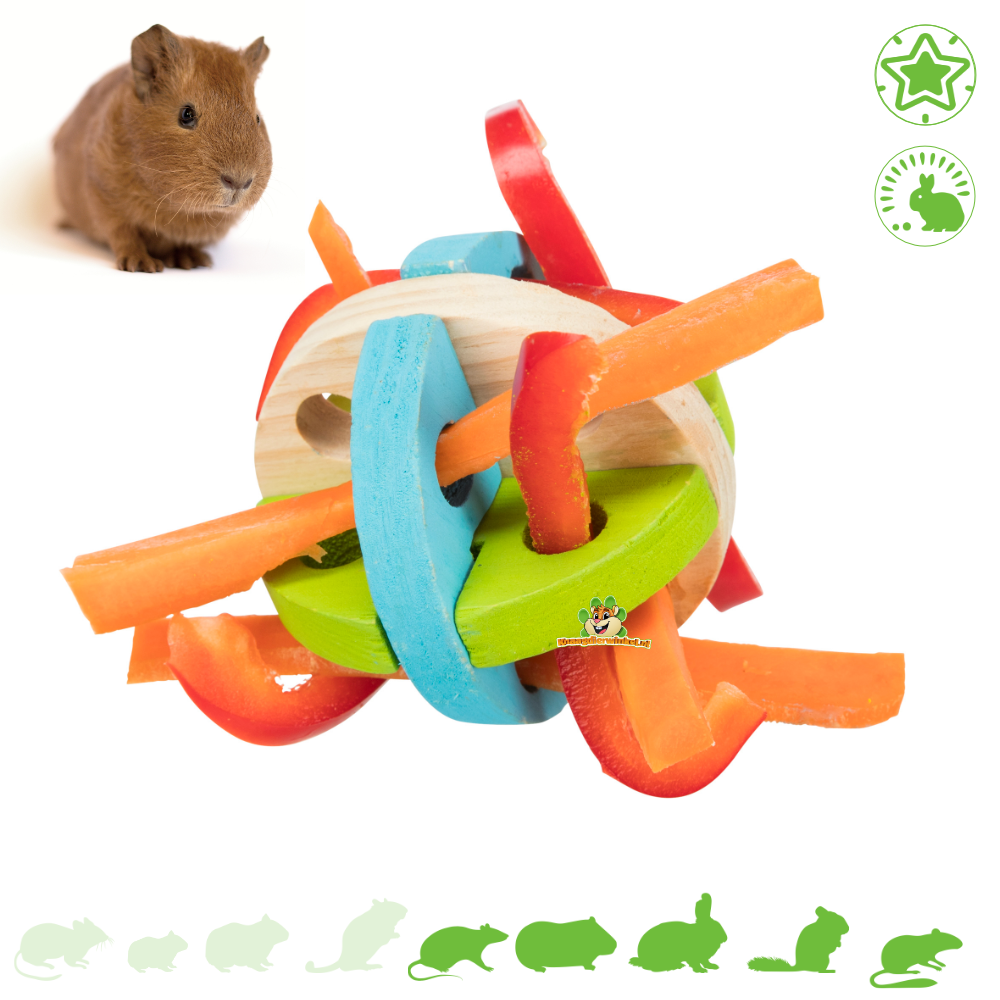
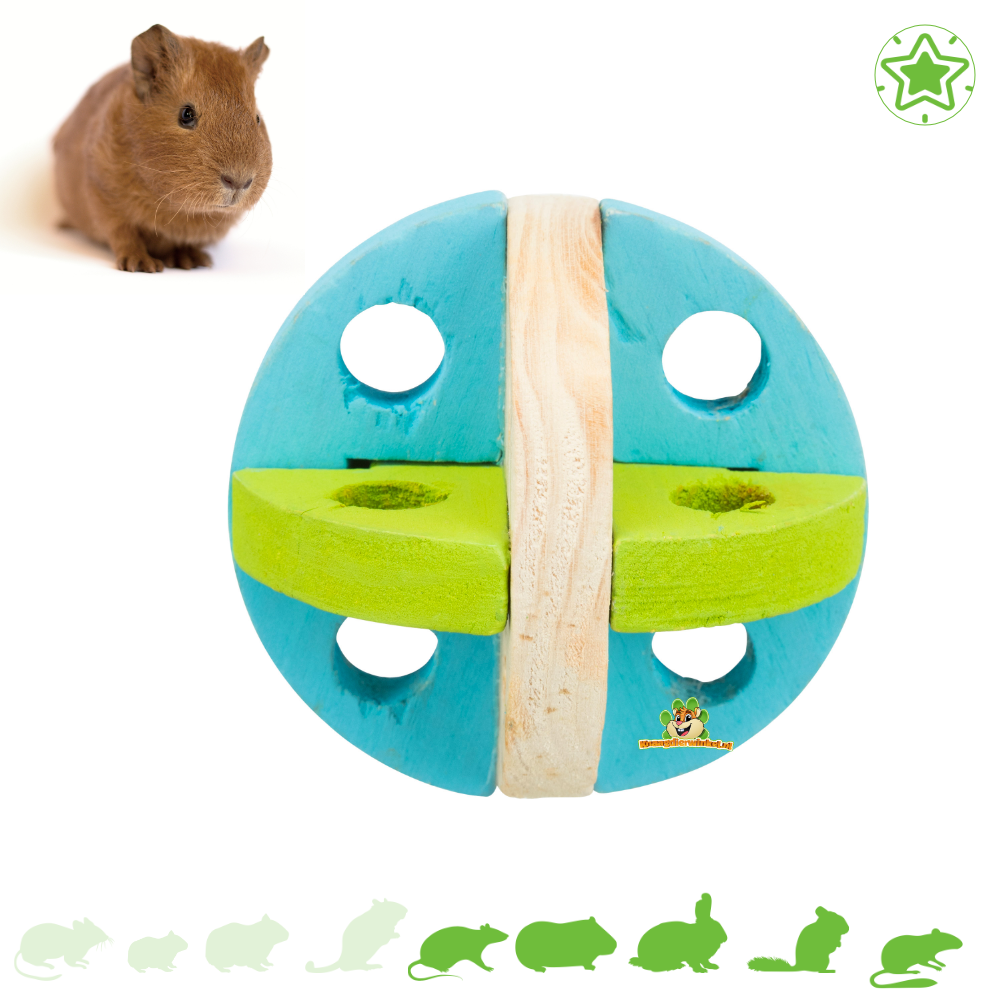
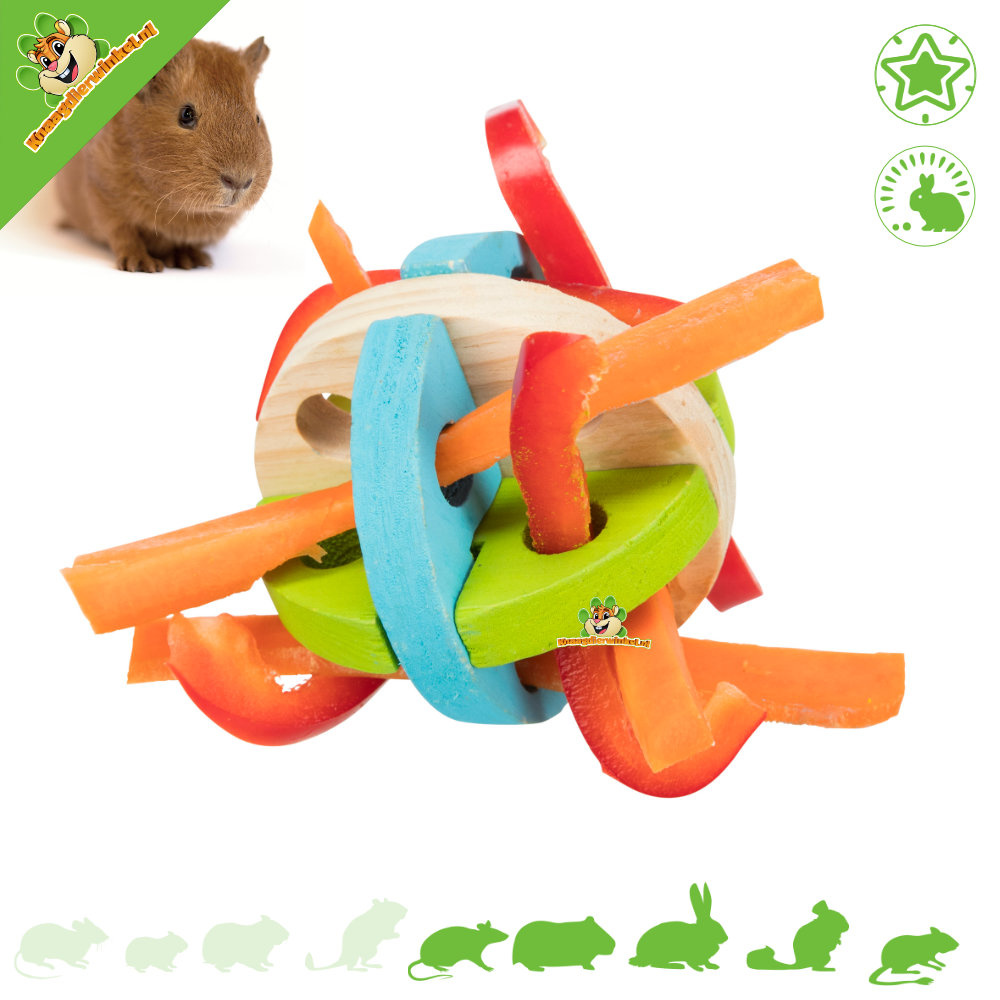
The Trixie Wooden Play & Snack Ball 8 cm is a fun foraging ball for animals who enjoy searching for food, pushing, rolling, and exploring. You can use the ball as a natural toy, but it becomes especially interesting when you fill the openings with suitable vegetables, herbs, hay, leaves, or a small snack.
DRD chooses this type of toy because it makes food just a little more interesting. Instead of offering everything in a food bowl, your animal has to make an effort to get to the treats. This makes the feeding area more active, varied, and fun. Especially for rats, guinea pigs, rabbits, chinchillas, and degus, this is a nice way to turn snack times into a little foraging session.
In short
- Wooden play and snack ball for foraging behavior.
- Diameter: approx. 8 cm.
- Made of wood.
- To be filled with suitable vegetables, herbs, hay, or snacks.
- Suitable for rats, guinea pigs, rabbits, chinchillas, and degus.
- Nice as a change of pace alongside the regular feeding spot.
Pros
✔ Made of wood
✔ Offers a challenge during meals
✔ To be used with vegetables, herbs, hay, or suitable snacks
✔ Stimulates searching, pushing, rolling, and exploring
✔ Suitable for multiple larger rodents and rabbits
✔ Compact size of approx. 8 cm
Why choose a wooden play and snack ball?
Many animals find searching for food more fun than food that is immediately available. A treat ball instantly turns a small snack into an activity. Your animal has to sniff, investigate, push, or pull to get to the tasty treat. As a result, snack time lasts longer and the enclosure becomes just a little more interesting.
This wooden ball is especially useful for animals that enjoy using their noses, paws, or teeth. You can offer it on its own as a toy, or fill it with, for example, a piece of bell pepper, carrot tops, herb stems, dried leaves, hay blades, or a suitable snack. Always choose something that suits the species and give snacks in moderation.
Because the ball has openings, the treats remain visible and accessible, but not too easily. This makes it suitable for owners who want to add more enrichment in a simple way without immediately using a complicated food puzzle.
How do you use the Wooden Play & Snack Ball?
Fill a few openings with small pieces of vegetables, herbs, hay, or a suitable snack. Then place the ball on a flat spot in the enclosure or offer it during outdoor use. Start simple so your animal understands there is something tasty inside. Later, you can make it slightly more challenging by inserting the pieces a little deeper into the ball.
- Use small pieces that suit your animal well.
- Do not fill the ball completely; a few pieces are often enough.
- Check that no food residue remains after use.
- Remove damp residue in a timely manner.
- Use the ball under supervision, especially with strong rodents.
For animals that eat quickly, this treat ball can help make a short snack time calmer and more active. It is not a substitute for daily basic food, but a fun addition to the decor and care.
For which animals is the Wooden Play & Snack Ball suitable?
- Rat: suitable as a foraging toy with small pieces of vegetables, herbs, or suitable snacks. With multiple rats, it is advisable not to put too much fresh vegetable in one ball at once and to distribute the portion gradually.
- Guinea pig: great fun with pieces of vegetables, herbs, or hay. Guinea pigs can explore the ball, pull on it, and get the treats out of the openings.
- Rabbit: suitable as a treat ball with appropriate vegetables, herbs, leaves, or hay. Use it on a flat spot in the enclosure or during outdoor run.
- Chinchilla: suitable with appropriate dried herbs, leaves, or hay. Do not use sugary or moist snacks and check the ball regularly for gnawing damage.
- Degu: suitable with hay, herbs, leaves, or small, appropriate snacks. Avoid sugary fillings and check the wood regularly, as degus are strong gnawers.
For mice, dwarf hamsters, hamsters, and gerbils, this ball is usually quite large and less practical. For these animals, smaller treat balls, willow balls, foraging treats, or smaller food puzzles are often better suited to their size and play style.
What can you put in the snack ball?
Always choose the filling based on the animal species. For guinea pigs and rabbits, consider suitable vegetables, herbs, leaves, or hay. For rats, you can use small pieces of vegetables or a suitable snack. For chinchillas and degus, hay, dried herbs, and leaves are often a better choice than fruit or moist snacks.
- Guinea pig and rabbit: hay, herbs, leafy greens, or small pieces of suitable vegetables.
- Rat: small pieces of vegetables, herbs, or suitable rat snacks.
- Chinchilla and degu: hay, dried herbs, leaves, or suitable high-fiber snacks.
Use fruit and energy-rich snacks only consciously and in small quantities when appropriate for the animal species. The strength of this ball lies primarily in the activity, not in the amount of snack.
Why are foraging toys valuable?
Foraging toys align with the natural behavior of many animals: searching, sniffing, picking, pulling, and exploring. In an enclosure, food is often placed in a fixed spot. This is practical, but sometimes also a bit predictable. By placing some of the snacks or herbs in a foraging ball, you turn foraging into a small daily activity.
For guinea pigs and rabbits, this can help offer vegetables or herbs in a more playful way. For rats, it fits well with their curious and inquisitive nature. For chinchillas and degus, the ball can be a fun way to make hay, leaves, or herbs more interesting without adding many extras.
Use for runoff and enrichment
The treat ball can be used inside the enclosure, but is also fun during outdoor run time. For example, place it in a safe run or play corner and let your animal discover for itself how to get to the treat. For rats, this pairs well with an outdoor run table, play mat, or Ratscaping corner. For guinea pigs and rabbits, it works nicely in a run or near a spacious hay area.
Feel free to switch up foraging toys. One day use this wooden ball, the next a treat roll, snuffle mat, treat board, or herbs in hay. This keeps enrichment interesting without having to constantly provide large amounts of snacks.
Dimensions and material
Diameter: approx. 8 cm
Material: wood
Use: play ball, snack ball, and foraging toy
Composition: wood
Good to know
- Check regularly for wear, loose pieces, splinters, or sharp edges.
- Remove wet or old food residues after use.
- Use snacks in moderation and appropriate for the animal species.
- Replace the ball when it becomes too damaged.
- Not intended as a main food or a substitute for daily basic nutrition.
Frequently Asked Questions
For which animals is this Wooden Play & Snack Ball suitable?
This treat ball is suitable for rats, guinea pigs, rabbits, chinchillas, and degus. For smaller animals such as mice, dwarf hamsters, hamsters, and gerbils, the ball is usually quite large.
What can I put in the snack ball?
That depends on your animal. For guinea pigs and rabbits, you could consider hay, herbs, or small pieces of vegetables. For rats, small pieces of vegetables or suitable snacks are appropriate. For chinchillas and degus, it is better to choose hay, dried herbs, or leaves.
Can I fill the ball with fruit?
Fruit is not a logical choice for every animal. Use fruit only when it suits the species and then in a small quantity. For chinchillas and degus, it is better to choose hay, herbs, or leaves rather than fruit.
Is this ball suitable for guinea pigs?
Yes, this ball is fun for guinea pigs. You can put pieces of suitable vegetables, herbs, or hay inside, for example. This way, snack time immediately becomes a mini foraging session.
Is this ball suitable for rats?
Yes, rats can make good use of this ball as a foraging toy. Fill it with small portions, especially when you have multiple rats, so that snack time remains fun without offering too much fresh vegetable at once.
Can my pet gnaw on the wooden ball?
Chewing can occur with wooden toys. Check the ball regularly for wear, loose pieces, or sharp edges, and replace it when it becomes too damaged.

Useful shopping links
- Training & foraging
- Snack balls for rodents
- Food puzzles
- Rats playing & foraging
- Guinea pig playing & foraging
- Rabbits playing & foraging
- Chinchilla toys
- Degoe toys
- Ask DRD for personal advice
✓ Specialist since 2011 • personal & expert advice • delivered from our own stock
| Material: | Wood |
| Dimensions (approx): | 8 cm |
| Diameter (approx): | ø 8 cm |
| Suitable for: | Rodents, Rat, Guinea Pig, Rabbit, Chinchilla, Degu |
| Particularities: | - |
| Safety Information: | Offer only under supervision. Check regularly for wear and tear |
Prima product. Leuk voor als je meerdere ratjes hebt. Een rat mag niet super veel verse groenten ivm diarree, dus als je de bal vol stopt moeten er toch wel heel wat ratjes aan moeten kunnen knagen.