Polski



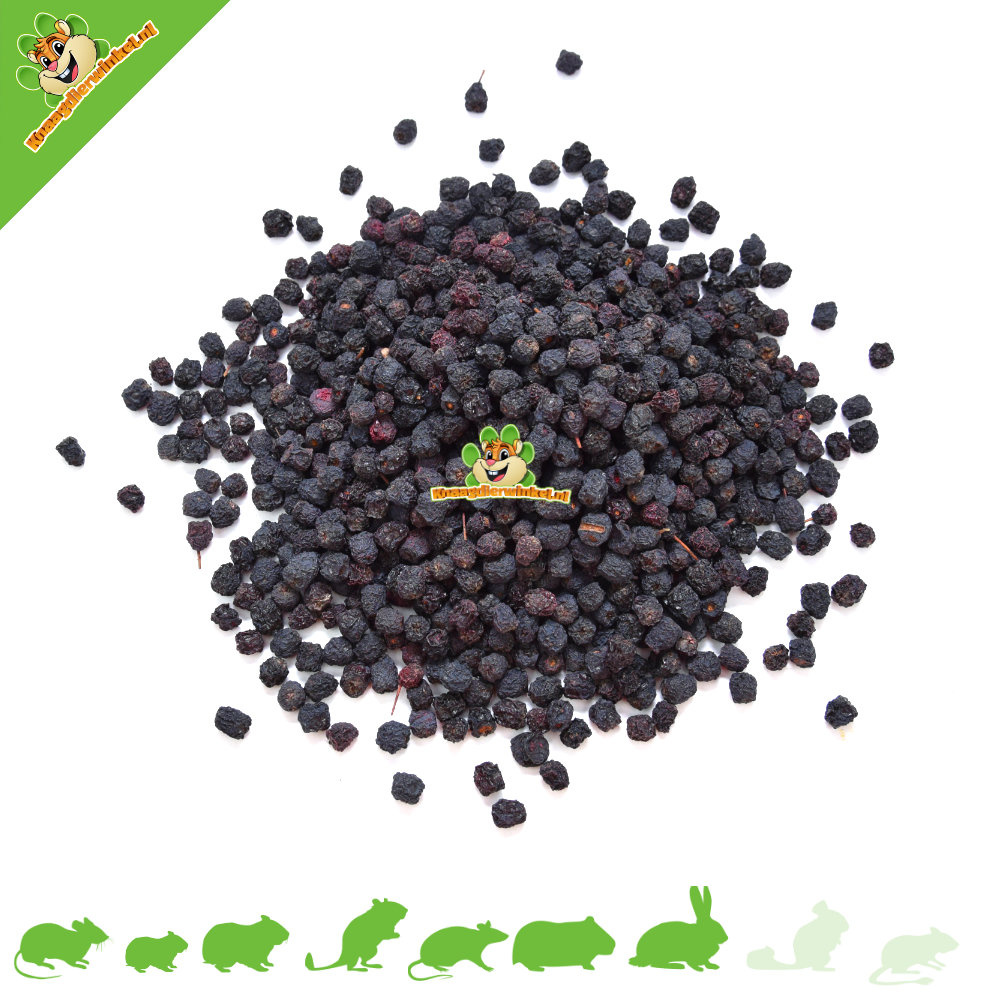
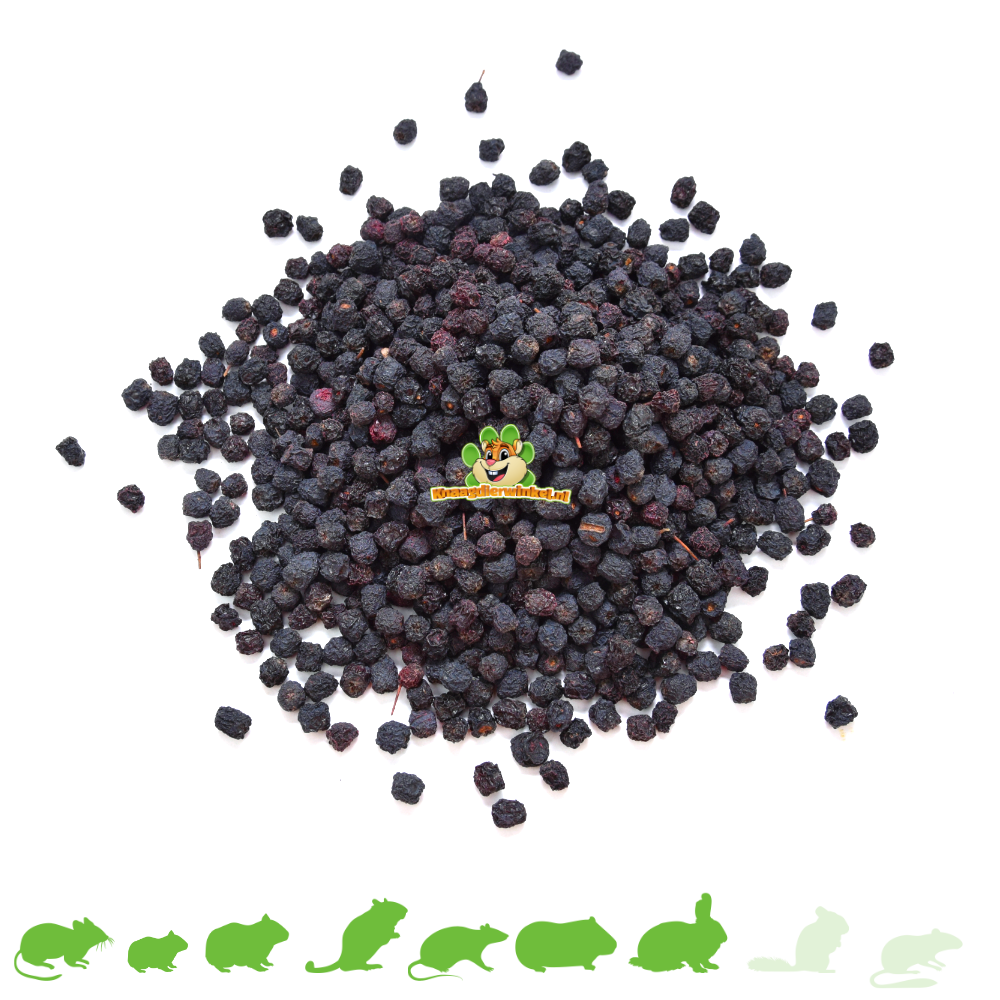
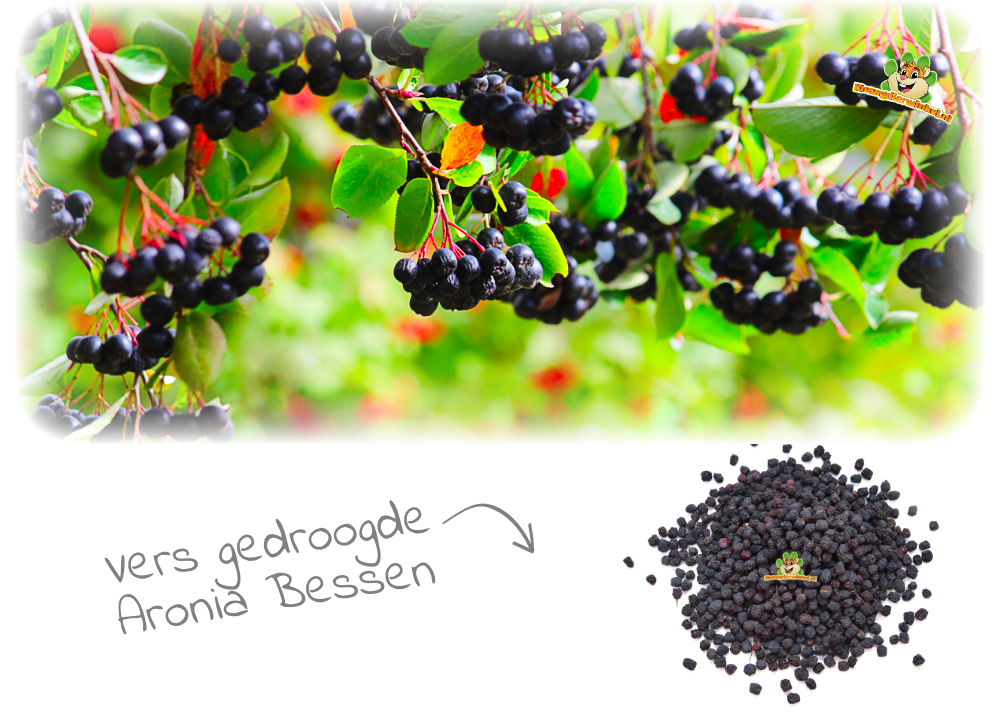
Aronia Berries for Rodents and Rabbits 200 grams
- Buy 2 for €7,55 each and save 5%
- Dispatched from our own stock
- Personal & expert advice
- Always 100% rodent-friendly
- Ordered before 5 p.m., shipped the same day!
Aronia Berries 200 grams – fruity treat for rodents, guinea pigs, and rabbits
Aronia Berries are dried berry snacks for rodents, guinea pigs, and rabbits. Thanks to their fruity scent and small size, they are convenient as a conscious treat, reward, or foraging snack. You can feed them by hand, hide them among hay or herbs, or scatter them around the enclosure so your animal has to search for them.
At DRD, when it comes to fruity snacks, we focus primarily on dosage and usage. Aronia Berries are a true treat for occasional use, not something you need to give in large quantities. Precisely because the berries are small, you can easily adjust them to the size of your animal and use them as a small reward or a search snack.
In short
- Dried aronia berries of approx. 200 grams
- Fruity treat for rodents, guinea pigs, and rabbits
- Handy as a reward, snack time, or foraging snack.
- Small size, making it easy to dose accurately.
- Fun to hide among hay, herbs, bedding, or in a sniffing game.
Pros of Aronia Berries
✔ Fruity snack with one recognizable ingredient
✔ Small size, handy as a reward or treat
✔ Easy to use during foraging games
✔ Suitable for scattering around the enclosure
✔ Nice change of pace for animals that like to search, sniff, and nibble
Why choose Aronia Berries?
Aronia berries are small, fragrant, and easy to use. This makes them very practical when you are looking for a fruity snack that you can offer consciously and in small quantities. You can give one berry as a reward, distribute a few berries over a foraging spot, or hide them in a sniffing mat, box, or natural setup.
A snack in a bowl is often quickly found. By hiding the berries among hay, herbs, or bedding, you make snack time more active. Your animal has to sniff, search, and investigate to find the berries. This makes this snack a good fit for owners who want to combine rewarding with natural foraging behavior.
For mice, dwarf hamsters, hamsters, and gerbils, Aronia Berries are particularly useful as a small snack or search treat. For dwarf rats and rats, they can be used effectively in sniffing games, training sessions, or as a small surprise in a Ratscaping zone. For guinea pigs and rabbits, they are suitable as a small fruity treat, for example, hidden in the hay corner or as a reward given by hand.
For which animals are Aronia berries suitable?
- Mouse: suitable as a small fruity treat. Hide one or a few berries among bedding, hay, or herbs so that mice can actively search for them.
- Dwarf hamster: offer small and deliberately. One berry is often enough as a treat or a brief foraging moment.
- Hamster: suitable as a small reward or foraging snack. Hide a few berries, for example, in a hamsterscaping corner or among natural decorations.
- Gerbil: suitable as an occasional snack and foraging time. Gerbils are active animals; hide the berries among hay, herbs, or in a foraging area.
- Dwarf rat: suitable as a small reward or training snack. Because dwarf rats can vary in size, adjust the quantity to suit your animals.
- Rat: suitable as a fruity treat, reward snack, or sniffing game. Rats often enjoy it when you hide small snacks in a sniffing mat, box, or Ratscaping zone.
- Guinea pig: suitable as a small fruity treat alongside hay and appropriate guinea pig food. Feed consciously and use the berries, for example, as a reward or as a search snack in the hay corner.
- Rabbit: suitable as a small fruity treat alongside hay and appropriate rabbit food. You can give a few berries by hand or hide them among hay or herbs.
Use & offer
Give Aronia berries as a treat in between meals. You can give a berry by hand, place it loose in the enclosure, or hide it among hay, herbs, bedding, or foraging toys. This way, a simple snack time immediately becomes a little search moment.
For small animals, one berry at a time is often sufficient. For rats, guinea pigs, and rabbits, you can dose a little more generously, depending on the size of your animals and the rest of their snack selection. Want to make it more interesting? Then distribute a few berries in different spots in the enclosure so your animal really has to search for them.
Store dried fruit in a dry, dark, and tightly sealed place. This way, the aroma, texture, and quality are preserved as well as possible.
Compound
Composition: Aronia Berries.
Analysis
Analysis: crude protein 3.8%, crude fiber 7.2%, crude fat 1.3%, crude ash 2.2%.
The composition is simple: only aronia berries. As a result, these berries are particularly suitable as a fruity treat, reward, and foraging snack. Their value lies mainly in the scent, taste, texture, and the brief foraging moment they create.
Good to know
Aronia Berries are a supplementary snack for in between meals. Give them consciously and in moderation as a variation alongside the daily basic diet suitable for your animal. Due to their small size, you can easily portion them and use them specifically as a reward or foraging snack.
Useful shopping links
- All snacks for rodents and rabbits
- Dried fruit for rodents and rabbits
- Interactive snacks and foraging snacks
- Playing and foraging
- Guinea pig snacks
- Rabbit snacks
- Ratscaping
Frequently asked questions about Aronia Berries
For which animals are Aronia berries suitable?
Aronia Berries are suitable as a fruity treat for mice, dwarf hamsters, hamsters, gerbils, dwarf rats, rats, guinea pigs, and rabbits. Adjust the quantity according to the size and normal feeding pattern of your animal.
What is the best way to feed Aronia berries?
You can give a berry by hand, offer it loose, or hide it among hay, herbs, bedding, or in a sniffing mat. This way, you immediately turn a treat into a foraging moment.
Are Aronia berries suitable for dwarf hamsters?
For dwarf hamsters, give Aronia berries small and deliberately. One berry is often enough as a treat or a brief foraging moment.
Are Aronia berries suitable for guinea pigs and rabbits?
Yes, Aronia berries can be used as a small fruity treat for guinea pigs and rabbits. Give them judiciously and always combine them with the normal base of hay and appropriate food.
Can you use Aronia berries as a training snack?
Yes, due to their small size, they are handy as rewards during interaction, training, or taming. Rats, hamsters, and rabbits, in particular, may enjoy such small rewards.
Are Aronia berries suitable for hiding?
Yes, precisely because of the scent and small size, Aronia Berries are fun to hide in a foraging corner, sniffing mat, small box, or natural decor.
How do you store Aronia berries?
Store dried fruit in a dry, dark, and tightly sealed place. This way, the aroma, texture, and quality are preserved as well as possible.
With Aronia Berries, you give your pet a small, fruity treat that is easy to portion and fun to use while foraging. A great choice for owners who want to combine a reward moment with searching, sniffing, and exploring.
| Content (approx): | 200 gram |
| Composition: | Aronia berries |
| Analysis: | Crude protein: 3.8%, Crude fiber: 7.2%, Crude fat: 1.3%, Crude ash: 2.2% |
| Promotes Foraging: | Yes, by scattering around |
| Suitable for: | Rodents, Mouse, Dwarf Hamster, Hamster, Gerbil, Rat, Guinea Pig, Rabbit, Chinchilla, Degu |
| Type: | supplementary pet food |
| Particularities: | - |
| Disclaimer: | Not for food producing animals |