Polski



Dried Marigolds 130 grams for Rodents & Rabbits!
- Buy 2 for €8,50 each and save 5%
- Dispatched from our own stock
- Personal & expert advice
- Always 100% rodent-friendly
- Ordered before 5 p.m., shipped the same day!
- Customer service from 09:00 to 18:00
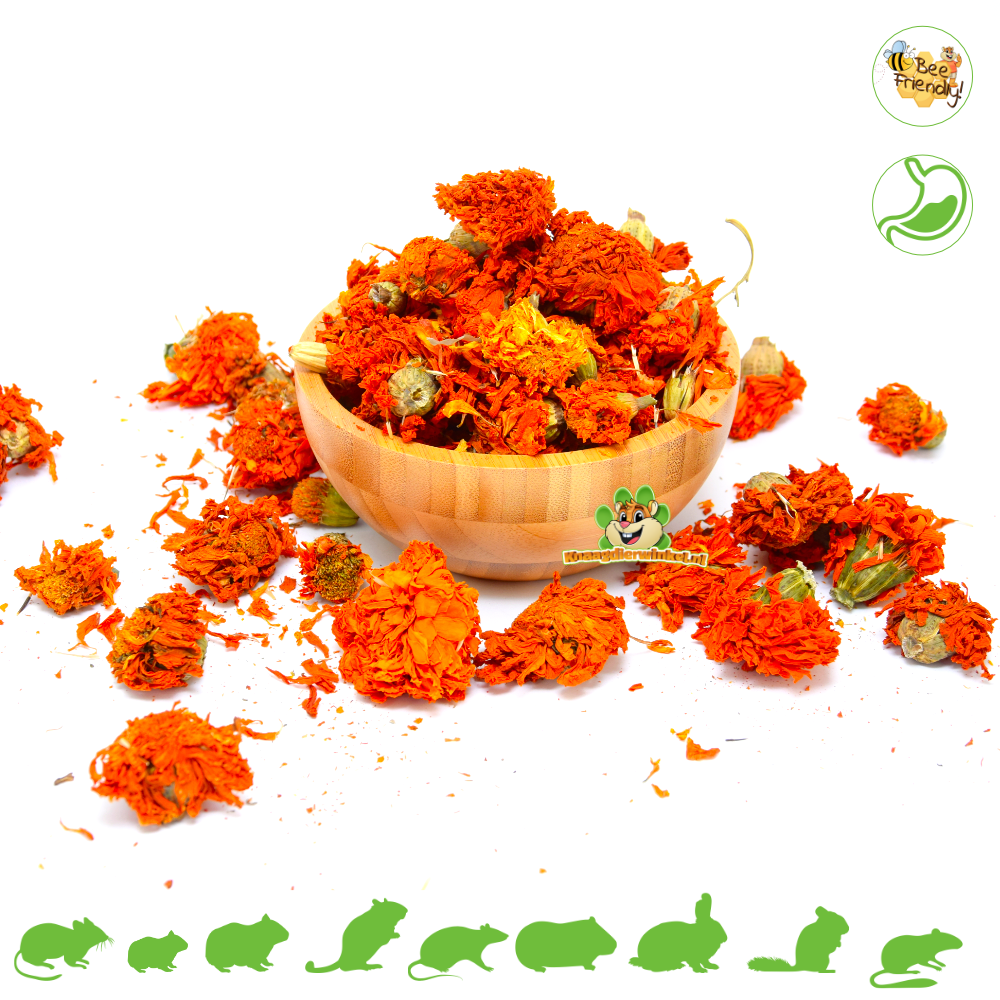
Dried Marigolds 130 grams – colorful flowers for hay, herbs, and foraging
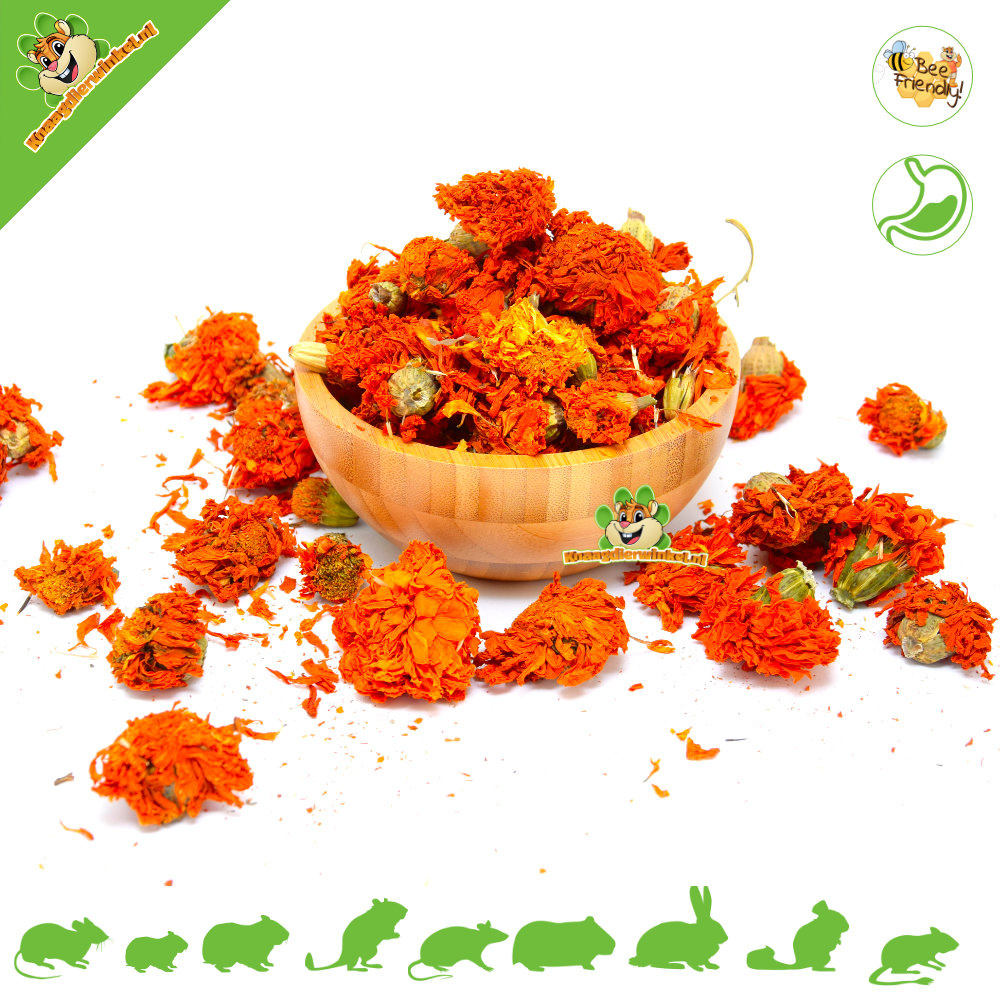
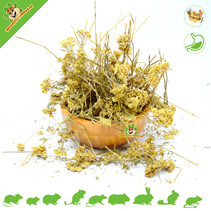
Dried marigolds are cheerful orange-yellow flowers for rodents and rabbits. They add color, scent, and natural variety to the enclosure and are ideal for making hay more attractive, by mixing in herb mixes, or by scattering them around as a small foraging opportunity.
At DRD, when it comes to dried flowers, we focus primarily on their practical use. Marigolds are great for owners who want to enrich hay, create a natural foraging corner, or simply add a bit more color to a hamsterscaping, gerbilscaping, or ratscaping setup. The flowers are lightweight, easy to dose, and complement a natural summer or autumn atmosphere in the enclosure beautifully.
In short
- Dried marigolds of 130 grams
- For rodents and rabbits
- Ideal for enriching hay, herb mixes, and foraging areas.
- Beautiful color accent for natural decor, summer and autumn themes
- Complementary feed for natural variety alongside the daily basic diet
Advantages of Dried Marigolds
✔ Beautiful orange-yellow flowers for extra color in the enclosure
✔ Suitable for mixing with hay, herb, or flower mixes
✔ Stimulates natural sniffing and foraging
✔ Light and easy to dose for small and larger animals
✔ Beautiful for hamsterscaping, gerbilscaping, and natural seasonal decor
Why choose marigolds?
Marigolds are especially nice because they immediately add color and variety. Many animals react curiously to different scents, shapes, and textures. By mixing a small amount of flowers into the hay, the hay becomes more interesting to explore, and your animal can actively start searching among the blades.
You can also use marigolds as a natural decorative finish in a scape. The warm orange-yellow color pairs beautifully with cork, moss, humus, wood bark, dried leaves, and other flowers. Especially in a summer or autumn theme, marigolds instantly add atmosphere without making the enclosure look cluttered.
For herbivores such as guinea pigs, rabbits, chinchillas, and degus, dried flowers are a nice way to add variety to hay and herbs. For small rodents such as mice, dwarf hamsters, hamsters, and gerbils, you use them primarily as light foraging flowers in a herb corner, hamsterscaping, or gerbilscaping setup.
For which animals are Dried Marigolds suitable?
- Mouse: suitable as a light foraging flower. Sprinkle a small amount among hay, herbs, or bedding so that mice can actively search and sniff.
- Dwarf hamster: suitable as a small natural addition in a herb corner or hamsterscaping enclosure. Use a small pinch at a time.
- Hamster: suitable for mixing with herbs, hay, or foraging material. Marigolds add scent, color, and texture to the enclosure.
- Gerbil: suitable as a floral addition to a digging or foraging zone. Hide the flowers among hay, herbs, or bedding to encourage searching behavior.
- Dwarf rat: suitable as a foraging flower through a sniffing mat, herb mix, or Ratscaping zone. Because dwarf rats can vary from one another, adjust the quantity according to your animals.
- Rat: suitable for mixing with foraging material or for use in a sniffing game. Rats often enjoy searching and exploring, making flowers a good fit for enrichment.
- Guinea pig: suitable as a hay topping or floral addition to the hay corner. Mix a small amount into the hay to encourage sniffing and searching.
- Rabbit: suitable as a natural hay topping or as part of a herb and flower mix. Sprinkle a little through the hay or offer it in a forage bowl.
- Chinchilla: suitable as a floral variation alongside hay, herbs, leaves, flowers, and gnawing material. Feed consciously and use especially small quantities.
- Degu: suitable as a light floral supplement alongside hay, herbs, leaves, and appropriate food. Mix a small amount with hay or foraging material.
Use & offer
You can offer dried marigolds in various ways. Mix a small amount into hay, scatter some flowers in a foraging corner, or combine them with other dried herbs, leaves, and flowers. For small animals, a pinch is often sufficient; for larger animals, you can dose a little more generously.
Do you want to make snack time more active? Then hide the flowers among hay, bedding, or in a snuffle mat. This way, your pet has to search, and the floral addition becomes more than just a tasty treat. In hamsterscaping, gerbilscaping, and ratscaping, you can also use marigolds as a warm, natural color finish.
Store dried flowers in a dry, dark, and tightly sealed place. This way, the fragrance, color, and quality are preserved as well as possible.
Compound
Composition: Marigolds.
Analysis
Analysis: crude ash 12.8%, protein 11.3%, crude fiber 21.8%, fat content 7.7%.
The composition is simple: only marigolds. As a result, these flowers are particularly suitable as natural variety, hay topping, and forage flowers. The combination of color, fragrance, and light texture makes them ideal for adding a daily hay or herb base just a little more appealing.
Good to know
Dried marigolds are a supplementary floral addition for in between meals. Use them as variety alongside the daily basic diet suitable for your animal. For guinea pigs, rabbits, chinchillas, and degus, hay remains the most important basis; these flowers primarily make the hay and foraging moments more varied and appealing.
Useful shopping links
- Rodent and rabbit herbs
- Dried flowers for rodents and rabbits
- Hay for enrichment
- Playing and foraging
- Hamsterscaping
- Gerbilscaping
- Ratscaping
Frequently asked questions about Dried Marigolds
For which animals are Dried Marigolds suitable?
Dried marigolds are suitable as a supplementary floral addition for mice, dwarf hamsters, hamsters, gerbils, dwarf rats, rats, guinea pigs, rabbits, chinchillas, and degus. Adjust the quantity according to the size and normal feeding pattern of your animal.
What is the best way to feed African marigolds?
You can mix the flowers with hay, offer them loose, or scatter them in a foraging corner. For small animals, a small pinch is often enough.
Can you use marigolds as a hay topping?
Yes, marigolds are very suitable as a hay topping. By mixing a small amount through the hay, you make the hay more interesting to examine.
Are African marigolds also beautiful for hamsterscaping?
Yes, the warm orange-yellow color fits beautifully into natural scapes, especially with summer and autumn themes. Scatter them subtly among herbs, moss, wood bark, or other natural materials.
How do you store dried marigolds?
Store the flowers in a dry, dark, and tightly sealed place. This way, the fragrance, color, and quality are preserved as well as possible.
With Dried Marigolds, you can easily add more color, scent, and natural variety to the enclosure. A great choice for owners who want to enrich hay, encourage foraging, and give the enclosure a warm, natural look.
| Content (approx): | 130 grams |
| Composition: | Marigolds |
| Analysis: | Rohasche: 12.8%, Rohprotein: 11.3%, Rohfaser: 21.8%, Rohfett: 7.7% |
| Promotes Foraging: | Yes, by scattering around |
| Suitable for: | Rodents, Mouse, Dwarf Hamster, Hamster, Gerbil, Rat, Guinea Pig, Rabbit, Chinchilla, Degu |
| Type: | supplementary pet food |
| Particularities: | - |
| Disclaimer: | Not for food producing animals |