 Polski

Outdoors with rodents and rabbits: runs, transport, and outdoor enclosures

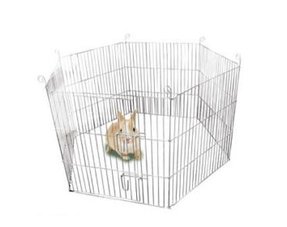
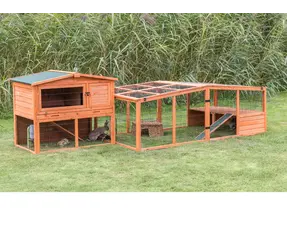
Outdoor products for rodents and rabbits: runs, transport, and outdoor enclosures
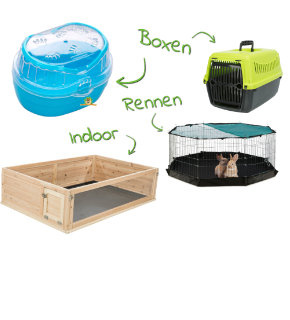 Do you want to safely transport your rodent or rabbit, let them out under supervision, or set up an outdoor area? In the main Outdoors category, you will find everything for transport, outdoor time, and garden setups: from transport boxes and runs to outdoor enclosures for guinea pigs and rabbits.
When it comes to outdoor products, DRD looks not only at “can the animal go outside?”, but primarily at the intended use. A transport box is intended for safe and temporary transport. A run is suitable for controlled, supervised time outdoors. An outdoor enclosure is primarily intended for guinea pigs and rabbits, where shelter, a dry floor, shade, room to move, and protection against predators must all come together.
In short
✓ Transport boxes are intended for safe transport to, for example, the vet, holiday care, a move, or a boarding address.
✓ Runs are suitable for controlled outdoor time, always supervised, with shade, shelter, and appropriate bar spacing.
✓ Outdoor enclosures are primarily intended for guinea pigs and rabbits, where the hutch, run, dryness, and safety must all work together.
Quick links
Subcategories | Transport boxes | Runs | Outdoor enclosures | By species | DRD tip | Learn more | Combining | Checklist | Good to know | FAQ
Transport boxes
For safe transport to the vet, holiday care, moving, or a temporary boarding address. Pay attention to ventilation, size, grip, and a quiet interior.
Running
For controlled outdoor time in the garden, on the terrace, or balcony. Select by animal species, bar spacing, sturdiness, surface, and protection from above.
Outdoor residences
For guinea pigs and rabbits that need a safe place outside with a shelter, run space, shade, dryness, and protection from predators.
Transport boxes: transport safely without the hassle
You use a transport crate for short, controlled transport moments. Think of a vet visit, moving house, holiday care, or a temporary boarding place. A good crate is sturdy, well-ventilated, easy to open, and suitable for the size of your animal.
Make the transport box calm and recognizable. For example, use a layer of suitable bedding, some hay for guinea pigs or rabbits, or a little nesting material for smaller rodents. The box is not a long-term enclosure, but a safe, temporary place for transport.
Also pay attention to the temperature during transport. Do not place a transport box in direct sunlight, in a drafty location, or loose in the car. For animals that are easily startled, a quiet box with sufficient grip is often more comfortable than a transport solution that is too open or slippery.
Running: supervised outdoor time in the garden, terrace, or balcony
A run can be nice for controlled outdoor time, but outdoors is never “just set it up and you’re done.” Pay attention to shade, temperature, predators, bar spacing, ground surface, stability, and supervision. A run must be sturdy and suitable for the species and the size of your animal.
For guinea pigs and rabbits, a run can provide extra room to move around. For small rodents such as mice, dwarf hamsters, hamsters, and gerbils, the outdoors is usually more likely to be stressful or risky due to temperature, smell, noise, predators, and the risk of escape. For these animals, a well-designed indoor enclosure is usually more logical than an outdoor run.
If you use a run for guinea pigs or rabbits, combine it with shelter, a drinking area, a dry resting place, and sufficient shade. Do not place the run on wet grass, in full sun, or in places where wild animals or pesticides could pose a risk.
Outdoor enclosures for guinea pigs and rabbits
An outdoor enclosure is particularly relevant for guinea pigs and rabbits. This does not involve just a hutch, but a complete outdoor setup with shelter, running space, a dry floor, shade, ventilation, and protection against predators.
For rabbits, a night hutch is primarily a sheltered resting place. The daily living space should consist of sufficient permanent room for movement, for example with a permanent rabbit run or a safe outdoor setup. For guinea pigs, outdoor housing makes sense only when the enclosure is well-sheltered, dry, draft-free, and stable.
Would you like to look further specifically for guinea pigs or rabbits? Then also check out guinea pig runs & enclosures , rabbit runs, and outdoor rabbits .
Outdoors by animal species: what makes sense?
Mice, dwarf hamsters, hamsters and gerbils
For small rodents, the outdoors is usually more quickly stressful or risky. Temperature differences, predators, wild scents, noises, and the risk of escape all play a role. For these animals, a transport box is primarily intended for transport, not as an outdoor enclosure.
Dwarf rats and rats
For dwarf rats and rats, the outdoors is usually not a standard living situation. Be sure to use a sturdy transport box for transport. When keeping them outdoors, choose a very controlled, safe setting free from drafts, strong sunlight, stressful stimuli, or the risk of escape. For indoor enclosure design, also consider Ratscaping as an enrichment option.
Guinea pigs
Guinea pigs can go outside under the right conditions, but they require plenty of shelter. Think of shade, a dry surface, protection against drafts, sufficient hiding places, group safety, and a stable run. Hairless guinea pigs are not suitable for outdoor housing. Also check out guinea pig runs & enclosures and the guinea pig cage selection guide .
Rabbits
Rabbits can be kept outdoors provided the enclosure is spacious, dry, draft-free, safe, and well-furnished. A hutch alone is not a complete living space; combine a sheltered resting place with sufficient permanent room to move around. See also keeping rabbits outdoors , choosing a rabbit run , and rabbit enclosure selection guide .
Chinchillas and degus
For chinchillas and degus, the outdoors is not a logical standard place. Chinchillas are sensitive to heat and moisture; degus require a stable, well-furnished living environment. Use outdoor products for these animals only when it is truly suitable for a short, safe, and controlled moment.
Practical DRD tip
The biggest mistake with an outdoor run is often not the run itself, but the location where it stands. A run that is safely in the shade in the morning can still end up in full sun later in the day. Therefore, do not just set up an outdoor run, but also observe how the sun, wind, noise, and predators behave throughout the day.
Want to know more about keeping things outdoors and outdoor space?
Some outdoor choices require more explanation than a product card can provide. Therefore, we also link to practical information pages from this category. For rabbits, you can read more about keeping rabbits outdoors , choosing a rabbit run , space for rabbits , and choosing a rabbit enclosure .
For guinea pigs, you can look further at guinea pig information & buying guides , guinea pig cage buying guide , and what you need for guinea pigs . This way, this category remains purchase-oriented, but the owner still has direct access to in-depth help when needed.
Combine beautifully with outdoor products
Shelters
A run or outdoor enclosure needs quiet hiding places, especially for guinea pigs and rabbits.
Hay & hay racks
For guinea pigs and rabbits, a good hay spot should remain visible and dry, even outdoors.
Ground cover
A dry floor, toilet area, or absorbent layer helps keep outdoor shelters more practical.
Summer & cooling
Heat control is important during outdoor moments. Also check out products for shade, coolness, and summer routine.
Checklist: safely outside
✓ Does the outdoor product suit the animal species, size, and application?
✓ Is there always shade, shelter, and a place out of wind and drafts?
✓ Are the bar spacing, latches, stability, and top-down protection correct?
✓ Is the surface dry, clean, and free of pesticides, wild animals, and sharp objects?
✓ Is there protection against cats, dogs, birds of prey, martens, and other animals?
✓ Do you use a transport box only for transport or short-term temporary care?
✓ Do you check after use whether the run, box, or outdoor enclosure is clean, dry, and undamaged?
Good to know about outdoor products
Outside is more stimulating than inside.
New smells, sounds, wind, birds, cats, and temperature differences can be overwhelming for small animals. Gradually build up time outdoors and observe your animal's behavior closely.
Shade is not an extra.
A run or outdoor enclosure should never be in full sun all day. Provide permanent shade and a sheltered spot where your animal can go on its own.
Predator safety remains important
Think not only about escaping, but also about intrusion. Cats, dogs, birds of prey, rats, and martens can pose a risk. A safe run or outdoor enclosure is sturdy, lockable, and, where necessary, protected from above.
Transport is temporary
A transport box is convenient and important, but remains intended for transport. For housing, time outdoors, or long-term care, choose a suitable cage, run, or outdoor enclosure.
Frequently asked questions about keeping rodents and rabbits outdoors
Can my rodent go outside?
That depends on the animal species, temperature, surface, safety, and stress sensitivity. Guinea pigs and rabbits can go outside under good conditions. For small rodents such as mice, dwarf hamsters, hamsters, and gerbils, being outside is usually risky sooner.
Can my rabbit live outside?
Rabbits can live outdoors provided the enclosure is spacious, dry, draft-free, safe, and well-furnished. A hutch alone is not enough; a rabbit also needs sufficient permanent space to move around.
Can my guinea pig live outside?
Guinea pigs can only live outdoors under good conditions: shelter, dryness, sufficient group warmth, a frost-free hiding place, protection against heat, and daily monitoring. Hairless guinea pigs are not suitable for outdoor housing.
What do you look out for in a race?
Pay attention to bar spacing, stability, closures, predator safety, shade, and the ground surface. For rabbits, protection against digging is especially important. For guinea pigs, drafts, open spaces, and hiding places are important considerations.
What do you use a transport box for?
You use a transport box for safe transport to, for example, the vet, holiday care, a move, or a boarding address. The box is not intended for long-term stay.
Can a transport box also be used as an outdoor enclosure?
No, a transport box is too small and too restrictive for outdoor stays or prolonged time outdoors. Use a suitable run, cage, or outdoor enclosure for that purpose.
Can hamsters or gerbils live in an outdoor enclosure?
Usually, that is not the best choice. Hamsters and gerbils are sensitive to stress, temperature fluctuations, and the risk of escape. For these animals, a well-designed indoor enclosure is generally much more logical.
What is the difference between a run and an outdoor enclosure?
A run is primarily intended for room to move and controlled time outdoors. An outdoor enclosure is a more complete setup with shelter, a night shelter, run space, dry zones, and protection against weather and predators.
Buy outdoor products at DRD Knaagdierwinkel®
At DRD Knaagdierwinkel®, you will find outdoor products for rodents and rabbits that are suitable for safe use: secure transport, controlled outdoor access, and creating a well-thought-out outdoor setup for guinea pigs and rabbits. We help you choose based on the animal, ensuring the application matches size, behavior, safety, and daily care.
Would you like to look further specifically? Then go to Transport boxes , Runs , Outdoor enclosures , Outdoor Rabbits or Guinea pig runs & enclosures .
✓ Specialist since 2011 in outdoor products, runs, transport, and species-specific selection assistance
✓ Carefully selected assortment: DRD chooses what is truly right for the animal, enclosure, and use
✓ Delivered from our own stock and shipped from the Netherlands to the Netherlands, Belgium, Germany, and other EU countries
