 Polski

Rabbit houses and rabbit hutches for indoors and outdoors
- Voor 17 uur besteld, dezelfde dag verzonden!
- Rodent specialist since 2011
- Dispatched from our own stock


- Voor 17 uur besteld, dezelfde dag verzonden!
- Rodent specialist since 2011
- Dispatched from our own stock


Rabbit houses and rabbit hutches for indoors and outdoors
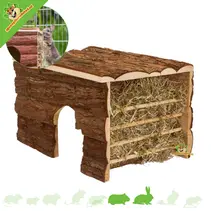
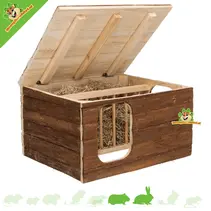
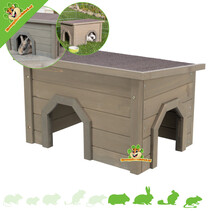
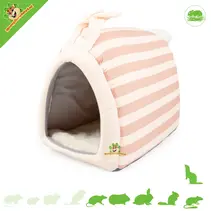
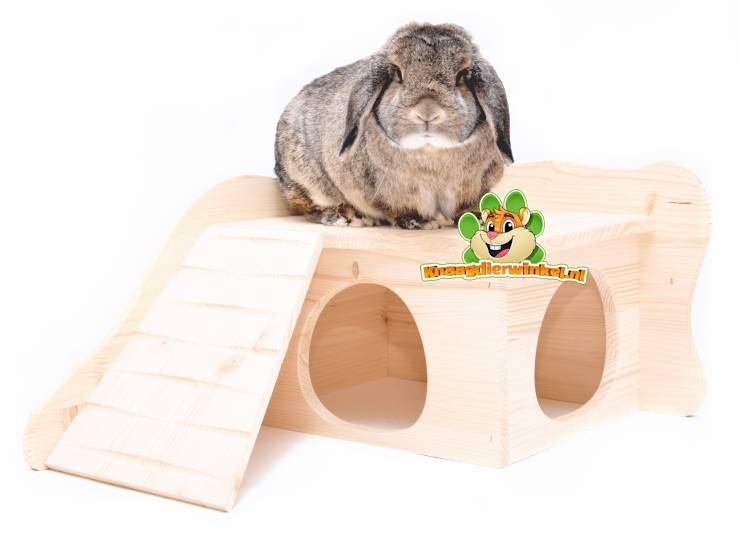 A rabbit hutch or rabbit house provides your rabbits with a sheltered place to rest, take cover, and retreat for a while. In this category, you will find various shelters for rabbits: from wooden houses and spacious rabbit hutches to plush houses, fleece shelters, plastic igloos, grass and hay houses, willow houses, and natural shelters for indoors and outdoors.
At DRD Knaagdierwinkel®, you will find rabbit houses for various situations. For indoors, consider soft plush houses, fleece shelters, igloos, wooden houses, and houses for the rabbit room . For outdoors, sturdy, sheltered, and easy-to-inspect rabbit houses are particularly important, depending on the material, placement, and weather conditions. This way, you choose not only a nice house, but a resting place that suits your rabbits and their enclosure.
✓ In short: rabbit hutches and rabbit houses provide shelter, peace, and a safe place in the enclosure.
✓ For indoors, wooden, plush, fleece, plastic, and natural houses are popular; for outdoors, pay extra attention to sturdiness, dryness, and shelter.
✓ Choose a house that is spacious enough, stands stably, and suits the size, behavior, and living space of your rabbits.
Quick links:
Why a playhouse? · What can you find here? · Which playhouse suits you? · Materials · Indoors or outdoors · Placement · Combining · Maintenance · Useful shopping routes · FAQ
Peace & shelter
A small house gives your rabbits a place where they can retreat, relax, and lie sheltered.
For indoors and outdoors
For indoors, you prioritize comfort and cleanliness; for outdoors, you pay extra attention to moisture, wind, cold, heat, and shelter.
Natural behavior
Sheltering, hiding, gnawing, resting, and choosing routes are all part of a rabbit-friendly setup.
Why do rabbits need a small house or rabbit hutch?
Rabbits feel more comfortable when they can choose between open space and shelter. A small house or rabbit hutch provides a fixed resting place where your rabbits can retreat. This is important in an indoor run, outdoor run, rabbit room, or larger enclosure.
A rabbit house is therefore not just decoration. It helps to organize the enclosure logically: a place to eat, a place to use the toilet, a place to move around, and a sheltered place to rest. Especially with a pair of rabbits, it is nice when both rabbits have sufficient space and choice.
A rabbit hutch helps with
✓ Peace and shelter in the enclosure.
✓ Create a safe retreat.
✓ Divide the space logically into zones.
✓ Create sheltered routes with huts and tunnels.
✓ Give your rabbits more choice in how they use the space.
What can you find in this Rabbit Houses category?
This category contains various types of rabbit hutches, rabbit houses, and shelters. Some houses are sturdy and practical, while others are soft, natural, chewable, or suitable as an extra sheltered spot in an indoor space. Choose the house based on size, material, placement, cleaning, and how your rabbits use the space.
Assortment in this category
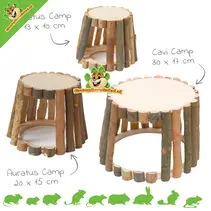
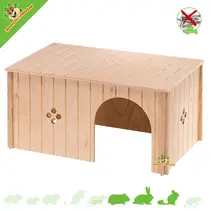
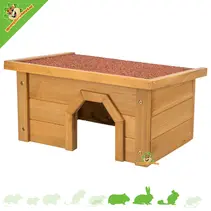
✓ Wooden rabbit houses: sturdy shelters for indoor runs, rabbit rooms, and sheltered enclosures.
✓ Rabbit houses: more spacious houses or shelters for rabbits that need more space.
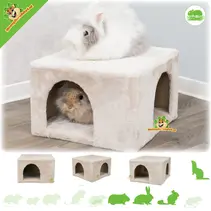
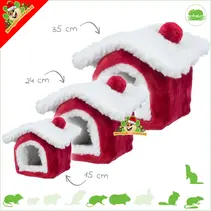
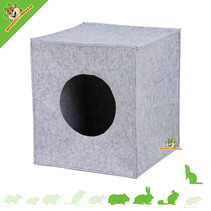
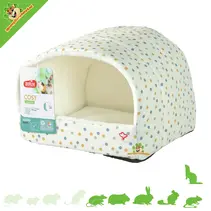
✓ Plush and fleece houses: soft hiding places for indoor use, ideal if your rabbits leave the material clean.
✓ Igloos and plastic houses: lightweight, smooth, and easy to clean, especially handy in dry places.
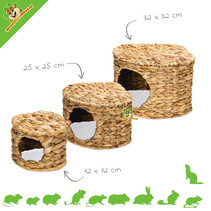
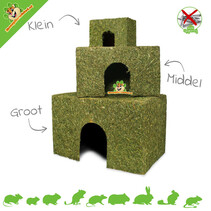
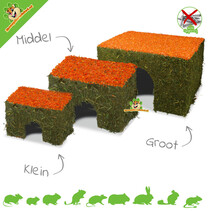
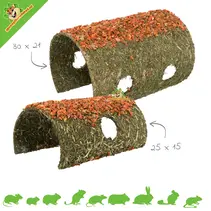
✓ Grass, hay, straw, and willow houses: natural houses that can also serve as chewable enrichment.
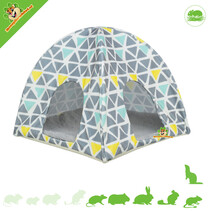
✓ Tents, baskets, and soft resting places: great options for a dry, safe indoor space.
✓ Houses for indoors and outdoors: depending on material, size, stability, and protection against moisture or weather.
Which rabbit house suits your rabbits?
A good rabbit house suits the size of your rabbits and the layout of their enclosure. Your rabbits must be able to get in and out easily, sit comfortably, and turn around. For larger rabbits or multiple rabbits together, a more spacious rabbit house is often preferable.
Also consider the function. Do you primarily want a hiding place, a soft resting spot, a natural chew house, a plush indoor house, or a sturdy rabbit hutch for a sheltered outdoor area? By determining the role of the house first, you can make a much more informed choice.
Pay attention to when choosing
✓ Does the size fit your rabbits?
✓ Can your rabbits easily get in and out of the house?
✓ Does the house have one opening or multiple openings?
✓ Is the little house stable and low in the enclosure?
✓ Is the material suitable for indoors, outdoors, or a sheltered spot?
✓ Can you properly inspect and keep the cottage clean?
Wooden, plush, fleece, plastic, and natural rabbit houses
The material determines how you use the house. Wood provides a natural look and fits well in many enclosures. Synthetic is often easy to clean. Grass, hay, straw, willow, and seagrass give a natural look and can also provide extra gnawing fun. Plush and fleece are primarily intended for dry indoor areas.
For each material, consider the location where it is used. Outdoors, moisture and weather play a greater role. Indoors, cleanliness, gnawing behavior, fur, loose fibers, and stability are important. Check soft and braided materials more frequently if your rabbits like to gnaw or dig.
Wooden houses
Sturdy, natural, and easy to combine with tunnels, ground mats, and run dividers. Check regularly for moisture, wear, and gnawing edges.
Plush and fleece houses
Soft and comfortable for indoor use. Nice as a resting place, provided your rabbits leave the material tidy and do not keep gnawing on it.
Plastic igloos
Lightweight and easy to clean. Practical in dry places, but pay attention to ventilation, heat, and gnawing behavior.
Natural cottages
Made from, for example, grass, hay, straw, willow, or seagrass. Great as a hiding place and chewable enrichment.
Rabbit houses for indoors and outdoors
For indoors, you can choose from wooden houses, soft plush houses, fleece hiding places, igloos, grass or willow houses, and combination products. Indoors, pay particular attention to the floor, grip, gnawing behavior, loose materials, and cleaning. In a rabbit room, a house is often part of a larger setup that includes bedding, a litter box, hay, and tunnels.
For outdoor use, rabbit houses are primarily used in sheltered, dry locations. Not every house is suitable for prolonged exposure to the elements. Outdoors, pay extra attention to moisture, wind, cold, heat, ventilation, and ensuring the house remains clean and dry. A shelter in an outdoor run is different from a full-fledged night hutch.
For indoors
✓ Plush, fleece, wooden, plastic, and natural houses can fit well indoors.
✓ Combine with floor mats, tunnels, and a toilet area.
✓ Check soft materials for gnawing damage, loose threads, and moisture.
For outdoors
✓ Be sure to choose sturdy, sheltered, and easily inspectable rabbit houses.
✓ Place cottages in a dry, sheltered location, out of direct weather.
✓ Check extra carefully for moisture, mold, cold, heat, and wear.
Read more: Keeping rabbits indoors · Keeping rabbits outdoors · Furnishing a rabbit room
Place rabbit house in the enclosure
The location of the house determines how well your rabbits use it. Ideally, place a house low, stable, and in a spot where it cannot tip over or sink. Do not place it in the middle of the free-roaming area, but rather along an edge, in a corner, or as part of a sheltered route.
A flat roof can naturally become part of the setup, as rabbits sometimes like to sit on them. In that case, ensure the hutch is stable and that there are no awkward stepping or falling points around the perimeter. For rabbits, it is primarily about stability, space, and logical placement.
Practical placement
✓ Place the playhouse low and stable.
✓ Place it along an edge or in a quiet zone.
✓ Leave enough free walking space.
✓ Ensure that entrances are not blocked immediately.
✓ Check that the playhouse cannot tip over, slide, or sink.
Combine rabbit houses with tunnels, hay, and enrichment.
A small house works best as part of a complete setup. Combine it with tunnels, hay, a litter box, drinking water, gnawing material, and foraging products. This creates an enclosure where your rabbits can choose: lying in the open, lying in a sheltered spot, walking through a tunnel, eating hay, or gnawing quietly.
Preferably, position houses and tunnels to create routes. Rabbits often enjoy moving along edges and using sheltered passages. At the same time, sufficient free-moving space must remain, especially in a rabbit run or rabbit room.
Smart combination
✓ Small house + tunnel for a sheltered route.
✓ Little house + ground mat for a comfortable resting place.
✓ House + gnawing material for safe neighborhood activity.
✓ House + hay corner for a quiet zone in the run.
✓ Shelter + foraging area for variety without cluttering the walking space.
One little house or multiple shelters?
For a pair of rabbits, one house is sometimes enough, but multiple hiding places are often more practical. Rabbits want to be able to lie together, but also be able to distance themselves. Multiple resting places prevent one house from becoming the only safe spot.
When keeping multiple rabbits, it is preferable to choose spacious rabbit houses, houses with multiple entrances, or a combination of houses and tunnels. This prevents an animal from ending up in a dead end and keeps the environment calmer for both rabbits.
For rabbit couples
✓ Ensure there are sufficient resting places.
✓ Choose spacious houses or multiple shelters.
✓ Houses with multiple openings are often more practical.
✓ Leave clear walking space and escape room.
✓ Check whether both rabbits can use the hiding places quietly.
Maintenance and inspection of rabbit hutches
A rabbit house is used daily and must therefore be checked regularly. Look for moisture, urine, droppings, gnaw marks, loose threads, sharp edges, and stability. Soft houses, woven materials, and natural houses, in particular, can wear out faster if your rabbits like to gnaw.
Wooden houses can usually be wiped down dry or cleaned locally. Plastic houses are often easier to clean thoroughly. Plush and fleece houses should primarily be used in dry indoor areas, and checked extra carefully for loose threads or wet spots. Natural houses made of grass, hay, straw, or willow are more consumables: they may be used and gnawed on, but replace them when they are too dirty, wet, or damaged.
Daily cottage check
✓ Is the little house still stable?
✓ Are there wet spots, urine, or strong odors?
✓ Are there sharp edges, loose parts, or damaged pieces?
✓ Are there loose threads or frayed edges on plush or fleece houses?
✓ Does the house still suit the size and behavior of your rabbits?
Good to know
Place playhouses low and stable, prevent them from tipping over or sagging, and check regularly for wear. Use the roof only as it naturally forms part of the layout and ensure that no awkward stepping or falling points are created around it.
Handy shopping routes at rabbit hutches
A rabbit house works best as part of a complete setup. Combine hiding places with tunnels, ground mats, a run, hay, a litter box, gnawing material, and enrichment.
Learn more about accommodation, space, and furnishing
Do you want to determine how many hiding places and resting zones you need first? Then read our information pages on space, rabbit runs, keeping indoors, keeping outdoors, and furnishing a rabbit room. This is how you choose a rabbit house as part of a complete living space.
How much space do rabbits need? · Choosing a rabbit run · Keeping rabbits indoors · Keeping rabbits outdoors · Furnishing a rabbit room
Frequently asked questions about rabbit hutches and rabbit houses
Do rabbits need a house?
Yes, a small house or shelter is important. Rabbits need shelter to feel safe, to rest, and to be able to retreat for a while.
What is the difference between a rabbit hutch and a rabbit house?
A rabbit hutch is often a smaller shelter or resting place. A rabbit house is usually more spacious and may be better suited for larger rabbits, multiple rabbits, or an outdoor enclosure. In practice, the words are often used interchangeably.
Which house is suitable for rabbits?
A suitable rabbit house is spacious enough, stable, easily accessible, and matches the enclosure. For a pair of rabbits, spacious houses or multiple hiding places are often more practical.
Are plush houses suitable for rabbits?
Plush and fleece houses can be suitable for dry indoor spots, especially if your rabbits leave the material clean. However, do check regularly for gnaw marks, loose threads, moisture, and dirt.
Is a wooden rabbit hutch suitable?
Yes, wooden houses are sturdy and natural. However, do check them regularly for moisture, sharp edges, loose parts, and gnaw marks.
Is a plastic igloo suitable for rabbits?
A plastic igloo can be practical because it is lightweight and easy to clean. However, pay attention to ventilation, heat, size, and whether your rabbits gnaw on it.
Are grass and hay houses suitable for rabbits?
Yes, natural grass and hay houses can be fun as shelters and chewable enrichment. They are more consumables and need to be replaced when they are too wet, dirty, or damaged.
Can you use a rabbit house outside?
That depends on the material and the location. Outdoors, primarily use sturdy and sheltered rabbit houses that can be kept dry. Check extra carefully for moisture, cold, heat, and wear.
Why are multiple openings useful?
Multiple openings make a hutch less of a dead end. This is convenient when you have multiple rabbits, as they can run in and out more easily and are less likely to block each other.
How many houses do two rabbits need?
For two rabbits, multiple hiding or resting spots are often pleasant. This way, your rabbits can lie together, but also move aside when they feel the need.
Rabbit houses at DRD Knaagdierwinkel®
At DRD Knaagdierwinkel®, you will find rabbit houses and rabbit hutches for various enclosures and situations: wooden houses, spacious shelters, igloos, plush houses, fleece shelters, grass and hay houses, willow houses, tents, and natural shelters for indoors and outdoors.
✓ Wooden houses, spacious rabbit houses, igloos, plush houses, fleece houses, and natural hiding places conveniently grouped together
✓ Houses for indoors and outdoors, rabbit rooms, runs, and sheltered enclosures
✓ Practical to combine with tunnels, floor mats, runs, rabbit rooms, and enrichment
✓ Selection guide for size, material, placement, maintenance, and multiple rabbits
✓ Specialist since 2011
✓ Delivered from our own stock
