Polski

Chinchilla food in the Chinchilla Webshop
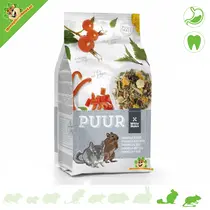
Complete chinchilla and degu food in muesli form with timothy hay, rosehip, marigold, paprika, and nettle. Available in 500 g and 2 kg.
Read more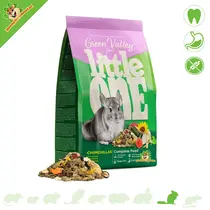
Grain-free, high-fiber chinchilla food with meadow and mountain grasses, herbs, flowers, vegetables, and FOS. With 24% fiber as a green daily base alongside hay.
Read more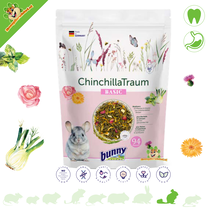
Complete chinchilla food with 63 plants & herbs and 3-fiber mix. High-fiber base for daily feeding; always combine with unlimited hay. Contents: 1.2 kg.
Read more
Complete all-in-one chinchilla food with extruded pellets. With FOS, MOS, yucca, spirulina and without added sugars/colorings.
Read more- Voor 17 uur besteld, dezelfde dag verzonden!
- Rodent specialist since 2011
- Dispatched from our own stock
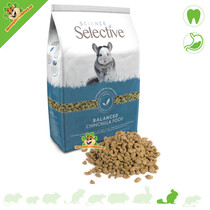
Complete all-in-one food for chinchillas of all ages. With 19% fiber, 3% fat, flaxseed, parsley, and prebiotic MOS.
Read more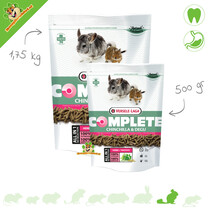
All-in-one pellet food for chinchillas and degus. No added sugars, with long fiber, flaxseed, FOS, and yucca.
Read more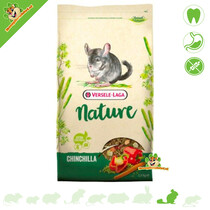
High-fiber, grain-free chinchilla food without added sugars. With timothy, grasses, herbs, vegetables, FOS, MOS, and yucca.
Read more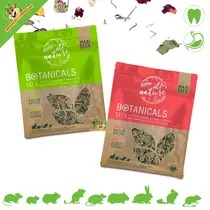
Botanicals Maxi Mix is a natural, tasty mix for rodents. Choose from Raspberries & Cauliflower or Peppermint & Chamomile Blossoms. Ideal as a snack or main food.
Read more- Voor 17 uur besteld, dezelfde dag verzonden!
- Rodent specialist since 2011
- Dispatched from our own stock
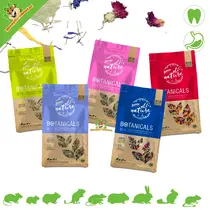
Bunny Nature Botanicals Mid Mix – Fine Natural Mix for Guinea Pigs, Rabbits, Chinchillas, Degus, Gerbils, Mice, Hamsters, and Rats! Natural herbal mix with carefully selected plants and flowers. Ideal as a snack or part of the allNature nutrition concept
Read more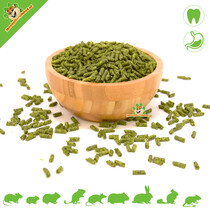
Lucerne pellets as natural grass/herb pellets for rodents and rabbits. Handy as a reward, mixed with hay, in a treat game, or for scattering around.
Read more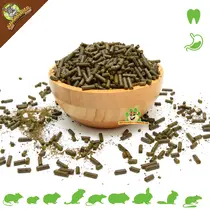
Walnut Leaf Pellets are a delicious addition to the diet of rodents and rabbits. Walnut leaves are not only delicious but also very healthy. The pellets are approximately 4 mm in size and are made entirely from fresh walnut leaves.
Read more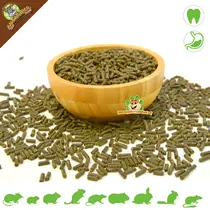
Dandelion pellets as natural herbal pellets for rodents and rabbits. Handy as a reward, mixed with hay, in a treat game, or to scatter around.
Read more- Voor 17 uur besteld, dezelfde dag verzonden!
- Rodent specialist since 2011
- Dispatched from our own stock
Rosemary pellets as natural herbal pellets for rodents and rabbits. Handy as a reward, in a treat ball, on a snack plate, or to scatter around.
Read more
Get ready to enter rodent paradise with the irresistible Rodent Herbal Basil Pellets! This nutritional sensation is specially designed to pamper your beloved rodents and rabbits. It's not just a treat—it's a tasty addition to their daily diet.
Read more
Spinach pellets as natural vegetable pellets for rodents and rabbits. Handy as a reward, mixed with food, in a treat ball, or to scatter around.
Read more
Thyme pellets as natural herbal pellets for rodents and rabbits. Handy as a reward, mixed with hay, in a treat game, or to scatter around.
Read more- Voor 17 uur besteld, dezelfde dag verzonden!
- Rodent specialist since 2011
- Dispatched from our own stock
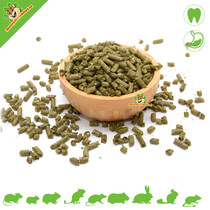
Meadow grass pellets as natural grass/fiber pellets for rodents and rabbits. Handy as a reward, mixed with hay, in a treat game, or for scattering around.
Read more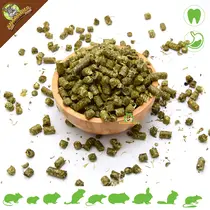
Timothy pellets made from organic Timothy grass for rodents and rabbits. Handy as a reward, mixed with hay, in a treat game, or to scatter around.
Read more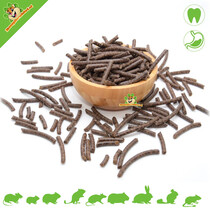
Pressed linseed pellets/kibble as a supplementary snack and foraging reward. For snuffle mat, treat board, treat ball, or to scatter throughout the enclosure.
Read more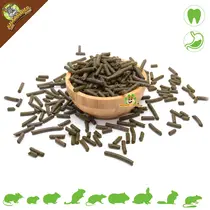
Hemp pellets as a natural pellet variation for rodents and rabbits. Handy as a reward, snack play filler, or for scattering.
Read more- Voor 17 uur besteld, dezelfde dag verzonden!
- Rodent specialist since 2011
- Dispatched from our own stock
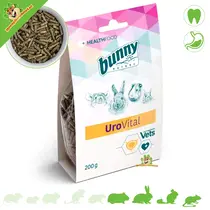
Complementary dietary supplement for dwarf rabbits, guinea pigs, chinchillas, and degus with low calcium content, stabilized vitamin C, and herbs such as cocksfoot root and parsley root.
Read more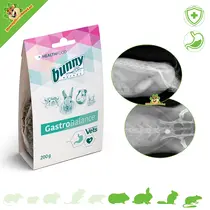
Does your beloved rodent or rabbit suffer from a sensitive digestive system and problems with gas? Don't worry! BunnyNature Gastro Balance is specially designed as a dietary supplement to support them during times of digestive issues, such as digestive pr
Read more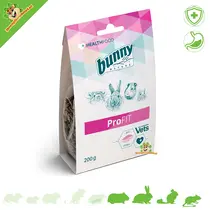
Bunny Nature Health Profit is a complementary dietary supplement for rabbits, guinea pigs, chinchillas, and degus. Containing inulin, chamomile, brewer's yeast, and vitamins, among other ingredients, as a daily extra supplement alongside the basic diet.
Read more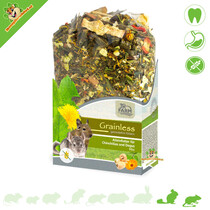
Complete grain-free food for chinchillas and degus with quad-bits, long-fiber herbs, and vegetables. Feed every 24 hours and always combine with unlimited hay and fresh drinking water. Contents: 650 g.
Read moreYou can order chinchilla food quickly and easily at DRD Rodent Shop ®
Want to feed your chinchilla truly well? Then it's all about fiber, constant availability, and a calm gut. Chinchillas have a sensitive digestive system and teeth that grow continuously throughout their lives. That's why you'll find primarily species-appropriate chinchilla food (pellets/chunks) in this category, supplemented with fiber-rich additives and herbs/botanicals for variety and enrichment. We carefully select based on appropriate composition, practicality, and species safety. Specialist since 2011 – fast delivery from our own stock.
Chinchilla food product groups
The daily core: balanced, stable and easy to dose.
Read more →
For those who consciously choose fiber-rich compositions and clear ingredients.
Read more →
Variation and enrichment within a good basic diet (in moderation).
Read more →
Handy for dosing: timothy, meadow grass and herb pellets, among others.
Read more →
Force-feeding and support mixes: handy to have at home.
Read more →
The basics of the chinchilla diet
- Unlimited hay: hay is the basis for fiber, intestinal function and natural tooth wear.
- Chinchilla food (pellets) as a supplement: daily in appropriate quantities, tailored to age and condition.
- Variation with care: herbs/botanicals are enrichment, not a replacement for hay or basic feed.
- Avoid long feeding breaks: chinchillas prefer to eat at different times, so make sure hay is always available.
- Balance in the menu: don't change food too often; always gradually increase feed changes.
Checklist: How to choose the right chinchilla food
- Fiber-oriented: choose a basic food that fits a high-fiber diet (hay always remains #1).
- Limit “extras”: Snacks/supplements are fun, but keep the basic diet leading.
- Stable menu: don't change too often; always switch food gradually.
- Observe: pay attention to appetite, stool, weight, and activity. If in doubt, consult a veterinarian experienced with small rodents.
- Store correctly: store food dry, cool and closed for quality and taste.
Practical tips 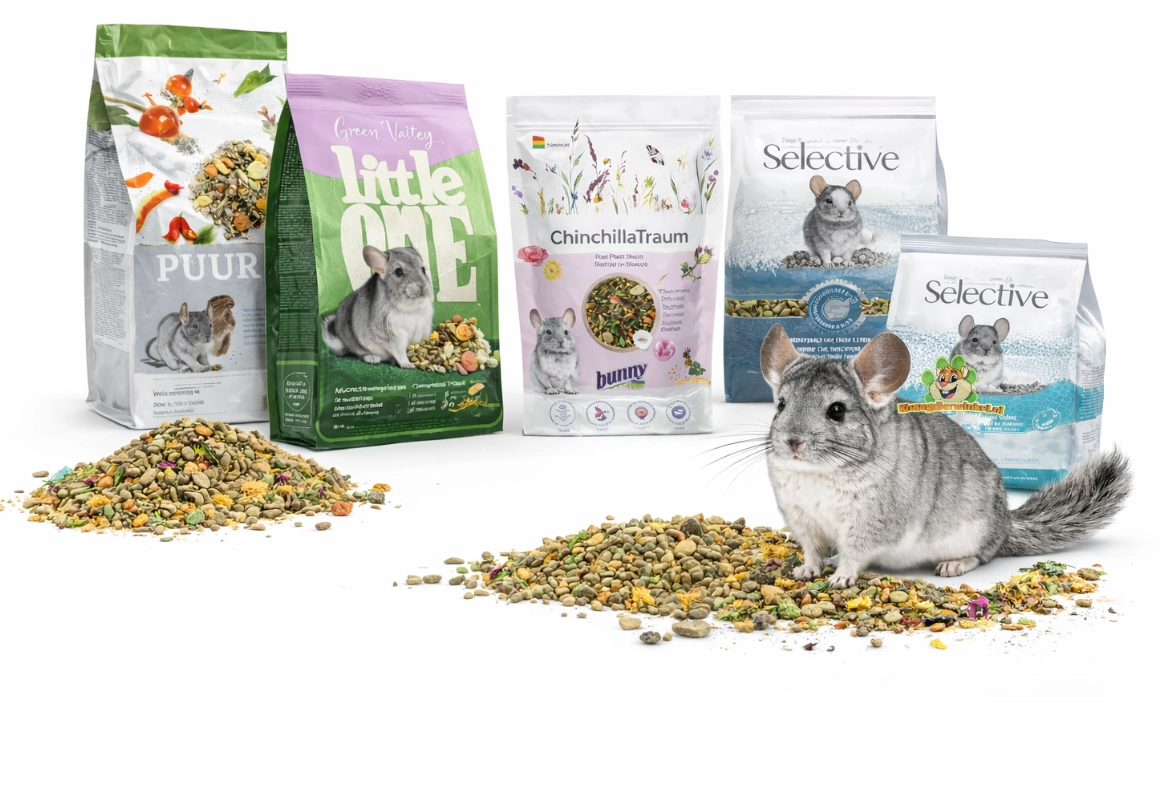
1) Basic food (pellets / complete chunks)
- Why pellets are often useful: less selective eating behaviour than with mixed muesli.
- Examples in this category: PURE Chinchilla & Degu, Bunny Nature ChinchillaDroom Basic, Supreme Selective Chinchilla, Beaphar Care+, Versele-Laga Complete, Versele-Laga Nature.
- Tip: measure out a fixed daily portion and always provide unlimited hay.
2) Grain-free & fiber-oriented
- For whom: Owners who opt for a clear composition and fibre-oriented nutrition.
- Examples: Little One Green Valley Chinchilla Food Grain-Free, JR Farm Grainless Mix Chinchilla & Degu.
- Tip: don't just look at "grain-free", but especially at the total picture: hay + stable basic feed + small supplement.
3) Herbs, botanicals & fiber supplementation
- Think of it as enrichment: sprinkle a small amount through the hay or in a foraging area.
- Examples: Mr Crumble Chinchilla Herbs, Meadow Dream, Bunny Nature BOTANICALS (mixes), Flower & Herb Mix (if available).
- Tip: Start small, observe and build up slowly – chinchillas like routine.
4) Herb/grass pellets (additional)
- Easy to use: easy to dose and neatly serve in a feeding bowl.
- Examples: Timothy Pellets, Meadow Grass Pellets, Lucerne (Alfalfa) Pellets, Dandelion Pellets, Walnut Leaf Pellets, Thyme/Rosemary/Basil/Spinach Pellets, Hemp Pellets, Linseed Pellets.
- Tip: Pellets are a supplement; keep hay and a suitable basic feed the main role.
5) Support nutrition & recovery
- For emergencies: Force-feeding may be useful when advised by a veterinarian or if temporary support is needed.
- Examples: JR Farm Force Feeding for Herbivores, Bunny Nature GoVet Health (including UroVital / Gastro Balance).
- Important: This is not a replacement for diagnosis or treatment; if your dog is not eating or is lethargic, always contact a veterinarian immediately.
Hygiene & storage
- Dry & sealed: store food airtight and dry (prevents loss of quality and vermin).
- Cool and dark: especially with herb mixes and botanicals, this helps preserve the aromas.
- Work clean: use a scoop and clean food bowls regularly.
- Always check: food should smell fresh and look dry; don't use products that smell musty or have become damp.
Safety
- Hay remains the foundation: chinchilla food is a supplement, not a replacement for unlimited hay.
- Change food gradually: build up over at least 7–14 days to protect the digestion.
- Add extras in moderation: herbs/botanicals/pellets are supplementary; introduce new products gradually.
- Observe your pet: changes in stool, appetite, or behavior are signs that you need to simplify the diet. If in doubt, consult a veterinarian.
- No medical claims: Supportive products are intended as supplements; they do not replace veterinary advice or treatment.
FAQ Chinchilla Food
What is the basic diet for a chinchilla?
Hay is the foundation and should be available in unlimited quantities. Chinchilla food (pellets/chunks) should be supplemented with an appropriate daily ration.
Are muesli mixes suitable?
Many chinchillas select for mixed feed. Therefore, many owners prefer pellets/complete kibble, which provides a more stable composition.
How often can I give herbs or botanicals?
Think of it as enrichment: small amounts and gradually increase the intake. Hay and basic feed remain the primary ingredients.
How do I switch to a different chinchilla food?
Gradually mix the new food into the old, building up over 7–14 days. Observe appetite and stool quality.
When is force-feeding or support feeding necessary?
Force-feeding and support products are intended for situations where additional support is needed, preferably in consultation with a veterinarian. If your chinchilla isn't eating, always contact them immediately.
✔ Fiber-oriented and species-appropriate – selected by specialists
✔ Basic food + enrichment: everything clearly presented in one category
✔ Specialist since 2011 – fast delivery from our own stock