 Polski



Rabbit training, brain games, and foraging toys

- Voor 17 uur besteld, dezelfde dag verzonden!
- Rodent specialist since 2011
- Dispatched from our own stock


- Voor 17 uur besteld, dezelfde dag verzonden!
- Rodent specialist since 2011
- Dispatched from our own stock
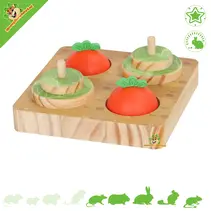
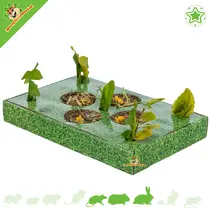
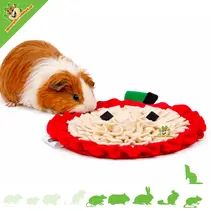
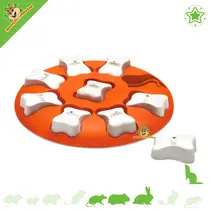
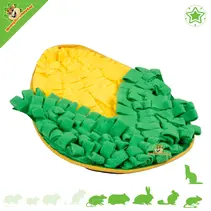

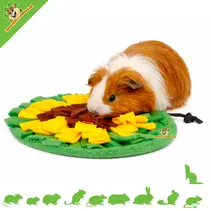
Rabbit Training & Foraging Toys – learning, searching, and working together
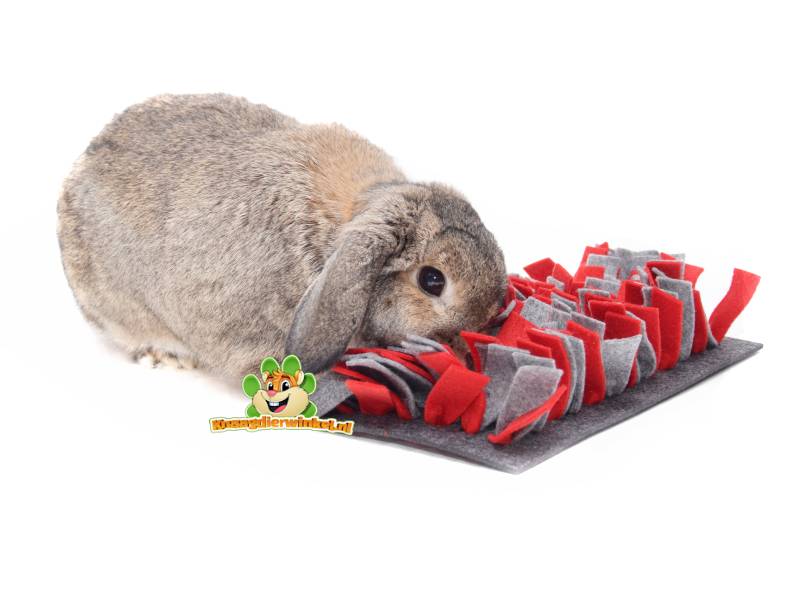 Rabbits are smart, curious animals that love to explore, search, and learn when given plenty of time. In this category, you will find training products and foraging toys for rabbits, such as clickers, puzzle games, treat balls, treat boards, puzzles, foraging products, and reward products suitable for positive training and enrichment.
At DRD Knaagdierwinkel®, we view training and foraging as part of a pleasant daily routine. It is not about forcing tricks, but about building trust, working together, and letting your rabbit search for food or rewards in a natural way. Combine this category with suitable rabbit snacks , rabbit herbs , rabbit hay , and a spacious, logically arranged rabbit enclosure .
✓ In short: training and foraging toys help your rabbit to search actively, learn calmly, and get more variety.
✓ For rabbits, focus primarily on positive reinforcement, short sessions, safe materials, and a level that suits your animal.
✓ Start easy: let your rabbit experience success and only build up when the game or exercise is relaxed.
Quick links:
Why training? · What can you find in this category? · Positive training · Foraging · Brain games & puzzles · Clicker & target · Potty training & habituation · Safe use · Handy shopping routes · FAQ
More confidence
With short, positive exercises, your rabbit learns that working together can be safe, predictable, and fun.
Naturally searching
Foraging toys let your rabbit sniff, search, push, roll, and puzzle for a reward.
Daily enrichment
Puzzle games, snack balls, and snack plates make eating slower and the day more interesting.
Why training and foraging are valuable for rabbits
Rabbits are not animals that just eat and lie around all day. They explore their environment, respond to established routines, and can learn through repetition and reward. Training and foraging give your rabbit something to do, but also help you work together better during daily care.
Think about coming calmly to you, getting used to a carrier, staying relaxed during grooming, learning to use a litter box better, or simply having fun with a puzzle game. The goal is not to force your rabbit, but to make desired behavior easier and more familiar step by step.
Training and foraging help with
✓ Building trust between you and your rabbit.
✓ Make food and rewards more interesting.
✓ Reduce boredom through searching, puzzling, and discovering.
✓ Getting used to grooming, the transport crate, or daily routines.
✓ Establish a calm routine around feeding, playing, and contact.
Read more: Caring for a rabbit · Setting up a rabbit room · Rabbit checklist
What can you find in this Rabbit Training & Foraging Toys category?
This category contains products that allow you to let your rabbit search, learn, and discover in a friendly way. Think of clickers, targeting aids, wooden puzzle games, sliding puzzles, flip games, treat balls, treat boards, foraging trees, foraging mats, herb meadows, and reward products.
Assortment in this category
✓ Clickers and training aids: for clearly marking and gradually building desired behavior.
✓ Thinking games and puzzles: for sliding, turning, opening, sniffing, and searching.
✓ Snack balls and snack rolls: offer for movement, rolling, and small rewards in a distributed manner.
✓ Snack plates and foraging bowls: for calmer eating and actively searching for small pieces.
✓ Foraging mats, herb meadows, and feeding trees: for natural sniffing and plucking.
✓ Rewards and foraging menus: to keep training small, fun, and manageable.
Positive training: rewarding instead of forcing
Rabbits learn best when training remains calm, predictable, and voluntary. Positive training means rewarding desired behavior. Your rabbit then learns: “this results in something nice.” This could be a small snack, a herb, access to something fun, or simply a familiar routine.
Keep sessions short. One to three minutes can be enough. It is better to stop at a good moment than when your rabbit loses interest. This way, training remains fun and you build trust step by step.
Basis of positive rabbit training
✓ Start with small, easy steps.
✓ Reward immediately when your rabbit shows the desired behavior.
✓ Keep sessions short and stop at a moment of success.
✓ Do not use punishment, pressure, or coercion.
✓ Repeat at fixed times so that it becomes predictable.
Foraging: make your rabbit work for small rewards
Foraging means searching for food. For rabbits, this is a natural way to keep busy. Instead of putting all the rewards in one bowl, you can divide small pieces into a treat ball, treat plate, hay corner, foraging mat, or herb meadow. This makes eating slower, more active, and more interesting.
Foraging toys are especially nice when you choose the level well. A beginner needs a simple game where quick success is possible. An experienced rabbit can handle more of a challenge, such as slides, flaps, rolling, or searching through hay and herbs.
Building up foraging
✓ Start with an easy game or a visible reward.
✓ Use small pieces so your rabbit doesn't get too many extra snacks.
✓ Combine snacks with hay, herbs, or dried leaves.
✓ Only make it more difficult when your rabbit remains relaxed and continues searching.
✓ Take the game away if your rabbit gets frustrated or starts throwing it around in a clumsy way.
Handy to combine with: Rabbit snacks · Rabbit herbs · Rabbit hay
Brain games and puzzles for rabbits
Thinking games and puzzles are suitable for rabbits that enjoy exploring. For example, they learn to lift a flap, move a slider, roll a ball, or search for small rewards in different places. This provides variety and can help make mealtimes less predictable.
Pay close attention to the difficulty level. A game that is too difficult will lead to frustration rather than enjoyment. Help your rabbit in the beginning by making the game easy. For example, leave the reward visible or leave a flap half open. Then you can make it more difficult step by step.
Choose a thinking game
✓ Beginner: choose an open snack board, a simple ball, or an easy sliding game.
✓ Advanced: choose a game with flaps, sliders, or multiple steps.
✓ Cautious rabbits: start low, quietly, and with a clear view.
✓ Active rabbits: choose something where they are allowed to push, roll, or search.
✓ Supervise and check that the material remains intact.
Clicker, target, and training with clear signals
A clicker or marker word helps to indicate exactly which behavior you are rewarding. This is useful because timing is important in training. Your rabbit hears the click or the word and learns: that moment was good, now comes a reward.
A target can help teach your rabbit to follow you kindly without pushing or picking it up. For example, you can use target training to guide your rabbit to a mat, into the transport box, or to a specific spot in the run.
Start clicker training slowly
✓ Choose a very small reward that your rabbit likes to accept.
✓ Click or say your marker word and give the reward immediately.
✓ Repeat briefly, so that your rabbit understands the connection.
✓ Afterwards, reward small desired behavior, such as coming to you or touching a target.
✓ Keep it relaxed and stop before your rabbit loses interest.
Potty training, transport crate and acclimatization
Training doesn't have to be complicated. Often, it's actually about practical everyday things: using a litter box, walking calmly to the transport box, getting used to brushing, or sitting on a mat for a moment. With positive reinforcement, you make such moments clearer and friendlier.
For housebreaking, a designated toilet area with hay nearby is helpful. Reward desired behavior calmly and keep the environment logical. For transport crate training, it helps not only to bring out the crate for vet visits, but also to occasionally leave it open with a treat or something familiar inside.
Practical training goals
✓ Make the toilet area more pleasant and clearer.
✓ Gradually get used to the transport box.
✓ Come to you without chasing or picking up.
✓ Getting used to grooming moments such as brushing or checking nails.
✓ Collaborate in small steps, without pressure.
See also: Rabbit toilets · Rabbit transport box · Rabbit care
Safe use of training and foraging toys
Training and foraging toys should remain fun and relaxing. Therefore, choose products that suit your rabbit's size, behavior, and experience. Regularly check that toys remain intact and remove loose, sharp, or broken parts.
Also pay attention to the quantity of rewards. Foraging toys make eating more fun, but extra snacks still count towards the daily diet. Therefore, work with small pieces, herbs, hay, or a portion of the daily ration where practical.
Good to check
✓ Does the game suit the size and strength of your rabbit?
✓ Are there no loose, sharp, or broken parts?
✓ Does your rabbit remain relaxed and curious during play?
✓ Do you use small rewards and not too many extra snacks?
✓ Put the game away when your rabbit is finished or when supervision remains necessary.
Handy shopping routes for rabbit training and foraging
Training and foraging work best when combined with appropriate rewards, a logical layout, and enough space. This way, you create not just a play moment, but a complete routine centered on searching, learning, and resting.
Rabbit Herbs
For scent, variety, and small scattering moments through hay or foraging toys.
Rabbits Playing & Foraging
For more toys, enrichment, and daily variety in the enclosure.
Learn more about behavior, care, and furnishing
Do you want to integrate training and foraging well into your rabbit's daily life? Then also read our information pages on care, the rabbit room, space, and enclosure. This way, you choose not only a fun game, but a routine that suits your rabbit and your living environment.
Caring for a rabbit · Setting up a rabbit room · How much space do rabbits need? · Rabbit enclosure selection guide · Rabbit checklist
Frequently asked questions about rabbit training and foraging toys
Can you train a rabbit?
Yes, rabbits can learn through repetition, predictability, and positive reinforcement. Think of coming to you, getting used to the transport box, following a target, or cooperating more calmly during grooming.
What is positive training for rabbits?
Positive training means rewarding desired behavior instead of punishing unwanted behavior. This way, you build trust and training remains more pleasant for your rabbit.
Where do you start if you want to train a rabbit?
Start with something simple, such as coming to you for a small reward or touching a target. Keep the session short and stop at a moment of success.
What is foraging toy for rabbits?
Foraging toys are toys where your rabbit has to search, roll, push, slide, or sniff to get to a reward. It makes eating more active and provides more variety.
Which puzzle game is suitable for a rabbit?
For beginners, simple treat plates, treat balls, or open puzzles are often enjoyable. For experienced rabbits, you can choose sliders, flaps, or multi-step games.
How often may you use foraging toys?
This can be done regularly, as long as you use small amounts and it fits within your daily diet. For example, use small pieces of snack, herbs, hay, or a portion of your normal portion.
Is a clicker useful for rabbits?
A clicker can be useful for marking exactly the right moment. You can also use a fixed marker word, such as “good”, as long as you reward immediately afterward.
Can training help with the transport box?
Yes, you can gradually let your rabbit get used to the transport box by placing the box open, putting something familiar or tasty inside, and rewarding small steps.
When is a game too difficult for a rabbit?
If your rabbit becomes frustrated, stops showing interest, or starts using the game roughly, it is probably too difficult or too long. Make it easier and build up again later.
Rabbit Training & Foraging Toys at DRD Knaagdierwinkel®
At DRD Knaagdierwinkel®, you will find training and foraging toys for rabbits, from clickers and puzzle games to treat balls, treat plates, herb meadows, and foraging products. We help you choose based on trust, natural curiosity, safe use, and daily enrichment.
✓ Clickers, puzzle games, snack balls, snack plates, and foraging products neatly organized together
✓ Practical to combine with rabbit treats, herbs, hay, litter boxes, and transport box training
✓ Selection aid for positive training, brain work, foraging, and habituation
✓ With practical explanations so you know faster which game or tool suits your rabbit
✓ Specialist since 2011
✓ Delivered from our own stock
