Polski



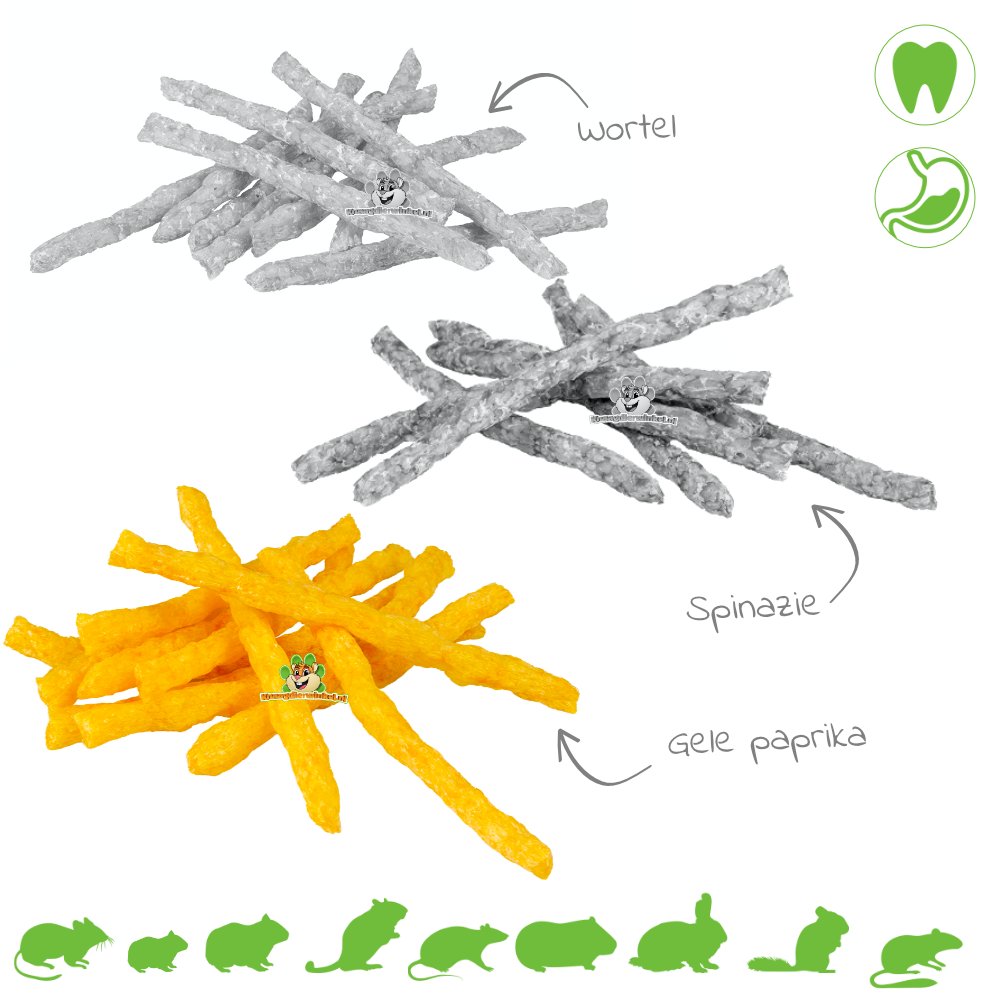
Yellow Bell Pepper, Spinach, and Carrot Chew Sticks for Rodents


- Dispatched from our own stock
- Personal & expert advice
- Always 100% rodent-friendly
- Ordered before 5 p.m., shipped the same day!
- Customer service from 09:00 to 18:00
Yellow Bell Pepper, Spinach, and Carrot Chew Sticks for rodents & rabbits
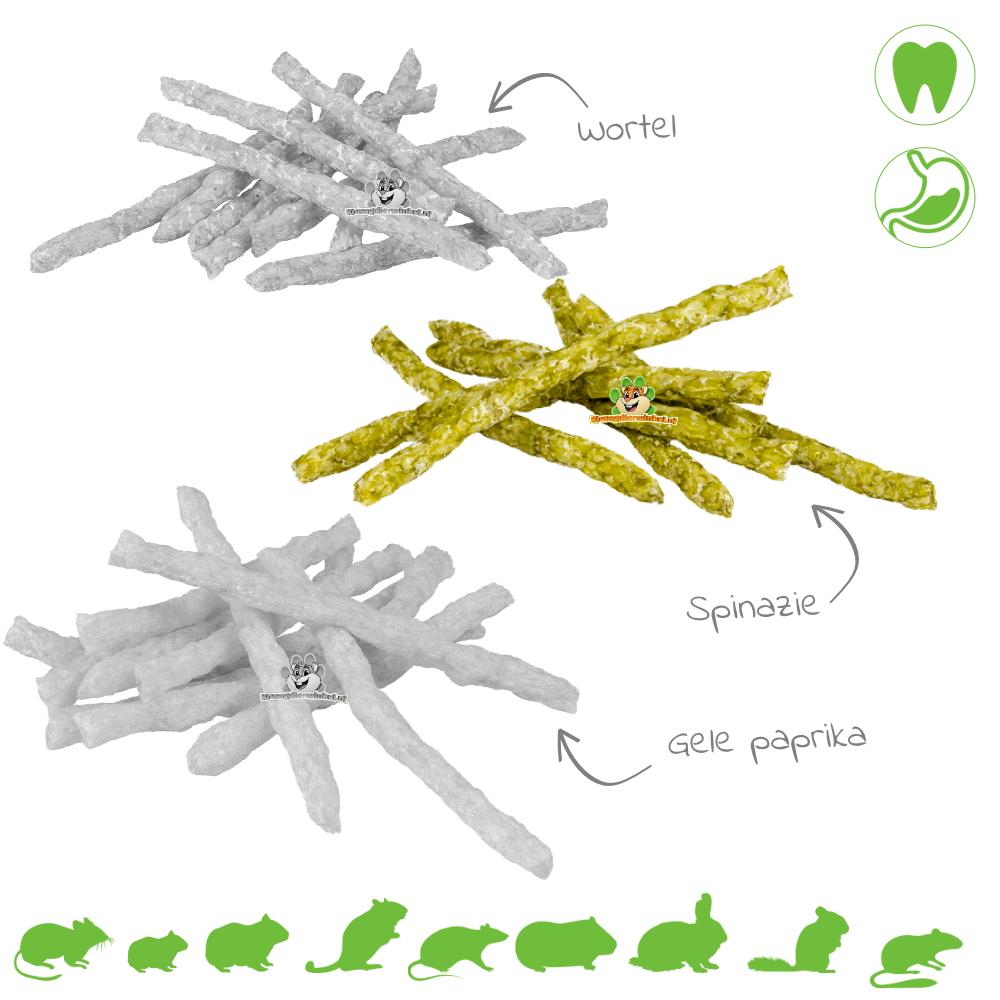
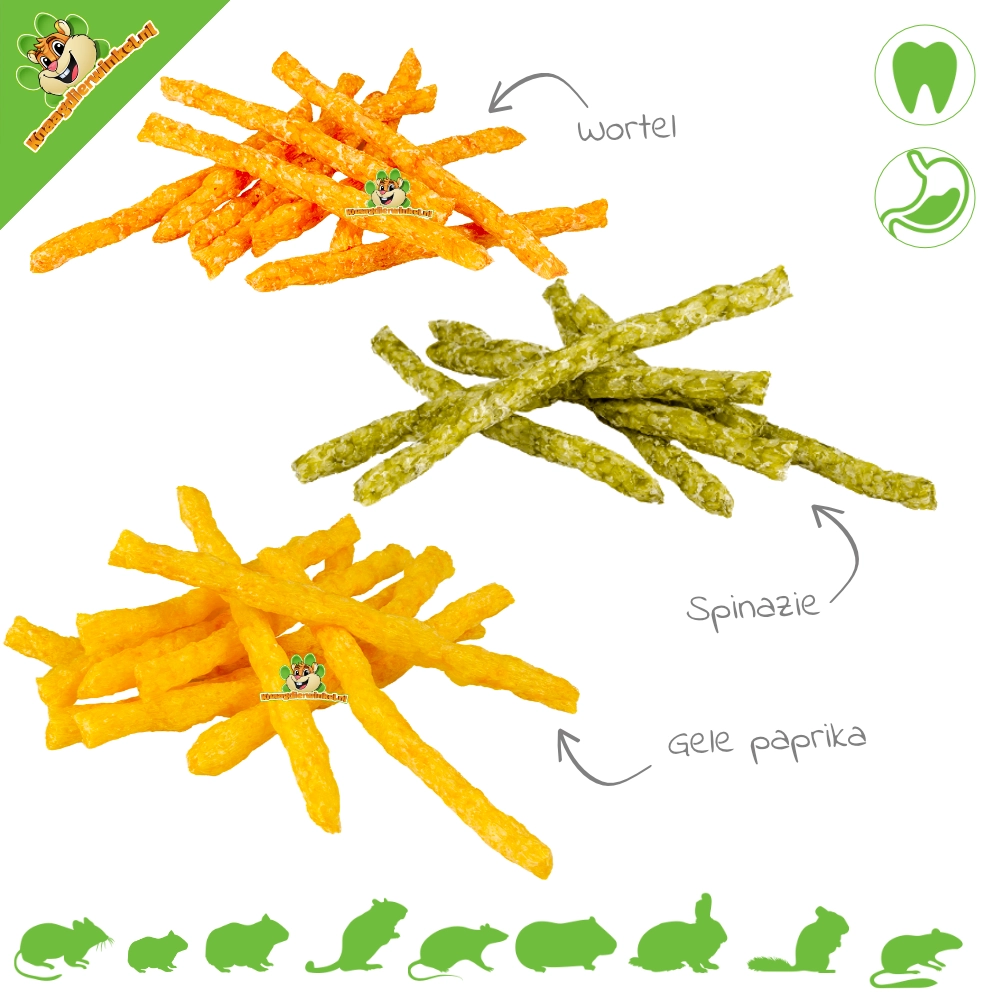
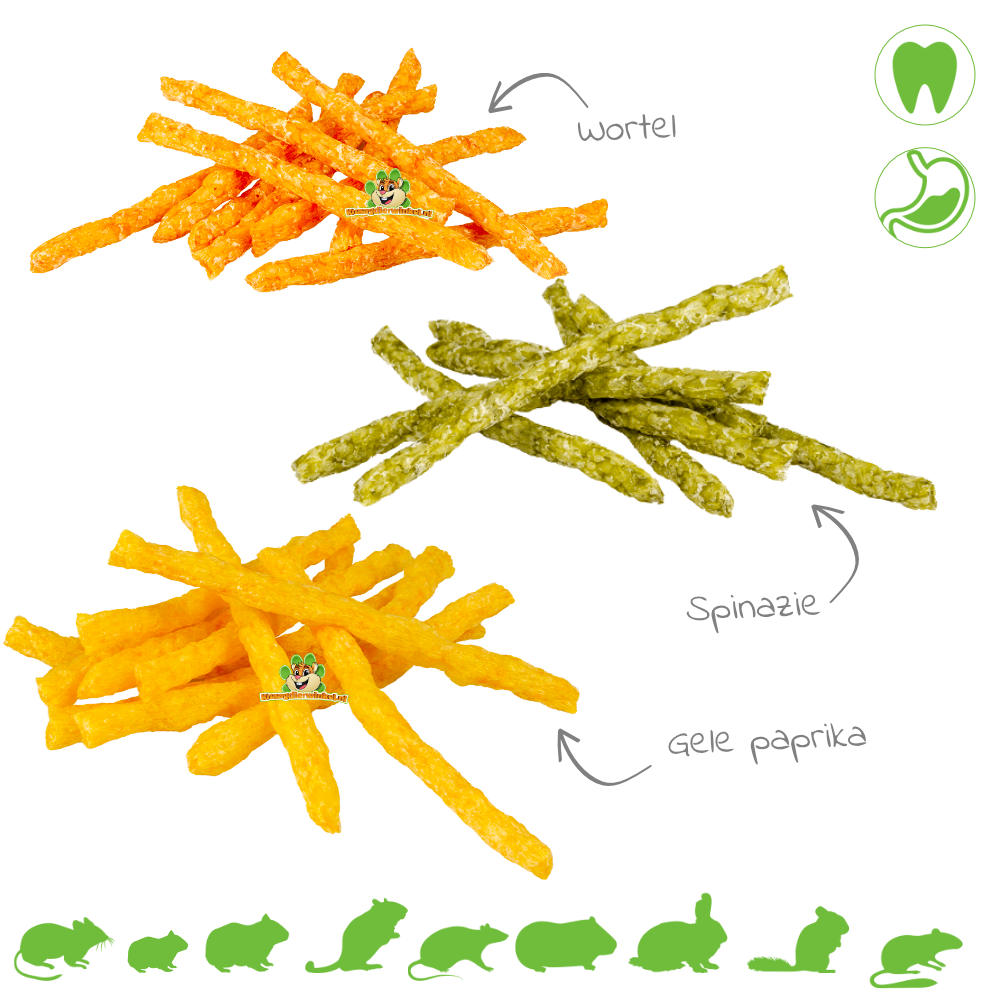
The Yellow Bell Pepper, Spinach, and Carrot Nibble Sticks are tasty supplementary snacks for rodents and rabbits. They are available in three vegetable varieties and give your animal something to nibble on at leisure. This makes them fun as a snack, a small reward, or as part of a foraging session in the enclosure.
DRD always considers the role of snacks in the daily diet. These chew sticks are not a staple food, but a supplementary treat that you offer consciously and in moderation. Precisely because you can hide them or offer them in various places in the enclosure, you immediately turn a simple snack into a little search moment. Your animal has to sniff, search, and choose, which aligns nicely with natural foraging behavior.
In short
- Snack sticks in three flavors: carrot, yellow bell pepper, and spinach
- Content approx. 50 grams
- Additional snack for rodents and rabbits
- Fun to let loose or hide in the enclosure
- Stimulates searching, sniffing, and foraging
- Suitable for multiple animal species, depending on portion and use
Pros of the Snack Sticks
✔ Available in carrot, yellow bell pepper, and spinach
✔ Tasty as an additional snack or small reward
✔ Also fun to hide for extra foraging fun
✔ Suitable for rodents and rabbits, tailored to portion and animal species
✔ Convenient size to offer consciously every now and then
✔ Combines nicely with Snack Sticks and Interactive Snacks
Why choose these snack sticks?
A snack becomes much more fun when your animal gets to work for it. Instead of placing the chew stick directly in front of their nose, you can hide it among hay, in a foraging corner, or in various spots in the enclosure. This way, snack time becomes not only tasty but also active. Your animal uses its nose, explores the surroundings, and is occupied with searching for a moment.
The three vegetable varieties provide variety. Carrot, yellow bell pepper, and spinach are a good fit for owners who like to offer a vegetable-oriented snack. Herbivorous animals such as guinea pigs, rabbits, chinchillas, and degus, in particular, can appreciate these snack moments, but other rodents can also receive the sticks as a supplementary snack, provided the portion size is appropriate.
For animals that quickly get bored of their surroundings, short searching moments are valuable. A chew stick, for example, can be hidden near a tunnel, in a sniffing corner, next to a little house, or among some herbs. This way, you turn a single snack into a small enrichment moment.
For which animals are the Nibble Sticks suitable?
- Mouse: suitable as a small supplementary snack. Give a small piece and optionally hide it in a foraging corner.
- Dwarf hamster: suitable as a small snack in moderation. Break off a piece and offer it as a reward, or hide it among bedding or herbs.
- Hamster: suitable as a supplementary snack. For hamsters, a small piece is often enough, especially when you use multiple snacks in the weekly menu.
- Gerbil: suitable as a nibbling and searching snack. Gerbils can examine the stick, gnaw on it, and play with it in the enclosure.
- Rat: suitable as a supplementary snack or reward. Rats can make good use of small pieces during training, run, or foraging games.
- Dwarf rat: suitable if the portion matches the size of your dwarf rat. Because dwarf rats can vary from one another, it is wise to give small pieces and see how your animal handles them.
- Guinea pig: suitable as a supplementary snack alongside hay, daily food, and fresh vegetables. Hide the stick near the hay corner, for example, for extra sniffing fun.
- Rabbit: suitable as an additional treat. Give consciously and in moderation, for example as a short foraging moment in the run or at the hay corner.
- Chinchilla: suitable as a supplementary snack in small quantities. Keep the portion small and offer the stick dry.
- Degu: suitable as a supplementary snack in small quantities. Preferably give a small piece and use it primarily as variety, not as a large daily snack.
How do you feed the snack sticks?
Give the chew sticks as a supplementary snack, alongside the normal main food. You can offer a stick loose, break it into smaller pieces, or hide it in the enclosure. Hiding it is especially fun: your animal has to use its nose to find the snack. This makes snack time more active and interesting.
For guinea pigs and rabbits, you can place a piece near the hay corner or hide it among some dried herbs. For hamsters, mice, and gerbils, you can scatter small pieces through the bedding or place them near a tunnel. For rats, you can use small pieces during training, run, or as a reward in a foraging toy.
Do not use the chew sticks as a substitute for the daily diet. For guinea pigs and rabbits, hay remains the basis of the daily diet. For hamsters, mice, gerbils, and rats, an appropriate main food remains important. Therefore, view these sticks as extra variety and not as the main component of the diet.
Composition & analysis
- Contents: approx. 50 grams
- Variants: Carrot, Yellow Bell Pepper and Spinach
- Composition according to product information: Spinach, Yellow bell pepper, Carrot
- Analysis: not specified
- Type: complementary feed
- Use: supplementary snack, foraging moment, and reward
The vegetable varieties make these nibble sticks attractive as a change of pace in the snack selection. Because this is complementary feed, you should give the sticks consciously alongside the normal daily menu and adjust the quantity based on the species, size, and other snacks your animal receives.
Easy to combine with
The Nibble Sticks are fun to combine with other products that stimulate searching, sniffing, and foraging. This makes snack time more active and less predictable.
- Snack Sticks for more snack variety
- Interactive Snacks for active snacking
- Training & foraging for search and reward moments
- Rodent and rabbit herbs to hide snacks in
- Dried vegetables for extra vegetable variety
Good to know
Offer the Nibble Sticks as a supplementary snack and give them in moderation. Adjust the portion to the animal and the rest of the daily diet. For small animals such as mice, dwarf hamsters, and hamsters, a small piece is often sufficient. For larger animals such as guinea pigs and rabbits, you can use the stick as a conscious treat or foraging moment.
Store the sticks in a dry place and close the packaging tightly after use. Always check snacks for smell, color, and texture before offering them. Do not give a snack that smells damp, stale, or unusual.
Not intended for food-producing animals.
Frequently asked questions about the Snack Sticks
Are these chew sticks suitable for guinea pigs?
Yes, the nibble sticks are suitable as a supplementary snack for guinea pigs. Give them alongside hay, main food, and fresh vegetables, for example, as a brief foraging moment at the hay corner.
Can rabbits have these sticks?
Yes, rabbits can have the chew sticks as an additional treat. Give consciously and in moderation, and use them, for example, to let your rabbit actively search for them.
Are the chew sticks suitable for hamsters?
Yes, hamsters can have a small piece as an additional snack. If necessary, break the stick into smaller pieces and hide them in the enclosure for extra foraging fun.
Can I use the sticks for training?
Yes, especially small pieces can be useful as a reward during training or taming. Use small portions so that snack time remains manageable.
How often can I give this snack?
Use the chew sticks as a variation and not as the main daily food. The correct amount depends on the species, size, and what other food and snacks your animal receives.
Are the sticks intended as the main food?
No, the chew sticks are complementary feed. They are intended as a snack, reward, or foraging moment alongside the normal diet.
What flavors are there?
The snack sticks are available in carrot, yellow bell pepper, and spinach flavors. This way, you can easily switch between different vegetable varieties.
Useful shopping links
✔ Vegetable snack sticks in three flavors
✔ For snacking, searching, and foraging
✔ Specialist since 2011 • personal & expert advice • delivered from our own stock

| Content (approx): | 50 grams |
| Composition: | Spinach, Yellow Pepper, Carrot |
| Analysis: | - |
| Promotes Foraging: | Yes, by hiding in the enclosure |
| Suitable for: | Rodents, Mouse, Dwarf Hamster, Hamster, Gerbil, Rat, Guinea Pig, Rabbit, Chinchilla, Degu |
| Type: | supplementary pet food |
| Particularities: | - |
| Disclaimer: | Not for food producing animals |