Polski



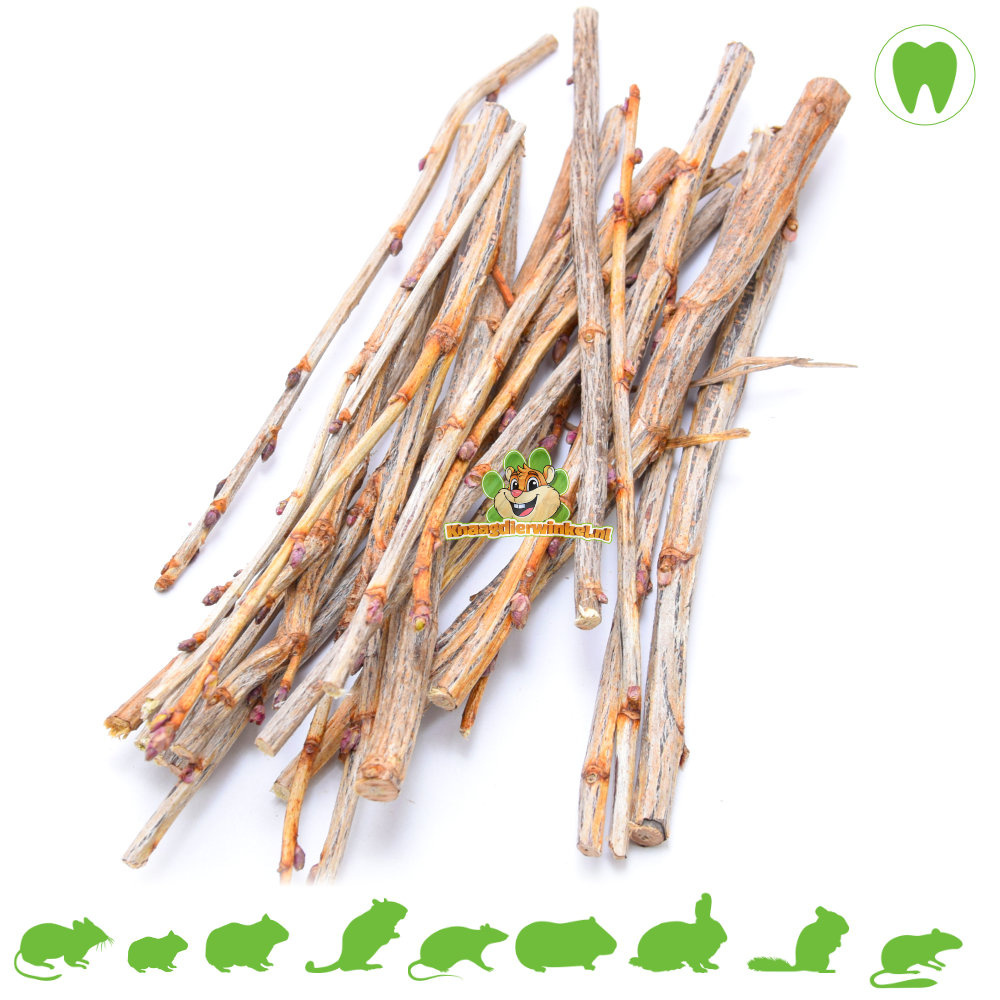
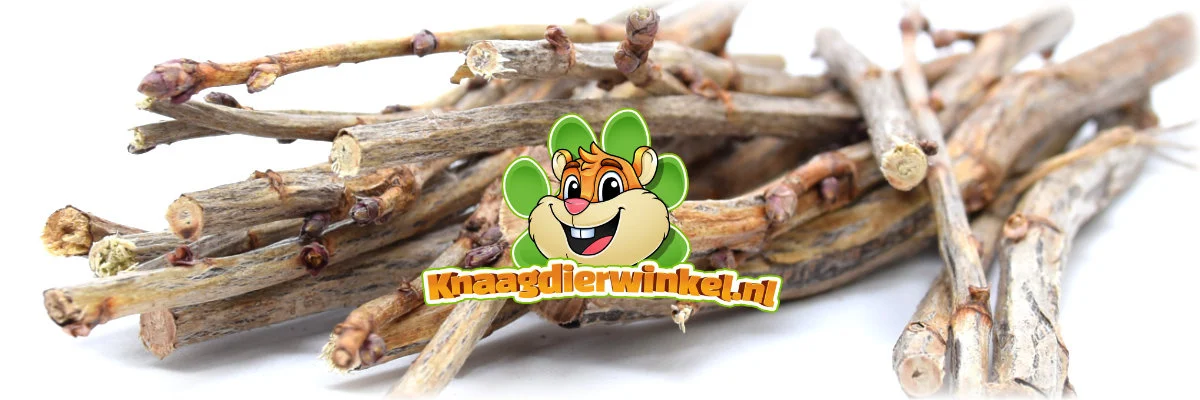
Blackcurrant Chewing Wood Branches for Rodents & Rabbits 60 g


- Dispatched from our own stock
- Personal & expert advice
- Always 100% rodent-friendly
- Ordered before 5 p.m., shipped the same day!
Blackcurrant Chewing Wood Branches for Rodents & Rabbits 60 g
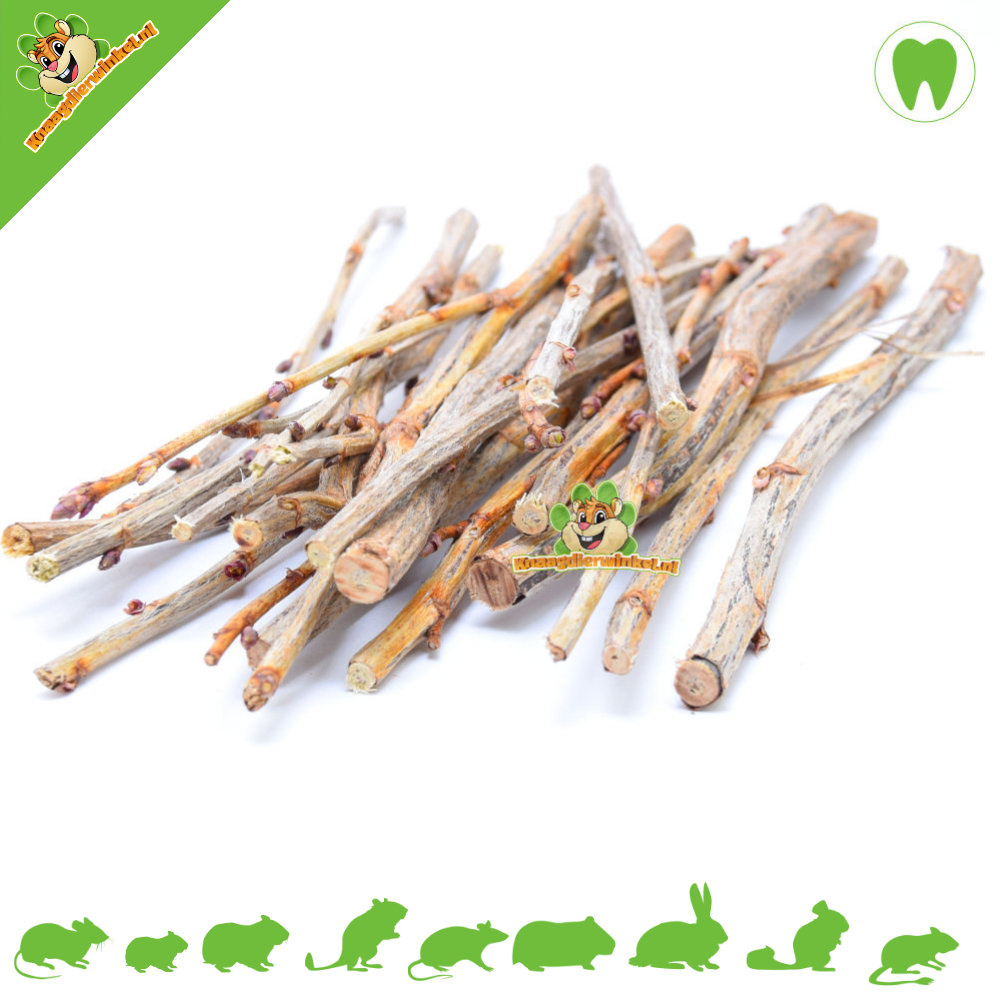
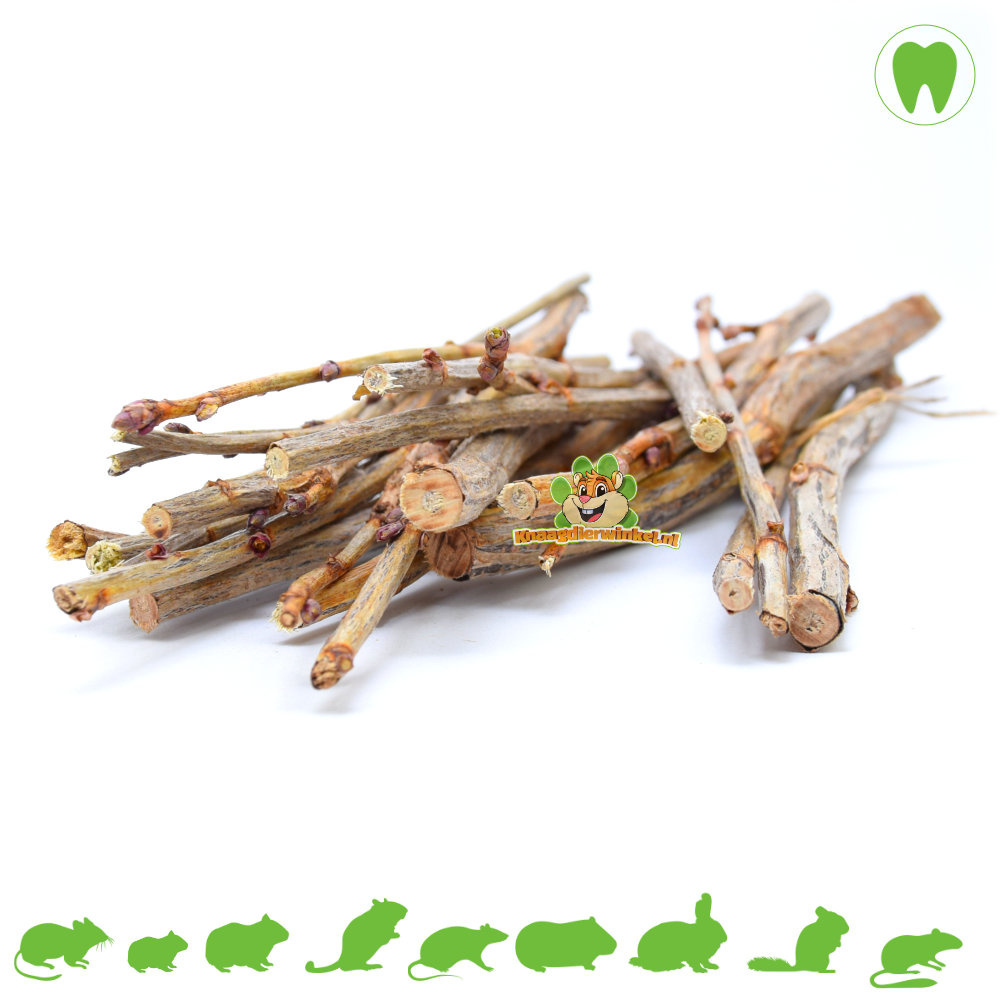
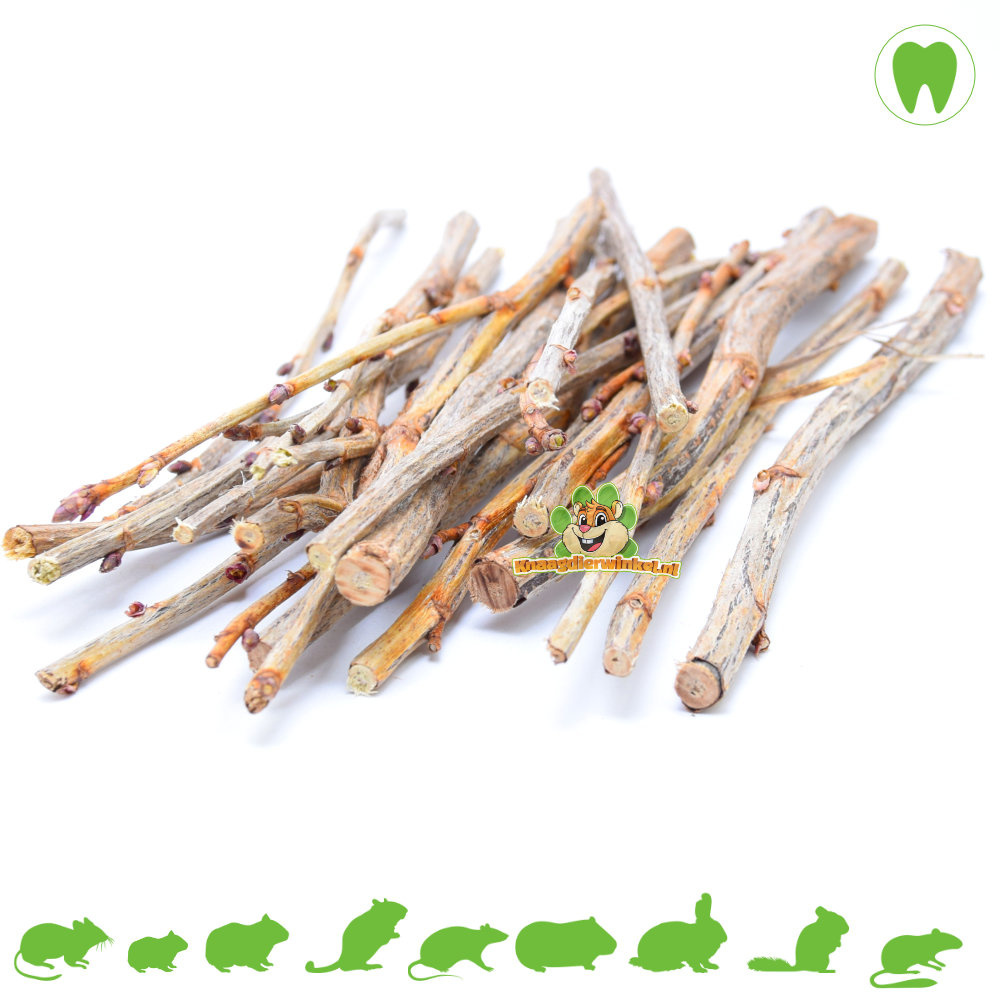
Blackcurrant Branch Chewing Wood consists of natural blackcurrant branches for rodents and rabbits. You use the branches as natural gnawing material, a foraging stimulus, and enrichment in the enclosure. Your animal can sniff, nibble, drag, and explore them, and quietly occupy itself with the sturdy branch structure.
These blackcurrant branches are especially great for owners looking for a natural gnawing material that is easy to use in the enclosure. You can offer the branches loose, scatter them around, place them in the hay corner, or incorporate them into a natural setup. At DRD, when it comes to gnawing material, we focus primarily on what your animal can do with it: explore, move, manipulate, and choose for themselves when they want to gnaw on it.
✓ In short
- Natural blackcurrant branches for rodents and rabbits
- Complementary feed and natural gnawing material
- Suitable for placing loosely in the enclosure or scattering around.
- Great for nibbling, dragging, sniffing, and foraging
- Provides natural structure and activity
- Fits nicely with natural decor, hamsterscaping, gerbilscaping, and ratscaping
- Contents: approx. 60 grams
Advantages of Blackcurrant Branch Chewing Wood
✔ Natural blackcurrant branches
✔ Sturdy branch structure to nibble on and explore
✔ Stimulates natural gnawing behavior and foraging
✔ Nice to scatter around or distribute over the enclosure
✔ Suitable for small and larger rodents and rabbits
✔ Nice natural variation alongside hay, food, herbs, and other gnawing material
Why choose Blackcurrant Branch Chewing Wood?
Blackcurrant Branch Chewing Wood is ideal when you want to give your animal a natural gnawing stimulus that fits well with their daily living environment. Some animals immediately start actively gnawing on wood, while others primarily investigate, move, or store branches in their favorite corner. That, too, is part of natural use: your animal receives material to do something with on its own.
For small rodents, you can scatter the branches among bedding, hay, or other natural materials. For larger animals such as rats, guinea pigs, rabbits, chinchillas, and degus, you can offer a few branches as a gentle gnawing and foraging stimulus.
Precisely because you can easily distribute the branches, you immediately turn a small gnawing moment into a quiet activity in the enclosure.
For which animals are blackcurrant branches suitable?
Blackcurrant Branch Chewing Wood is suitable as natural gnawing material and additional variety for rodents and rabbits. Adjust the quantity to the animal species, size, and how actively your animal engages with the wood.
- Mouse: suitable as natural branch material to explore, move, and nibble on.
- Dwarf hamster: suitable as a fragrant gnawing and exploration stimulus in a natural setting.
- Hamster: suitable as a natural branch to nibble on, move around, or use in the enclosure.
- Gerbil: very fun as shredding and gnawing material; gerbils can actively work on the branches.
- Dwarf gratin: suitable as a natural gnawing and foraging stimulus, tailored to the actual size of your animal.
- Rat: suitable as sturdy branch material to hold, examine, and gnaw on.
- Guinea pig: suitable as natural gnawing material alongside hay, guinea pig food, and herbal varieties.
- Rabbit: suitable as a natural branch to nibble on, play with, and explore.
- Chinchilla: suitable as natural gnawing material alongside hay, herbs, leaves, and branches.
- Degu: suitable as a gnawing and branch variation alongside hay and appropriate basic food.
Usage & dosage
Provide Blackcurrant Chewing Wood Branches as supplementary gnawing material and natural enrichment. You can place the branches loosely in the enclosure, scatter them around, stick them through the hay, or place them in a foraging corner. Your animal can decide for itself whether it wants to nibble, drag, investigate, or incorporate the branches into the enclosure's setup.
Do you want to make the branches extra interesting? Then distribute them across multiple spots in the enclosure, for example near the hay corner, in a sniffing box, or among natural materials. This way, your animal has to search, and a gnawing moment immediately becomes a small activity.
If you use the branches mainly as a standalone gnawing stimulus, the package will often last longer. If you have multiple animals or real destroyers such as gerbils, rats, chinchillas, or degus, the package may run out faster.
✓ Usage & consumption
Blackcurrant Branch Chewing Wood contains approximately 60 grams. The duration of use depends on how many branches you offer at once and how actively your animal chews on them. Therefore, view the table as a practical guideline, not as a fixed dosage.
| Usage | Amount per day | Use per package |
|---|---|---|
| Sparse snacking moment | 1 gram per day | about 60 days |
| Average use | 2 grams per day | about 30 days |
| Extended gnawing and foraging time | 5 grams per day | about 12 days |
Give the branches as a supplement alongside suitable main feed, hay, and other natural variety.
Compound
Blackcurrant branches.
Analytical constituents
Not given up.
What does this compound mean?
The composition is straightforward: blackcurrant branches. It concerns natural gnawing material that you use as additional variety and as an activity in the enclosure.
The branch structure makes this item practical to use. You can offer the branches loose, scatter them around, place them in the hay corner, or use them in a natural setup. This way, you provide your animal with material to explore, move around, and work with at its own pace.
Good to know
- This is supplementary pet food and natural gnawing material, not a main food.
- Suitable to offer loose or to scatter around in the enclosure.
- Not every animal gnaws on wood equally actively; investigating, dragging, and storing are also part of natural use.
- Optionally, use the branches in a sniffing corner, hay corner, or natural setup.
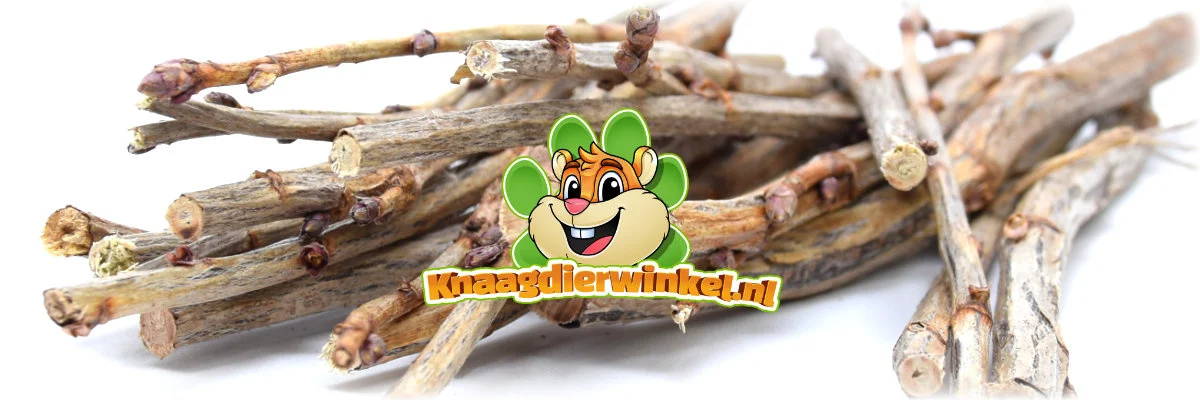
- Natural branches can vary in color, thickness, and structure per harvest.
- Store the blackcurrant branches in a dry, cool, and tightly sealed place.
- Remove any residue when it has become damp or dirty.
Frequently Asked Questions about Blackcurrant Branch Chewing Wood
Is Blackcurrant Bristles Chewable Main Food?
No, Knaaghout Zwartecurr Takken is a complementary feed and natural gnawing material. Use it alongside suitable main feed and hay.
How much is in the package?
The packaging contains approx. 60 grams of blackcurrant branches.
How long does one package last?
That depends on the number of animals and how actively your animal plays with wood. At 1 gram per day, one package lasts about 60 days. At 2 grams per day, that is about 30 days.
Can I scatter Blackcurrant Chewwood Branches?
Yes, that works well. By distributing the branches throughout the enclosure, your animal has to search, explore, and choose for itself what to play with.
For which animals is Blackcurrant Branch Chewing Wood suitable?
Blackcurrant Branch Chewing Wood is suitable for mice, dwarf hamsters, hamsters, gerbils, dwarf rats, rats, guinea pigs, rabbits, chinchillas, and degus.
Is Blackcurrant Branch Chewing Wood suitable for guinea pigs and rabbits?
Yes, guinea pigs and rabbits can use blackcurrant branches as natural gnawing material and variety alongside hay and appropriate food.
Is Blackcurrant Branch Chewing Wood suitable for chinchillas and degus?
Yes, chinchillas and degus can use Blackcurrant Branch Chewing Wood as a natural branch and gnawing variation alongside hay, herbs, leaves, and other suitable gnawing materials.
Does my animal have to gnaw on it?
No, not every animal gnaws on wood to the same extent. Some animals mainly investigate the branches, drag them around, or use them in their enclosure. That also makes the material valuable as natural enrichment.
Can I use this for hamsterscaping, gerbilscaping, or ratscaping?
Yes, blackcurrant branches fit nicely into a natural setting. You can distribute them among ground cover, hay, tunnels, and other natural materials.
What is the composition?
The composition is blackcurrant branches.
Are analysis values known?
No, no analysis values have been provided for this article.
How do I store Blackcurrant Branch Chewing Wood?
Store the branches in a dry, cool, and tightly sealed place. This way, the aroma and texture are preserved as well as possible.
Useful shopping links
- View gnawing material
- View gnawing wood & branches
- view blackcurrant products
- View dried branches & stems
- View hamster gnawing material
- view gerbil gnawing material
- View rat gnawing material
- View rabbit gnawing material
Blackcurrant Branch Chewing Wood is a great choice for owners looking for natural gnawing material that is easy to distribute throughout the enclosure. Place a few branches near the hay corner, scatter them around, or use them in a natural setup. This provides your animal with a quiet gnawing moment offering scent, texture, and the pleasure of natural foraging.
| Content (approx): | 60 grams |
| Composition: | Blackcurrant Branches |
| Analysis: | - |
| Promotes Foraging: | Yes |
| Suitable for: | Rodents, Mouse, Dwarf Hamster, Hamster, Gerbil, Rat, Guinea Pig, Rabbit, Chinchilla, Degu |
| Type: | supplementary pet food |
| Particularities: | - |
| Disclaimer: | Not for food producing animals |