Polski


Have a question?
Have a question about this product? Please feel free to contact us, we will be happy to help you!

Have a question about this product? Please feel free to contact us, we will be happy to help you!
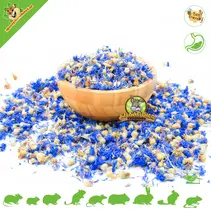
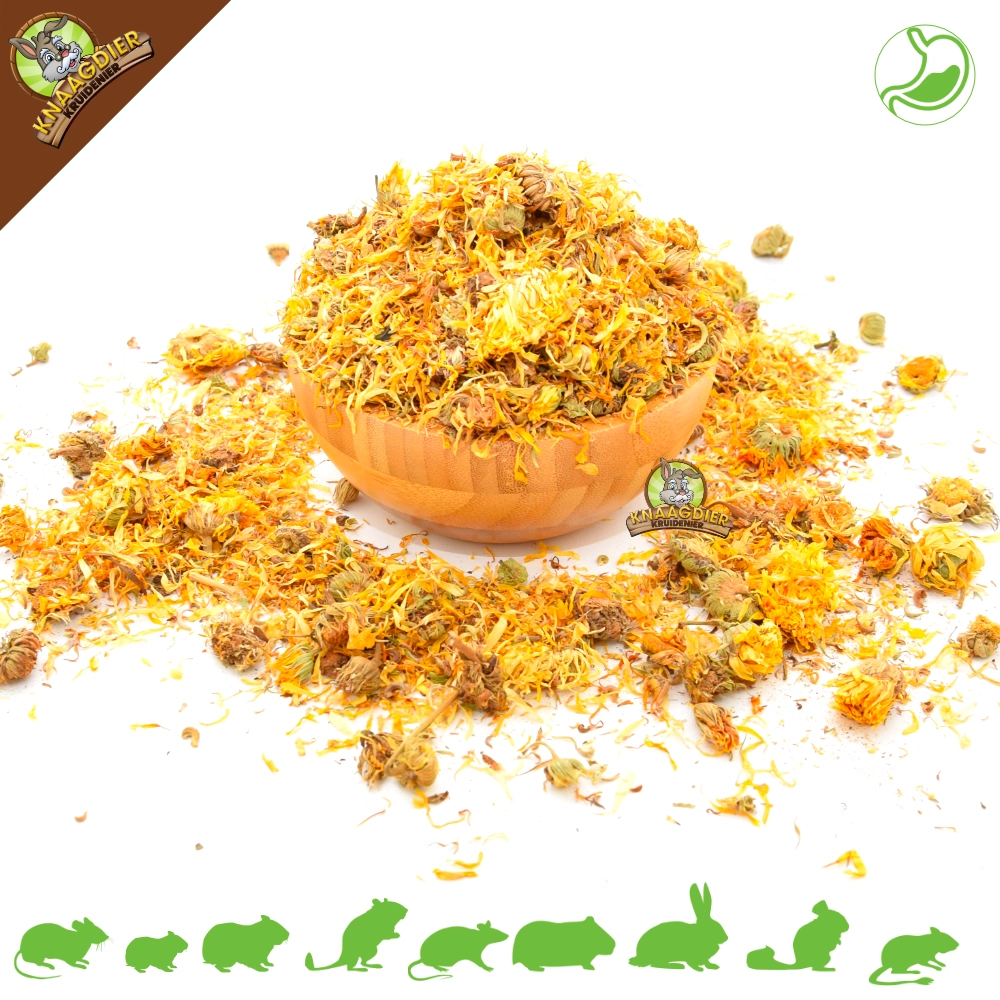
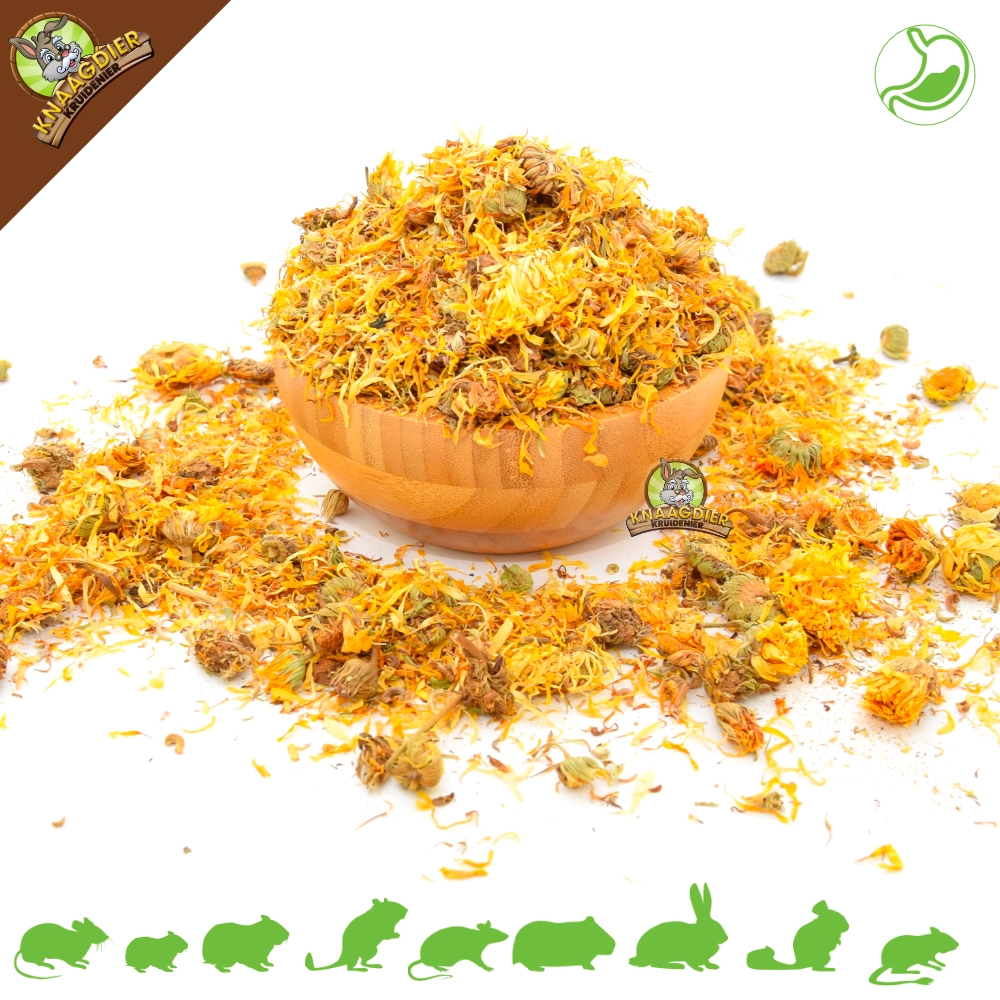
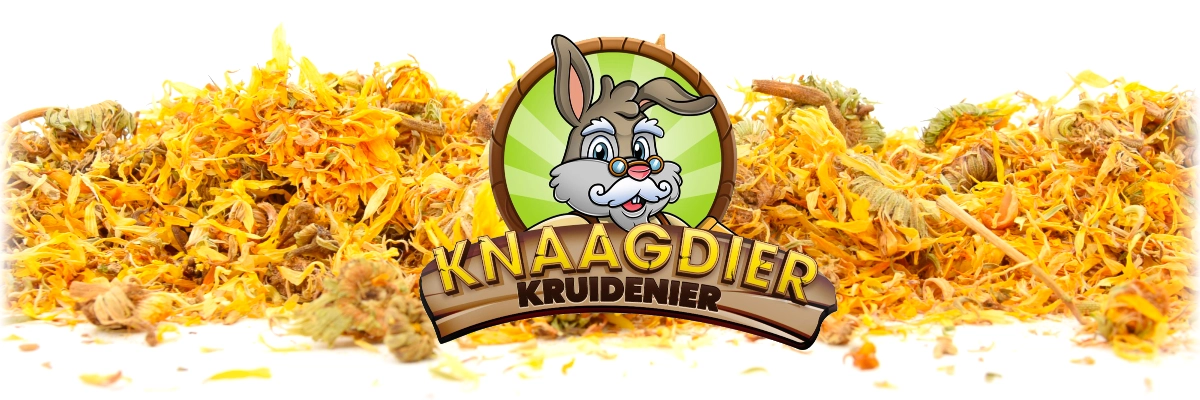
Marigold Flowers from De Knaagdier Kruidenier® are dried flower petals that you can offer as a natural supplementary feed for rodents and rabbits. The flowers add color, scent, and variety to the daily feeding time and are very suitable for stimulating foraging in a calm, natural way.
DRD selects these types of herbs and flowers not only because they look beautiful in the enclosure, but primarily because they serve a clear function. Marigold flowers can be used as an edible bedding layer, mixed into hay, or incorporated into a snack board, foraging mat, or natural decoration. This makes food more interesting and invites your animal to search, smell, and discover.
✔ Natural complementary feed
✔ Beautiful colorful flowers for extra variety
✔ Ideal for mixing with hay or herbal mixes
✔ Suitable for snack boards, foraging mats, and bedding layers
✔ Fits well with hamsterscaping, gerbilscaping, and natural enclosures
✔ From De Knaagdier Kruidenier®, carefully selected for rodents and rabbits
Marigold flowers are particularly interesting as natural variation in the menu and in the enclosure setup. The color and scent make the feeding or hay corner more attractive, while requiring your animal to search and select for itself. This aligns well with natural foraging behavior: not everything is ready-made in one place, but is offered spread out.
For herbivores such as guinea pigs, rabbits, chinchillas, and degus, you can use marigold flowers as a small supplement alongside good hay, appropriate basic food, and other dried herbs. For mice, dwarf hamsters, hamsters, gerbils, pygmy rats, and rats, the flowers are especially nice as edible enrichment in a natural-style setup or as a small change of pace during foraging.
The flowers are not a staple food, nor are they a substitute for a complete daily menu. They are intended as additional variety. By dosing and scattering them, you make them more valuable: your animal has to work for them, turning the snack time into more than just eating.
Always start with a small amount, especially if your pet is not yet familiar with marigold flowers. This allows your pet to gradually get used to the scent, taste, and texture. Remove any leftovers if they become dirty or damp.
Marigold flowers are at their best when you don't give them as a large portion, but rather offer them spread out. This stimulates searching, sniffing, and selecting.
100% natural dried marigold flowers.
This analysis shows that marigold flowers are a supplementary herbal flower and not a complete food. Therefore, use them as a small variation alongside your animal's normal basic diet.
Marigold flowers are a complementary feed. Give them as variety and not as a replacement for the daily basic diet. For guinea pigs, rabbits, chinchillas, and degus, hay remains the most important basis. For mice, dwarf hamsters, hamsters, gerbils, dwarf rats, and rats, the flowers are particularly interesting as foraging and enrichment material.
Store dried flowers in a dry, cool, and tightly sealed place. This way, the scent, color, and texture are preserved as well as possible. Always check that herbs and flowers remain clean and dry in the enclosure.
You use marigold flowers as supplementary animal feed, an edible bedding layer, colorful variation in the hay, or as part of a foraging session.
No, marigold flowers are not a staple food. It is a complementary feed and intended as a small variation alongside the normal basic diet.
Yes, that works very well. By mixing a small amount into the hay, you make the hay more interesting and encourage your animal to search and sniff.
Yes, marigold flowers make beautiful edible decorations in a hamsterscaping setup. Scatter them in small quantities throughout the scape or around a foraging area.
Yes, marigold flowers are suitable as a supplementary herbal flower for guinea pigs and rabbits. Give them in moderation alongside hay, appropriate basic food, and other herbs.
Yes, as a small supplementary herbal flower. Keep the portion limited and combine with a fiber-rich, simple basic diet and good hay.
Start with a small amount and use it as a variation. The correct quantity depends on the animal species, size, group size, and the rest of the menu.
Store the flowers in a dry, cool, and tightly sealed place. Remove any remaining items from the enclosure if they become damp or dirty.
With Marigold Flowers, you give your rodent or rabbit a natural, colorful addition that complements foraging, variety, and a beautifully decorated enclosure. Use small quantities, combine with hay or other herbs, and let your animal quietly search, sniff, and explore.
| Content (approx): | 130 grams |
| Composition: | 100% Natural Dried Marigold Flowers |
| Analysis: | Crude protein: 16.0%, crude fat: 6.2%, crude fibre: 15.0%, crude ash: 13.5% |
| Promotes Foraging: | Yes |
| Suitable for: | Rodents, Mouse, Dwarf Hamster, Hamster, Gerbil, Rat, Guinea Pig, Rabbit, Chinchilla, Degu |
| Type: | supplementary pet food |
| Particularities: | - |
| Disclaimer: | Not for food producing animals |
Mijn hamsters vinden het erg lekker! het ruikt ook nog eens lekker, en ziet er mooi uit in het terrarium
Onze ratjes vinden ze heerlijk.
Staat heel mooi in de hamsterverblijven! Ik strooi het er door heen en dat geeft een mooie kleur en beide hamsters eten er van.