Polski



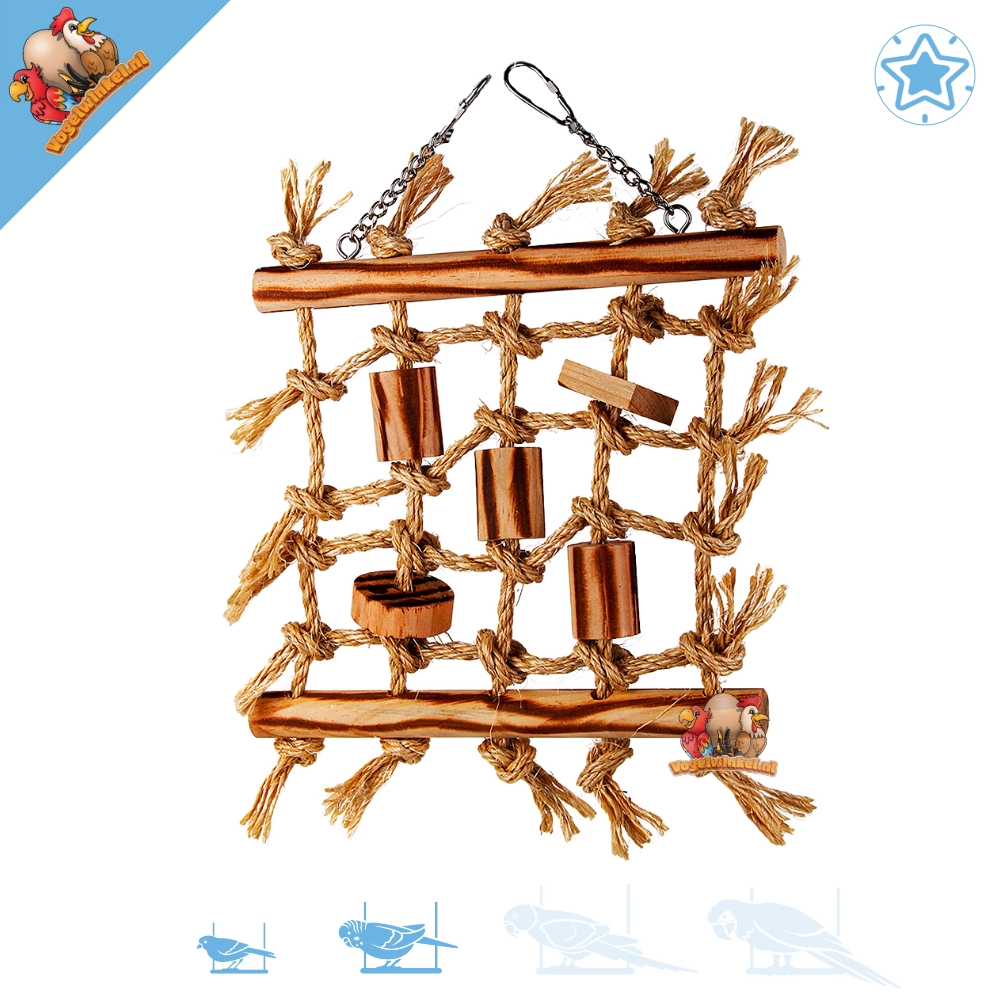
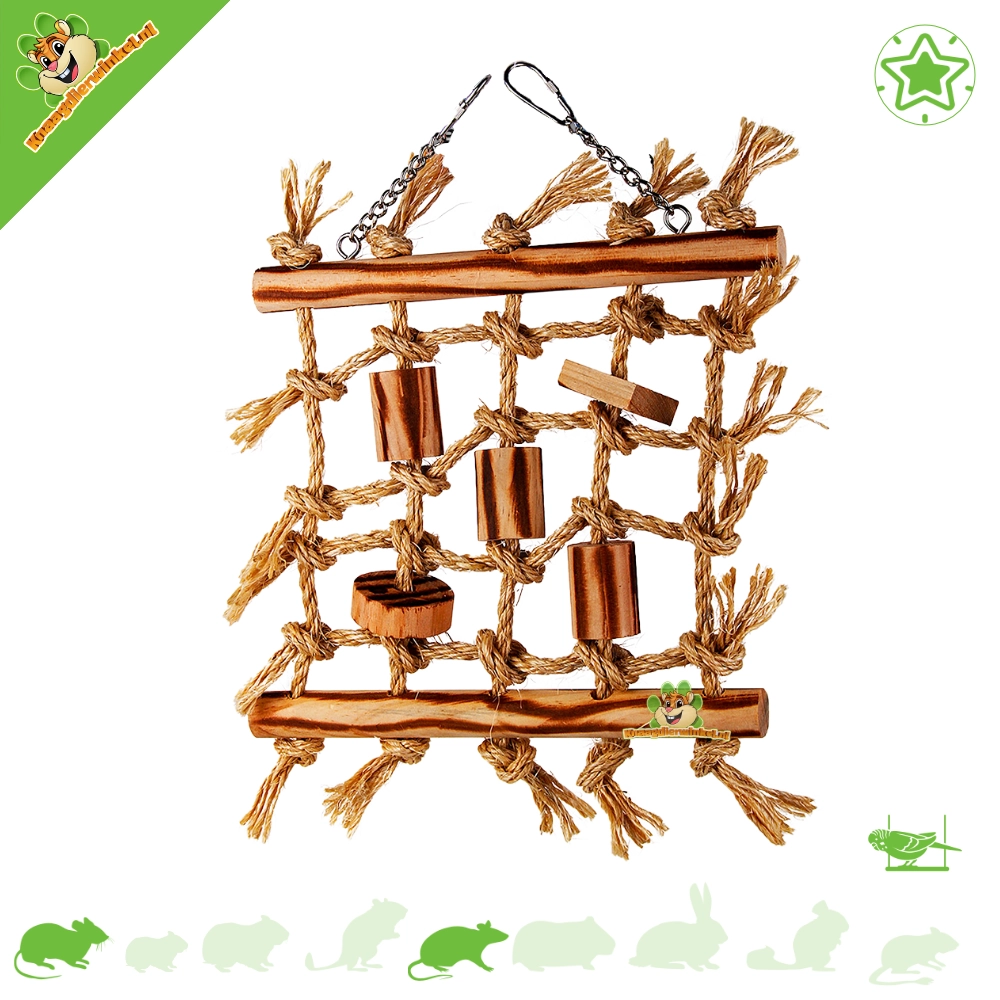
Sisal Climbing Rope with Wooden Blocks 36 cm for birds, mice, and rats
- Dispatched from our own stock
- Personal & expert advice
- Always 100% rodent-friendly
- Ordered before 5 p.m., shipped the same day!
Sisal Climbing Rope with Wooden Blocks 36 cm for birds, mice, and rats
The Sisal Climbing Rope with Wooden Blocks 36 cm is a natural play rope for birds, mice, and rats. The combination of sisal rope and wooden blocks provides your animal with a fun place to climb, balance, nibble, and keep busy. You can easily hang the rope using the hanging hook, so it can be used as an extra play and climbing route in the enclosure.
At DRD, when it comes to hanging toys, we focus primarily on the material, suspension, accessibility, and how the animal uses the product in practice. This climbing rope measures approximately 36 × 26 × 4 cm and is made of sisal and wood. For birds, it serves as a playful perch, climbing, and gnawing element. For mice and rats, it is mainly an additional climbing route or activity element, alongside platforms, branches, tunnels, and other safe routes in the enclosure.
In short
- Natural climbing rope with wooden blocks.
- Dimensions approx. 36 × 26 × 4 cm.
- Made of sisal and wood.
- With hanging hook for attaching to bars, a branch, or a sturdy hanging point.
- Suitable for birds, finches, canaries, small parakeets, and large parakeets.
- Also suitable as a climbing element for mice and rats.
- Encourages climbing, balancing, nibbling, exploring, and being active.
- Regularly check for fraying, wear, and loose parts.
✔ Natural sisal rope with wooden blocks
✔ Fun to climb, balance, and explore
✔ Wooden blocks provide extra chewing and play value
✔ Easy to hang with the hanging hook
✔ Suitable for birds, mice, and rats
✔ Nice addition to an active stay with multiple routes
Why choose the Sisal Climbing Rope with Wooden Blocks?
An active enclosure needs more than just food, water, and a resting place. Birds, mice, and rats enjoy using their bodies and senses: climbing, balancing, nibbling, exploring, and forging routes. This climbing rope adds exactly such an extra activity without taking up much space.
For birds, the climbing rope is a nice combination of perch, play object, and chewing material. The sisal rope provides grip, and the wooden blocks make it more attractive to explore. This creates more variety than with a regular perch.
For mice and rats, you use the rope primarily as part of the enclosure's setup. It is not a substitute for platforms, branches, or safe runways, but rather a fun extra route or activity. By hanging the rope cleverly, you connect different areas of the enclosure and make the cage more interesting.
For which animals is this climbing rope suitable?
- Mouse: suitable as a climbing element and extra route in a mouse enclosure. Mice are curious climbers, but pay close attention to a safe height, accessibility, and any frayed edges on the rope.
- Dwarf rat: potentially suitable as an additional climbing element if the dwarf rat is a good fit in terms of size, strength, and movement. Since dwarf rats can vary in size, actual body size remains the determining factor.
- Rat: suitable as an extra climbing and play element in a rat cage. Use the rope as part of a route with platforms, hammocks, or other safe crossings, and always ensure fall protection.
- Finch: suitable as a playful rope with wooden blocks. Place it so that the bird can easily reach it and has enough room to move.
- Canary: suitable as an extra perch, climbing, and nibbling element. Ensure the cage does not become too crowded and that free flying space remains.
- Small parakeet: suitable as climbing toy and entertainment. Small parakeets may actively nibble, so check the rope, wood, and hanging hook regularly.
- Large parakeet: suitable when the size, suspension, and sturdiness match the bird. Check for wear more frequently, as larger parakeets have more strength in their beaks.
For dwarf hamsters, hamsters, gerbils, guinea pigs, rabbits, chinchillas, degus, and ferrets, it is better to choose a play product that suits their size, weight, gnawing power, and movement patterns. Sisal rope, in particular, always requires close supervision with active gnawers.
Use for birds
For birds, the Sisal Climbing Rope with Wooden Blocks is a fun way to bring more movement and activity into the cage. Birds can sit on it, climb along it, nibble on the wooden blocks, and explore the rope. The different textures keep it more interesting than a single smooth perch.
Hang the rope securely from the bars, a branch, or another fixed hanging point. Do not place it directly above food or water bowls if you want to prevent food scraps from falling in. Leave enough room to move and check regularly that the rope, blocks, and hanging hook are still in good condition.
Use for mice
Mice enjoy using height, routes, and structures. This climbing rope can therefore be a fun extra connection between platforms, branches, or other parts of the enclosure. Hang the rope so that your mice can easily reach it and cannot fall from a great height.
Combine the rope with other mouse enclosure fixtures such as platforms, ladders, branches, tunnels, and hiding places. Pay particular attention to fraying or loose fibers, as mice enjoy gnawing on rope and wood. If there is clear wear, remove the rope from the enclosure.
Use for rats
For rats, this climbing rope can be a fun extra route or a playful challenge. Rats enjoy using different levels in their cage and can use the rope to climb, explore, or nibble on the wooden blocks. It works best as part of a clear route, not as a standalone high crossing without footholds.
Hang the rope securely and ensure your rats can easily reach it via platforms, branches, ropes, or hammocks. When placing it higher, fall protection is important. For example, use a platform, hammock, or soft route under the rope so that any potential jump or miss is cushioned.
How do you hang the climbing rope safely?
- Securely attach the climbing rope to bars, a branch, or a stable hanging point.
- Check that the hanging hook is securely attached before your animal uses the rope.
- Hang the rope at a height that suits your animal and its climbing ability.
- Ensure clear routes to and from the rope.
- Always use sufficient trap break when placing mice and rats at an elevated level.
- Leave birds sufficient space to move around and fly.
- Check regularly for fraying, loose blocks, sharp edges, and wear.
A climbing rope should encourage movement, but remain clear and accessible. Do you notice that your animal is struggling with it or that the rope swings too much? Then hang it lower or make the route easier.
Materials and maintenance
The climbing rope is made of sisal and wood. Sisal provides grip and pairs well with climbing and play elements. The wooden blocks provide extra structure and make the product attractive to explore and nibble on.
If necessary, clean the rope carefully with a dry or slightly damp cloth. Do not immerse the product in water, as this may cause the sisal and wood to deteriorate in appearance. Allow the rope to dry thoroughly before hanging it back up.
Good to know
Regularly check this climbing rope for wear, fraying, and loose parts. This is especially important for animals that like to gnaw on rope or pull hard on toys. Do you see long loose threads, broken connections, or damaged wooden blocks? Then remove the product from the enclosure.
Use the climbing rope as an addition to a fully furnished enclosure. Birds need multiple perches, exercise, and variety. Mice and rats need safe routes, hiding places, climbing opportunities, and resting spots. This rope adds an extra play and climbing route to that.
Frequently Asked Questions
Is this climbing rope suitable for birds?
Yes, the climbing rope is suitable for birds such as finches, canaries, and parakeets. Always consider the size, strength, and behavior of your own bird.
Is this climbing rope suitable for mice?
Yes, mice can use this climbing rope as an extra climbing route or play element. Hang it up safely and ensure clear routes and fall protection.
Is this climbing rope suitable for rats?
Yes, the rope can be suitable as an extra climbing and play element for rats. Use it in combination with platforms, hammocks, or other safe crossings.
Is sisal rope chew-proof?
Sisal is sturdy, but not infinitely chew-resistant. Check the rope regularly for fraying, loose fibers, and wear.
Can I use the climbing rope outside?
Preferably use the rope indoors or in a dry, sheltered aviary. Moisture can affect sisal and wood.
Useful shopping links
- Everything for birds
- Parakeet toys
- Toys for canaries & finches
- Mice playing & foraging
- Mouse platforms & ladders
- Rats playing & foraging
The Sisal Climbing Rope with Wooden Blocks 36 cm is a great choice when you want to add more exercise, gnawing fun, and route variety to a birdcage, mouse enclosure, or rat cage. Thanks to the sisal rope, wooden blocks, and simple suspension, you can quickly turn an empty space into an active play and climbing element.
| Material: | Sisal, Wood |
| Dimensions (approx.): | 36 x 26 x 4 cm |
| Diameter (approx): | ø |
| Suitable for:: | Bird, Finches, Canaries, Small Parakeets, Large Parakeets | Rodents, Mouse Rat |
| Safety information: | Observe the animal during initial use to see how it interacts with the bedding. Always check the bedding before use for possible irregularities. |