Polski



Wooden Snack Box 14 cm for Rodents


- Dispatched from our own stock
- Personal & expert advice
- Always 100% rodent-friendly
- In stock soon!
Trixie Wooden Snack Box 14 cm for Rodents, Rabbits and Ferrets
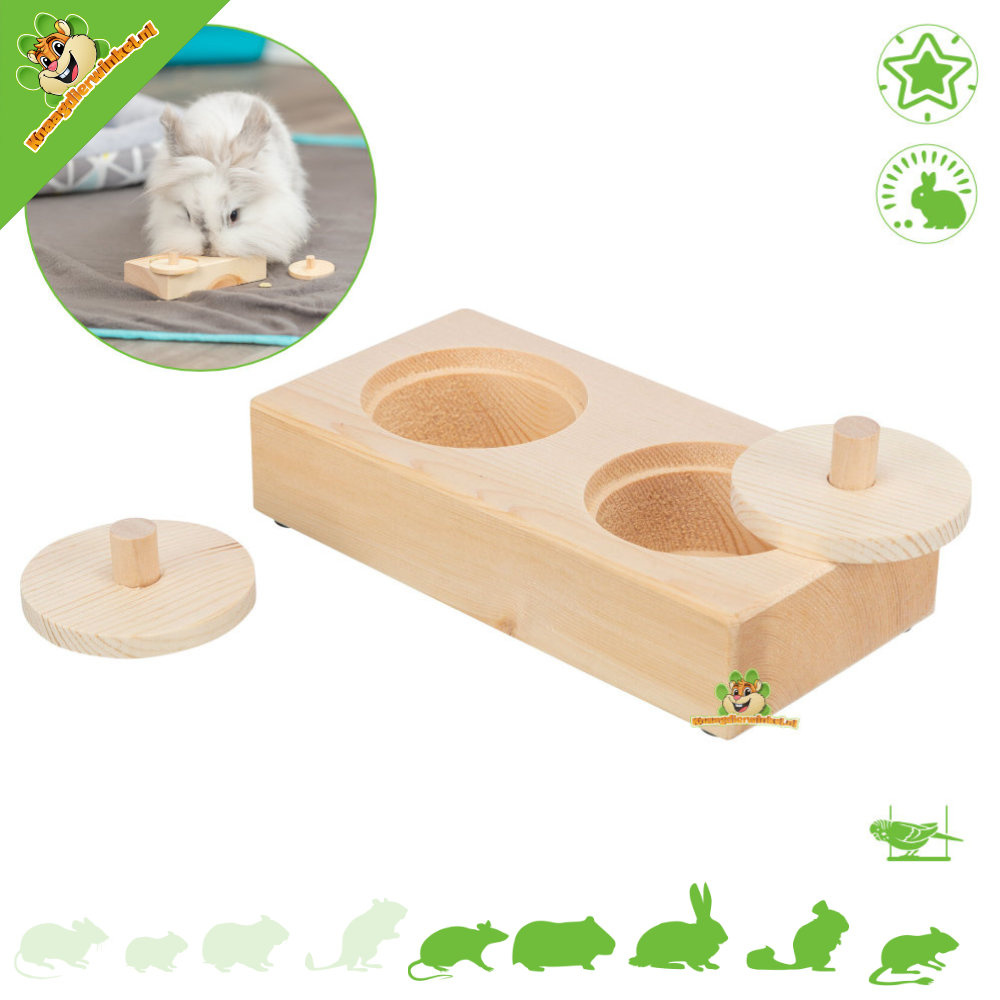
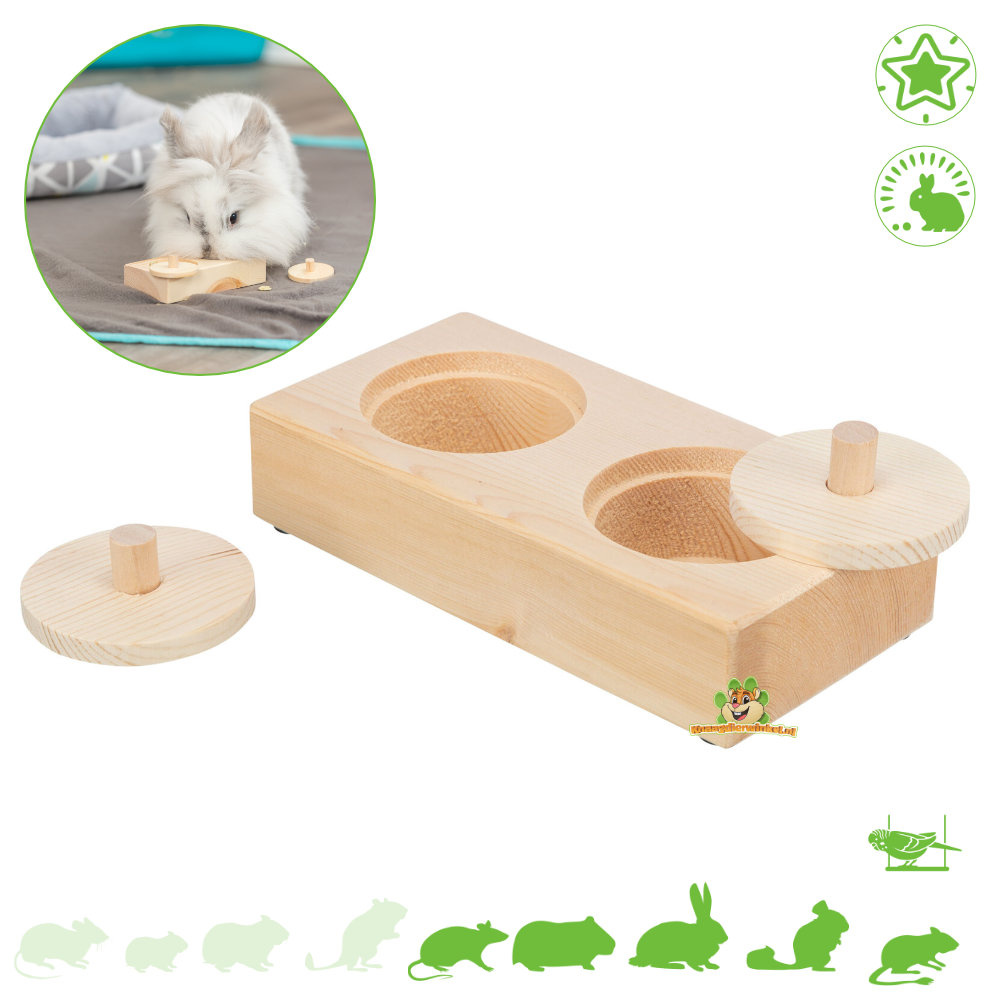
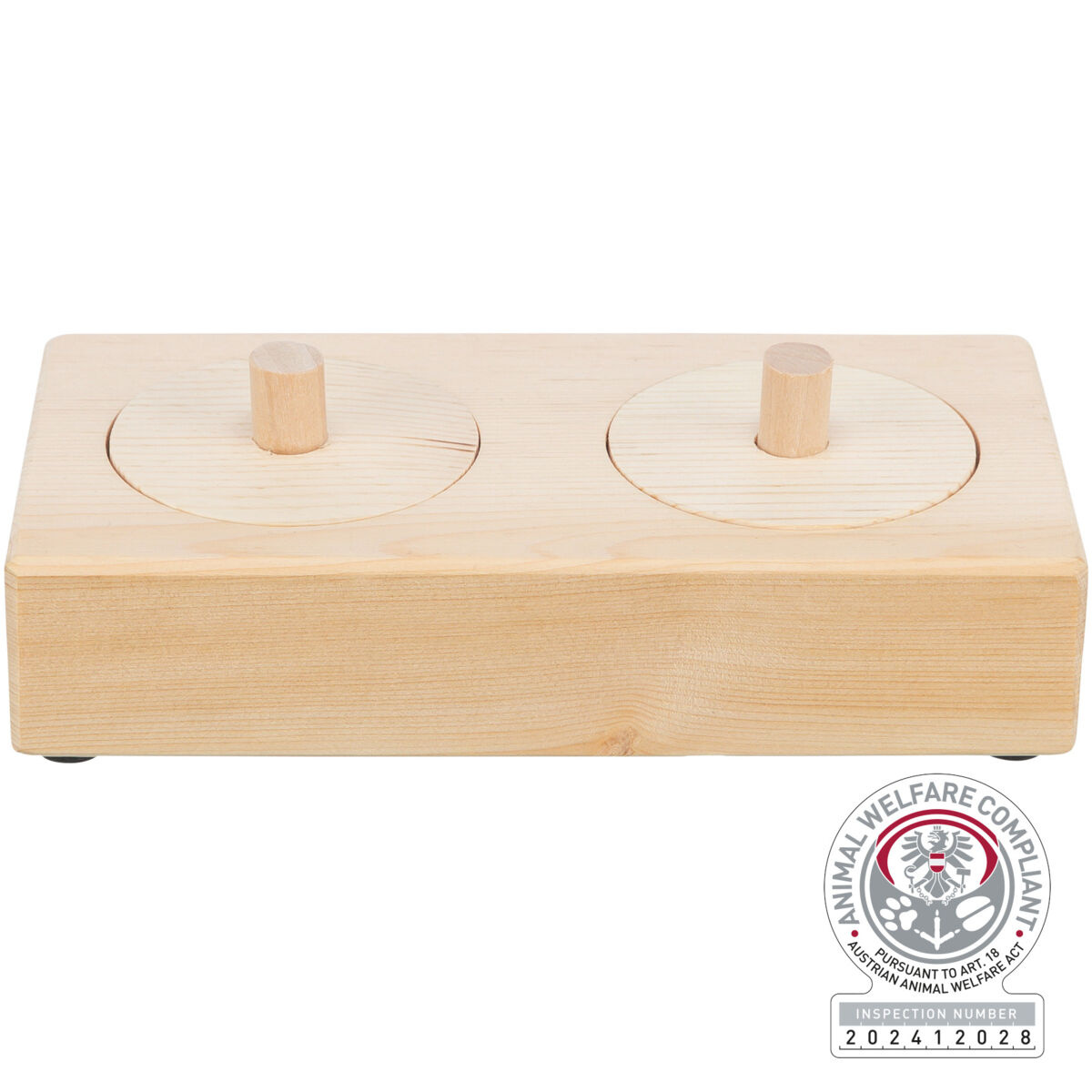
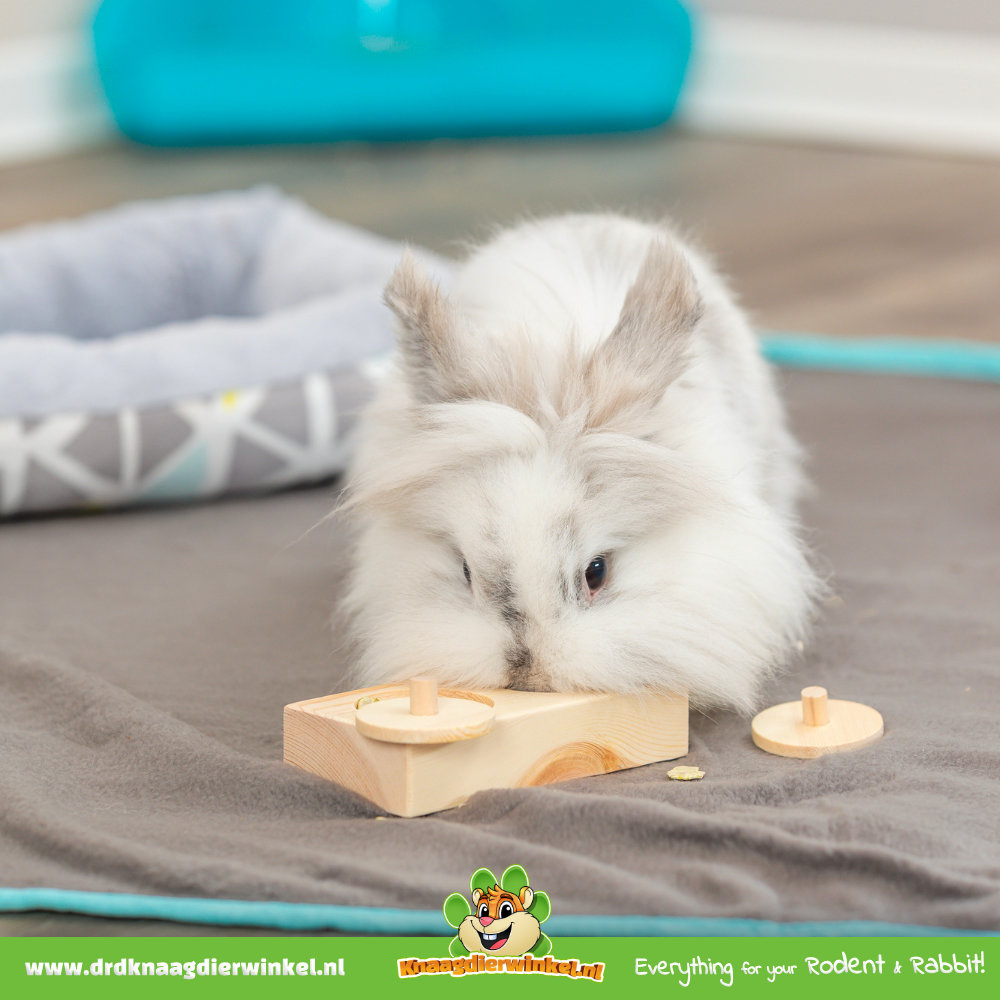
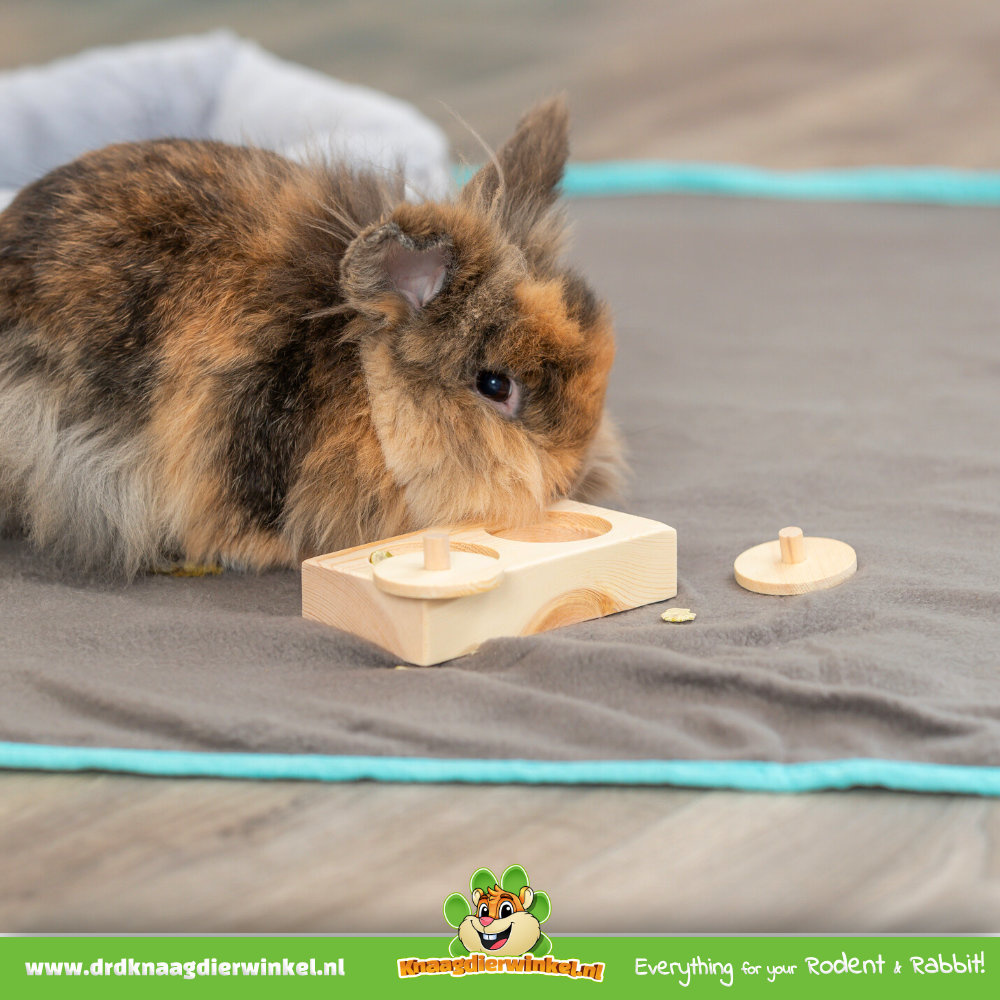
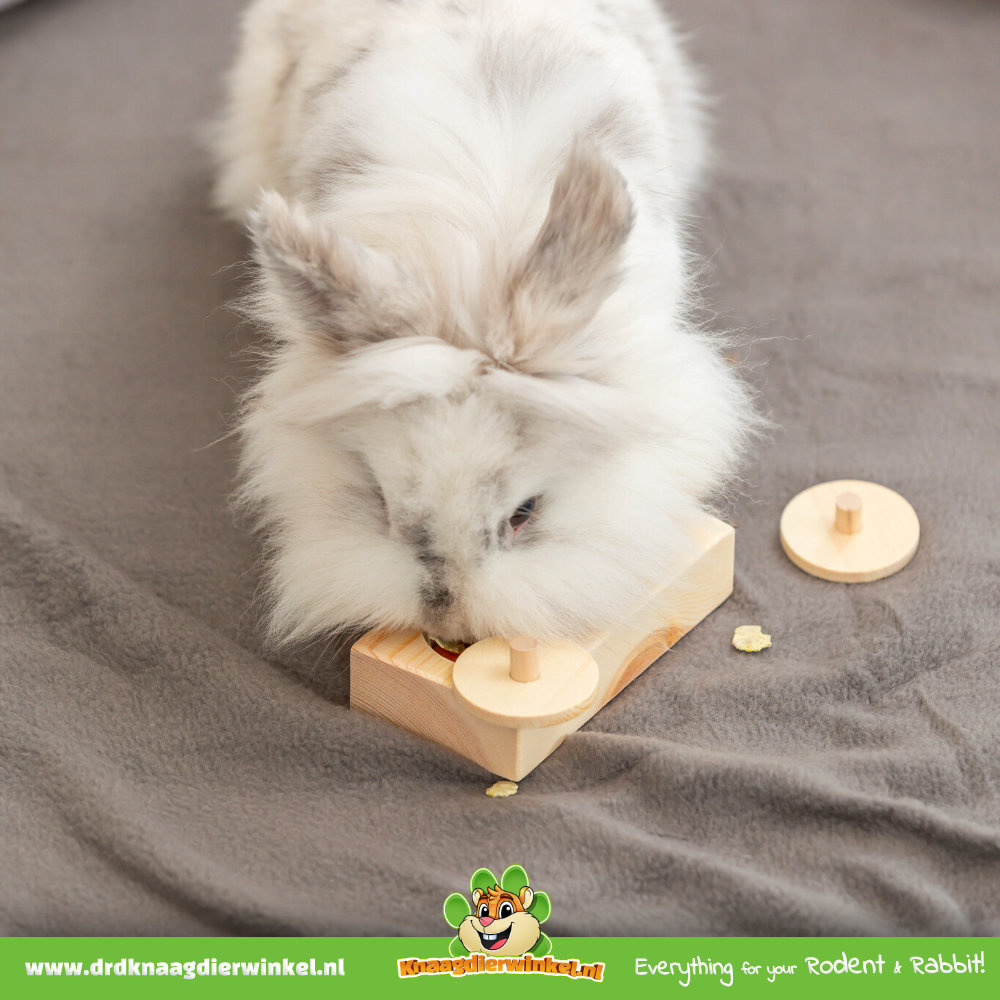
The Trixie Wooden Snack Box 14 cm is a compact food puzzle that lets your pet search for a small reward in a fun way. Hide a snack under the flaps and let your pet discover how to get to it. This makes foraging more active, interesting, and just a little more challenging.
DRD chooses this type of toy because it aligns well with natural foraging behavior. Instead of giving a snack immediately, your animal has to look, smell, try, and move. Especially smart and curious animals such as rats, guinea pigs, rabbits, chinchillas, degus, and ferrets can derive a lot of pleasure from this. The snack box can also be used as a small food puzzle for birds, provided the size and reward are appropriate.
In short
- Wooden snack box / food puzzle for small rewards.
- Dimensions: approx. 14 × 7 × 3 cm.
- Material: wood.
- With flaps under which you can hide snacks.
- Provides mental challenge and stimulates searching for food.
- Suitable for rats, guinea pigs, rabbits, chinchillas, degus, ferrets, and birds.
- For small rodents, only use when size and operation are appropriate.
- Offer only under supervision and put back after use.
Pros
✔ Compact wooden feeding puzzle of approx. 14 cm
✔ Stimulates searching, smelling, and trying
✔ Great for mental challenge and variety
✔ Suitable for short play sessions with your pet
✔ Works with small, suitable snacks or pellets
✔ Made of wood
! Use only under supervision and do not leave in the enclosure as a permanent toy
Why choose a wooden snack box?
Many rodents, rabbits, and ferrets are more curious than you might sometimes think. They don't just want to get food, but also want to do something to get to that tasty treat. A snack box turns a small reward into a moment of play. Your pet has to smell where the snack is, examine the flaps, and discover how to get to the reward.
This makes the snack box very suitable as short daily or weekly enrichment. You do not use it as a food bowl for the normal portion of food, but as an extra challenge with small rewards. This keeps things clear, fun, and appropriate for the animal.
The snack box is small and low. This makes it easy to place during a play session, on a flat surface, or during safe time off. Afterwards, you store it away again so that the playtime remains special and the wood is not unnecessarily gnawed on.
For which animals is the Wooden Snack Box suitable?
- Rat: very suitable as a food puzzle. Rats are curious and can quickly learn how the flaps work. Use small rewards and build it up gradually.
- Guinea pig: suitable as a quiet snack puzzle. Guinea pigs can explore the flaps with their noses and thus learn where the reward lies.
- Rabbit: suitable as a mental challenge for rabbits who enjoy searching and working with their noses. Use small, appropriate rewards and place the box on a stable spot.
- Chinchilla: suitable as a snack puzzle under supervision. Choose appropriate, small rewards and carefully check that your chinchilla does not actively gnaw on the wood.
- Degu: suitable as a smart food puzzle, but degus can gnaw vigorously. Therefore, use only under supervision and put the box away afterwards.
- Ferret: suitable as a short play session with an appropriate reward for ferrets. Use the box outside the enclosure or during a supervised play session.
- Bird: may be suitable as a small food puzzle for birds, provided the reward, size, and use are appropriate for the bird species.
For mice, dwarf hamsters, hamsters, and gerbils, the snack box can sometimes be used as a small sniffing or search puzzle, but the size and lids must be suitable for the animal. For these smaller animals, forage layers, scattered food, small snack plates, tunnels, and natural furnishings are often more logical as daily enrichment.
Use for rats
For rats, this Wooden Snack Box is great fun as a short puzzle during outdoor play or a supervised play session. Rats use their noses, paws, and teeth to investigate things. Let them first calmly discover that there is something tasty under the flaps.
Start easy: first, leave the flaps half open or show your rat where the reward is. As soon as your rat understands that there is something under the flaps, you can make it a little more difficult. Store the box away afterwards so that it doesn't become a permanent wreck in the rat cage.
Use in guinea pigs and rabbits
Guinea pigs and rabbits can get a lot of enjoyment out of quiet food puzzles. They love to search with their noses and can learn that there is something tasty hidden under a flap. Use small pieces of vegetables, herbs, pellets, or a suitable snack, depending on what your animal is allowed to have.
Place the snack box on a flat, quiet spot. In the beginning, help by opening the lids or placing a reward partially visible. This prevents frustration and makes the game positive. The goal is not for your animal to finish as quickly as possible, but for them to be occupied in a fun way.
For use with chinchillas and degus
Chinchillas and degus are intelligent animals that enjoy exploring. A snack box can therefore be interesting as a short mental challenge. However, use small, appropriate rewards and only give the box when you stay with them.
Degus, in particular, can actively gnaw on wood. This isn't necessarily a problem with a wooden product, but this box is intended as a food puzzle, not a gnawing block. Remove the snack box if your animal starts destroying it rather than puzzling.
For use with ferrets and birds
For ferrets, the Wooden Snack Box can be a fun, short play session. Ferrets are curious and inquisitive, but have different nutritional needs than herbivorous rodents and rabbits. Therefore, only use rewards that are suitable for ferrets.
For birds, the snack box can be used as a small food puzzle in a safe place. Always check that the size, wood, and opening mechanism are suitable for your bird. Use only bird-appropriate rewards and remove the box if your bird destroys it too intensely.
How do you use the Trixie Wooden Snack Box?
The snack box works simply: you hide a small reward under the flaps and let your animal figure out how to get to it. Start very easy at first. Success is more important than difficulty. If your animal quickly understands what to do, you can hide the reward better or make it less visible.
- Place the snack box on a flat, quiet spot.
- Use small, appropriate rewards.
- Let your animal sniff and explore first.
- Start with a flap half open or a snack visible.
- Reward calmly and prevent frustration.
- Keep the play session short and positive.
- Store the snack box away after use.
View the snack box in use
In this video, you can see how the wooden snack box can be used as a food puzzle. Use the video primarily as inspiration: every animal learns at its own pace.
Which reward do you use?
Use small rewards that are appropriate for the species. It is about searching and solving puzzles, not about large amounts of food. A small piece is often enough to motivate your animal.
- For rats: small, suitable treats, pieces of vegetables, or a small training treat.
- For guinea pigs: small pieces of vegetables, herbs, or a suitable guinea pig snack.
- For rabbits: small pieces of herbs, leafy greens, pellets, or a suitable rabbit snack.
- For chinchillas and degus: small, suitable herbs, pellets, or species-appropriate snacks.
- For ferrets: only rewards that are suitable for ferrets and their diet.
- For birds: bird-friendly rewards in small quantities.
Above all, choose something your animal really wants to search for. In the beginning, the reward can be easy to find. Later, you can make it more challenging by hiding the snack better under the flap.
Why are foraging toys valuable?
Foraging toys encourage animals to actively engage with food. Instead of receiving a snack directly from the hand, they have to search and try. This aligns better with natural behavior and makes playtime more interesting.
- Searching: your animal uses scent and curiosity to find the reward.
- Try this: your animal learns that a small flap can open and that there is something underneath.
- Variety: a food puzzle breaks the daily routine.
- Working together: you can help, encourage, and watch how your animal learns.
- Gentle challenge: the box requires thought, but remains clear and compact.
Why not leave it in the enclosure?
The Wooden Snack Box is intended as supervised foraging and training toy. If you leave the box in the enclosure for extended periods, your animal may gnaw on it, damage parts, or use the box in a way that is not intended.
By storing the box after use, it stays tidy longer and playtime remains interesting. Your pet then learns: when the snack box appears, there is something fun to discover.
Animal welfare label
This snack box bears the Tierschutz-Kennzeichen. This is an Austrian animal welfare label for products that have been positively assessed by the Fachstelle für tiergerechte Tierhaltung und Tierschutz. The assessment considers legal regulations, animal welfare, practical application, and the suitability of the product.
For you as an owner, this provides extra guidance when choosing foraging and training toys designed to challenge animals in an appropriate way.

Cleaning and maintenance
Because you hide snacks in the box, it is important to keep the snack box tidy. Preferably use dry or not too moist rewards. Remove leftovers after the play session so that nothing is left lying under the lids.
- Check that no snack residue remains after use.
- Preferably use dry treats or small pieces that do not release much moisture.
- Dry clean the wood if necessary.
- Let the box dry thoroughly if it has become damp.
- Regularly check flaps, edges, and wood for wear.
- Do not use the box anymore if sharp edges, loose parts, or damage occur.
Dimensions and specifications
Product: Wooden Snack Box 14 cm
Brand: Trixie
Material: wood
Dimensions: approx. 14 × 7 × 3 cm
Use: food puzzle, snack box, training toys and foraging toys
Suitable for: rodents, rats, guinea pigs, rabbits, chinchillas, degus, ferrets, and birds
Important: use only under supervision and store after use
Good to know
- Offer only under supervision.
- Check regularly for wear, gnawing damage, loose parts, and sharp edges.
- Use the snack box as a short mental challenge, not as a regular food bowl.
- Do not leave the box unattended in the enclosure.
- Use small rewards that are appropriate for the animal species.
- Remove snack residue after use.
- Put the box away again after the play session.
Frequently Asked Questions
For which animals is the Trixie Wooden Snack Box suitable?
The snack box is suitable for rodents, rats, guinea pigs, rabbits, chinchillas, degus, ferrets, and birds. Always use it under supervision and with rewards appropriate for the animal species.
How big is the Wooden Snack Box?
The snack box has dimensions of approx. 14 × 7 × 3 cm.
What is the snack box made of?
The snack box is made of wood. Check the wood regularly for gnawing damage, loose parts, or sharp edges.
Can the snack box remain in the enclosure?
No, use the snack box as supervised playtime and put it away afterwards. This way, it stays clean longer and you prevent your pet from using it as a gnawing object.
What snacks can you put in it?
Use small snacks, pellets, herbs, or pieces of vegetables that suit your animal. For ferrets and birds, of course, you should only choose rewards that are suitable for those species.
Is this snack box suitable for rats?
Yes, rats are often curious and eager to learn. This snack box can be a fun food puzzle during run-out or a supervised playtime.
Is this snack box suitable for rabbits?
Yes, rabbits can use the snack box as a quiet food puzzle. Start easy and use small, suitable rewards, such as herbs, pellets, or a small piece of vegetable.

Useful shopping links
- Training & foraging
- Food puzzles for rodents and rabbits
- Snack boards and snack games
- Rats playing & foraging
- Guinea pig playing & foraging
- Rabbits playing & foraging
- Chinchilla toys
- Degoe toys
- Ferret toys
- DRD Bird Shop®
- Ask DRD for personal advice.
✓ Specialist since 2011 • personal & expert advice • delivered from our own stock
| Material: | Wood |
| Dimensions (approx): | 14 × 7 × 3 cm |
| Diameter (approx): | ø |
| Suitable for: | Rodent, Rat, Guinea Pig, Rabbit, Chinchilla, Degu | Ferret, Bird |
| Particularities: | - |
| Safety Information: | Offer only under supervision. Check regularly for wear and tear |