Polski



Long Grey Rock Bowl for Rodents, Rabbits & Scaping


- Dispatched from our own stock
- Personal & expert advice
- Always 100% rodent-friendly
- Ordered before 5 p.m., shipped the same day!
- Customer service from 09:00 to 18:00
Long Grey Rock Bowl for rodents, rabbits & scaping
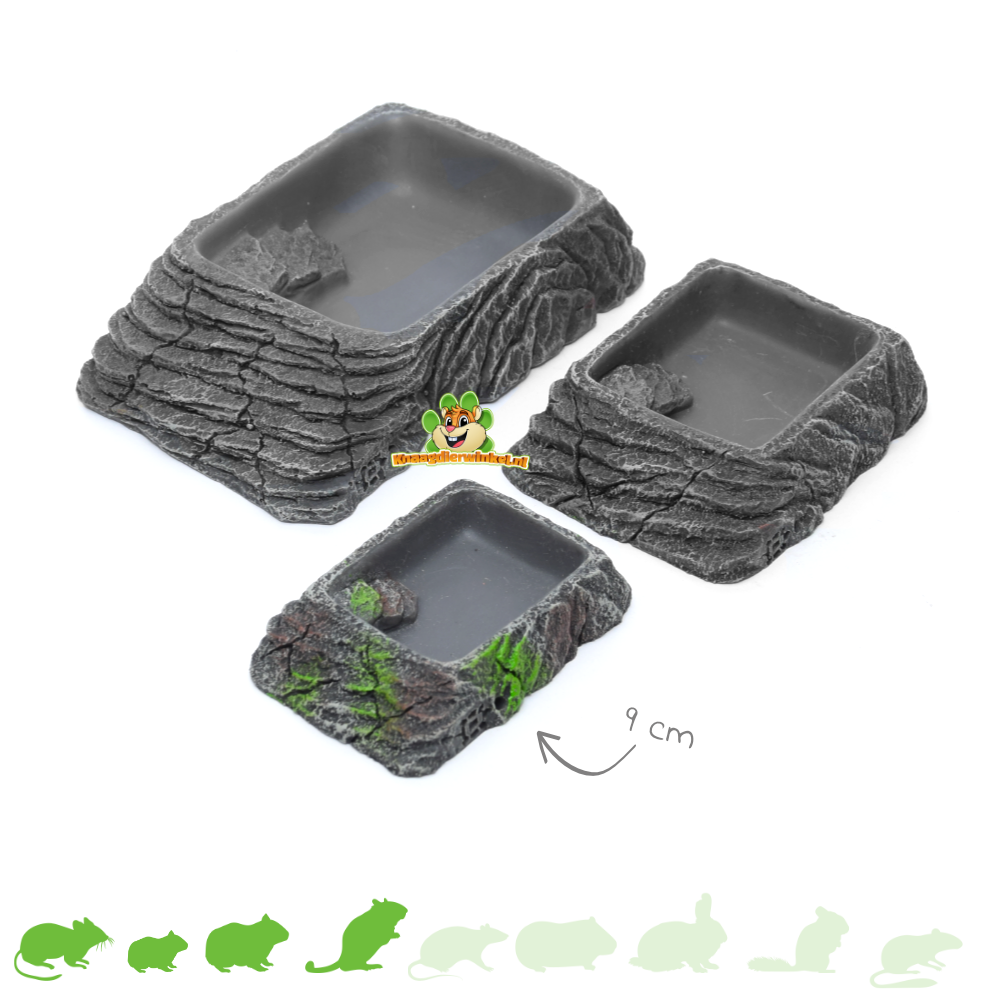
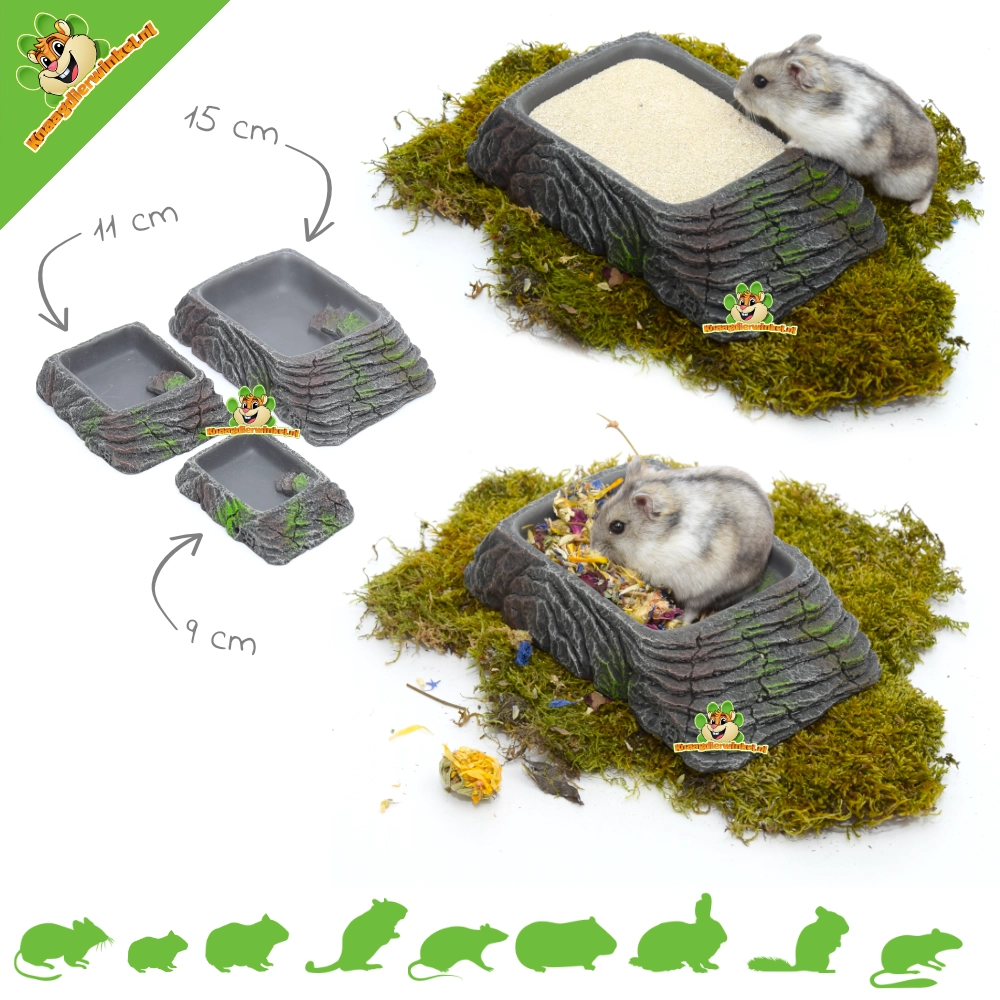
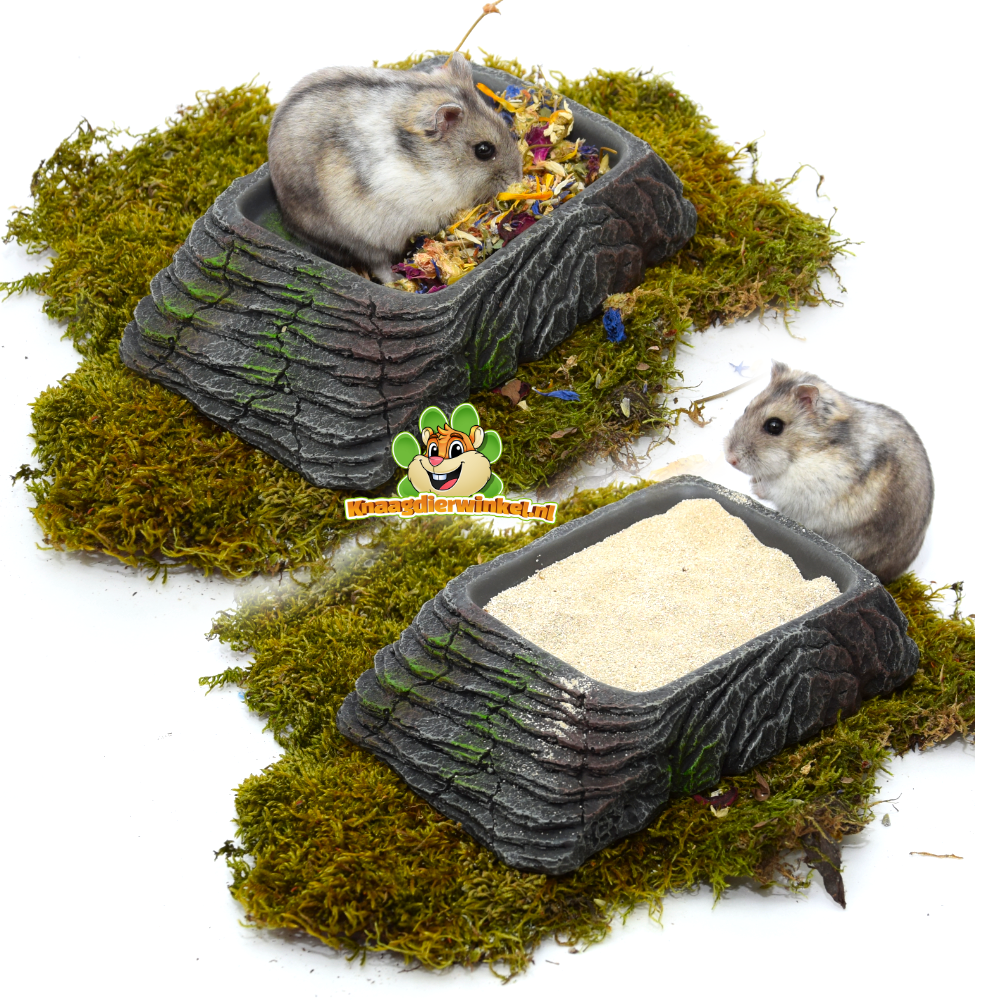
The Long Grey Rock Bowl is a versatile, natural-looking bowl for rodent and rabbit enclosures. Thanks to its elongated rock shape, the bowl fits beautifully into a natural setting, for example for hamsterscaping, gerbilscaping, or as a quiet feeding and drinking area in the enclosure. You can use the bowl as a food bowl, water bowl, or decorative bowl. The largest size can also be used as a small sand bath for small animals.
When it comes to bowls, DRD always considers their function within the enclosure. A food bowl must provide a clear overview, a water bowl must be stable and easy to keep clean, and a scavenger hunt bowl must logically fit the size of the animal. This grey rock bowl is particularly handy because it is available in three sizes. This allows you to better choose what suits your animal, your decor, and the purpose for which you want to use the bowl.
In short
- Elongated grey rock bowl with a natural appearance
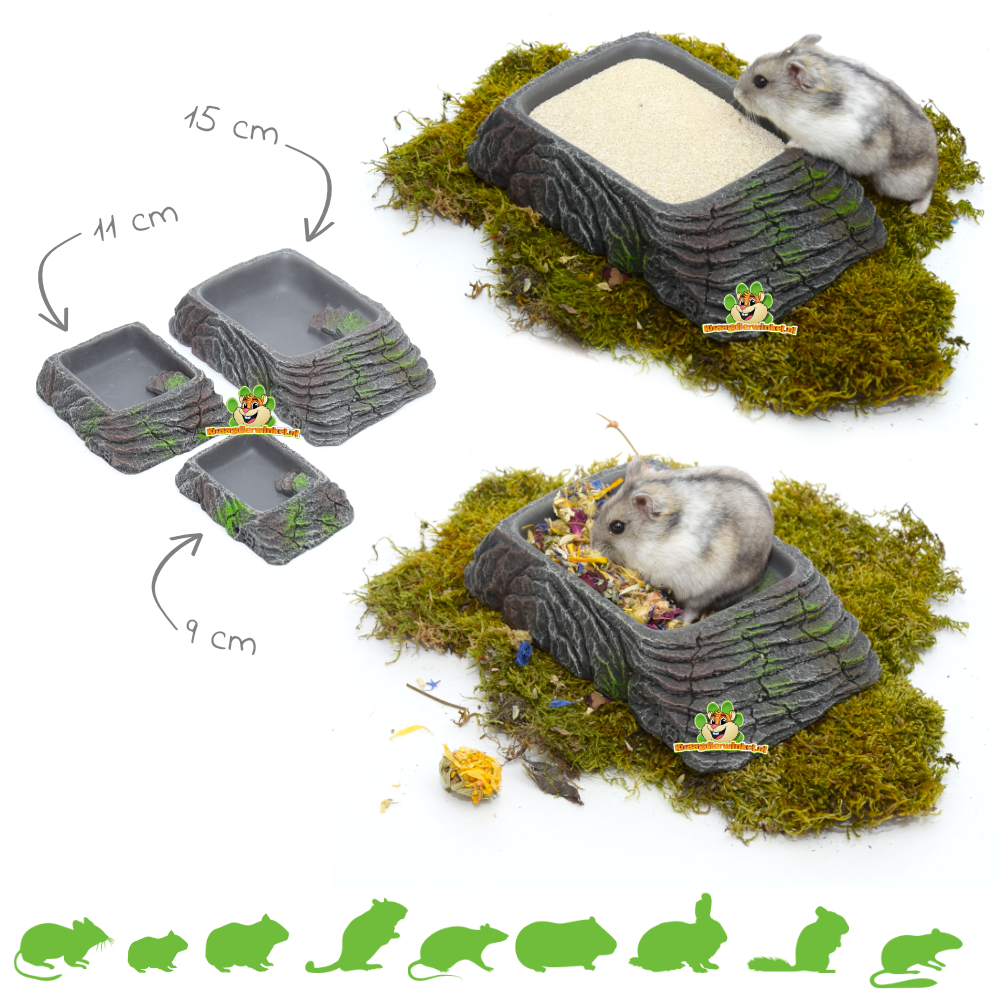
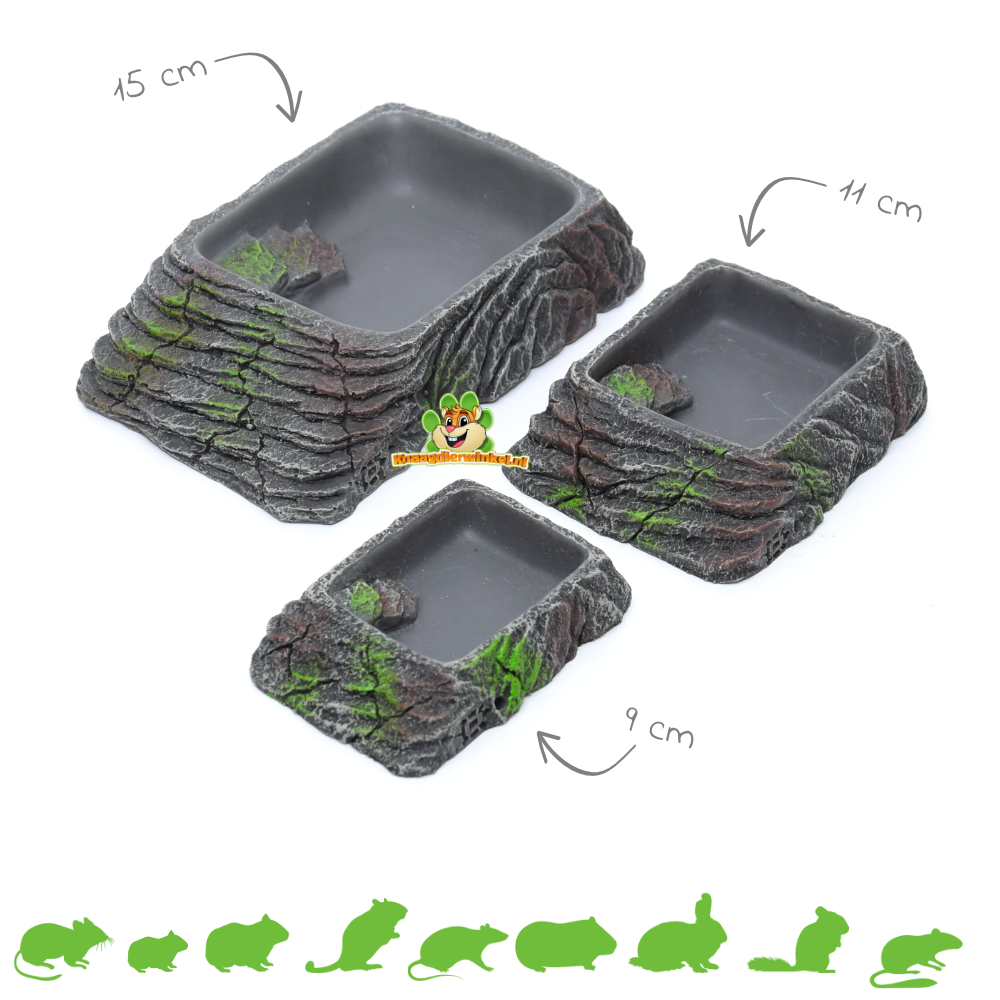
- Available in 3 sizes: 9 cm, 11 cm and 15 cm
- Can be used as a food bowl, water bowl, or decorative aquascaping bowl.
- The largest size can also be used as a small sandbox for small animals.
- Beautiful for hamsterscaping, gerbilscaping, and natural decor.
- Suitable for multiple animal species, depending on size and application
- Specialist since 2011: carefully selected for practical living space design
Advantages of the Long Grey Rock Basin
✔ Can be used as a food bowl
✔ Can be used as a water bowl
✔ Largest size also usable as a small sandbox for small animals
✔ Natural rock look for hamsterscaping and gerbilscaping
✔ Three sizes for different animals and applications
✔ Combines well with food bowls , water bowls , and sand bowls
Why choose a rock bowl?
A bowl might seem like a simple part of the enclosure, but in practice, it makes a big difference. A designated feeding spot helps your animal recognize where food is offered. For you, it is convenient because you can better see how much has been eaten and whether any food scraps are left behind. If you use the bowl as a water bowl, it adds a natural look and can serve as a nice alternative or extra drinking point alongside a water bottle.
The rock shape makes this tray particularly suitable for a natural-style setup. In a hamster enclosure, gerbilarium, or aquascaping arrangement, you would rather not have a bright plastic tray that clashes. This grey rock tray looks calmer and fits better among bedding, cork, wood, moss, sand zones, and other natural materials. As a result, the tray is not only functional but also part of the overall look of the enclosure.
The three sizes make the product versatile. The smallest sizes are suitable for small rodents such as mice, dwarf hamsters, hamsters, and gerbils. The largest size can be used for larger animals as a food or water bowl, but also as a small sand bath for small animals that need a compact sand corner.
Which size do you choose?
- 9 cm: suitable as a small food or water bowl for mice, dwarf hamsters, hamsters, and small landscaping corners. Also handy for small portions of herbs, seeds, or supplementary food.
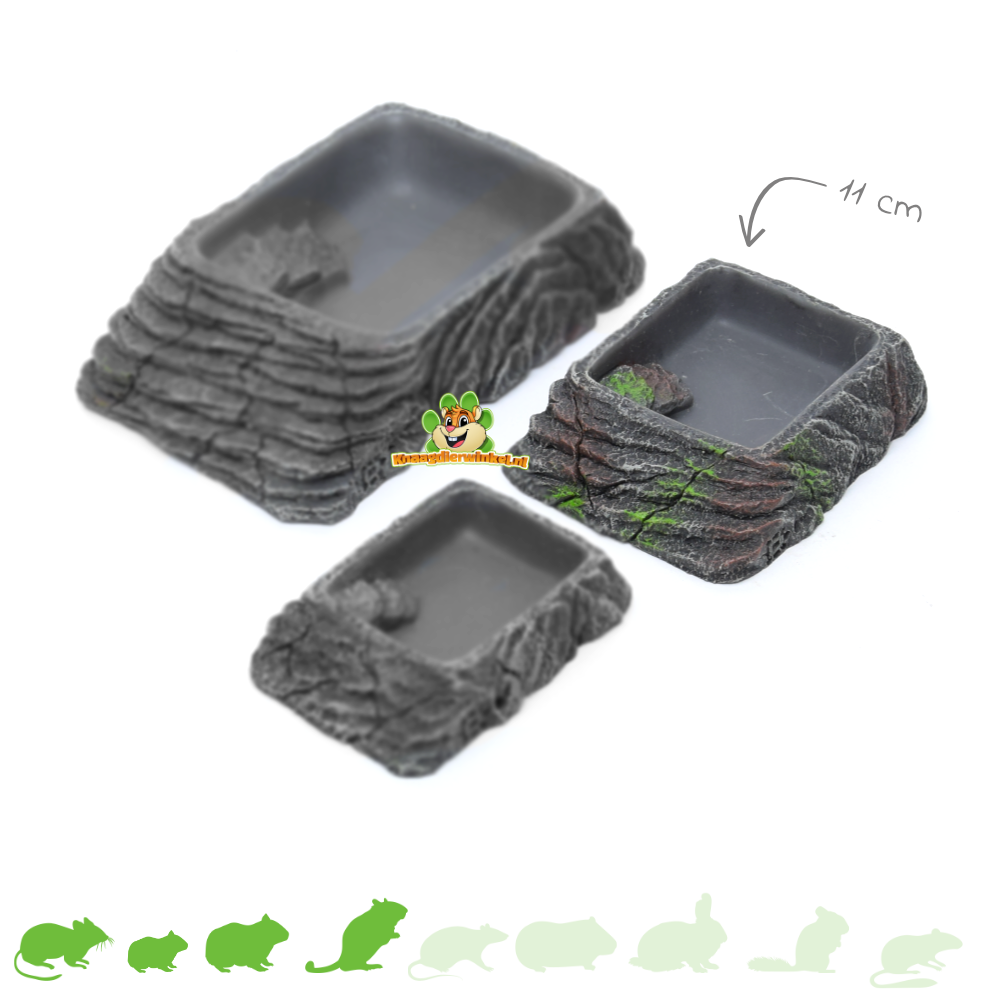
- 11 cm: suitable as a slightly larger food or water bowl for mice, dwarf hamsters, hamsters, and gerbils. This size is often convenient when you want just a bit more capacity, but the bowl needs to remain compact.
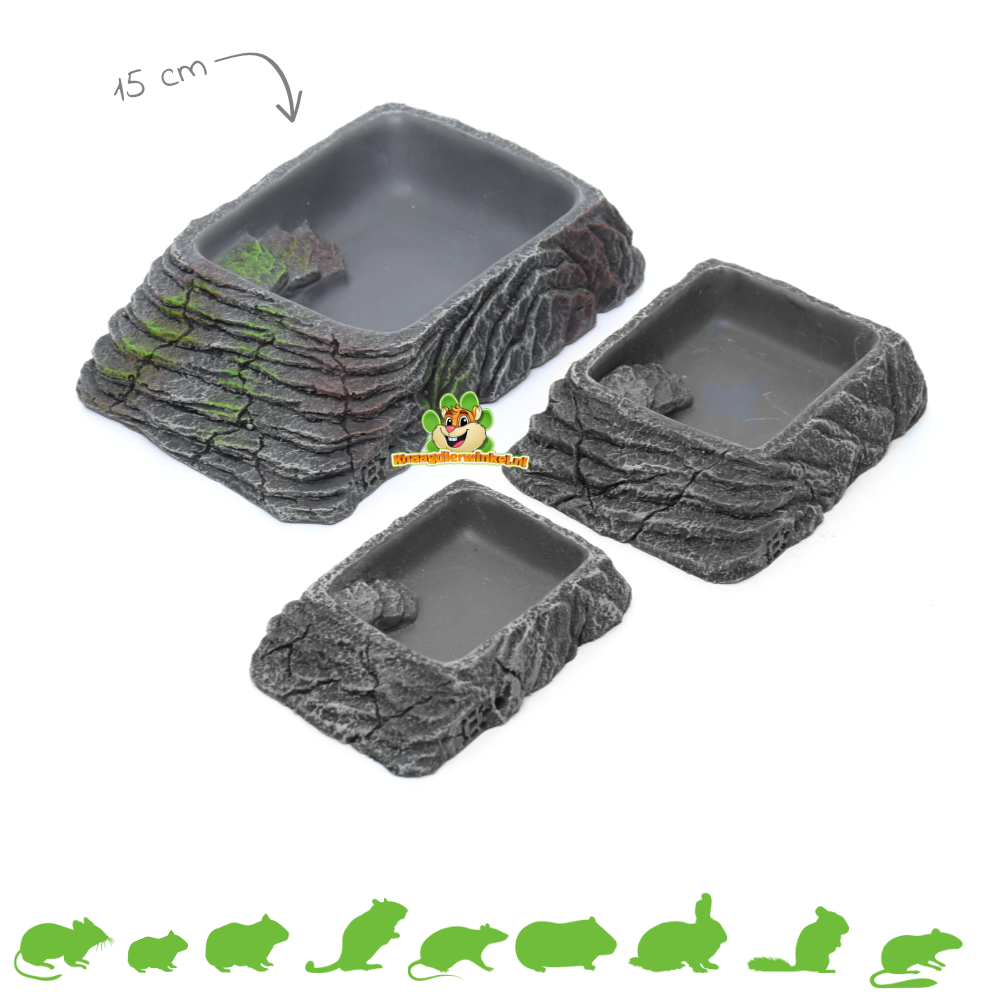
- 15 cm: suitable as a food bowl or extra water bowl for larger animals such as rats, guinea pigs, rabbits, chinchillas, and degus. For small animals such as mice and dwarf hamsters, this size can also be used as a compact sand bath.
Always choose the size based on the animal, its location in the enclosure, and the intended use. A food bowl can be compact, but a water bowl must be stable and easy to clean. If you want to use the bowl as a sand bath, your animal must be able to step into it comfortably and have enough room to use the sand.
Use as a food bowl
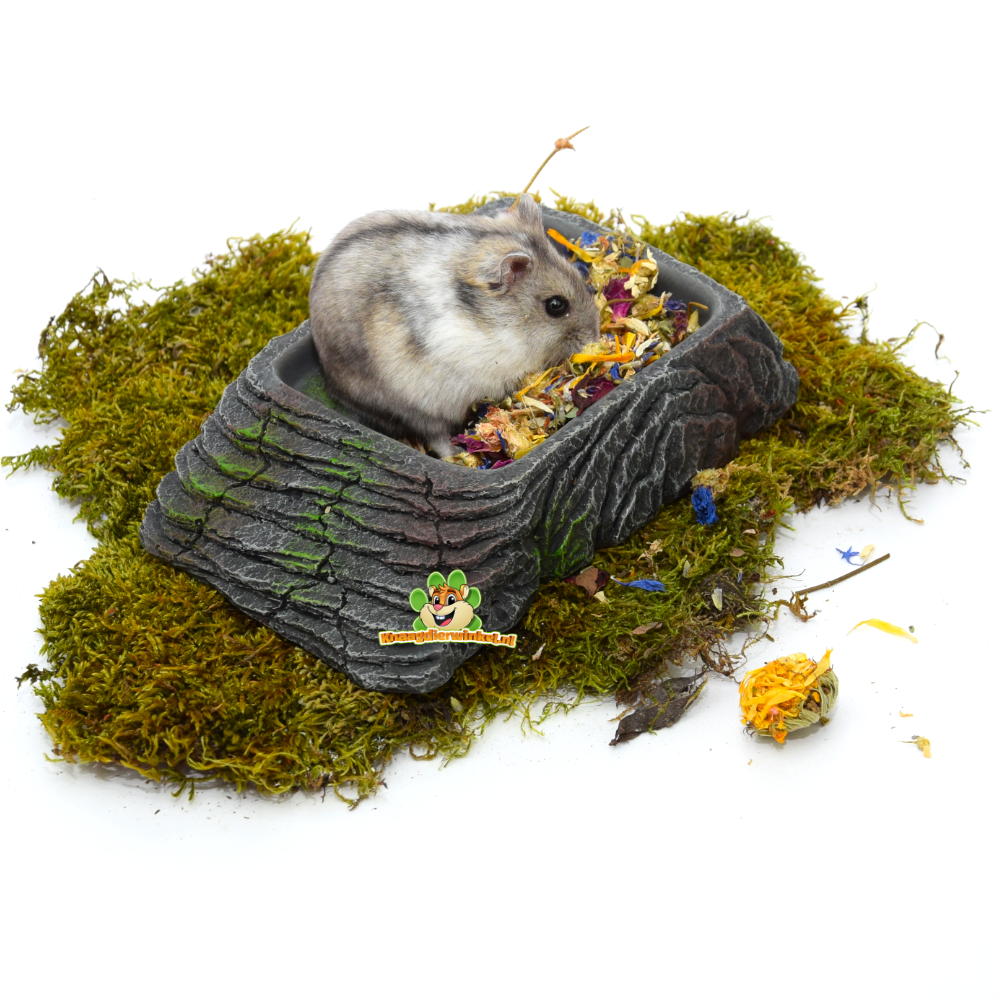
The Grey Long Rock Bowl can be used effectively as a food bowl. A fixed feeding spot provides an overview of the enclosure and makes it easier to see how much your animal is eating. This is especially useful for animals whose daily portion you like to keep a close eye on, such as hamsters, gerbils, mice, rats, guinea pigs, rabbits, chinchillas, and degus.
For small animals, sizes 9 cm and 11 cm are often the most logical for food bowls. Think of mice, dwarf hamsters, hamsters, and gerbils. For larger animals, the 15 cm size is more practical, for example as a food bowl for rats, guinea pigs, rabbits, chinchillas, and degus. For groups of degus, an extra bowl can be handy so that multiple animals can eat at the same time.
Use the bowl for the daily portion of food, a small herb mixture, dried vegetables, or a controlled snack portion. For animals that enjoy foraging, you can also alternate the bowl with scattered food or a foraging area to keep searching for food interesting.
Use as a water bowl
The Grey Long Rock Bowl can also be used as a water bowl. This provides a natural look and can look particularly beautiful in aquascape enclosures. However, hygiene is especially important with water. Water in an open bowl becomes contaminated more quickly by bedding, sand, or food residue than water in a drinking bottle. Therefore, check the water daily and change it more frequently when it has become dirty.
For small animals, the 9 cm and 11 cm sizes are suitable as water bowls, provided the bowl is stable and the animal can easily reach it. For larger animals, the 15 cm size can be used as an extra water bowl. For guinea pigs and rabbits, it remains important to carefully check whether the capacity and location suit their daily drinking needs. An extra water bottle or larger water bowl can also be useful.
Always place a water bowl on a flat, stable spot. Do not place it directly in a digging zone or toilet area. This keeps the water cleaner and prevents the bowl from quickly becoming filled with bedding.
Use as a sandbox
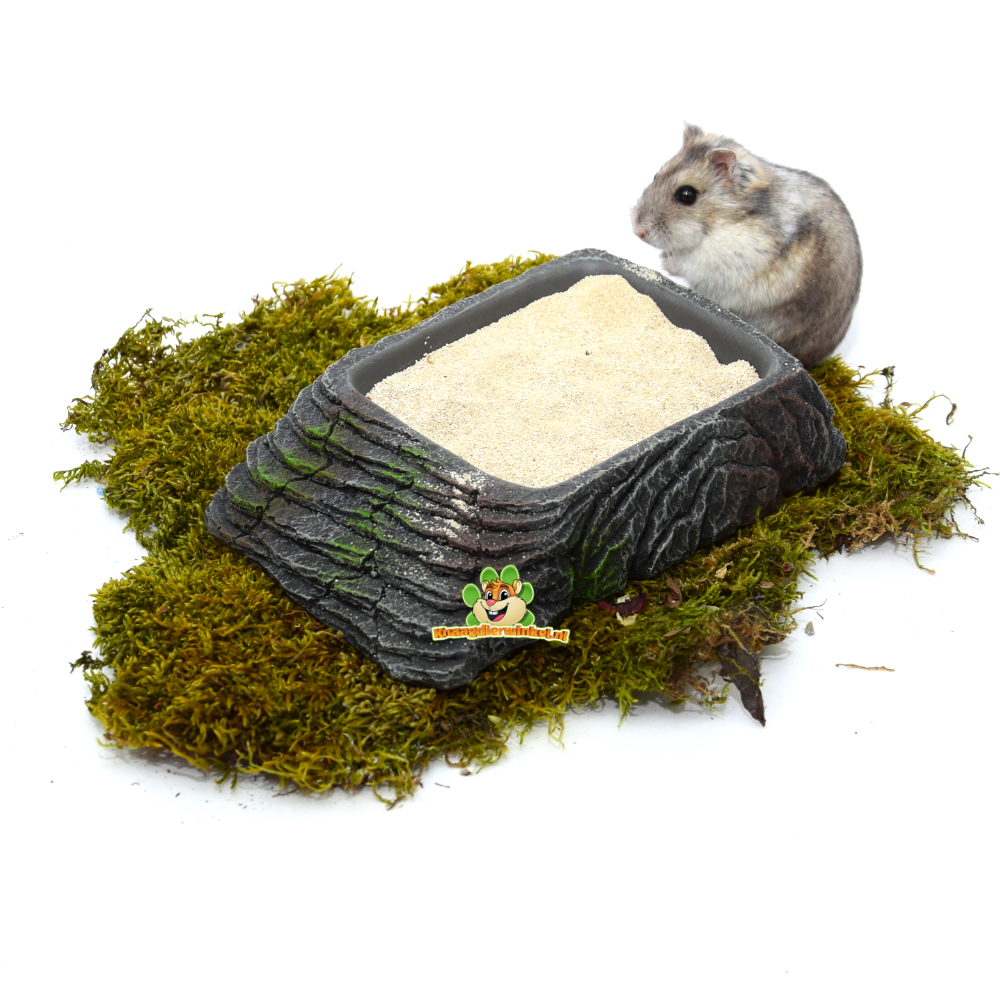
The largest size of 15 cm can be used as a small sand bath for small animals such as mice and dwarf hamsters. Fill the container with a suitable layer of bath sand and place it in a stable spot in the enclosure. This is especially handy when you want to create a compact sand corner that fits nicely into a natural-style setup.
For hamsters, the 15 cm size can serve as a small sand corner, but for a Syrian hamster, a larger sand bath is often more pleasant. For gerbils, this tray is usually too small and too shallow as a primary sand bath, because gerbils prefer to dig and roll more actively in the sand. For chinchillas and degus, this size is not suitable as a full-fledged sand bath; they require a suitable, more spacious sand bath solution.
Do not use sand baths for rats, guinea pigs, or rabbits. Rats do not bathe in sand, and fine sand can be irritating to their respiratory system. Guinea pigs and rabbits do not need a sand bath for grooming. Therefore, for these animals, this product makes much more sense as a food or water bowl than as a sand bath.
For which animals is the Long Grey Rock Bowl suitable?
- Mouse: suitable as a small food bowl, water bowl, or in the largest size as a compact sand bath. Place the bowl stably and check for soiling daily.
- Dwarf hamster: suitable as a food bowl, water bowl, or small sand bath in the largest size. For a sand corner, a quiet, stable spot works best.
- Hamster: suitable as a food or water bowl. The 15 cm size can be used as a compact sand corner, but for larger hamsters, a more spacious sand bath is often better.
- Gerbil: suitable as a food or water bowl. As a sand bath, the rock bath is usually small and shallow; a larger sand bath is more practical for gerbils.
- Dwarf rat: suitable as a food or water bowl provided the size matches the size and build of your dwarf rat. Because dwarf rats can vary from one another, it is good to check if they can reach it comfortably.
- Rat: suitable as a food bowl or extra water bowl, especially in the largest size. Do not use this product for rats as a sand bath; rats do not need a sand bath.
- Guinea pig: suitable as a food bowl or extra water bowl in the largest size. For water, it is important to check daily that the bowl is clean and filled.
- Rabbit: suitable as a food bowl or extra water bowl in the largest size. For larger rabbits, check carefully whether the size suits the daily portions and drinking needs.
- Chinchilla: suitable as a food bowl or extra water bowl in the largest size. Not suitable as a full-fledged sand bath; choose a suitable chinchilla sand bath for that.
- Degu: suitable as a food bowl or extra water bowl. This bowl is usually too small as a sand bath; a larger sand bath is more suitable for degus.
Material & dimensions
- Product: Long Grey Rock Basin
- Version: elongated rock bowl in grey colour
- Dimensions 9 cm: approx. 9.3 × 6.5 × 2.1 cm
- Dimensions 11 cm: approx. 11.1 × 8.8 × 2.8 cm
- Dimensions 15 cm: approx. 15.8 × 10.4 × 3.5 cm
- Use: food bowl, water bowl, aquapark bowl, and for small animals, possibly a sand bowl.
- Suitable for: mice, dwarf hamsters, hamsters, gerbils, rats, dwarf rats, guinea pigs, rabbits, chinchillas, and degus, depending on size and application
The rock look makes the tray particularly suitable for a natural interior. It is less conspicuous than a brightly colored tray and blends in nicely with wood, cork, substrate, sand zones, and other aquascaping materials.
Easy to combine with
The Long Grey Rock Bowl looks its best in an enclosure where the feeding area, water area, or sand corner is a logical part of the setup. Combine the bowl with natural bedding, a sand zone, or other aquascaping materials, for example.
- Hamsterscaping for a natural hamster setup
- Gerbilscaping for a natural gerbil setup
- Hamster sand & sand bath
- Feeding bowls
- Drinking bottles & water bowls
Cleaning & maintenance
Do you use the bowl for food? Then remove food residue daily and clean the bowl regularly. Do you use it as a water bowl? Change the water daily, and more often if bedding, sand, or food gets into it. Rinse the bowl thoroughly and dry it before putting it back.
Are you using the largest size as a sand bath for a small animal? Sift or replace the sand regularly, depending on how intensively it is used. If the container becomes wet, dirty, or no longer smells fresh, clean it and refill it with clean bath sand.
Good to know
Offer the bowl under supervision and check regularly for wear, damage, or sharp edges. Always place it stably so that it cannot easily tip over. Especially when used as a water bowl, a flat surface is important so that the water does not quickly seep into the bedding.
Use the tray as a sand bath only for animals for which a sand bath or sand corner makes sense. This product is not intended as a sand bath for rats, guinea pigs, and rabbits. For chinchillas and degus, the size is too small to serve as a full-fledged sand bath solution.
Frequently asked questions about the Long Grey Rock Basin
Can I use the Grey Long Rock Bowl as a food bowl?
Yes, all sizes can be used as a food bowl. For small rodents, the 9 cm and 11 cm sizes are often convenient. For larger animals, the 15 cm size is usually more logical.
Can this small container be used as a water bowl?
Yes, the container can be used as a water bowl. Check the water daily and change it more frequently if bedding, sand, or food ends up in it.
What size is suitable for a dwarf hamster?
For a dwarf hamster, 9 cm and 11 cm are suitable as food or water bowls. If you want to use the bowl as a small sand bath, the 15 cm size makes the most sense.
Can I use this container as a sandbox?
The largest size of 15 cm can be used as a small sand bath for small animals such as mice and dwarf hamsters. For gerbils, chinchillas, and degus, a larger sand bath is usually more practical.
Is this sandbox suitable for rats?
No, do not use this container for rats as a sand bath. Rats do not need a sand bath, and fine sand can be taxing on their respiratory system. For rats, the product makes more sense as a food bowl or an extra water bowl.
Is this bowl suitable for guinea pigs and rabbits?
Yes, the 15 cm size in particular can be suitable as a food bowl or extra water bowl for guinea pigs and rabbits. This product is not intended as a sand bath for guinea pigs and rabbits.
Does this bowl fit in with hamsterscaping?
Yes, the grey rock look fits very nicely with hamsterscaping. You can use the tray as a feeding area, water spot, or small sand corner, depending on the size and the animal.
Does this bowl fit in with gerbilscaping?
Yes, as a food or water bowl, the bowl fits nicely into gerbilscaping. As a sand bath, it is usually too small and too shallow for gerbils; for that, it is better to choose a larger sand bath.
✔ Elongated rock bowl in 3 sizes
✔ For food, water, aquascaping, and small sandy corners
✔ Specialist since 2011 • personal & expert advice • delivered from our own stock


| Size (approx): | 9,3 x 6,5 x 2,1 cm | 11,1 x 8,8 x 2,8 cm | 15,8 x 10,4 x 3,5 cm |
| Suitable for: | Rodents, Mouse, Dwarf Hamster, Hamster, Gerbil, Rat, Guinea Pig, Rabbit, Chinchilla, Degu |
| Particularities: | - |
| Safety Information: | Offer only under supervision. Check regularly for wear and tear |