Polski



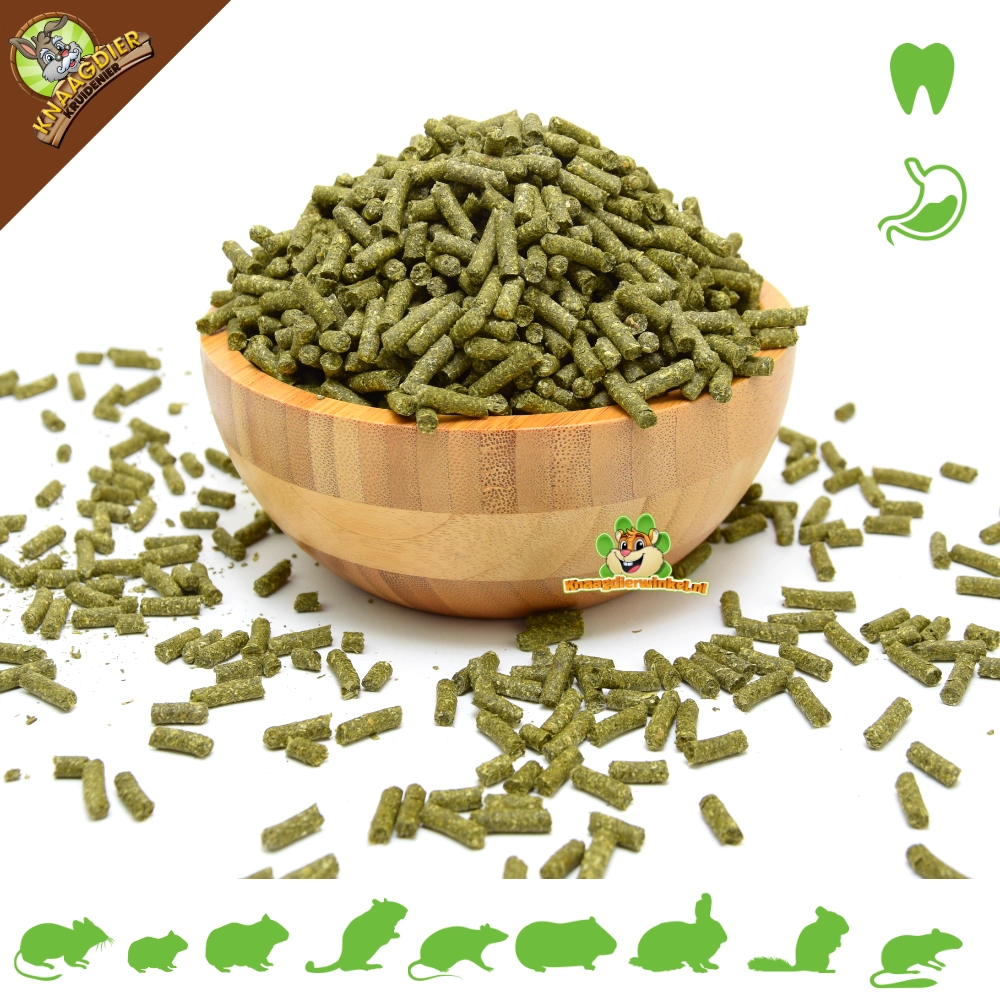
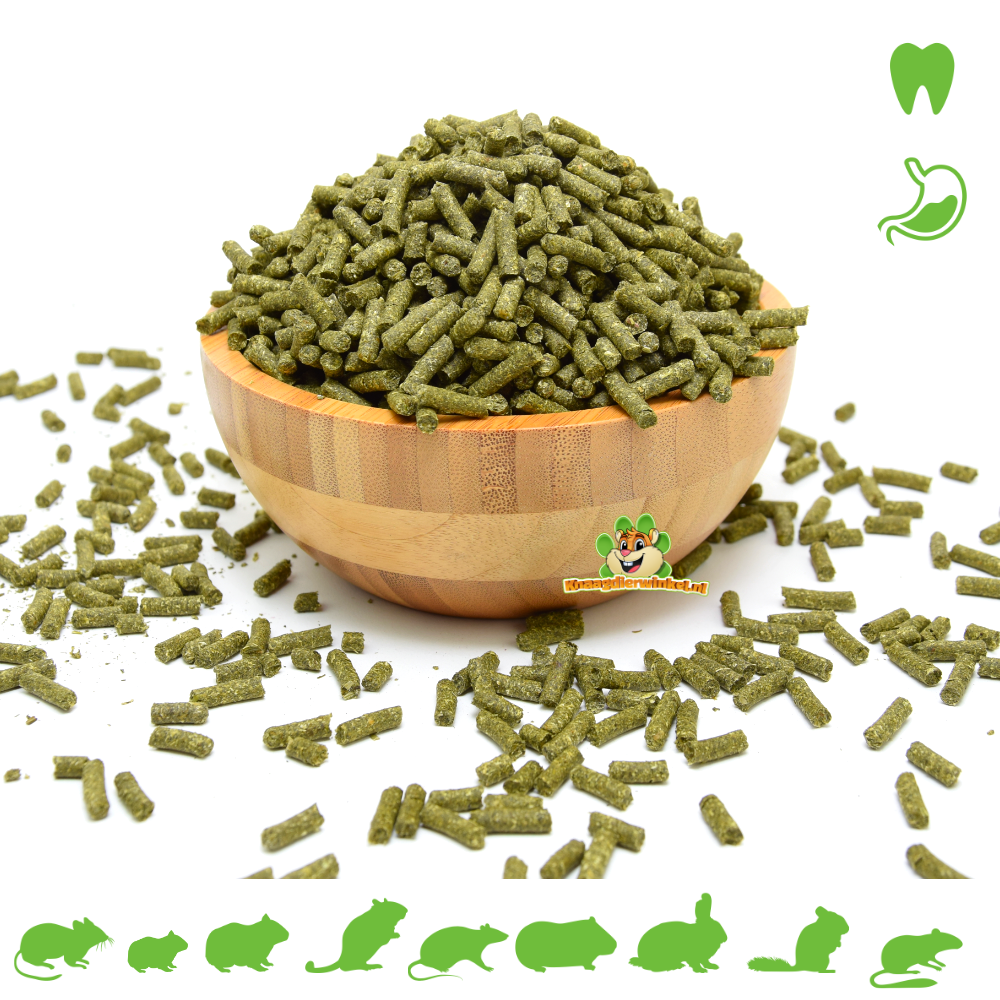
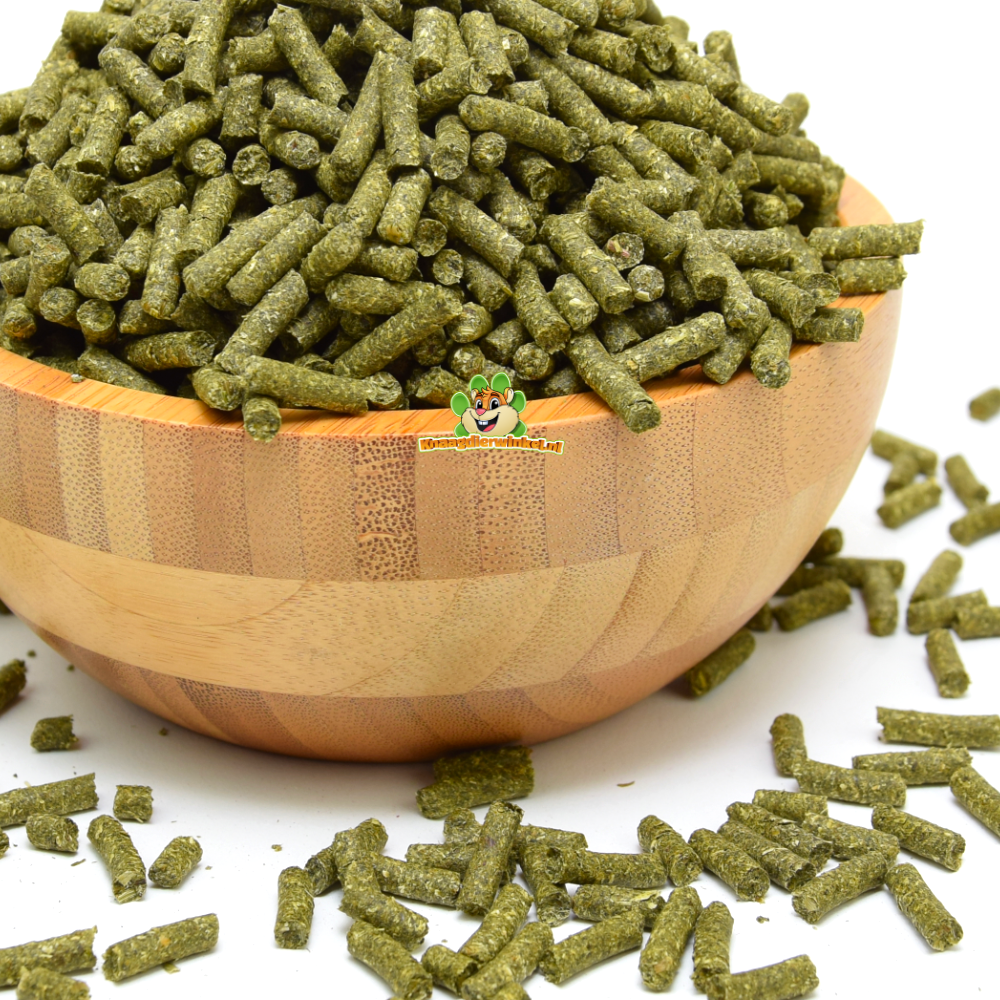
Dill Pellets 200 grams for Rodents and Rabbits
- Dispatched from our own stock
- Personal & expert advice
- Always 100% rodent-friendly
- Ordered before 5 p.m., shipped the same day!
Dill Pellets 200 grams for Rodents and Rabbits
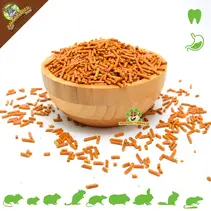
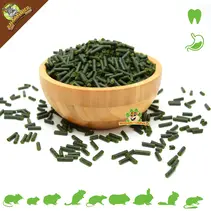
Knaagdier Kruidenier® Dill Pellets are compact dill herbal pellets for rodents and rabbits. Thanks to their pellet shape, they are easy to portion, convenient as a reward, and very suitable for use in a treat ball, treat bowl, snuffle mat, or during foraging time.
DRD chooses herbal pellets because they are a practical way to offer natural herbal variety. While loose herbs primarily provide texture and scattering, pellets are particularly useful when you want to reward specifically, control dosage, or let your animal search for something. This way, you easily add scent, flavor, and activity to the daily feeding time.
In short
- Dill pellets for rodents and rabbits
- Supplementary feed
- Compact pellet shape: easy to dose and use
- Handy as a reward, mixed with food or in a treat game.
- Suitable for treat ball, treat plate, snuffle mat, and foraging bowl
- Great for foraging: searching, rolling, sniffing, and collecting
- Contents: 200 grams
Advantages of Dill Pellets
✔ Natural dill herb pellets
✔ Compact and easy to dose
✔ Ideal as a reward or herbal supplement
✔ Fits well in snack balls, snack plates, and snuffle mats
✔ Handy to scatter around for extra searching
✔ From De Knaagdier Kruidenier®, carefully selected for rodents and rabbits
✓ De Knaagdier Kruidenier® – premium private label of DRD
This product is part of De Knaagdier Kruidenier®, the premium private label of DRD Knaagdierwinkel®. Under this brand, we select natural herbs, flowers, leaves, and mixes suitable for the daily care of rodents and rabbits.
The strength lies in calm, natural variation: suitable for enriching hay, stimulating foraging, or making an enclosure more interesting in an edible way. In doing so, De Knaagdier Kruidenier® aligns well with what DRD stands for: carefully choosing what truly feels right for both animal and owner.
Why choose dill pellets?
Dill Pellets are particularly handy when you want to offer herbs in a compact, easy-to-dose form. You can feed them separately, mix them with food, put them in a treat ball, or scatter them around the enclosure. This makes them suitable for owners who want to combine herbal variety with foraging and entertainment.
For guinea pigs, rabbits, chinchillas, and degus, dill pellets are a good herbal supplement alongside good hay and appropriate basic food. For mice, dwarf hamsters, hamsters, gerbils, dwarf rats, and rats, they are especially fun as a reward or foraging stimulus in a snuffle mat, snack board, or layer of dry bedding.
By not just placing pellets in a bowl, but instead hiding them or letting them roll, you make the snack time more active. Your animal has to smell, search, and work for the reward. This aligns well with natural foraging behavior.
For which animals are Dill Pellets suitable?
- Mouse: suitable as a reward or foraging stimulus. Use small pieces or a limited amount, tailored to the size of the animal.
- Dwarf hamster: suitable as a herbal reward in a snack bowl, snuffle mat, or hamsterscaping setup. Dose in small amounts and spread out.
- Hamster: suitable as a compact herbal pellet for rewarding and foraging. Fun to hide among bedding, hay, or a dry foraging layer.
- Gerbil: suitable as a pellet reward or search game. Gerbils can track down, carry, and examine the pellets.
- Dwarf rat: suitable as a forage supplement, depending on group size and acceptance. Dwarf rats can vary in size, so dose according to use and body size.
- Rat: suitable as a reward in a treat ball, treat bowl, snuffle mat, or digging box. Rats enjoy working for small food rewards.
- Guinea pig: suitable as a herbal supplement alongside hay and guinea pig food. Use the pellets in a treat bowl, mixed with hay, or as a reward.
- Rabbit: suitable as a herbal pellet alongside the daily hay routine. Handy as a reward, in a treat ball, or as a topping over hay.
- Chinchilla: suitable as a herbal supplement in appropriate portions. Combine with good hay and a simple, fiber-rich basic diet.
- Degu: suitable as a herbal pellet within a simple, high-fiber diet. Use consciously, for example as a reward or in a foraging game.
How do you offer Dill Pellets?
- Give a few pellets as a reward.
- Scatter pellets around the enclosure so your animal has to search for them.
- Use them in a snack ball, snack plate, or snuffle mat.
- Mix a quantity with hay or herbs.
- Hide pellets in a digging bucket or dry forage layer.
- Use as a supplement to the daily basic diet.
Start slowly if your pet is not yet familiar with dill pellets. This allows your pet to get used to the smell, taste, and texture. Remove pellets when they have become damp or dirty.
✓ Use & foraging in brief
Dill pellets are especially handy when you want to combine snack time with an activity. Thanks to their compact shape, you can easily hide them, distribute them, or use them in a food game.
- Use measured portions at a time
- Suitable for snack ball, snack plate, and snuffle mat
- Scattering stimulates searching and sniffing.
- Can be combined with hay, herbs, or flowers
- Handy as a reward during contact moments
- Store in a dry, cool, and tightly sealed place.
Compound
Dill.
Analysis
Crude ash 16.8%, crude fiber 1.8%, crude protein 12.1%, crude fat 3.9%.
This analysis aligns with a natural herbal pellet that you can offer as a supplement to the daily basic diet. The compact pellet shape comes into its own particularly well as a reward, mixed with hay, in a treat game, or as a foraging pellet.
Product information
- Product: Rodent Herbalist® Dill Pellets
- Type: complementary feed
- Contents: approx. 200 grams
- Composition: dill
- Use: herb pellet, reward, foraging material, and snack game filling
- Promotes foraging: yes
- Suitable for: mouse, dwarf hamster, hamster, gerbil, dwarf rat, rat, guinea pig, rabbit, chinchilla and degu
Good to know
Dill Pellets are a natural herbal supplement that can be used in various ways: as a reward, mixed with hay, in a treat ball, or as a search game in the enclosure. For guinea pigs, rabbits, chinchillas, and degus, herbal pellets are useful as variety alongside a fiber-rich base. For smaller rodents, use them primarily as a foraging reward in appropriate portions.
Store the pellets in a dry, cool, and tightly sealed place. Always check that the pellets remain clean and dry in the enclosure and remove any residue if it has become damp or soiled.
Frequently Asked Questions about Dill Pellets
What do you use Dill Pellets for?
You use dill pellets as a herbal supplement, reward, snack game stuffing, or as part of a foraging session.
What is the advantage of pellets?
Pellets are compact, easy to portion, and convenient to use in a treat ball, treat plate, snuffle mat, or foraging bin.
Are dill pellets suitable for rabbits?
Yes, dill pellets are suitable as a herbal supplement for rabbits. Use them alongside unlimited hay, appropriate rabbit food, and other herbs or leaves.
Are dill pellets suitable for guinea pigs?
Yes, dill pellets are suitable as a herbal supplement for guinea pigs. Use them, for example, in a snack bowl, mixed in with hay, or as a reward.
Can I use dill pellets in a snack ball?
Yes, pellets are very handy for that. Due to their compact shape, they roll along well, and your animal has to actively search and move for the reward.
Can I scatter dill pellets around the enclosure?
Yes, scattering is a fun way to encourage foraging. Use appropriate portions and distribute them across multiple locations.
What is the difference between loose dill and dill pellets?
Loose dill requires more sprinkling and herb texture. Dill pellets are more compact and especially handy for snack games, rewarding, and precise dosing.
How do I store dill pellets?
Store the pellets in a dry, cool, and tightly sealed place. Remove any leftovers from the enclosure when they have become damp or dirty.
Useful shopping links
- Herbal pellets for rodents and rabbits
- Rodent and rabbit herbs
- Rabbit pellets
- Guinea pig pellets
- Chinchilla pellets
- Degoe pellets
- Playing & foraging
- Contact us for advice
With Knaagdier Kruidenier® Dill Pellets, you give your rodent or rabbit a compact herbal supplement that is easy to portion, hide, and use in treat games. Use appropriate portions, offer the pellets alternately, and let your animal actively search, sniff, and discover.
| Content (approx): | 200 grams |
| Composition: | Dill |
| Analysis: | Crude ash 16.8% Crude fiber 1.8% Crude protein 12.1% Raw fat 3.9% |
| Promotes Foraging: | Yes |
| Suitable for: | Knaagdieren, Muis, Dwerghamster, Hamster, Gerbil, Rat, Cavia, Konijn, Chinchilla, Degoe |
| Type: | supplementary pet food |
| Particularities: | Complementary feed |
| Disclaimer: | Not for food producing animals |