 Polski

Rabbit cage or hutch for indoor and outdoor rabbits
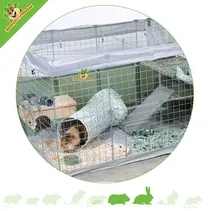
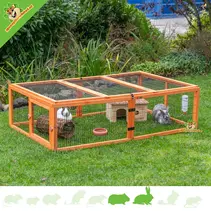


Buying a rabbit cage – choosing an indoor enclosure, outdoor hutch, and rabbit hutch
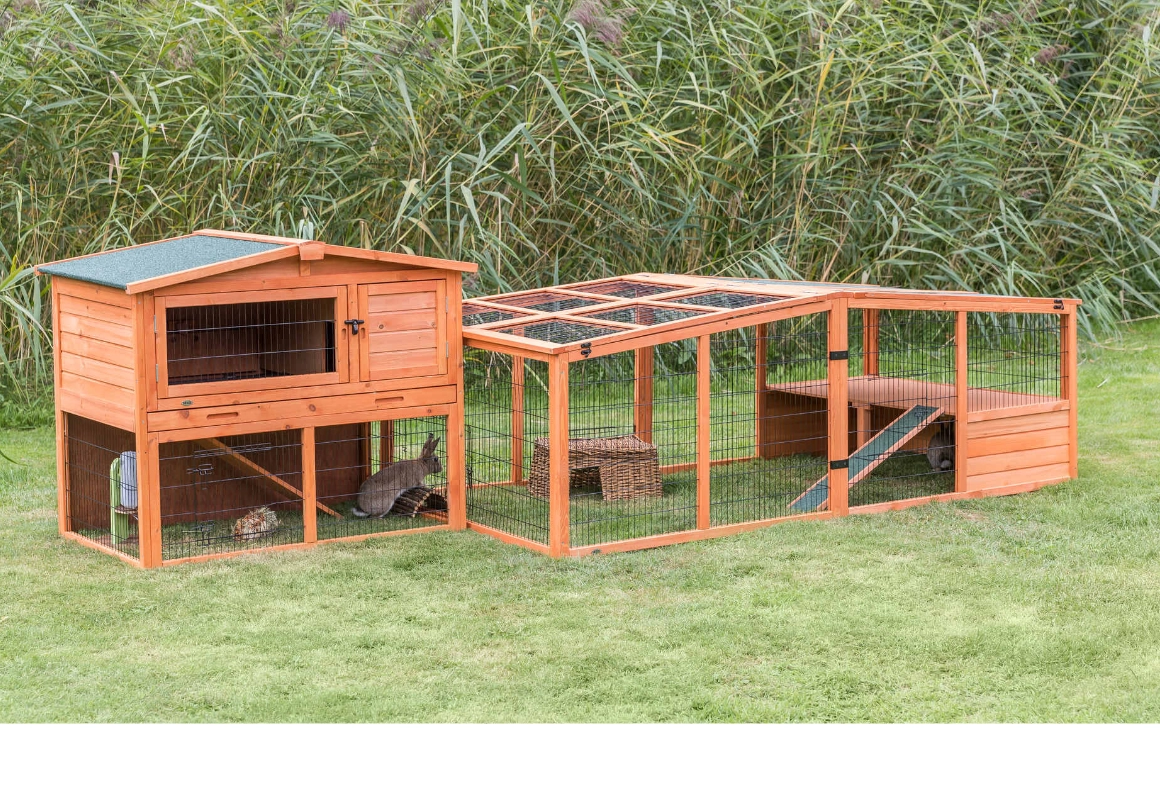 A rabbit cage, hutch, or enclosure forms the basis of your rabbit's living environment. In this category, you will find hutches, enclosures, and run solutions for indoors and outdoors. Think of a wooden outdoor hutch, a run with a roof, or a spacious indoor enclosure that you can combine with extra living space.
At DRD Knaagdierwinkel®, we view a rabbit cage as part of a complete living space. A hutch or cage is especially valuable when logically combined with a rabbit run , good bedding , a clear toilet area , hay, hiding places, and safe enrichment.
✓ In short: a rabbit cage or hutch is the basic setup, but should preferably be part of a spacious enclosure with a run.
✓ Choose for indoor use based primarily on floor area, grip, cleaning, toilet area, and expandability.
✓ For outdoor use, focus primarily on shelter, safety, roof or run, ground surface, shade, rain, and protection against animals from outside.
Quick links:
Why a good cage? · What can you find in this category? · Indoors or outdoors · Cage with run · Which size? · Safety · Setting up the enclosure · Maintenance · Useful shopping routes · FAQ
Basis of the stay
A cage or hutch provides shelter, rest, and structure, but works best in combination with sufficient open living space.
Indoors or outdoors
For indoors, pay attention to the floor, grip, and cleanliness; for outdoors, to shelter, the surface, and safety.
Space counts
A rabbit enclosure must provide space for rest, exercise, a litter box, hay, shelter, and natural behavior.
Why a good rabbit cage is important
A rabbit cage or hutch is often the first product that comes to mind when keeping rabbits. However, it is important to look beyond just the hutch itself. Rabbits are active, social animals that need space to move around, stretch out, sniff, eat, retreat, and pass each other.
Therefore, it is better to view a rabbit cage as part of a larger enclosure. A hutch can serve as a sheltered spot, resting area, or night shelter. The run, rabbit room, or safe outdoor space then provides the room to move that rabbits need daily.
A good rabbit enclosure helps with
✓ Offer shelter and rest.
✓ Create a clear layout for toilet, hay, water, and rest.
✓ Give rabbits sufficient space to move and relax.
✓ Create a safe base indoors or outdoors.
✓ Expand the enclosure with a run, panels, tunnels, and hiding places.
Read more: Rabbit hutch selection guide · How much space do rabbits need?
What can you find in this Rabbit Cage category?
This category contains rabbit cages, hutches, and enclosures that you can use as a basis for an indoor or outdoor setup. Think of a wooden rabbit hutch, a rabbit run with a roof, and a spacious rabbit enclosure for indoor use. The right choice depends on your space, the number of rabbits, and whether the enclosure will be placed indoors or outdoors.
Assortment in this category
✓ Wooden rabbit hutches: suitable as a sheltered resting place or outdoor base, preferably combined with a spacious run.
✓ Rabbit runs with roof: practical for extra enclosed space and protection from above.
✓ Indoor enclosures: handy for indoor rabbits, rabbit rooms, or a partitioned living room setup.
✓ Combination with a run: important to turn a hutch or cage into a real living space.
✓ Choice of application: indoors, outdoors, temporary, permanent, only as a shelter or as part of a larger enclosure.
Indoor rabbit cage or outdoor rabbit hutch
An indoor enclosure and an outdoor hutch both serve different functions. Indoors, you focus primarily on floor space, grip, cleanliness, cleanliness, cables, furniture, and sufficient free movement space. Outdoors, you pay extra attention to shelter, rain, wind, sun, temperature, predators, and escapes.
So, do not choose based solely on how the hutch looks, but especially on how your rabbits use the enclosure daily. A beautiful hutch that is too small as a complete living space only becomes truly practical when combined with a safe run or permanent enclosure.
Indoor enclosure for rabbits
✓ Handy for the living room, rabbit room, or enclosed indoor space.
✓ Pay attention to grip, ground mats, and floor protection.
✓ Make cables, plants, and furniture rabbit-proof.
✓ Combine with toilet, hay corner, tunnels, and hiding places.
Outdoor hutch for rabbits
✓ Use the hutch as a sheltered resting place within a larger outdoor enclosure.
✓ Pay attention to rain, wind, sun, shade, and temperature.
✓ Protect against escaping, digging, and animals from outside.
✓ Check hay, water, droppings, closures, and bedding daily.
Read more: Keeping rabbits indoors · Keeping rabbits outdoors · Rabbit room
Rabbit cage with run: from hutch to living space
A rabbit hutch without extra space is usually too restrictive as a complete living environment. A run makes the enclosure more functional: your rabbits can move around, pass each other, rest, sniff, and use different zones. Therefore, a cage or hutch with a run is often a much better foundation than just a hutch.
For outdoors, a run with a roof or cover is especially important. This reduces the risk of escape and better protects your rabbits from outside animals. For indoors, a run or C&C setup can help create a larger, flexible enclosure.
A cage with a run is handy for
✓ Create more permanent living space.
✓ Combine a clear resting area and room to move.
✓ Logically organize hay, toilet, water, rest, and enrichment.
✓ Give rabbits more room to move, especially with a pair.
✓ Expand an enclosure step by step, indoors or outdoors.
See also: Rabbit run · Choosing a rabbit run
Which size rabbit cage or rabbit enclosure do you choose?
It is better to choose a rabbit enclosure that is more spacious than too cramped. For an average pair of rabbits, you can use approximately 4 to 5 m² of permanent living space as a practical starting point. Larger, more energetic, or multiple rabbits require more space. The hutch itself primarily serves as a sheltered spot; the total living space determines whether the enclosure is truly practical.
Also pay attention to the layout. A toilet, hay rack, drinking area, house, tunnel, and feed trough take up space. There must be free movement space remaining; otherwise, an enclosure feels large on paper but crowded in practice.
Assessing size in practice
✓ Can your rabbits make multiple hops in a row?
✓ Can they lie stretched out without blocking the walking route?
✓ Can they pass each other safely?
✓ Can a toilet, hay, water, and shelter fit in without everything being full?
✓ Is the space permanently available, even when you are not at home?
Safety at a rabbit cage or rabbit hutch
For a rabbit cage, safety revolves around materials, closures, ventilation, flooring, and placement. Rabbits can gnaw, push, jump, and dig. Outdoors, external animals, wind, rain, sun, and temperature fluctuations are added to this.
Therefore, regularly check whether the hutch, run, and connections are still sturdy. Watch out for sharp edges, loose parts, gnawing damage, damp spots, and places where your rabbit could escape or get stuck.
Safety check
✓ Do doors, flaps, and panels close properly?
✓ Are there no sharp edges or loose parts?
✓ Can your rabbit not escape or get stuck?
✓ Is an outdoor enclosure protected against animals from outside?
✓ Is there sufficient shade, dry shelter, and fresh air?
✓ Do you check the enclosure after a storm, moving, gnawing, or redecorating?
Setting up a rabbit hutch
A rabbit cage or hutch only works well when the layout is right. Create clear zones: a hay and toilet area, a drinking area, a quiet hiding place, free roaming space, and an area for enrichment. Do not place everything in the middle of a passageway, so that your rabbits can pass each other and lie down stretched out.
When keeping multiple rabbits, escape routes are important. Therefore, choose hiding places with multiple openings, tunnels, and routes along the edges rather than narrow dead-end corners. This keeps the enclosure quieter and more practical for daily use.
Basic setup for a rabbit hutch
✓ Toilet tray with suitable toilet bedding.
✓ Hay in a dry and easily accessible place.
✓ Clean drinking water, possibly at multiple locations.
✓ Shelters, small houses, or tunnels with escape routes.
✓ Chewing material and foraging toys for daily enrichment.
✓ Free walking space that is not cluttered with accessories.
Maintenance and daily check
A rabbit hutch remains pleasant if you check it regularly. Check the hay, water, droppings, litter box, wet spots, bedding, and the fur around the hindquarters daily. Outdoors, pay extra attention to rain, wind, flies, digging spots, mud, heat, and predators.
Indoors, check for floor protection, gnaw marks, cables, shifting panels, and whether the toilet area is being used properly. Remove broken, sharp, wet, or heavily soiled items in a timely manner.
Daily stay check
✓ Are your rabbits eating well and do they have normal droppings?
✓ Is drinking water clean and accessible?
✓ Is the toilet area clean and dry enough?
✓ Are the hutch, run, latches, and connections still sturdy?
✓ Are there no sharp edges, loose parts, or gnawing damage?
✓ Are the hindquarters of both rabbits clean and dry?
Handy shopping routes for rabbit cages and enclosures
A rabbit cage works best as part of a complete enclosure. Therefore, combine your cage or hutch with products for space, grip, hay, a litter box, hiding places, tunnels, water, and enrichment.
Rabbit run
For extra living space with a hutch, indoor enclosure, or outdoor setup.
Ground cover
For toilet, resting area, or parts of the enclosure where absorption is required.
Rabbit toilets
For a clearly defined toilet area in a cage, run, or rabbit room.
Houses & tunnels
For rest, shelter, and safe walking routes through the enclosure.
Learn more about space, keeping it inside and outside
Do you want to determine which enclosure suits you best first? Then read our information pages on rabbit enclosures, space, keeping indoors, keeping outdoors, the rabbit room, and choosing a run. This way, you choose not just a hutch or cage, but a living space that truly works for your rabbits.
Rabbit hutch selection guide · How much space do rabbits need? · Keeping rabbits indoors · Keeping rabbits outdoors · Furnishing a rabbit room · Choosing a rabbit run
Frequently asked questions about rabbit cages
Which rabbit cage do I need?
That depends on whether they are kept indoors or outdoors, the number of rabbits, the available space, and how the enclosure is used. Always choose a cage or hutch as part of a larger living space with a run or safe outdoor area.
Is a rabbit cage sufficient as a complete enclosure?
Usually not. A cage or hutch is primarily suitable as a sheltered spot, sleeping area, or base. In addition, rabbits need sufficient permanent living space to move, rest, eat, sniff, and pass each other.
How big should a rabbit cage be?
Don't just look at the cage, but at the total living space. For an average pair of rabbits, you can use about 4 to 5 m² of permanent living space as a practical starting point. More space is often preferable, especially for larger or active rabbits.
What is better: a rabbit hutch or a run?
A combination is often best. The hutch offers shelter and rest, while the run provides exercise, space to retreat, and a better layout of the enclosure.
Can a rabbit hutch be placed outside?
Yes, but ensure shelter against rain, wind, sun, and cold. Combine an outdoor hutch with a safe run and check carefully for escapes, digging, and animals from outside.
Which rabbit cage is suitable for indoors?
For indoors, a spacious, easy-to-clean enclosure is useful. Pay attention to grip, floor protection, a toilet area, cables, furniture, and sufficient space to run in a run or rabbit room.
What do you put in a rabbit cage or enclosure?
Think of a litter box, litter bedding, hay, water, a hiding place, a house, a tunnel, gnawing material, and foraging toys. In addition, ensure that enough free movement space remains.
Does an outdoor hutch need to have a run?
Yes, that is highly recommended. A hutch alone usually offers too little exercise. A run makes the enclosure more spacious, more practical, and better suited to natural rabbit behavior.
How do you keep a rabbit cage clean?
Provide a clearly marked toilet area, replace wet bedding promptly, check hay, water, and droppings daily, and clean the enclosure regularly with appropriate cleaning products.
Rabbit cages at DRD Knaagdierwinkel®
At DRD Knaagdierwinkel®, you will find rabbit cages, hutches, and enclosures for indoors and outdoors. From wooden outdoor hutches and runs with roofs to indoor enclosures: we help you choose based on space, safety, layout, and daily use.
✓ Rabbit cages, hutches, and enclosures neatly organized together
✓ Practical to combine with run, ground mats, toilets, hay, and shelters
✓ Selection guide for indoor, outdoor, space, safety, and furnishing
✓ With practical explanations so you know faster which accommodation suits your situation
✓ Specialist since 2011
✓ Delivered from our own stock
