 Polski



Foraging Feeding Tree 36 cm for Rodents & Rabbits


- Dispatched from our own stock
- Personal & expert advice
- Always 100% rodent-friendly
- Ordered before 5 p.m., shipped the same day!
Trixie Foraging Feeding Tree 36 cm for rodents and rabbits
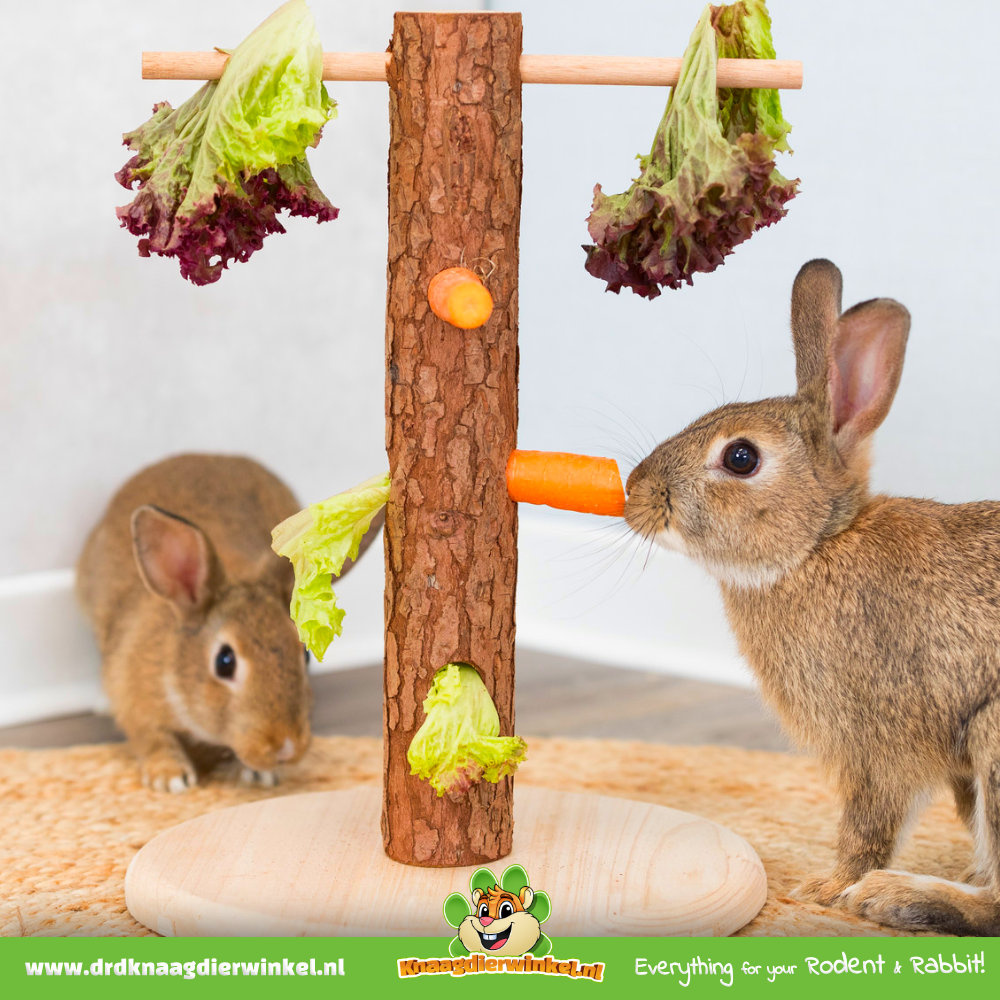
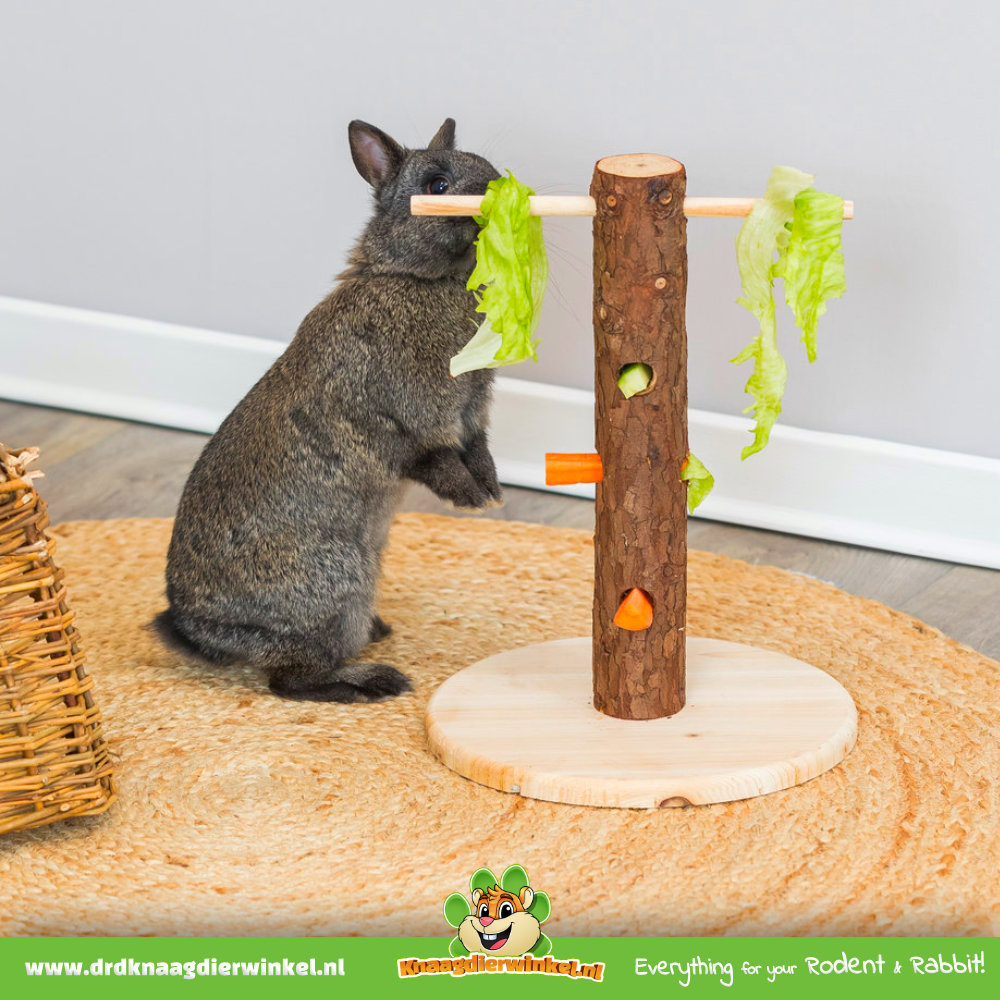
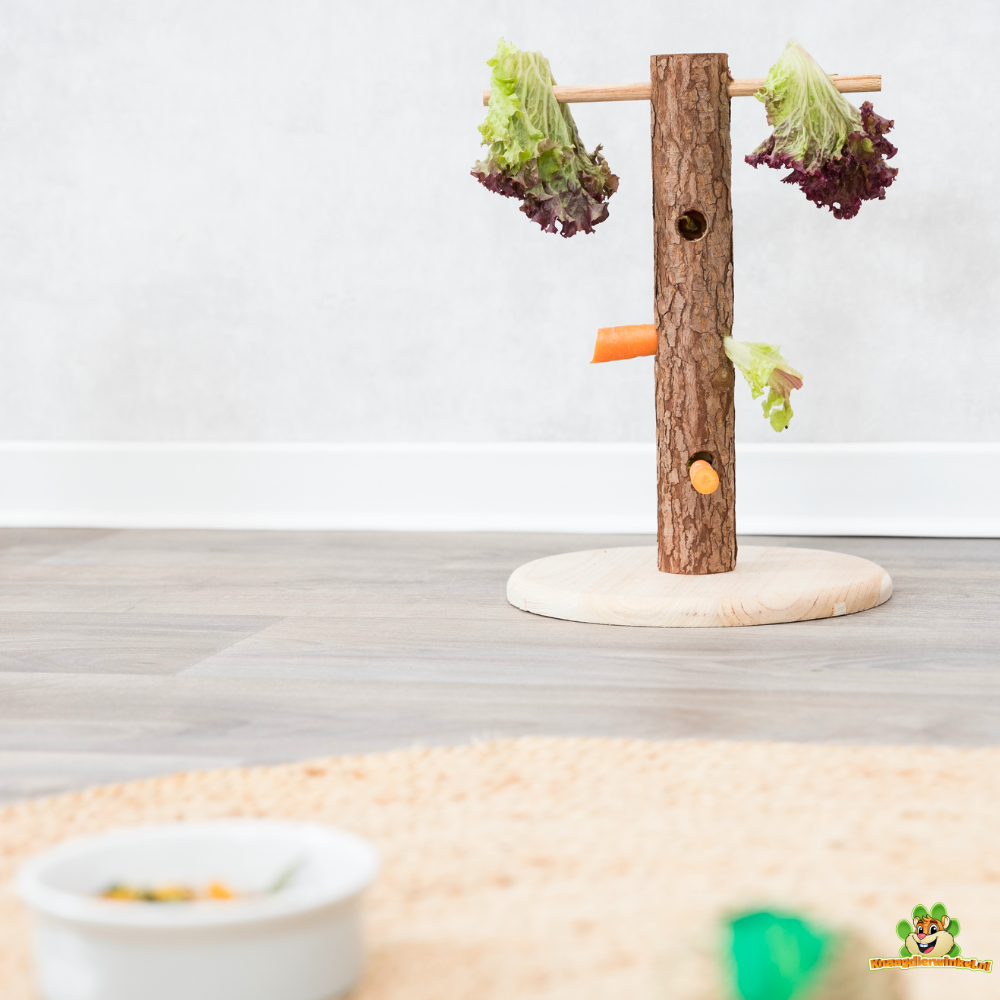
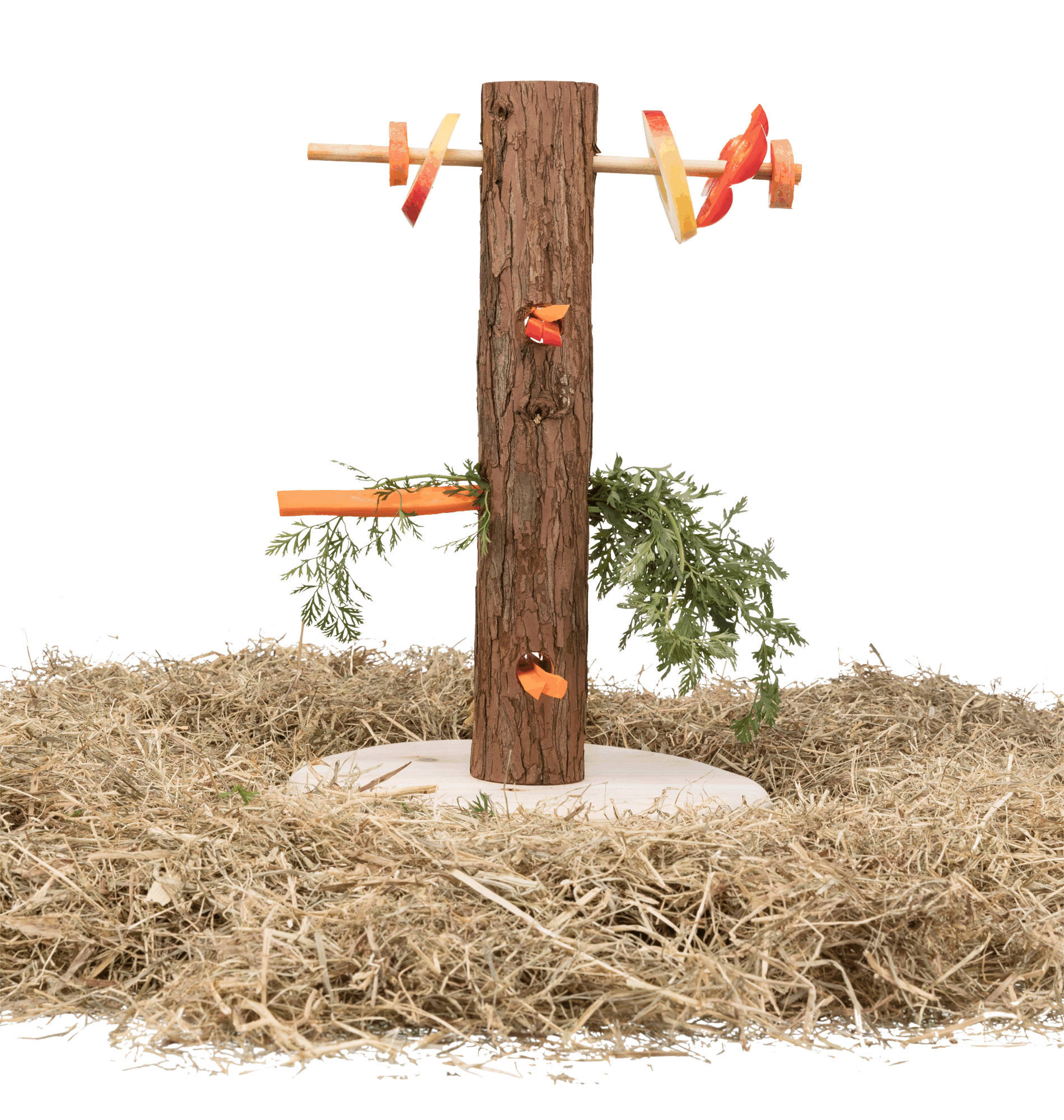
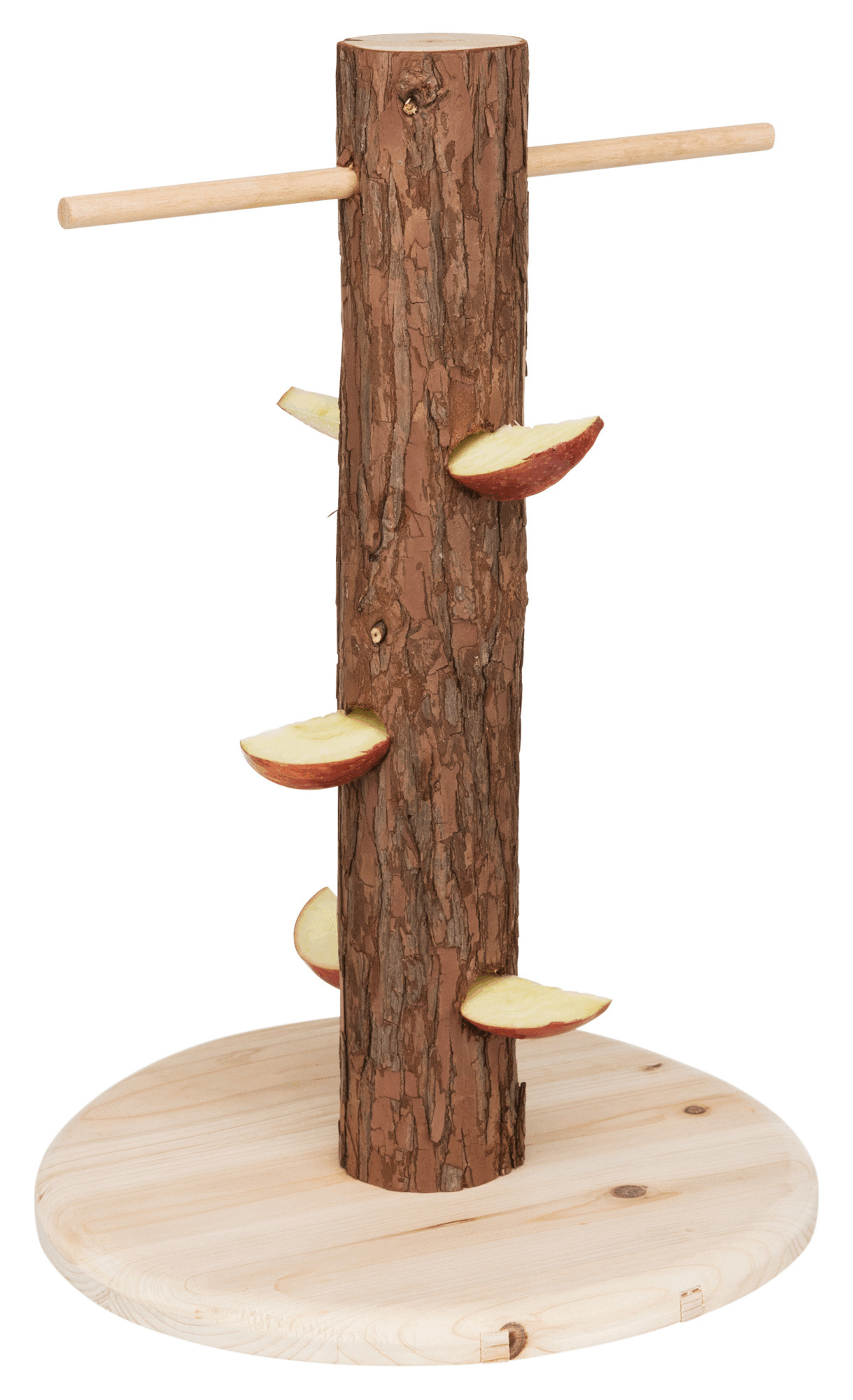
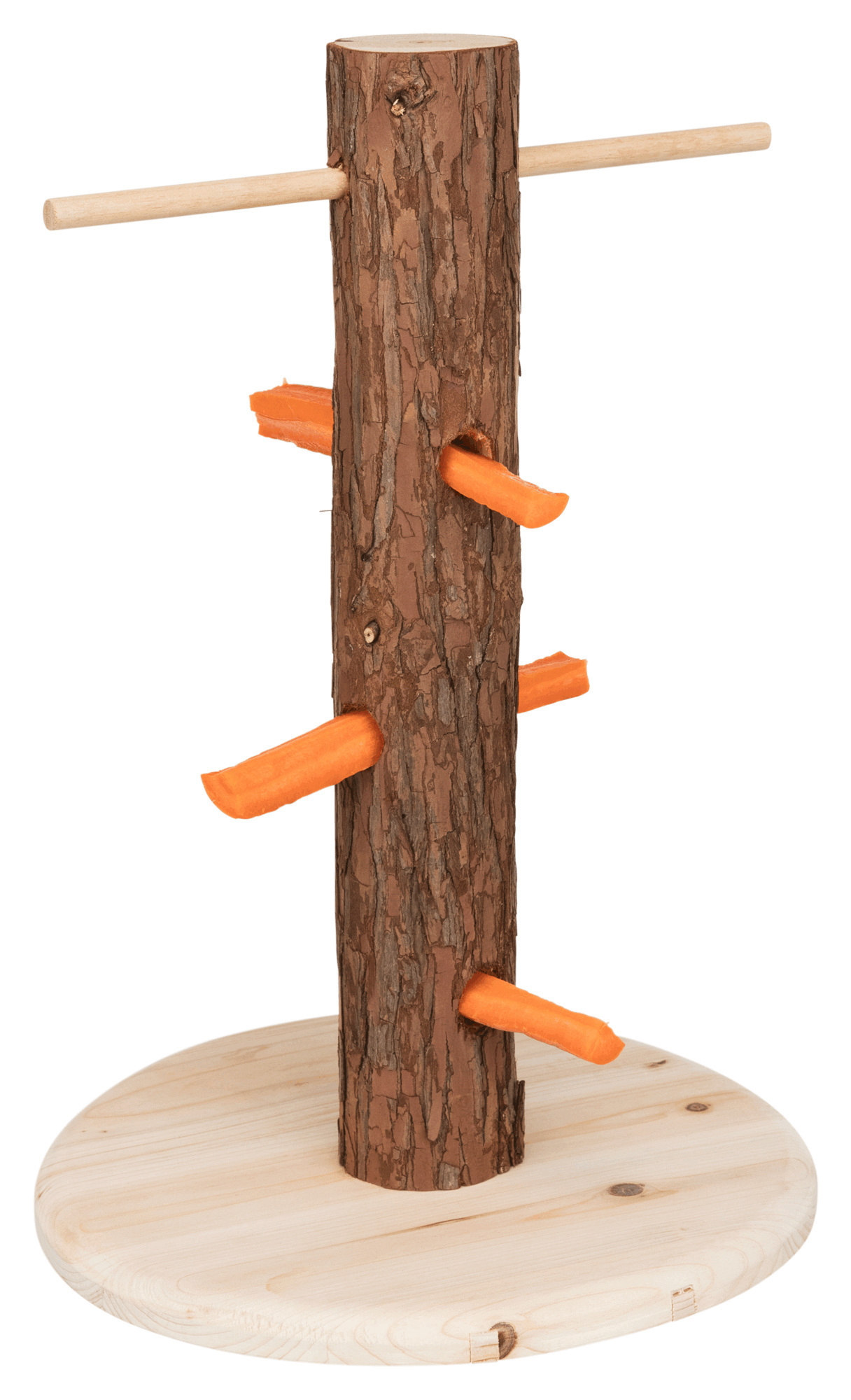
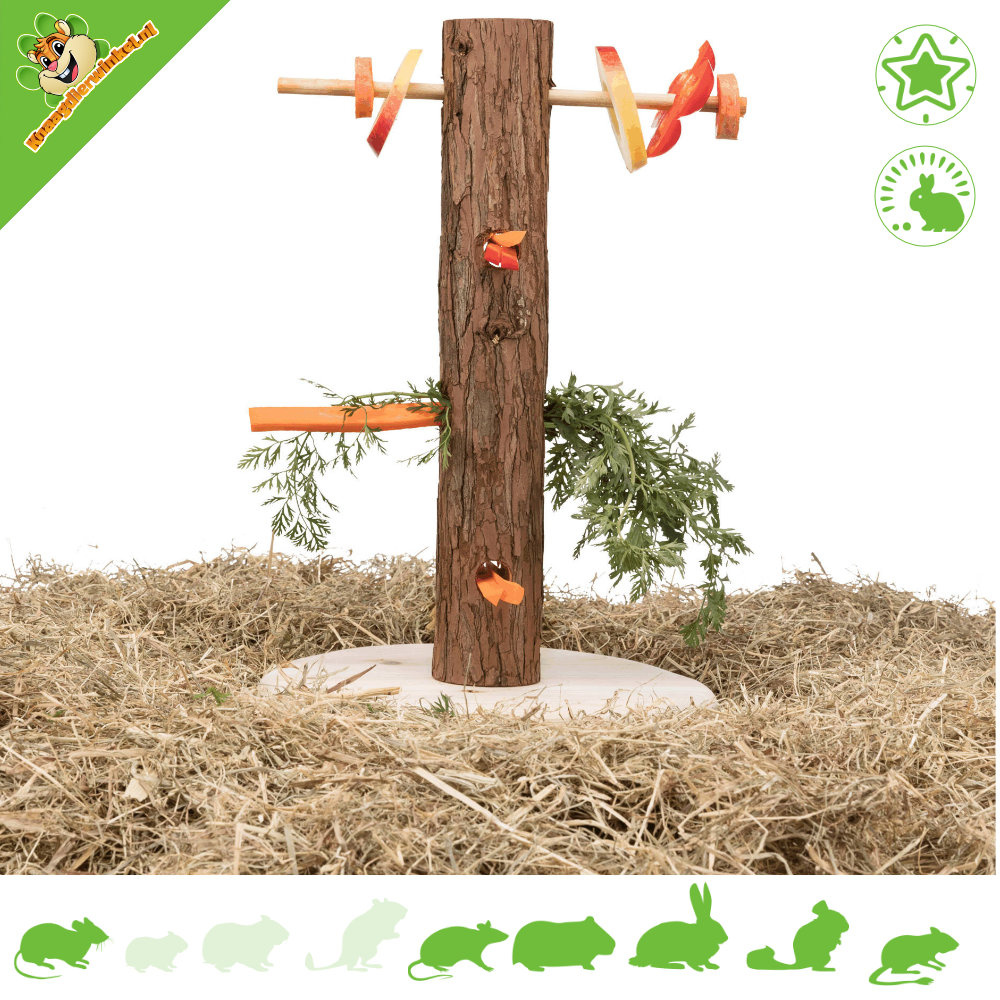
The Trixie Foraging Feeding Tree 36 cm is a wooden feeding tree that allows you to offer vegetables, herbs, twigs, hay, or small snacks in a more fun way. Instead of placing everything loosely in a food bowl, your animal has to search, pull, nibble, climb, or choose. This makes mealtime more active and aligns better with natural foraging behavior.
The feeding tree is suitable for mice, rats, guinea pigs, rabbits, chinchillas, and degus. You can use it as daily enrichment, for a snack time, or as a quiet activity in the enclosure or run. Due to its vertical shape, it takes up little floor space, while still providing multiple spots to attach treats between or to.
In short
- Wooden foraging tree of approximately 25 × 36 cm
- Base diameter approximately ø 25 cm
- Suitable for mice, rats, guinea pigs, rabbits, chinchillas, and degus
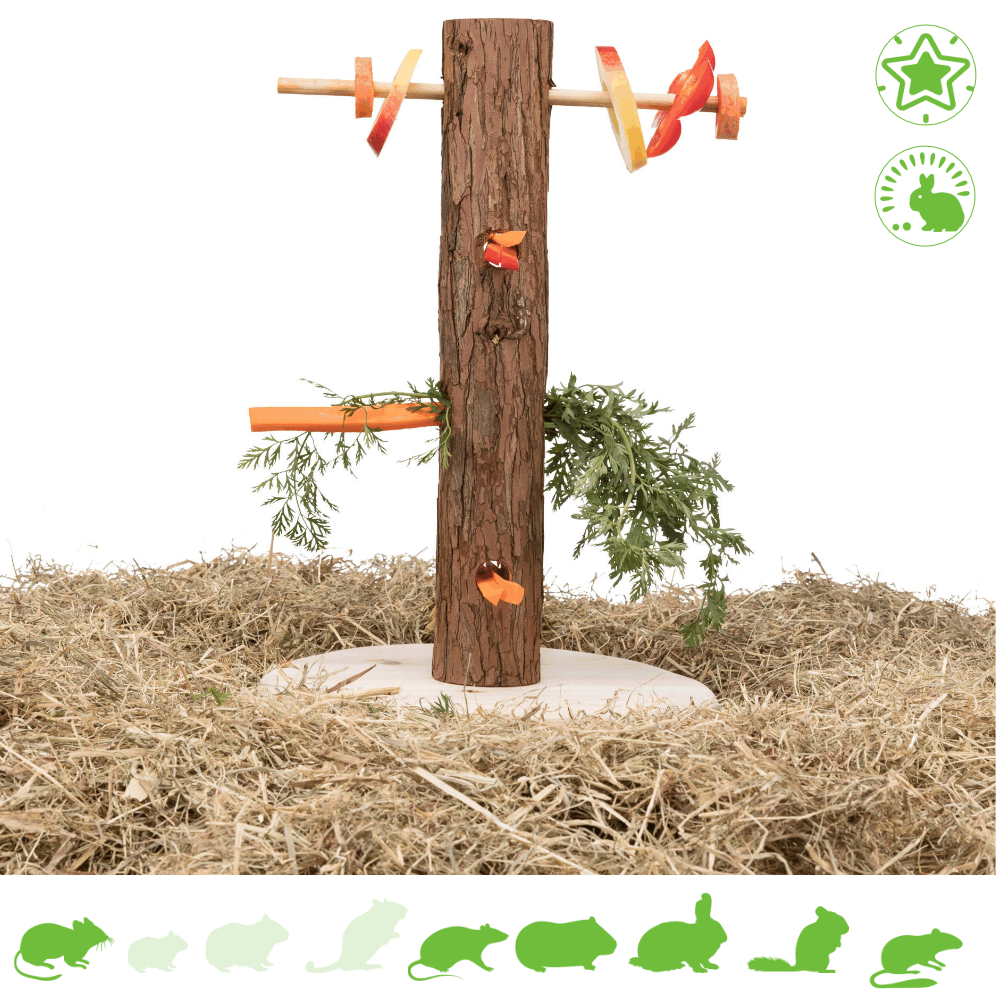
- To be filled with vegetables, herbs, twigs, hay, or small suitable snacks
- Encourages searching, climbing, pulling, nibbling, and quiet activity
- Made from softwood species without resin channels
Pros of the Trixie Foraging Feeder
✔ Makes searching for food more fun and active
✔ Suitable for vegetables, herbs, twigs, hay, and small snacks
✔ Also great for mice as a climbing, sniffing, and foraging tree
✔ Helps make snack times calmer and more interesting
✔ Wooden version with a natural look
✔ Combines nicely with herbs, foraging toys, and gnawing material
Why choose a foraging feed boom?
Many rodents and rabbits spend a large part of the day searching, sniffing, selecting, and nibbling. When food is always lying in a bowl, that moment passes quickly. With a food tree, you make mealtime just a little more challenging. Your animal has to work to get to the treats, without it becoming complicated or frustrating.
You can fill the food tree with various treats. Think of a piece of vegetable for rabbits or guinea pigs, a few twigs for degus or chinchillas, herbs for mice and rats, or small snacks as a short reward. By varying the contents, the tree remains interesting and you can adapt it to the animal species and their diet.
Another advantage is that feed is less likely to end up directly on the bottom. This can be particularly practical for vegetables, herbs, or hay. You keep the snack time more organized and can see better what is left.
For which animals is the Trixie Foraging Feeding Tree suitable?
- Mouse: suitable as a climbing, sniffing, and foraging tree in a spacious and well-furnished mouse enclosure. Mice are good climbers and often enjoy searching for small snacks or herbs via twigs, platforms, and trails. Place the feeding tree stably and ensure that any fall is cushioned by bedding, platforms, or other furnishings.
- Rat: suitable as a foraging tree with herbs, small snacks, vegetables, or twigs. Rats are intelligent animals that enjoy exploring, pulling, and searching, making this tree a good quiet challenge.
- Guinea pig: suitable for offering vegetables, herbs, or hay in a more active way. Place treats low enough so that your guinea pig can reach the food in a relaxed manner without having to climb.
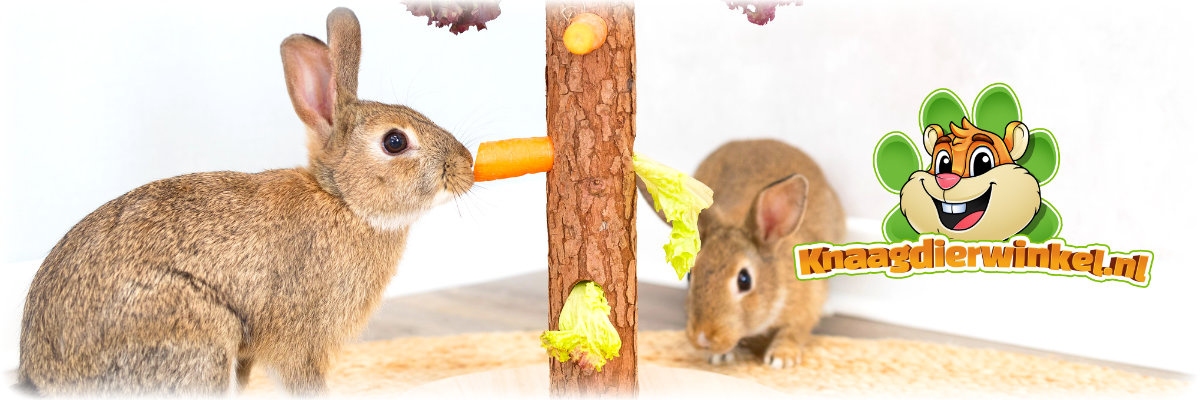
- Rabbit: suitable as a snack and vegetable tree in the run or rabbit room. Attach the contents at a height your rabbit can easily reach without having to stretch awkwardly.
- Chinchilla: suitable for dry herbs, twigs, or appropriate treats. Do not use wet vegetables if they do not fit within your chinchilla's diet.
- Degu: suitable for twigs, herbs, and appropriate dry snacks. Degus are active gnawers, so check the tree regularly for wear.
For dwarf hamsters, hamsters, and gerbils, this feeding tree makes less sense as standard foraging toys, because the height and shape are less suitable for animals that are primarily active on and under the floor. For these animals, low foraging bowls, snack rolls, tunnels, or landscaping elements are more practical.
How do you use the feed boom?
Place the feeding pole stably on a flat surface. Check that it cannot easily fall over when your animal pulls on it, climbs on it, or leans against the pole. Fill the openings or attachment points with small amounts of treats, such as herbs, vegetables, hay, twigs, or snacks suitable for your animal.
Start simple. The first time, place a treat clearly visible and easily accessible. As soon as your animal understands that there is something to be had, you can make it a bit more difficult by distributing the pieces a little more. This way, you build up the challenge gradually.
Do not use the feeding tree to dispense large quantities of snacks. The main idea is that your animal spends more time on a small amount. This makes the product useful for enrichment, without making the feeding or snacking moment too generous.
What can you put in the feed boom?
- Small pieces of vegetables for animals that are allowed to eat vegetables
- Dried herbs or leaves
- Hay or fragrant hay tufts
- Small twigs or gnawing material
- A few suitable snacks as a short reward
Always tailor the contents to the animal species. What works well for a rabbit or guinea pig is not automatically suitable for a chinchilla, degu, rat, or mouse. Keep it simple, natural, and consistent with your animal's normal diet.
Foraging as daily enrichment
Foraging means that an animal makes an effort to find or reach food. This doesn't have to be complicated. In fact, small adjustments, such as hanging vegetables, hiding herbs, or scattering snacks, can make daily life more interesting.
The Trixie Feeding Tree fits in well with this. Your animal stays actively engaged, uses its nose, mouth, and paws, and has to choose how to get to the treats. This provides variety in the enclosure and makes snack time more than just eating something.
For group animals, it can be beneficial to create multiple foraging spots. This prevents one animal from hogging everything. Use the feeding tree as one of several snack or herb spots in the enclosure.
Material & details
The foaling pole is made of wood. The softwood species used contain no resin canals and are dried for a long period. The glue used is non-toxic to animals and consists of a mixture of cellulose.
Because wood is a natural material, color, structure, and finish may vary slightly from product to product. This is part of wooden furnishings and makes each piece just a little bit different.
The animal welfare label
This product bears the Tierschutz-Kennzeichen. This is an animal welfare label for products that have been assessed in accordance with the Austrian Animal Welfare Act. The assessment considers, among other things, legal regulations, current insights, practical experience, and the use of the product by the relevant animal species.
For you as an owner, this provides extra guidance when choosing a product intended for animal-friendly use. It remains important to fill the feeding boom appropriately, place it stably, and check it regularly for wear.

Great to combine with
The Trixie Foraging Feeding Tree pairs well with natural food, herbs, and enrichment. You can combine it with:
- Foraging toys for rodents and rabbits
- Herbs for rodents and rabbits
- Natural gnawing material
- Mouse toys
- Guinea pig playing and foraging
- Rabbit training and foraging toys
- Rats play and forage
- Ratscaping inspiration
Cleaning and maintenance
Remove fresh residue after use, especially when you have offered vegetables. Preferably clean the feeder dry with a brush or cloth. Use a slightly damp cloth only when necessary and allow the wood to dry completely before using the feeder again.
Regularly inspect the feeding tree for wear, loose parts, splinters, or gnawing marks. Wood may be used, but it must remain neat and safe. Replace the product if it becomes damaged or develops sharp edges.
Frequently Asked Questions
For which animals is the Trixie Foraging Feeding Tree suitable?
The feeding tree is suitable for mice, rats, guinea pigs, rabbits, chinchillas, and degus. Always use it with appropriate filling and place the contents at a height your animal can easily reach.
Is the feeding tree suitable for mice?
Yes, mice can use the food tree as a climbing, sniffing, and foraging tree. Place it stably, use small amounts of suitable snacks or herbs, and ensure safe routes and fall protection in the enclosure.
What are the dimensions of the feed boom?
The dimensions are approximately 25 × 36 cm. The base has a diameter of approximately ø 25 cm.
What can I put in the feed boom?
You can fill the feeding tree with small pieces of vegetables, herbs, hay, twigs, or suitable snacks. Always tailor the contents to the animal species.
Is the feeding tree suitable for guinea pigs?
Yes, guinea pigs can use the food tree for vegetables, herbs, or hay. Place the treats low enough so that your guinea pig can eat in a relaxed manner without having to climb.
Is the feeding tree suitable for rabbits?
Yes, rabbits can use the food tree as a snack or vegetable tree. Make sure it stands stably and that your rabbit can easily access the contents.
Is the feeding tree suitable for rats?
Yes, rats can use the food tree as foraging toys. Fill it with herbs, small snacks, or vegetables, for example, and check regularly for gnawing marks.
Is the food tree suitable for hamsters?
This feeding tree makes less sense for hamsters, as the height and shape do not suit their foraging style as well. For hamsters, it is better to choose low foraging bowls, snack rolls, or landscaping elements.
How do I clean the feed boom?
Remove fresh residue after use and dry clean the tree with a brush or cloth. Use a slightly damp cloth only when necessary and allow the wood to dry thoroughly.
Can my pet gnaw on it?
The product is made of wood, so nibbling is possible. However, check regularly to ensure that no splinters, loose parts, or sharp edges develop.
Useful shopping links
- Foraging toys
- Herbs for rodents and rabbits
- Natural gnawing material
- Mouse toys
- Guinea pig playing and foraging
- Rabbit training and foraging toys
- Rats play and forage
The Trixie Foraging Feeding Tree 36 cm is a great choice for owners who want to make snack time more active, natural, and interesting. By not simply placing vegetables, herbs, twigs, or small snacks down, but offering them via the feeding tree, you give your pet more to do and turn foraging into a daily form of enrichment.

| Material: | Wood |
| Dimensions (approx): | 25 × 36 cm |
| Diameter (approx): | ø 25 cm |
| Suitable for: | Rodents, Rat, Guinea Pig, Rabbit, Chinchilla, Degu |
| Particularities: | The products are made from softwoods without resin channels. The types of wood we use do not produce resin and are dried for a long time. The glue we use is also non-toxic to animals and consists of a cellulose mixture. |
| Safety Information: | Offer only under supervision. Check regularly for wear and tear |

Mijn knappe knagers (2 degoes) zijn dol op deze boom! Vooral erin klimmen vinden ze een sport. Uiteraard hang ik er voor hen geen groente of fruit in, maar takjes, blaadjes en nestmeriaal. Vinden ze te gek! Een aanrader dus :) 4 sterren omdat hij een beetje gammel in elkaar gezet moest worden. Maar als je hem strak aandraait en waar nodig rechttikt met een hamertje, komt het goed.
- veel speelplezier
- knagervriendelijk (bv geen lijm of scherpe spijkers)
- makkelijk in elkaar te zetten
- hij was een beetje scheef/gammel
Mooie bezigheid voor de konijnen, heel functioneel en er kunnen veel verschillende soorten groenten/fruit/kruiden in verwerkt worden, zo blijft het interessant voor de dieren
Super leuke boom! De konijnen vinden het super leuk om te doen en ze zijn er even zoet mee! Echt een aanrader!
Echt zo leuk! Mijn konijnen vinden het super leuk. Ik doe inderdaad wortels of komkommers in de gaten, maar ook andere takken of de oogst van JR Farm is ook erg leuk. Zeker een aanrader voor in de konijnenren!