Polski



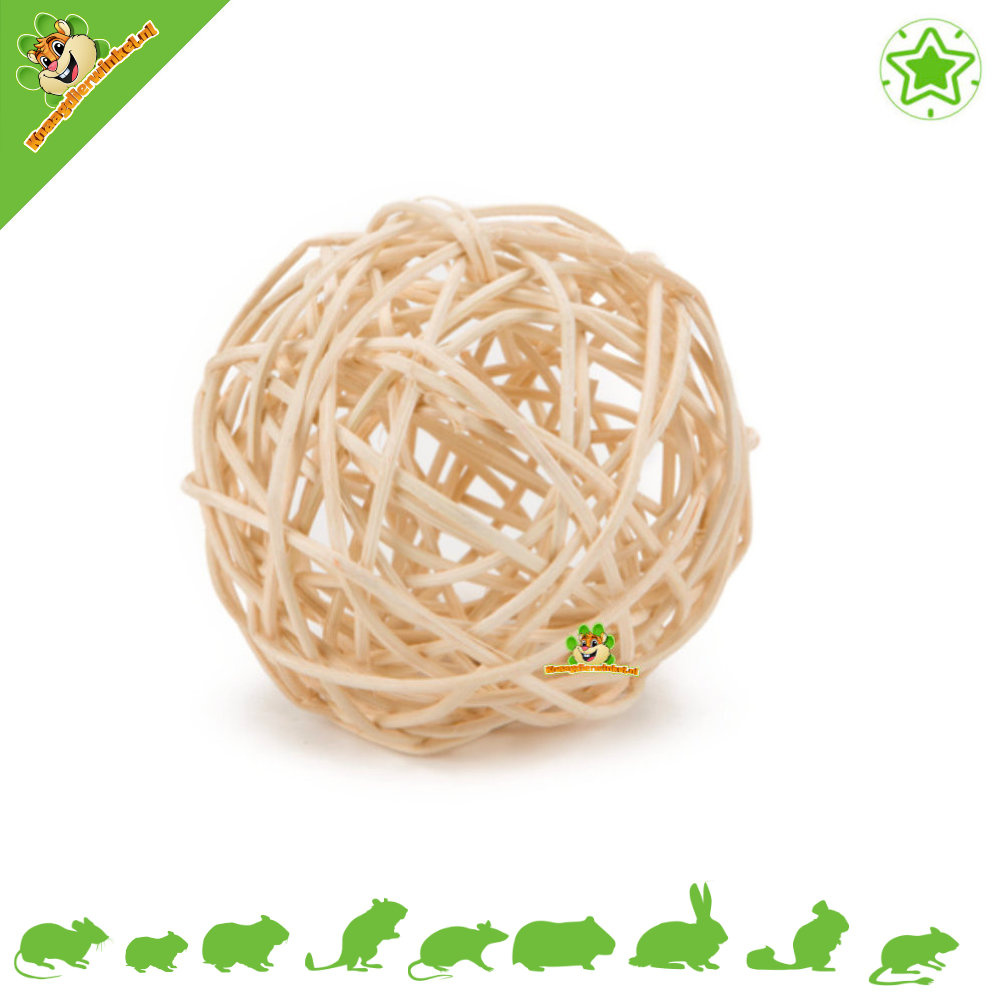
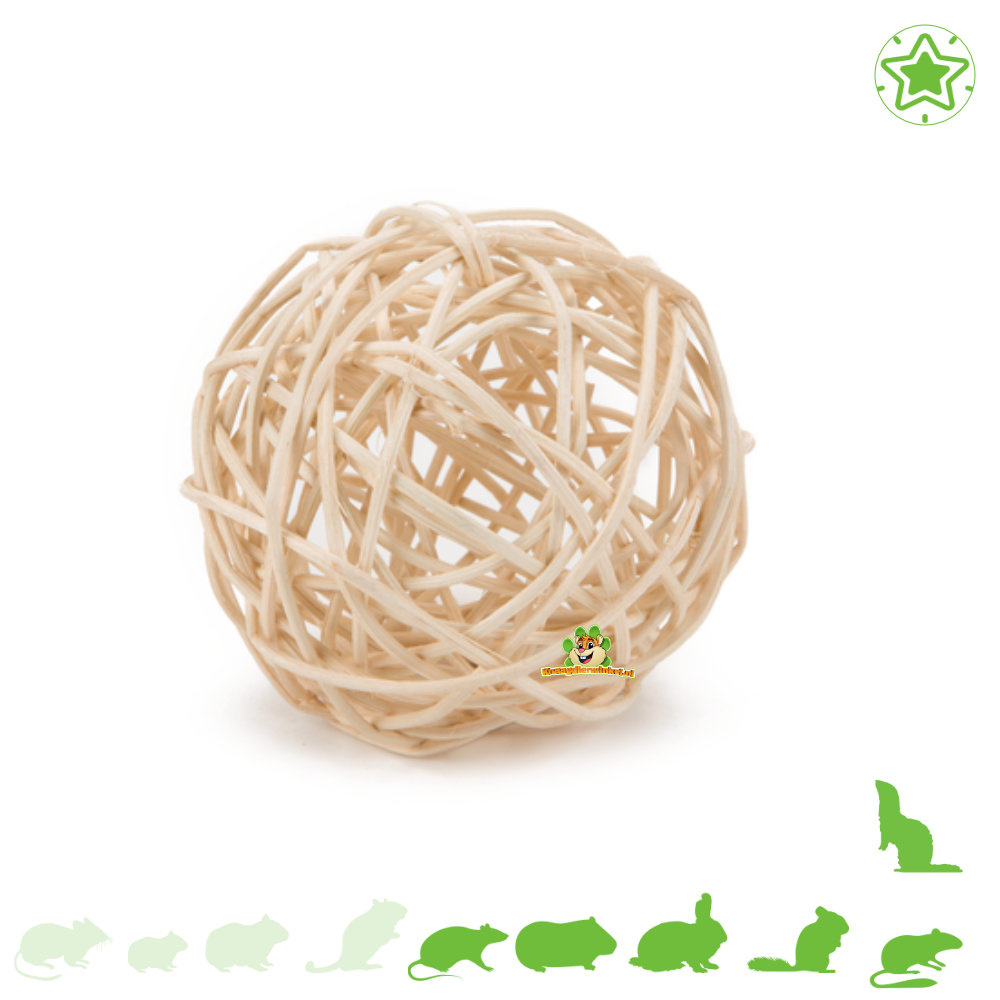
Trixie Rattan Play Ball 4 cm for Rodents & Rabbits
- Dispatched from our own stock
- Personal & expert advice
- Always 100% rodent-friendly
- Ordered before 5 p.m., shipped the same day!
Trixie Rattan Play Ball 4 cm for rodents & rabbits
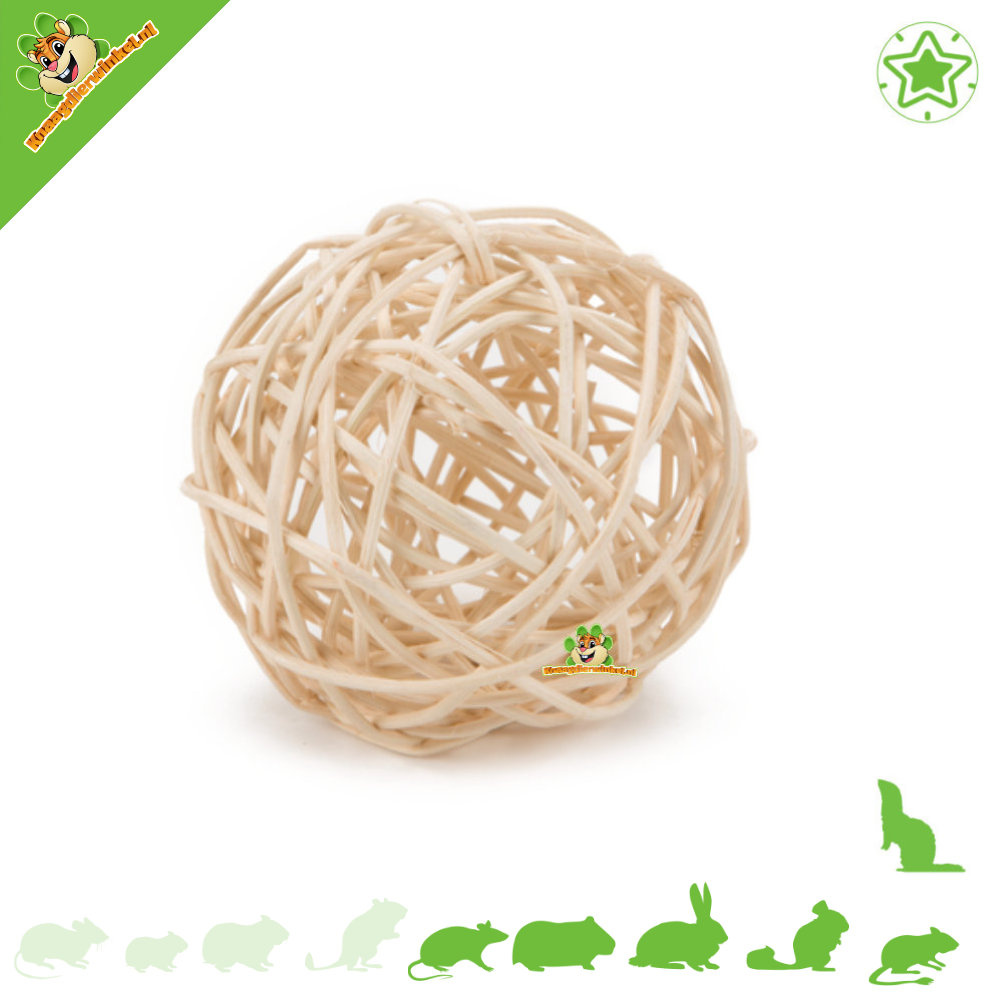
The Trixie Rattan Play Ball 4 cm is a small, lightweight play element for animals that love to gnaw, roll, push, drag, and explore. Thanks to its compact size, this natural ball is easy to move around the enclosure. You can offer the ball on its own as a playful gnawing object, or fill it with a little hay, dried herbs, or small snack pieces to make searching and foraging extra interesting.
When it comes to toys, DRD always considers their function within the enclosure. This rattan play ball is not a large main toy, but rather a small enrichment product that easily fits in somewhere: in a hay corner, digging zone, foraging area, playpen, or natural setup. For small rodents, it is a fun object to push against, gnaw on, or explore. For larger animals such as guinea pigs, rabbits, rats, chinchillas, and degus, it primarily serves as a small extra playtime or foraging ball.
In short
- Made of natural rattan
- Compact size of approx. ø 4 cm
- Lightweight and easy to roll, push, or move
- Can be filled with hay, herbs, or small snack pieces
- Great for gnawing, foraging, exploring, and daily variety
- Specialist since 2011: carefully selected for natural play behavior
Advantages of the Rattan Play Ball
✔ Made of natural rattan
✔ Small and lightweight
✔ Stimulates gnawing, rolling, pushing, and exploring
✔ Can also be filled with hay, herbs, or small snacks
✔ Nice as a compact addition to the enclosure
✔ Combines nicely with balls and rolls for rodents
Why choose a rattan play ball?
A good enclosure consists of more than just a food bowl, water bowl, and sleeping house. Animals also need small stimuli that encourage movement, searching, and exploring. This rattan play ball is a simple and handy example of that. You place it down, and your animal decides for itself what to do with it: roll, drag, gnaw, unravel, or search for what is hidden inside.
The nice thing about a 4 cm ball is that it takes up little space. This means it fits in smaller corners of the enclosure, among hay, or in a foraging zone. For mice, dwarf hamsters, hamsters, and gerbils, the size is pleasantly manageable. For rats, guinea pigs, rabbits, chinchillas, and degus, it is actually a small supplementary toy that you can easily alternate with larger play and foraging materials .
You can also use the ball as a small foraging challenge. For example, put a little hay, dried leaves, or a few small pieces of herbs inside. The animal then has to sniff, pull, or roll to get to it. This makes foraging just a little more active without making it complicated.
For which animals is the Rattan Play Ball suitable?
- Mouse: suitable as a small play and gnawing ball. Mice can investigate the ball, move it around, or use it in a natural setup with tunnels, bedding, and sniffing spots.
- Dwarf hamster: suitable as a small natural enrichment object. Place the ball low in the enclosure, for example near the foraging area or among natural furnishings.
- Hamster: suitable as a lightweight play ball for exploring, rolling, or gnawing. For Syrian hamsters, it is primarily a small supplementary toy, not the largest play element in the enclosure.
- Gerbil: suitable as a natural gnawing and destruction toy. Gerbils can gnaw enthusiastically, so check the ball regularly and replace it when it is too worn down.
- Rat: suitable as a small foraging and play element. Rats can roll the ball, destroy it, or use it in an active play zone. Combine it, for example, with rat toys and foraging products .
- Dwarf rat: suitable when the size matches the size and build of your dwarf rat. Because dwarf rats can vary from one another, it is good to observe how your animal uses the ball.
- Guinea pig: suitable as a small sniffing and foraging toy. For example, place the ball near the hay corner and fill it with some hay or a small amount of dried herbs.
- Rabbit: suitable as a small play ball or foraging ball. For adult rabbits, 4 cm is a compact size, so use it primarily as an extra play activity alongside larger rabbit toys .
- Chinchilla: suitable as a natural gnawing and play element. Offer the ball dry and check regularly for wear.
- Degu: suitable as an active chewing and destruction toy. Degus can be enthusiastic destroyers, which means the ball may show signs of wear more quickly.
For ferrets, the ball can be offered as a small playful object, but due to its size, it is primarily suitable for controlled play and not as sturdy ferret toy for prolonged rough use.
How do you use the Rattan Play Ball?
Place the rattan play ball loosely in the enclosure, run, or play zone. Your animal can then roll, push, move, or nibble on the ball on its own. Want to make the ball more interesting? Fill it with a little hay, dried herbs, leaves, or a few small treats. This turns a simple toy into a short foraging activity.
For hamsters, gerbils, and mice, you can also partially hide the ball in bedding or among natural decorations. For guinea pigs and rabbits, the hay corner is a logical place. For rats and pygmy rats, you can use it in a digging box, on a platform, or as part of Ratscaping , where various materials combine to encourage sniffing, searching, and discovery.
Material & dimensions
- Material: rattan
- Size: approx. 4 cm
- Diameter: approx. ø 4 cm
- Brand: Trixie
- Use: gnawing, rolling, foraging, dragging, and natural enrichment
Rattan has a natural, braided structure. As a result, animals can nibble on it, explore the material, or use the ball piece by piece during play. Because it is a natural play material, signs of wear may occur. This is part of this type of toy.
Good to know
Offer the play ball under supervision and check regularly for wear, loose pieces, or damaged parts. Has the ball been chewed down too much, become very dirty, or is it no longer nice and sturdy? Then replace it in time. The ball is intended as a toy and for enrichment, not as a food substitute.
Preferably use the ball in a dry spot in the enclosure. If it gets wet or is used as litter, remove it. This keeps the enclosure fresh and the toy pleasant to use.
Frequently asked questions about the Rattan Play Ball
Is this rattan play ball suitable for hamsters?
Yes, the ball is suitable as a small, natural play and gnawing object for hamsters. Place it low in the enclosure and use it, for example, near the foraging area or among natural decorations.
Can I fill the ball with snacks?
Yes, you can fill the ball with a little bit of hay, dried herbs, or small snack pieces. This turns the ball into a simple foraging challenge.
Is the ball big enough for rabbits?
For rabbits, 4 cm is a small size. This makes the ball suitable as a small extra toy or foraging ball, but feel free to combine it with larger toys for adult rabbits for more variety.
Is rattan meant to be gnawed on?
Yes, rattan is a natural material that animals can explore and nibble on. However, check regularly whether the ball is still firm and replace it when it is too worn down.
How often do I need to replace the play ball?
That depends on the animal. Enthusiastic rodents like gerbils and degus can destroy a ball faster than quieter animals. Replace the ball as soon as it is too damaged, develops loose parts, or has become dirty.
Useful shopping links
- Balls and rolls for rodents
- Chewing material
- Rodent and rabbit herbs
- Hamster playing & foraging
- Guinea pig toys

| Material: | Rattan |
| Dimensions (approx): | 4 cm |
| Diameter (approx): | ø 4 cm |
| Suitable for: | Rodents, Rat, Guinea Pig, Rabbit, Chinchilla, Degu | Ferret |
| Particularities: | - |
| Safety Information: | Offer only under supervision. Check regularly for wear and tear |