 Polski

Rat digging box selection guide: safe digging, sniffing, and exploring
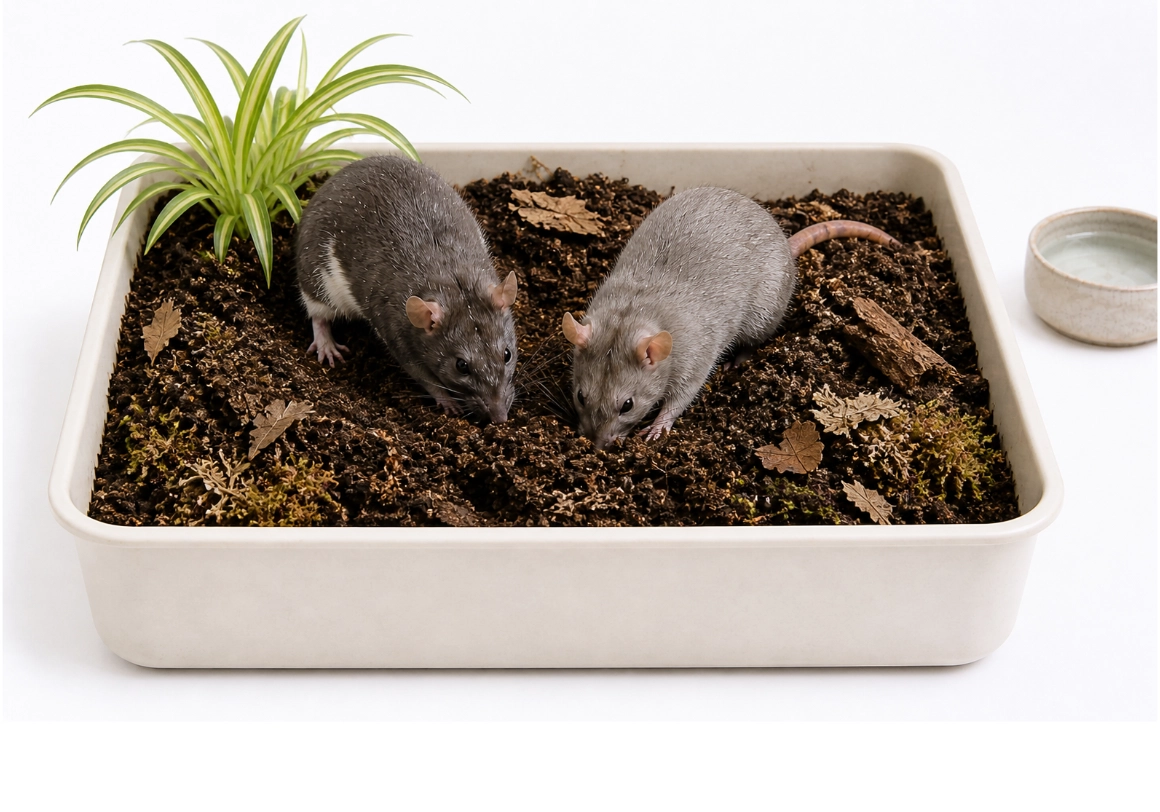 A digging box for rats is a fun way to let your rats sniff, search, dig, and explore more. Rats are smart, curious animals that enjoy engaging with their surroundings. With a well-chosen digging box, you provide them with an extra enrichment spot in the cage, run, or play area.
A rat digging box is not a sand bath. Rats do not need a sand bath for grooming, unlike chinchillas and degus. Therefore, do not use chinchilla sand or fine sand for rats. Rats have sensitive airways, and fine dust can be harmful. It is better to choose rat-suitable, low-dust materials that you can easily check for moisture, odor, and contamination.
✓ In short: a rat digging box is intended for sniffing, searching, digging, and enrichment.
✓ Do not use chinchilla sand or fine sand, as rats have sensitive airways and do not need a sand bath.
✓ Choose material that is low-dust, controllable, and suitable for your rats and your cleaning routine.
Quick links:
Why a digging bucket? · No sand bath · Choosing material · Installation · Digging bucket & Ratscaping · Foraging · Maintenance · Useful shopping routes · FAQ
For sniffing
A digging box gives your rats a place to sniff, search, dig, and explore.
Choose low-dust
With rats, pay extra attention to dust, ventilation, and materials that are comfortable for sensitive airways.
Fits with Ratscaping
A digging box can be a nice extra zone within a natural rat setup.
Why a digging box for rats?
A digging box gives rats a separate place to sniff, search, and dig. This aligns well with their curious behavior. Not every rat digs with the same enthusiasm, but many rats find it interesting to search through material with their noses and paws, especially when you hide small rewards or food inside.
A digging box can also help make the setup more varied. Instead of just hammocks, tunnels, and platforms, you add a floor area where your rats can really explore. This is especially valuable within Ratscaping, as it allows you to create different functions within the cage or play area.
A rat digging box helps with
✓ Stimulate sniffing, searching, and exploring.
✓ Make small feeding or snacking moments more active.
✓ Provide more variety alongside hammocks, tunnels, and platforms.
✓ Create a separate digging or sniffing zone in the layout.
✓ Make Ratscaping more functional by adding multiple behavior zones.
Read more: Ratscaping for beginners · What do you need for rats?
A rat digging box is not a sand bath.
This is the most important difference: a digging box for rats is intended for sniffing, searching, and digging. It is not a sand bath. Rats do not groom their fur with sand like chinchillas and degus do. Therefore, they do not need chinchilla sand or fine sand.
Because rats have sensitive airways, fine dust can actually be unpleasant. Therefore, we do not recommend chinchilla sand, fine bath sand, or dusty materials for rats. Choose materials that are better suited for rats and always check how dusty, damp, or dirty the material becomes.
Do not use as a rat digging box
✓ No chinchilla sand.
✓ No fine bath sand.
✓ No heavily dusty materials.
✓ No damp, musty, or mold-prone filling.
✓ No material that can quickly irritate the eyes, nose, or airways.
What material do you choose for a rat burrow?
The best material depends on your goal. Do you mainly want to encourage sniffing? Then you can use a light, dry filling in which you hide small rewards. Do you want to stimulate more digging behavior? Then you need material that provides a bit more volume, but remains low-dust and easy to control.
With natural materials such as humus, coconut fiber, or other digging materials, monitoring is especially important. They can be interesting for experienced owners, but you must continue to closely monitor moisture, odor, ventilation, mold formation, and soiling. For beginners, a separate, small digging box is often easier to manage than immediately using a large bedding base.
Assessing material
✓ Is the material low enough dust for rats?
✓ Can you easily recognize and remove wet or dirty spots?
✓ Does the material remain fresh, dry enough, and well-ventilated?
✓ Can your rats search in it without it creating a lot of dust?
✓ Does the material suit your cleaning routine and experience?
See also: Rat Bedding · Rat bedding selection guide
Where do you place a digging box in the rat cage?
Place a digging bucket stably, low, and in a place where you can easily access it. A digging bucket can make a mess, so it is best not to place it directly under hammocks, drinking spots, or fabric sleeping areas. This prevents material from getting wet or snagging on everything.
If you have a large cage or a play area, you can use the digging box as a separate zone. For example, next to tunnels, cardboard, foraging products, or demolition material. This way, it becomes a natural foraging spot instead of a standalone box without a function.
Placement check
✓ Is the bin stable and cannot easily tip over?
✓ Can you easily remove and clean the bin?
✓ Is the container not directly under a water bottle, water bowl, or wet spots?
✓ Can multiple rats look, search, or enter at the same time?
✓ Is there enough free space left in the cage?
Combining an excavator bucket with Ratscaping
Within Ratscaping, a digging box is one of the possible zones. You combine it with tunnels, hammocks, platforms, gnawing material, foraging products, and hiding places. This creates a setup where your rats not only sleep and eat, but also search, explore, and create routes.
A digging bucket does not have to be large to be valuable. A smaller bucket that is used well, kept clean, and regularly refilled is often more practical than a large bucket that becomes too damp or messy.
Smart combination with
✓ Tunnels or pipes towards the excavation zone.
✓ Snack hiding spots in or around the box.
✓ Gnawing material or cardboard to explore and destroy.
✓ A toilet area in a different location, so that the excavator bucket stays cleaner.
✓ Hammocks and resting areas higher in the cage, separate from the digging zone.
See also: Ratscaping · Rat Tunnels & Tubes · Rat Hammocks
Foraging with a rat digging box
A digging box becomes more interesting when you turn it into small search moments. For example, hide a few pellets from the daily portion, small rat-suitable snacks, dried vegetables, or some herbs among the material. Your rats will then have to sniff and search before they find anything.
Use small amounts. The goal is not to provide excessive snacks, but to encourage searching and exploring. Especially for intelligent rats, a digging box can be a nice way to make snacking calmer and more active.
Foraging ideas in the digging bucket
✓ Hide a few kibbles from the daily portion.
✓ Use small pieces of dried vegetables as a search reward.
✓ Mix a little herbs or seeds into a small part of the container.
✓ Make it easy first, and only then hide deeper.
✓ Remove old food residues on time.
See also: Rat Play & Foraging · Rat Snacks · Rat Herbs and Seeds
Maintenance of a rat burrow
A digging box remains pleasant only if you check it regularly. Look for moisture, odor, dust, old food remnants, droppings, and urine spots. Some rats use a digging box primarily for searching, while others may also urinate in it or hide food. Adjust your maintenance based on how your rats use the box.
Inspection is especially important with damp or natural materials. Is the material becoming musty, wet, or do you see mold forming? Then it must be replaced. A digging bucket must remain fun and interesting, but also clean and safe.
Maintenance check
✓ Check daily for old food residue and wet spots.
✓ Remove contaminated material on time.
✓ Replace the filling when it becomes musty, dusty, or damp.
✓ Wash or clean the bin regularly, depending on usage.
✓ Pay extra attention to odor, mold growth, and respiratory symptoms.
Useful shopping routes for a rat burrow
A digging bucket is not separate from the rest of the setup. Combine it with low-dust bedding, Ratscaping, tunnels, foraging products, snacks, and hygiene products.
Toilets & Urinal Mats
For clear urinating areas, hygiene, and a fresher interior.
Read more about rat housing
Do you want to combine a digging box well with the rest of the rat cage? Then also read the pages on Ratscaping, bedding, basic necessities, and foraging.
Ratscaping for Beginners · What Do You Need for Rats? · Rat Bedding Selection Guide · Rat Cage Selection Guide · Rat Food Selection Guide
Frequently asked questions about a digging box for rats
Do rats need a digging box?
A digging box is not mandatory, but it is a fun form of enrichment. Rats can sniff, search, dig, and find small rewards in it.
Is a rat digging box the same as a sand bath?
No, a digging box is intended for sniffing, searching, and digging. A sand bath, like for chinchillas or degus, is not part of rat care.
Are rats allowed in chinchilla sand?
No, chinchilla sand is not suitable for rats. Rats have sensitive airways, and fine sand can be taxing on them. Furthermore, rats do not need a sand bath for their fur.
What material is suitable for a rat digging box?
Choose material that is low-dust, inspectable, and suitable for rats. Pay attention to dust, moisture, odor, mold growth, and how easily you can remove soiled areas.
Can humus go in a rat burrow?
Humus or similar natural materials can be interesting for experienced owners, but require careful monitoring of moisture, ventilation, odor, mold, and contamination. For beginners, a small, separate digging box is easier to manage than a large, damp zone.
Where do you place a digging box in the rat cage?
Place the container stably, low, and in a place where you can easily access it. Preferably, do not place it directly under drinking areas or fabric hammocks, so that the material does not get wet quickly.
Can you hide food in a rat digging box?
Yes, that works well. Use small amounts, for example, a few kibbles from the daily portion, small snacks, dried vegetables, or herbs. Do remove old food scraps in time.
How do you keep a rat burrow clean?
Check regularly for wet spots, odor, old food residue, droppings, and soiling. Replace the bedding when it becomes dusty, musty, wet, or dirty.
Does a digging bucket suit Ratscaping?
Yes, a digging box fits well with Ratscaping. It is a separate zone for sniffing, searching, and digging and combines nicely with tunnels, foraging products, bedding, and gnawing material.
Rat digging boxes at DRD Knaagdierwinkel®
At DRD Knaagdierwinkel®, we view a rat digging box as part of enrichment and Ratscaping. It is not about a sand bath, but about a safe sniffing and digging area that suits rats, their sensitive airways, and daily hygiene in their enclosure.
✓ Selection guide for excavator buckets, digging equipment, and sniffing zones
✓ Clear explanation why chinchilla sand and fine sand are not suitable for rats
✓ Strong link with Ratscaping, bedding, foraging, and hygiene
✓ Practical tips for installation, maintenance, and responsible use
✓ Specialist since 2011
✓ Delivered from our own stock
