 Polski


Keeping rabbits outdoors: safe enclosure, run, and shelter
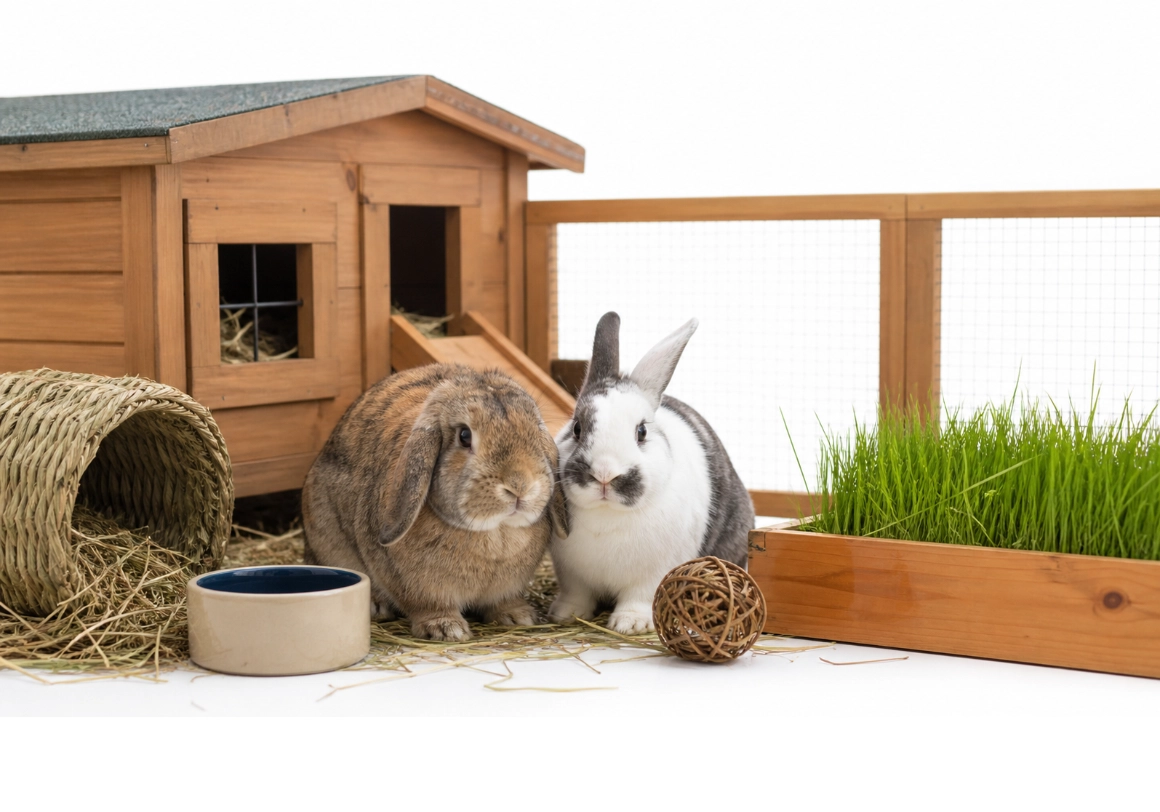 Keeping rabbits outdoors can be wonderful, but it requires a well-thought-out setup. An outdoor enclosure should not consist solely of a hutch, but rather a safe living space with sufficient exercise, a dry and sheltered sleeping area, shade, fresh air, drinking water, hygiene, and protection against escape and predators.
This page is part of our Rabbit Information . Here you can read what to look out for regarding an outdoor run, shelter, ground surface, shade, winter coat, heat, cold, rain, wind, and daily checks. This way, you can provide outdoor rabbits with an enclosure that suits their behavior as well as practical care.
✓ In short: keeping rabbits outdoors requires a spacious run, a dry night shelter, shade, shelter, grip, hygiene, and daily checks.
✓ Do not simply move indoor rabbits outside during a cold period. Rabbits that overwinter outdoors must be moved outside in time to develop a winter coat.
✓ Outside, pay extra attention to heat, drafts, dampness, predators, escapes, flies, drinking water, hay, and normal droppings.
Quick links:
Can rabbits live outdoors? · Outdoor enclosure · Run & exercise · Hutch & shelter · Predator-proof & escape prevention · Summer & winter · Hygiene & monitoring · FAQ
More than a pen
An outdoor enclosure needs a spacious run where your rabbits can move around, retreat, sniff, eat, and rest.
Sheltered and dry
The night shelter must be dry, windproof, draft-free, and easily accessible, with enough space for your rabbits to rest together.
Seasonal inspection
Outside, pay extra attention to sun, wind, rain, cold, heat, flies, predators, and whether water, hay, and toilet areas remain clean.
Can rabbits live outside?
Yes, rabbits can live outdoors provided the enclosure is properly set up and they are accustomed to outdoor conditions. It is important that you do not constantly switch between indoors and outdoors. Rabbits do not tolerate large temperature fluctuations well. Therefore, you should not simply put a rabbit that lives indoors outside in the winter.
If you want to let rabbits overwinter outdoors, they must be living outside in time so they can develop a winter coat. So, do not wait until the cold months to start housing them outdoors. Conversely, you should not simply move outdoor rabbits into a warm living room in the winter, as the temperature difference can be too great.
Keeping them outdoors also means keeping at least two compatible rabbits together. Rabbits are social animals and benefit greatly from having a companion. Together, they can rest, follow each other, and lie close together during cold periods.
Useful information pages: Bonding rabbits · Rabbit enclosure selection guide · Rabbit checklist
Outdoor enclosure for rabbits: what to look out for?
A good outdoor enclosure consists of more than just a hutch. Your rabbits need a safe base with a dry sleeping area, a spacious run, shade, shelter from rain and wind, a safe surface, clean toilet areas, and sufficient opportunities to move around, shelter, and eat.
Think in zones when setting up the enclosure. Create a rest zone with a sleeping area or shelter, a hay and toilet zone, a running zone, and optionally an enrichment zone with tunnels, gnawing material, or a digging area. This makes the enclosure clearer for you and more pleasant for your rabbits.
A good country retreat has
✓ A dry, windproof, and draft-free night shelter.
✓ A spacious, safe run where your rabbits can move around.
✓ Shade and shelter from bright sun, rain, and wind.
✓ Drinking water that is not standing in direct sunlight and cannot freeze unchecked.
✓ A toilet area that is easy to keep clean.
✓ Protection against escaping, digging out, and predators.
Useful shopping routes: Rabbit runs · Outdoors · Rabbit houses
Outdoor rabbit run: space to move
A run is an important part of keeping rabbits outdoors. Rabbits need to be able to walk, turn, run, jump, sniff, dodge, and choose resting spots. A hutch alone is too restrictive for this. A run makes the enclosure more functional because you have more space for movement, hay, a toilet, water, tunnels, and shelter.
When designing an outdoor run, pay attention to sturdiness, height, flooring, roof or covering, and connection to the sleeping area. Rabbits can dig and jump, and predators can reach the run from the outside. Therefore, check not only whether your rabbits stay inside, but also whether other animals cannot get in.
Run-check outside
✓ Is the run sturdy and stable?
✓ Can your rabbits not escape by jumping or digging?
✓ Is the run protected against predators from above, below, and the sides?
✓ Is shade always available?
✓ Can your rabbits pass each other and move out of the way?
✓ Is there room for hay, water, a toilet, and shelters without the run being full?
View now: Rabbit racing .
Night shelter, hiding places and shelter
Outdoors, rabbits need a dry and sheltered place where they can rest together. A night hutch must be waterproof and windproof, but also have sufficient ventilation. It must not be drafty, become musty, or remain wet. In winter, extra nesting material or straw is important so that your rabbits can burrow in for warmth.
Additionally, provide multiple hiding places in the run. Rabbits are prey animals and feel more comfortable when they can retreat. Hiding places with multiple openings are often more practical, as this prevents your rabbits from trapping each other in a dead-end corner.
offers good shelter
✓ A dry place to rest together.
✓ Protection against rain, wind, and strong sun.
✓ No drafts, but fresh air.
✓ Enough space for both rabbits to lie down comfortably.
✓ Multiple safe hiding places or passageways in the run.
Useful shopping routes: Rabbit houses · Rabbit tunnels · Rabbit bedding
Safety outside: predators, escaping and digging
Outdoor enclosures must be extra well secured. Rabbits can dig and escape, but predators or cats can also get to the run. Therefore, consider protection on the top, sides, and bottom. An unsupervised open run outdoors is often more vulnerable than you think.
Regularly check whether the mesh, latches, panels, woodwork, and base are still sturdy. Also look for digging spots along the edges. An enclosure that was safe last month can slowly weaken due to gnawing, weathering, or digging.
Outdoor safety check
✓ Are doors, panels, and latches securely closed?
✓ Is the run protected at the top?
✓ Was excavation along the edges prevented?
✓ Can cats, martens, foxes, or birds of prey not get to your rabbits?
✓ Are there no sharp edges, loose nails, or damaged mesh?
✓ Do you check the enclosure regularly after storms, rain, frost, or rodent damage?
Rabbits outside in summer and winter
Keeping animals outdoors requires different attention depending on the season. In the summer, shade, coolness, drinking water, fly control, and clean hindquarters are important. A hutch or run must not be left in direct sunlight, and drinking water must be checked more frequently.
In winter, it is precisely about dryness, shelter, being kept free from drafts, extra straw, and water that does not freeze. Rabbits accustomed to living outdoors and that have developed a good winter coat can often tolerate the cold better than large temperature fluctuations. Therefore, do not simply move outdoor rabbits to a warm living room, and do not suddenly expose indoor rabbits to the cold.
Summer outdoors
✓ Always shade and ventilation.
✓ Change water more often.
✓ Check toilet areas and hindquarters extra carefully.
✓ Be alert for flies, maggots, and overheating.
Winter outside
✓ Dry, draft-free, and windproof night shelter.
✓ Extra straw or nesting material in the resting place.
✓ Check water for freezing.
✓ No sudden transition to a warm interior space.
Useful information pages: Rabbits in summer · Winter products · Summer products
Outdoor surface: grass, tiles, or solid soil?
The ground surface determines a lot in an outdoor enclosure. Grass is natural and interesting, but can become wet, muddy, or bare. Tiles are practical to clean and help prevent digging, but can get hot in the summer and encourage less natural sniffing behavior. A combination can therefore be very practical.
Pay particular attention to grip, dryness, cleanliness, and safety. A wet, dirty, or damaged surface leads to hygiene problems more quickly. Ensure that your rabbits always have dry resting places and that toilet areas are easy to keep clean.
Choosing a surface
✓ Grass is natural, but requires checking for wet, bare, and dirty spots.
✓ Tiles are practical for cleaning and preventing excavation, but they can get hot.
✓ A solid floor can help make the enclosure safer and clearer.
✓ Dry resting places always remain important.
✓ Check that the surface does not become slippery, sharp, wet, or too hot.
Hygiene and daily inspection outside
Outdoor enclosures require daily inspection. Due to rain, wind, heat, leaves, insects, and bedding, an enclosure can change more quickly than an indoor space. Therefore, check hay, water, toilet areas, bedding, coat, droppings, and behavior every day.
In the summer, pay extra attention to flies and a clean hindquarters. In the winter, pay extra attention to dampness, drafts, and frozen water. Do you notice that one of your rabbits is eating less, defecating less, is lethargic, seems short of breath, or has dirty, wet hindquarters? Then contact a rabbit-specialist veterinarian.
Daily exterior check
✓ Do your rabbits eat hay and feed well?
✓ Are there normal droppings?
✓ Is drinking water clean, accessible, and not too hot or frozen?
✓ Have toilet spots, wet bedding, and food residue been removed?
✓ Are the hindquarters of both rabbits clean and dry?
✓ Is the enclosure still sturdy, closed, and predator-proof?
✓ Are your rabbits alert and moving normally?
Useful shopping routes: Rabbit toilets · Rabbit toilet bedding · Rabbit cleaning products
Enrichment in a country retreat
Outdoors, rabbits often already have more scent, sound, and stimuli than indoors, but enrichment remains important. Think of tunnels, hiding places, gnawing material, hay in multiple locations, a safe digging spot, or foraging ideas involving herbs and pellets. This way, the enclosure becomes more than just a run.
However, use materials outdoors that are suitable for the weather and moisture. Remove products when they become wet, moldy, sharp, or heavily soiled. It is better to rotate items strategically rather than filling the entire run.
Enriching the outdoors
✓ Tunnels along walkways or sheltered edges.
✓ Hay in multiple dry places.
✓ Chewing material in places where your rabbits like to be active.
✓ An excavation site when soil and safety permit.
✓ Small foraging moments with herbs, hay, or part of the daily portion of pellets.
Useful information pages: Foraging for rabbits · Digging box for rabbits · Chewing material for rabbits
Checklist: keeping rabbits outdoors
Check these points
✓ Are your rabbits used to outdoor conditions and not suddenly moved from indoors?
✓ Is there a dry, windproof, and draft-free resting place?
✓ Is the run spacious, sturdy, and securely enclosed?
✓ Is the enclosure protected against predators and digging?
✓ Is shade and shelter always available?
✓ Is drinking water clean, accessible, and protected from sun or freezing?
✓ Are litter areas and bedding easy to keep clean?
✓ Is there enough room for both rabbits to rest, move around, and retreat?
✓ Do you check food, droppings, water, coat, behavior, and safety daily?
Important to know
Keeping outdoors requires more seasonal monitoring than keeping indoors. Sun, wind, rain, frost, insects, and predators all affect the enclosure. Therefore, it is better to check briefly daily rather than only when you notice something.
Is one of your rabbits not eating, is one of your rabbits not pooping, does one of your rabbits seem distressed or lethargic, or do you see a dirty, wet hindquarters, wounds, or maggots? Contact a rabbit-specialist veterinarian immediately.
Frequently asked questions about keeping rabbits outdoors
Can rabbits live outdoors all year round?
Yes, rabbits can live outdoors when they are well accustomed to outdoor conditions and have a safe, dry, sheltered enclosure. Rabbits that overwinter outdoors must move outside in time so that they can develop a winter coat.
Can you just put indoor rabbits outside?
No, not just like that. Rabbits do not tolerate large temperature fluctuations well. So do not suddenly place indoor rabbits in the cold or outdoor rabbits suddenly in a warm living room.
What do rabbits need outdoors?
Outdoor rabbits need a spacious run, a dry sleeping area, shade, drinking water, hay, a safe surface, a toilet area, shelter from wind and rain, and protection from predators.
Is just a rabbit hutch enough?
No, a hutch alone is too restrictive. Rabbits need space to move, retreat, sniff, rest, and exhibit natural behavior. A safe run is therefore part of a good outdoor enclosure.
How do you make an outdoor run safe?
Check that your rabbits cannot escape by jumping or digging and that predators cannot reach the run. Pay attention to sturdy panels, latches, mesh, covering, and protection along the bottom.
Where do you put a rabbit hutch outside?
Place the enclosure in a sheltered spot with shade, fresh air, and protection against wind, rain, and strong sun. Pay attention to the movement of the sun throughout the day.
What do you do with outdoor rabbits in the winter?
Provide a dry, draft-free, and windproof night shelter with extra straw or nesting material. Check drinking water for freezing and do not simply move outdoor rabbits into a warm living room.
What do you check daily on outdoor rabbits?
Check food, hay, water, droppings, fur, hindquarters, toilet areas, shade, shelter, closures, digging spots, and whether your rabbits are alert and react normally.
Continue reading within Rabbit Information
Do you want to determine which enclosure suits you first? Then read the Rabbit Enclosure Selection Guide . For warm days, you can read more under Rabbits in the Summer . Do you want to do more with outdoor enrichment? Then check out Foraging for Rabbits and Chewing Material for Rabbits . Or go back to the Rabbit Information .
Outdoor products for rabbits at DRD Knaagdierwinkel®
At DRD Knaagdierwinkel®, you will find products to furnish your rabbits' outdoor enclosure practically and safely. Think of rabbit runs, houses, tunnels, drinking facilities, litter products, bedding, cleaning products, summer products, and winter products.
✓ Products for outdoor enclosures, runs, shelters, and seasonal care conveniently grouped together
✓ Practical shopping routes for safety, hygiene, water, shade, and enrichment
✓ Specialist since 2011
✓ Delivered from our own stock
View now: Outdoors · Rabbit runs · Rabbit houses · Rabbit tunnels · Drinking bottles & water bowls · Summer products · Winter products .
