 Polski


Guinea pig itching, mites, and parasites – recognizing the signs and taking calm steps
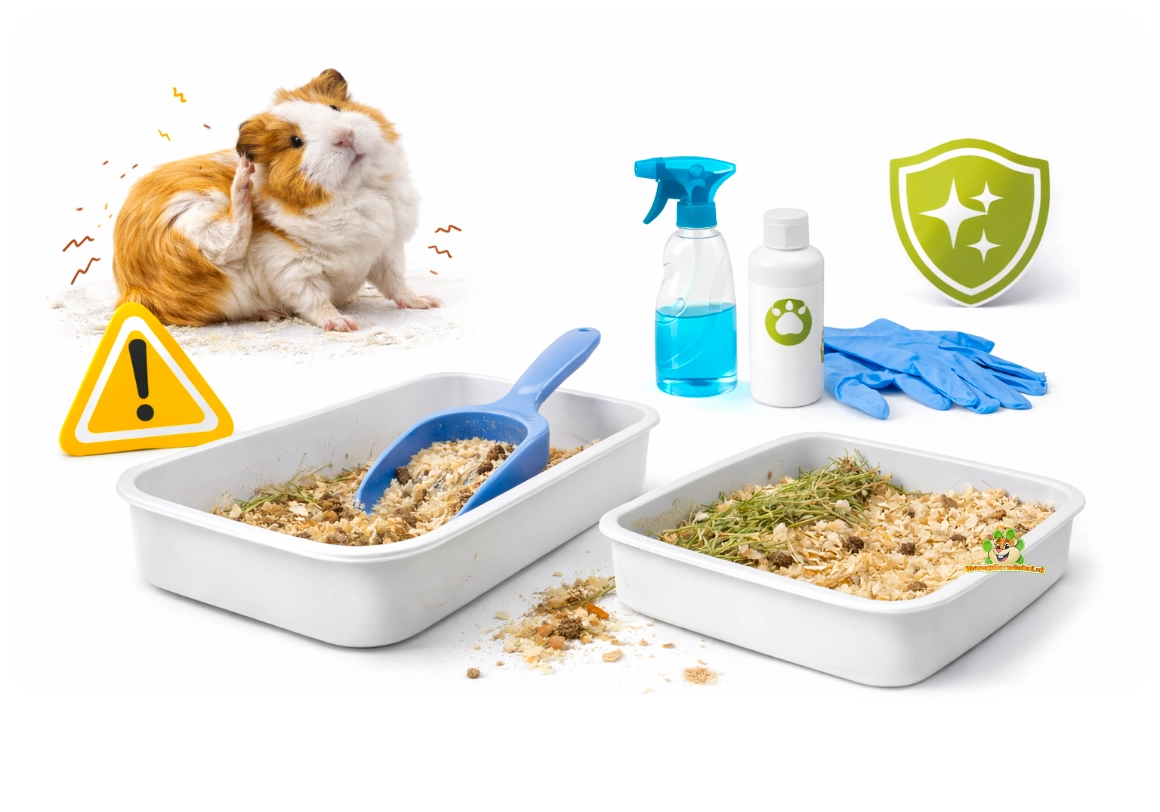 Itching in a guinea pig is a signal you should take seriously. Scratching, biting at the fur, rubbing, bald patches, scales, scabs, or a restless guinea pig can have various causes. Sometimes mites, lice, or other parasites are involved. Sometimes it involves irritation, damp bedding, dirt, fungus, wounds, stress, or another skin or health complaint.
On this page, you can read which signs are important, what you can check immediately, and when to consult a veterinarian. Always combine skin and coat checks with a clean, dry enclosure, good guinea pig bedding , clean floor mats and pee pads , sufficient hay , and daily observation of behavior, eating habits, and coat.
At DRD Knaagdierwinkel®, we do not view itching as something that can be solved with a product alone. First, you examine the animal, the skin, the coat, the enclosure, hygiene, and potential sources of infection. In cases of pronounced itching, scabs, bald patches, wounds, lethargy, or doubt, consulting a veterinarian is the right step. Specialists since 2011.
Quick links:
Answer first | Signs | Possible causes | What to do immediately? | When to see a vet? | Cleaning the enclosure | New guinea pig | Common mistakes | Checklist | FAQ
Answer first: what do you do about itching or bald spots?
Do you notice that your guinea pig is scratching a lot, has flakes, is developing bald patches, has scabs, or is biting itself? Calmly check the skin and fur, make the enclosure extra clean and dry, wash textiles, and contact a veterinarian if there are clear symptoms.
✔ Check skin, coat, ears, neck, shoulders, back, hindquarters, and belly calmly.
✔ Watch out for itching, bald patches, scales, scabs, sores, redness, or restlessness.
✔ Clean wet bedding, hay corners, houses, and textiles extra thoroughly.
✔ Do not use random anti-parasite products for dogs or cats.
Go to a veterinarian if there is severe itching, scabs, bald patches, sores, lethargy, loss of appetite, or if you are unsure.
Signs of itching, mites, or parasites in guinea pigs
Itching and skin problems can start subtly. Sometimes you first see more scratching or rubbing. Later, bald patches, scales, scabs, or sores may develop. Also pay attention to behavior: a guinea pig with severe itching may become restless, irritable, or quieter.
| Signal | What could it mean? | What are you doing? |
|---|---|---|
| Frequent scratching or biting at the fur | Itching, irritation, parasites or skin problem | Check skin and coat; call the veterinarian if symptoms are obvious. |
| Bald spots | Scratching, mites, lice, fungus, hormonal or other cause | Have the cause assessed, especially in case of spreading or crust formation. |
| Flakes or rough coat | Dry skin, parasites, pollution or other skin irritation | Check enclosure, floor, textiles and skin |
| Scabs or small wounds | Damage caused by scratching, biting, or inflammation | Do not apply it yourself; consult a veterinarian. |
| Small bugs or nits in the fur | Could be consistent with lice or other external parasites | Have it determined which product is suitable for guinea pigs. |
| Lethargy or not eating | May indicate pain, stress, severe itching, or illness | Contact a veterinarian immediately |
Guinea pig language → | Guinea pig health → | Guinea pig not eating →
Possible causes of itching in guinea pigs
Itching does not automatically mean your guinea pig has mites, but parasites are a significant possibility. The cause determines the approach. Therefore, a close examination is important, and a veterinary check is also necessary in case of clear symptoms.
| Possible cause | What do you see often? | Practical step |
|---|---|---|
| Mites or scab mites | Intense itching, scratching, bald patches, scabs or sores | Have a veterinarian assess and treat appropriately |
| Lice | Itching, scales, rough coat and sometimes visible bugs or nits | Have the right remedy for guinea pigs determined |
| Fungal or skin infection | Bald or scaly patches, sometimes less itching than with scabies | Veterinary diagnosis is important, also due to contagiousness |
| Damp or contaminated surface | Irritation, dirty coat, wet belly or hindquarters | It is better to keep the ground, hay corner, and puddled areas dry. |
| Stress, hierarchy, or self-harm | Restlessness, biting of fur, group tension, or agitated behavior | Look at stay, pairing, routes, and group rest |
| Other health complaint | Lethargy, not eating, weight loss, or sudden changes in behavior | Call a veterinarian |
Pairing guinea pigs → | Taming a guinea pig → | Caring for a long-haired guinea pig →
What can you do immediately for an itch?
You can already take practical steps while you assess the symptoms. The goal is to calmly observe your guinea pig, make the enclosure cleaner and drier, and avoid using anything unsuitable for guinea pigs.
✔ Check skin and coat gently, without pulling hard or loosening scabs.
✔ Give wet spots, hay corners, houses, and bedding an extra clean.
✔ Wash bottom mats, pee pads, rugs, and soft baskets according to the washing instructions.
✔ Allow washed textiles to dry completely before putting them back.
✔ Note when the itching started and whether new animals, bedding, or products have been used.
Call a veterinarian if there is significant itching, bald patches, scabs, sores, loss of appetite, or if you have any doubts.
Guinea pig cleaning products → | Bottom mats and pee pads → | Cleaning a guinea pig cage →
When should you take your dog to the vet for an itch?
You can consult a veterinarian if there is even slight doubt, but in the case of clear itching or skin changes, a check-up is advisable. Mites are not always visible to the naked eye. Sometimes microscopic examination, a skin scraping, or another test is necessary to properly assess the cause.
✔ Severe itching, scratching, rubbing, or biting at the fur.
✔ Bald patches, scabs, sores, scales, or redness.
✔ Itching in multiple guinea pigs in the same group.
✔ A new guinea pig with coat problems or scratching behavior.
✔ Lethargy, loss of appetite, weight loss, signs of pain, or restlessness.
Use treatment only as advised and with products suitable for guinea pigs.
Guinea pig transport box → | Guinea pig care → | Guinea pig health →
Keep the enclosure clean and dry in case of skin problems
A clean and dry enclosure supports recovery and helps prevent irritation. Wet hay corners, urine spots, damp mats, and poorly ventilated shelters, in particular, can make the skin and coat uncomfortable.
| Place | Why check? | Practical approach |
|---|---|---|
| Hay corner | Often gets wet or dirty | Remove wet hay daily and use extra absorption. |
| Under cottages | Moisture pools there more quickly. | Lift the houses and check the ground |
| Ground mats and peat mats | Textiles can hold urine and dirt | Wash regularly and let dry completely |
| Tunnels and soft baskets | Can collect hair, flakes, and dirt | Shake out, wash, or replace when necessary |
Guinea pig bedding → | Guinea pig hay racks → | Guinea pig houses → | Guinea pig tunnels →
New guinea pig and parasites: introduce gradually
A new guinea pig can unknowingly bring skin or coat problems with it. Therefore, it is wise to observe a new guinea pig quietly before introducing it to your existing group. Pay attention to scratching, bald patches, scales, scabs, coat quality, appetite, and general behavior.
Are you unsure about the skin or coat of a new guinea pig? Have this assessed before pairing. This prevents you from introducing a potentially contagious problem to the group.
✔ Check skin and coat before mating.
✔ Use separate items when in doubt about skin conditions.
✔ Wash hands and clean materials between care moments.
Only pair the guinea pig when it appears healthy and any symptoms have been assessed.
Pairing guinea pigs → | Guinea pig language →
Common mistakes with guinea pig itching and parasites
When you have an itch, you want to do something quickly. That is understandable, but especially with skin problems, the correct order is important: first look for signs and have the cause assessed, then treat appropriately.
✔ Just using a remedy without knowing the cause.
✔ Using products for dogs or cats on a guinea pig.
✔ Only view one animal while multiple guinea pigs live together.
✔ Do not include the accommodation in the cleaning routine.
✔ Scratching off scabs or applying cream to irritated skin without advice.
Ignoring itching for too long, which can cause wounds and stress to increase.
Smartly combine guinea pig itching with care and hygiene
When dealing with itching, look at both the animal and the environment. A clean floor, a dry hay corner, well-washed textiles, clean houses, and daily coat checks help maintain an overview. Coat care is especially important for long-haired guinea pigs, as dirt, moisture, and tangles can get trapped in the fur more easily.
Also pay attention to the group situation. A guinea pig that is chased, experiences a lot of stress, or does not have good access to hay and resting places can become unbalanced more quickly. A good setup helps to better assess behavior and skin issues.
Guinea pig care → | Guinea pig cleaning products → | Guinea pig cushions and baskets → | Guinea pig cage accessories →
DRD makes the choice: first understand the cause, then act in a targeted manner.
At DRD, we view itching as a signal that requires careful investigation. Mites and parasites are possible, but skin problems can have multiple causes. Therefore, it is important not to treat indiscriminately.
The strength lies in the combination: checking skin and coat, keeping the enclosure dry and clean, washing textiles, observing group behavior, and calling in the veterinarian in case of clear symptoms.
Checklist – guinea pig itch, mites and parasites
✔ Do you see scratching, rubbing, biting at the fur, or restlessness?
✔ Are there bald patches, scales, scabs, redness, or sores?
✔ Have you calmly checked the skin and coat without loosening any scabs?
✔ Has the enclosure been made extra clean and dry?
✔ Have textiles, ground mats, houses, and hay corners been checked?
✔ Do not use products for dogs or cats without veterinary advice?
Did you call a veterinarian regarding clear symptoms, multiple animals with itching, or if you were in doubt?
Good to know
Itching, bald patches, scabs, sores, or sudden changes in behavior can have various causes. This page helps you recognize signs and practically inspect the enclosure, but it does not replace a diagnosis. In case of clear symptoms, loss of appetite, lethargy, or if in doubt, contact a veterinarian.
Would you like to read up on general background information about guinea pigs? Then also check out the LICG guinea pig information at licg.nl.
FAQ – frequently asked questions about guinea pig itch, mites, and parasites
Why does my guinea pig scratch so much?
Excessive scratching can be caused by mites, lice, skin irritation, fungus, damp bedding, stress, or another skin condition. Observe the skin, coat, living conditions, and behavior, and contact a veterinarian if there are clear symptoms.
How do you recognize mites in a guinea pig?
Mites can cause itching, scratching, bald patches, scabs, sores, and restlessness. Mites are not always visible, which is why a veterinary check is important if they are suspected.
Can a guinea pig have lice?
Yes, guinea pigs can get lice. Sometimes you see small insects or nits in the fur. Have it assessed which product is suitable for guinea pigs.
Are bald spots always parasites?
No, bald spots can have multiple causes, such as mites, lice, fungus, hormonal problems, skin irritation, stress, or rubbing. The cause determines the approach.
Can you use flea treatment for dogs or cats on guinea pigs?
No, do not use just any products for dogs or cats on guinea pigs. Some products are unsuitable or dangerous for small animals. Consult a veterinarian.
Does the enclosure also need to be cleaned in case of mites or lice?
Yes, clean and dry the enclosure, wash textiles, and check hay corners, houses, tunnels, and floor mats. Additionally, follow the veterinarian's advice for treatment.
Do you need to treat all guinea pigs for parasites?
That depends on the diagnosis and the veterinarian's advice. Because guinea pigs live together, it is important to have the entire group assessed when multiple animals have symptoms or have had contact with each other.
Can itching in guinea pigs be caused by bedding?
Damp, dusty, or soiled bedding can irritate the skin and coat. Ensure a dry, clean floor and check solid urine spots and hay corners extra carefully.
When should you go to the vet for guinea pig itching?
Consult the veterinarian in case of severe itching, bald patches, scabs, sores, scales, multiple animals with symptoms, lethargy, loss of appetite, or doubt about the cause.
What do you combine with care for guinea pig itching?
Combine skin checks with cleaning products, dry bedding, floor mats, pee pads, clean houses, hay racks, grooming products, and a transport box for vet visits.
✔ Guinea pig itching, mites, and parasites clearly explained with signs, causes, and practical steps
✔ Convenient to combine with cleaning, bedding, grooming, transport box, and health check
✔ Specialist since 2011, delivered from our own stock
Ordered before 17:00, shipped the same day | Delivered from our own stock | Specialist since 2011
