 Polski

Cleaning a guinea pig cage – how to keep the enclosure fresh, dry, and comfortable
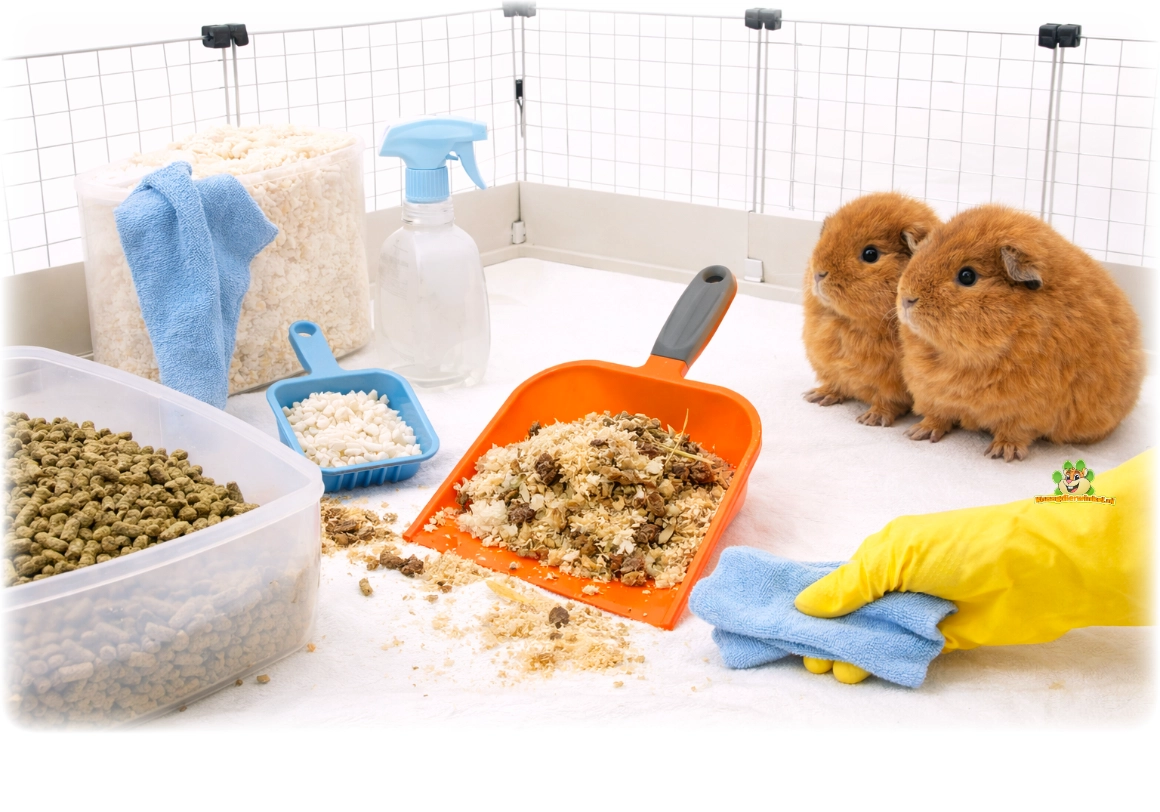 Cleaning a guinea pig cage becomes much easier when you follow a fixed routine. Guinea pigs eat a lot of hay, leave droppings scattered around, and often have favorite spots to urinate. Hay corners, resting places, floor mats, litter boxes, and the areas under houses therefore require regular attention.
On this page, you will read how to keep a guinea pig enclosure practically clean, how often to check which parts, and how to smartly combine guinea pig bedding , floor mats and pee pads , guinea pig toilets , and cleaning products. The goal is not only a clean enclosure, but above all a dry, pleasant base for your guinea pigs.
At DRD Knaagdierwinkel®, we view cleaning from the perspective of daily use. Where is urine deposited? Where is wet hay located? Which spots start to smell faster? And how can you arrange those areas so that cleaning becomes less of a chore? This way, hygiene doesn't become a major task to be done afterwards, but a calm routine that suits your enclosure. Specialist since 2011.
Quick links:
Answer first | Cleaning schedule | Pee spots | Bedding & mats | Hay corner | Houses & accessories | Preventing odor | Common mistakes | Checklist | FAQ
Answer first: how often do you clean a guinea pig cage?
How often you clean a guinea pig cage depends on the number of guinea pigs, the size of the enclosure, the bedding, and established urine spots. Ideally, work with daily checks, spot cleaning, and a regular, more thorough cleaning.
✔ Daily: check wet hay, old vegetables, dirty urine spots, and water/feed.
✔ Several times a week: maintain designated potty spots, toilets, pee pads, and hay corners.
✔ Regularly: clean bedding, bottom mats, houses, tunnels, and accessories more thoroughly.
A larger enclosure with good floor zones often stays fresh more easily than a small enclosure where everything happens in one place.
Practical cleaning schedule for the guinea pig cage
A cleaning schedule provides structure. You don't have to clear everything out every day, but you do want to prevent wet spots, old hay, and food remnants from being left behind. Use the schedule below as a practical basis and adapt it to your guinea pigs and enclosure.
| Moment | What do you check? | Why? |
|---|---|---|
| Daily | Water, feed, hay, old vegetables, wet spots and unusual behavior | This way, the enclosure stays fresh and you will notice sooner if your guinea pig is eating or behaving differently. |
| 2–4 times a week | Hay corner, toilet, pee pads, bedding on favorite urination spots | These places often get wet or dirty the fastest. |
| Weekly or as needed | Thorough cleaning of the base, trays, houses, tunnels, and accessories | Prevents the buildup of odor, dirt, and moisture |
| In case of odor or moisture | Specifically search for wet bedding, wet hay, dirty mats, or soiled houses | The smell usually comes from a specific wet spot, not from the entire cage. |
Please note: this schedule is a starting point. With more guinea pigs, a smaller enclosure, many soft materials, or solid urine spots, cleaning may be necessary more frequently.
Identifying pee spots and designing them smartly
Many guinea pigs have favorite spots to urinate. These are often found near the hay corner, under houses, in quiet corners, or on soft mats. By recognizing these spots, you don't have to clean the entire enclosure every time. Instead, you arrange the problem areas more intelligently.
✔ Place extra absorbent bedding on marked urine spots.
✔ Use a pee mat or litter box under or next to the hay corner.
✔ Check under houses and tunnels, as moisture can linger there longer.
✔ Replace wet hay quickly, because wet hay starts to smell and becomes less pleasant.
It is better to clean small wet spots more often than to wait until the entire cage is dirty.
Guinea pig toilets → | Guinea pig floor mats and pee pads → | Guinea pig hay racks →
Keep bedding, ground mats, and pee pads clean
The bedding largely determines how clean and fresh a guinea pig enclosure stays. Loose bedding, fleece, floor mats, and pee pads all require different cleaning routines. The best choice is the solution that stays dry, is comfortable, and suits your maintenance method.
| Soil type | Cleaning benefit | What do you look out for? |
|---|---|---|
| Loose bedding | You can often scoop out wet spots in a targeted manner. | Apply sufficient layer thickness and replace wet areas on time. |
| Ground mats | Solid, soft surface with less loose debris | Often combine with pee pads or absorbent zones |
| Plaster mats | Handy on solid damp spots and under haystacks. | Replace regularly and allow to dry completely after washing |
| Toilet bowl | Bundles dirt and moisture in one practical place | Works especially well when you place it on an existing potty spot |
Guinea pig bedding → | Floor mats and pee pads → | All bedding →
Keep the hay corner clean
The hay corner is often the busiest spot in the enclosure. Guinea pigs eat there, walk through it, and regularly urinate nearby. Therefore, this area gets dirty faster than you might think at first glance. A good hay corner makes cleaning much easier.
✔ Offer hay generously, but remove wet or soiled hay daily.
✔ Optionally use a hay rack, hay sack, or a designated hay corner to keep the hay more organized.
✔ Place extra absorbent material or a pee mat under the hay corner.
✔ Place the hay so that multiple guinea pigs can eat at the same time.
Check hay corners extra carefully during warm periods or when feeding a lot of vegetables.
Guinea pig hay → | Guinea pig hay racks → | Guinea pig food and nutrition →
Cleaning houses, tunnels, food bowls, and accessories
It is not just the floor that gets dirty. Houses, tunnels, food bowls, water bowls, drinking bottles, cushions, and baskets also need to be checked. Moisture sometimes lingers longer, especially under houses and in tunnels, because there is less air circulation.
✔ Regularly lift the houses and check the ground underneath.
✔ Rinse food and water bowls thoroughly and let them dry clean.
✔ Check drinking bottles for proper functioning, deposits, and a smoothly operating nipple.
✔ Wash soft materials according to the washing instructions and let them dry completely.
Check wooden products for moisture, odor, dirt, and wear.
Guinea pig houses → | Guinea pig tunnels → | Guinea pig food bowls → | Drinking bottles and water bowls →
Preventing odor in the guinea pig cage
A guinea pig enclosure usually starts to smell due to damp spots, wet hay, old vegetables, or saturated bedding. Odor is therefore often a signal that there is a wet zone somewhere. By looking specifically for the source, you will solve the problem faster than by simply using more air freshener or scented products.
✔ First check hay corners, urine spots, and under shelters.
✔ Use sufficiently absorbent bedding in wet areas.
✔ Remove old vegetables and wet hay daily.
✔ Let washed mats dry completely before putting them back.
Ensure a well-ventilated area, but avoid drafts.
Guinea pig cleaning products → | Guinea pig cage accessories → | Guinea pig care →
Common mistakes when cleaning a guinea pig cage
Cleaning becomes more difficult when the layout does not cooperate. Many problems arise because damp spots are not recognized or because everything happens in one busy area.
✔ Clean only the visible top layer while the underlayer remains wet.
✔ Leave wet hay in the hay corner.
✔ Put soft mats back while they are still damp.
✔ Do not lift the houses to check underneath.
✔ Use too little absorbent material on stubborn wet spots.
Trying to hide the smell instead of locating the wet spot.
Smartly combine cleaning the guinea pig cage with the interior design
A clean enclosure starts with a smart layout. Create a clear hay corner, place water in a spot that doesn't constantly wet the bedding, and use extra absorbent pads where your guinea pigs often urinate. This way, you don't clean harder, but smarter.
With multiple guinea pigs, spreading them out helps. Multiple hiding places, multiple hay or resting spots, and open runways prevent everything from happening in one busy spot. This is not only more pleasant for the guinea pigs but also more practical for cleaning.
Guinea pig cage → | Guinea pig cage buying guide → | Guinea pig language → | Guinea pig health →
DRD makes the choice: cleaning starts with the right layout
At DRD, we view cleaning not as a separate chore, but as part of the enclosure. A well-chosen floor, a smart hay corner, a designated potty area, and sufficient space make care calmer and more manageable.
The key is recognizing where the dirt forms. If you know where your guinea pigs urinate, eat, and rest, you can clean more effectively, and the enclosure remains more pleasant for both the animal and the owner.
Checklist – cleaning the guinea pig cage
✔ Do you check water, feed, hay, old vegetables, and wet spots daily?
✔ Do you know where the regular pee spots are?
✔ Do you use extra absorption in hay corners and under favorite resting spots?
✔ Remove your wet hay and old vegetables on time?
✔ Do you check under houses, tunnels, and soft materials?
✔ Do you let your washed soil mats and pee pads dry completely?
Do you adjust your routine when you notice more odor, moisture, or dirt?
Good to know
A clean enclosure contributes to comfort and daily monitoring. Does the enclosure suddenly smell stronger, do you see wet spots, diarrhea, reduced appetite, abnormal droppings, or a guinea pig that is becoming lethargic? Then look not only at cleaning, but also at health and nutrition.
Would you like to read up on general background information about guinea pigs? Then also check out the LICG guinea pig information at licg.nl.
FAQ – frequently asked questions about cleaning a guinea pig cage
How often should you clean a guinea pig cage?
Check wet spots, old hay, water, food, and old vegetables daily. Clean regular urine spots several times a week and perform a more thorough cleaning depending on the number of guinea pigs, the bedding, and the size of the enclosure.
Why does my guinea pig cage smell quickly?
Odors are often caused by wet bedding, wet hay, old vegetables, or saturated urine spots. Pay particular attention to hay corners, the areas under shelters, and favorite resting spots.
How do you keep the hayloft clean?
Remove wet and soiled hay daily. If necessary, use a hay rack, hay sack, litter box, pee mat, or extra absorbent bedding under the hay corner.
Can you potty train guinea pigs?
Some guinea pigs use designated spots to urinate, but not every guinea pig becomes truly house-trained. You can, however, place a toilet or pee pad in the spot where your guinea pigs already frequently urinate.
What is useful for designated potty spots?
Use extra absorbent bedding, a litter tray, or a pee mat. Clean those areas more often than the rest of the enclosure.
How do you clean bottom mats and pee pads?
First remove hay and loose hair. Wash according to the washing instructions and let the mats dry completely before placing them back in the enclosure.
Do you have to clean the cottages too?
Yes, check houses and tunnels regularly. Puddles can form, especially under houses. Also check for moisture, odor, dirt, and wear.
Which cleaning products do you use for a guinea pig cage?
Use products suitable for animal enclosures and rinse surfaces thoroughly when necessary. Let everything be dry before your guinea pigs go back.
How do you prevent a guinea pig cage from getting dirty quickly?
Use enough space, good bedding, extra absorption on wet spots, a smart hay corner, and multiple resting places. Keep wet zones small and clean them specifically.
What do you combine with cleaning a guinea pig cage?
Combine cleaning with bedding, floor mats, pee pads, litter boxes, hay racks, feed bowls, water bowls, houses, tunnels, and suitable cleaning products.
✔ Cleaning a guinea pig cage with a practical schedule for daily checks, urine spots, and deeper cleaning
✔ Convenient to combine with bedding, pee mats, litter boxes, hay racks, and cleaning products
✔ Specialist since 2011, delivered from our own stock
Ordered before 17:00, shipped the same day | Delivered from our own stock | Specialist since 2011
