Polski

Cleaning the rat cage and reducing odor
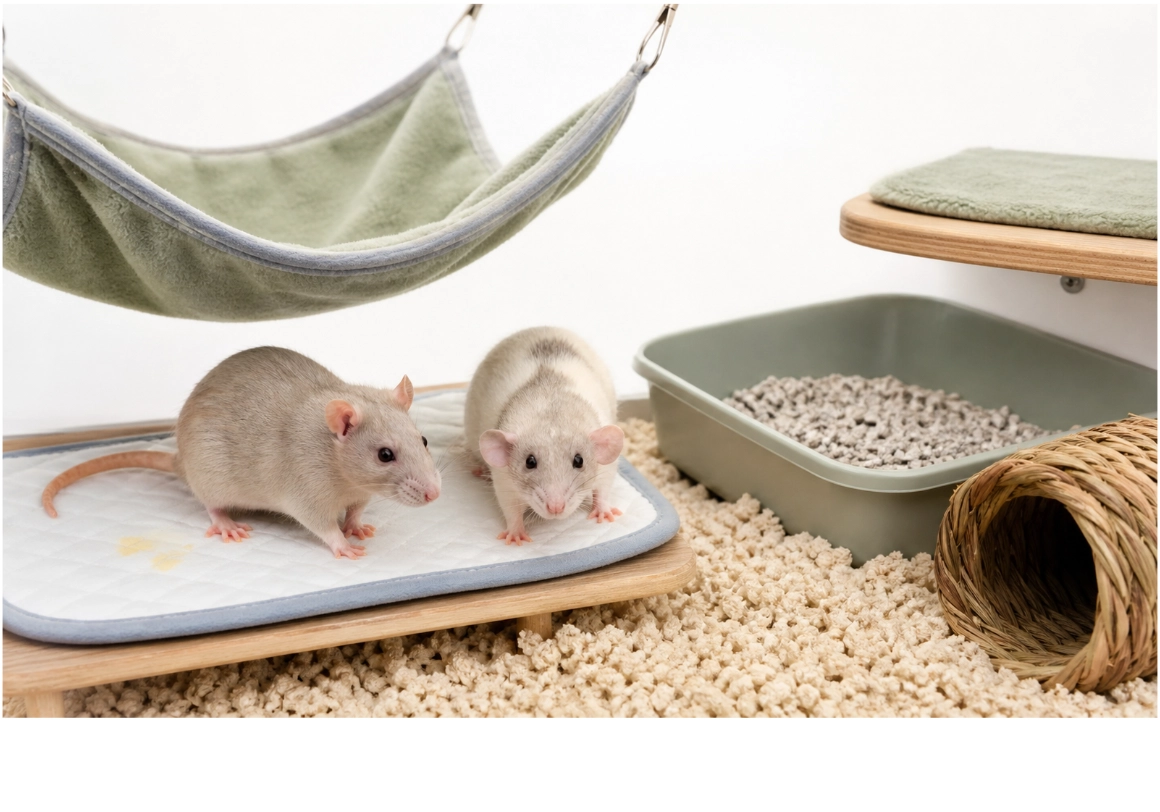 Cleaning a rat cage isn't just about emptying everything frequently, but primarily about smart cleaning. Rats have designated urination spots, favorite hammocks, pathways, and sleeping places. By recognizing these spots well, you can reduce odor without having to completely turn the entire cage upside down every time.
At DRD Knaagdierwinkel®, we view cleaning as part of good rat care. DRD selects products and advice not only based on “smelling fresh,” but primarily on practical use, low-dust choices, safe materials, good ventilation, and daily checks. Therefore, combine low-dust rat bedding with clearly marked rat toilets , properly placed pee pads , and regularly washed hammocks . This way, the enclosure remains more pleasant for your rats and for you.
✓ In short: remove wet spots, old food residues, and heavily soiled areas daily.
✓ Use toilets, pee pads, and low-dust bedding to better manage urination spots.
✓ Wash hammocks and fabric parts regularly, but avoid removing all the familiar scent at once every time.
Quick links:
Why does a rat cage start to smell? · Daily cleaning · Weekly cleaning · Bedding · Toilets & pee pads · Washing hammocks · Reducing odor · Respiratory system · Useful shopping routes · FAQ
Spot cleaning
Removing small dirty spots daily often works better than waiting until the entire cage is dirty.
Recognizing pee spots
Rats often have favorite urinating spots. With toilets and pee mats, you can address those spots more intelligently.
Fresh and recognizable
Clean in logical sections so that the enclosure stays fresh and your rats recognize their familiar spots.
Why does a rat cage start to smell?
A rat cage can start to smell due to urine, wet bedding, soiled hammocks, old food scraps, poor ventilation, or urine spots on platforms and in corners. Rats use recurring spots to urinate. If these spots are not properly contained or cleaned regularly, odor develops more quickly.
Insufficient ventilation or excessive moisture in the enclosure can also intensify odors. Rats have sensitive airways, so a fresh, low-dust, and well-ventilated living environment is important. Strong odors are not only annoying for you but also a signal that the cleaning routine or setup could be improved.
Common causes of odor
✓ Wet bedding or puddles in corners.
✓ Hammocks, baskets, or fabric parts that hold urine.
✓ Platforms, ladders, or plastic parts where urine collects.
✓ Old food remains in tunnels, houses, or digging boxes.
✓ Insufficient ventilation or bedding that is not suitable for your group.
Daily cleaning of the rat cage
Daily cleaning doesn't have to be extensive. It is precisely small checks that make a big difference. Look where your rats urinate, where they hide food, and which hammocks or platforms get dirty quickly. Immediately remove wet bedding, old food remnants, and visibly soiled areas.
We call this daily round spot cleaning. You don't empty the entire cage, but tackle the areas that cause odor. This keeps the enclosure fresher without your rats constantly losing their familiar surroundings.
Daily check
✓ Remove wet bedding and urine spots.
✓ Remove old fresh food, snack leftovers, or hidden food scraps.
✓ Check toilets and replace soiled filling where necessary.
✓ Check if pee pads, hammocks, or baskets are wet.
✓ Check drinking bottles, water bowls, and feeding areas for leaks or dirt.
Weekly cleaning: work in logical parts
In addition to daily spot cleaning, a rat cage requires a more thorough cleaning on a regular basis. Exactly how often depends on the number of rats, the cage, bedding, ventilation, furnishings, and how many fabric items you use.
Clean the cage thoroughly, but try not to remove all the familiar scent at once every time. If everything becomes completely odorless, some rats may actually start marking more. It is often easier to clean in logical areas: bottom, litter boxes, platforms, hammocks, and accessories.
Weekly cleaning points
✓ Replace soiled bedding and clean the tray.
✓ Clean platforms, ladders, and plastic parts.
✓ Wash or replace hammocks, baskets, and pee pads where necessary.
✓ Check tunnels, houses, and digging boxes for old food residue.
✓ Let parts dry thoroughly before putting them back in the cage.
Bedding and scent in the rat cage
The right bedding makes a big difference. For rats, you pay attention not only to absorption but also to dust. Rats have sensitive airways, so heavily dusty bedding is not a good foundation. A low-dust, highly absorbent substrate helps to better absorb urine and keep the enclosure fresher.
Additionally, pay attention to how your rats use the cage. Do they mainly urinate in corners? Then a litter box might be useful. Do they urinate on platforms or in hammocks? Then pee pads, extra washable items, and a smarter layout are more important than just different bedding.
Assess ground cover
✓ Is the bedding low enough dust for rats?
✓ Does the substrate absorb urine well?
✓ Can you easily recognize and remove wet spots?
✓ Does the bedding suit your cage, group, and cleaning routine?
✓ Does the cage remain well-ventilated and not too humid?
Read more: Rat bedding selection guide · Rat Bedding
Rats use toilets and pee pads
Rats can often learn to use specific spots as toilet areas, although not every rat remains fully house-trained. A litter box is especially helpful when your rats choose distinct corners or fixed spots. By placing a toilet there, you can better manage urine spots and clean them up more quickly.
Pee pads are useful in places where rats like to lie down or urinate, such as platforms, resting spots, or under favorite hammocks. They protect the surface and are easier to replace or wash than having to clean the entire cage every time.
Smart use of toilets and urinals
✓ Place toilets in places where your rats already like to urinate or defecate.
✓ Place pee mats on platforms or resting areas that get wet quickly.
✓ Replace toilet paper and pee pads as soon as they are wet or heavily soiled.
✓ Use multiple small toilet areas for larger cages or groups.
✓ Stay realistic: potty training helps, but it doesn't make cleaning unnecessary.
Read more: Litter training rats · Rat toilets · Rat pee pads
Washing hammocks, baskets, and fabric parts
Hammocks are wonderful for rats, but they can also quickly retain scent. Many rats sleep, groom, eat, and sometimes urinate in or near their hammocks. As a result, fabric parts are often one of the first places where you notice a scent.
Wash hammocks, baskets, cushions, and pee pads regularly. Do not use strongly perfumed products that leave a lot of odor. Let everything dry thoroughly before hanging it back up. Also, always keep enough spare hammocks ready so you can switch them out without the cage becoming bare.
Check fabric parts
✓ Do hammocks or baskets smell strongly of urine?
✓ Are there wet spots, holes, or loose threads?
✓ Can your rats still safely get in and out of the hammock?
✓ Do you have spare hammocks to switch to clean ones?
✓ Are washed parts completely dry before they go back?
See also: Rat Hammocks · Rat Nesting Material, Cushions & Baskets
Reduce odor without having to completely empty the cage every time.
Reducing odor begins with recognizing the real sources of the smell. Often, these are not all parts at once, but specific spots: a potty platform, a favorite hammock, a litter box, wet bedding, or leftover food in a hutch.
By targeting those spots specifically, the cage remains fresher and more practical. You don't have to wash or replace everything at once. Furthermore, retaining some of the familiar scent can help keep the group calmer, while still removing the dirty spots.
Reducing odor in practice
✓ Remove wet bedding and old food remnants daily.
✓ Use toilets at designated urination spots.
✓ Wash hammocks, pee pads, and baskets on time.
✓ Check shelves and plastic parts where urine collects.
✓ Ensure good ventilation and avoid dusty materials.
Dust, odor and sensitive airways
Rats have sensitive airways. Therefore, when cleaning, you should look not only at smell but also at dust, ventilation, and moisture. A heavily dusty substrate or fine sand can be unpleasant for rats. Therefore, do not use chinchilla sand or fine sand as a sand bath; rats do not need this for grooming.
Do you notice that your rats are sneezing a lot, wheezing, seem short of breath, are lethargic, or have a noticeable amount of reddish-brown discharge around their nose or eyes? If so, that is a signal to take a close look at the environment, dust, ventilation, and overall health. If in doubt, contact a veterinarian specializing in rats.
Keeping it clean in a more airway-friendly way
✓ Choose low-dust bedding.
✓ Avoid fine sand and chinchilla sand for rats.
✓ Keep the cage well ventilated and not too humid.
✓ Allow washed parts to dry completely.
✓ Watch out for sneezing, rattling, shortness of breath, lethargy, or a clear change in behavior.
Handy shopping routes for cleaning a rat cage
Do you want to keep the rat cage more practical and fresher? These product groups help with bedding management, urine spots, hammocks, grooming, and daily checks.
Read more about rat care
Do you want to effectively combine the cleaning routine with furnishing, potty training, bedding, and health signals? Then read these information pages as well.
What do you need for rats? · Rat bedding selection guide · Litter training rats · Ratscaping for beginners · Rat burrow box selection guide
Frequently asked questions about cleaning a rat cage
How often should you clean a rat cage?
Check the cage daily for wet spots, old food remnants, and soiled parts. Perform a more thorough cleaning regularly, depending on the number of rats, the cage, bedding, and furnishings.
Why does my rat cage stink?
A rat cage can smell due to urine, wet bedding, dirty hammocks, urine spots on platforms, old food remnants, or insufficient ventilation. First, locate the source of the odor and address that specific spot.
How do you reduce odor in a rat cage?
Use low-dust bedding, remove wet spots daily, use litter boxes and pee pads, wash hammocks regularly, and ensure good ventilation.
Do you have to clean the entire rat cage every time?
Not always. Daily spot cleaning is important. For a more thorough cleaning, you can work in sections so that the enclosure remains fresh but does not constantly become completely odorless for your rats.
How often should you wash rat hammocks?
Wash hammocks as soon as they are wet, dirty, or strong-smelling. How often this is necessary depends on your rats, the location in the cage, and how many spare hammocks you use.
Does a rat toilet help with odor?
Yes, a toilet can help to better manage urine and feces spots. Not every rat becomes fully house-trained, but designated toilet spots often make cleaning easier.
Are pee pads useful for rats?
Yes, pee pads are handy on platforms, resting places, and spots where rats often urinate. They are easier to replace or wash than to clean the entire setup every time.
Which bedding helps reduce odors for rats?
Choose a low-dust and highly absorbent bedding that suits your cage and group. In addition to odor, pay attention to dust as well, since rats have sensitive airways.
Can you use chinchilla sand to reduce odor?
No, do not use chinchilla sand or fine sand for rats. Rats do not need a sand bath, and fine dust can be harsh on their sensitive airways.
When is a smell a reason to pay extra attention?
A strong urine odor, wet spots, stuffy air, frequent sneezing, wheezing, or lethargic behavior are signals to thoroughly inspect the environment. Contact a veterinarian specializing in rats if you have any health concerns.
Cleaning a rat cage with the help of DRD Knaagdierwinkel®
At DRD Knaagdierwinkel®, we view cleaning as part of good rat care. It is not just about eliminating odors, but about a fresh, practical, and low-dust living environment where your rats can sleep, play, eat, drink, and live together comfortably.
✓ Practical explanation for cleaning, reducing odor, and recognizing urine spots
✓ Direct routes to bedding, toilets, pee pads, hammocks, and grooming
✓ Extra attention to low-dust choices and sensitive airways
✓ No sand bath or chinchilla sand positioning for rats
✓ Specialist since 2011
✓ Delivered from our own stock