 Polski


Choosing a rabbit run: indoor, outdoor, fixed or flexible
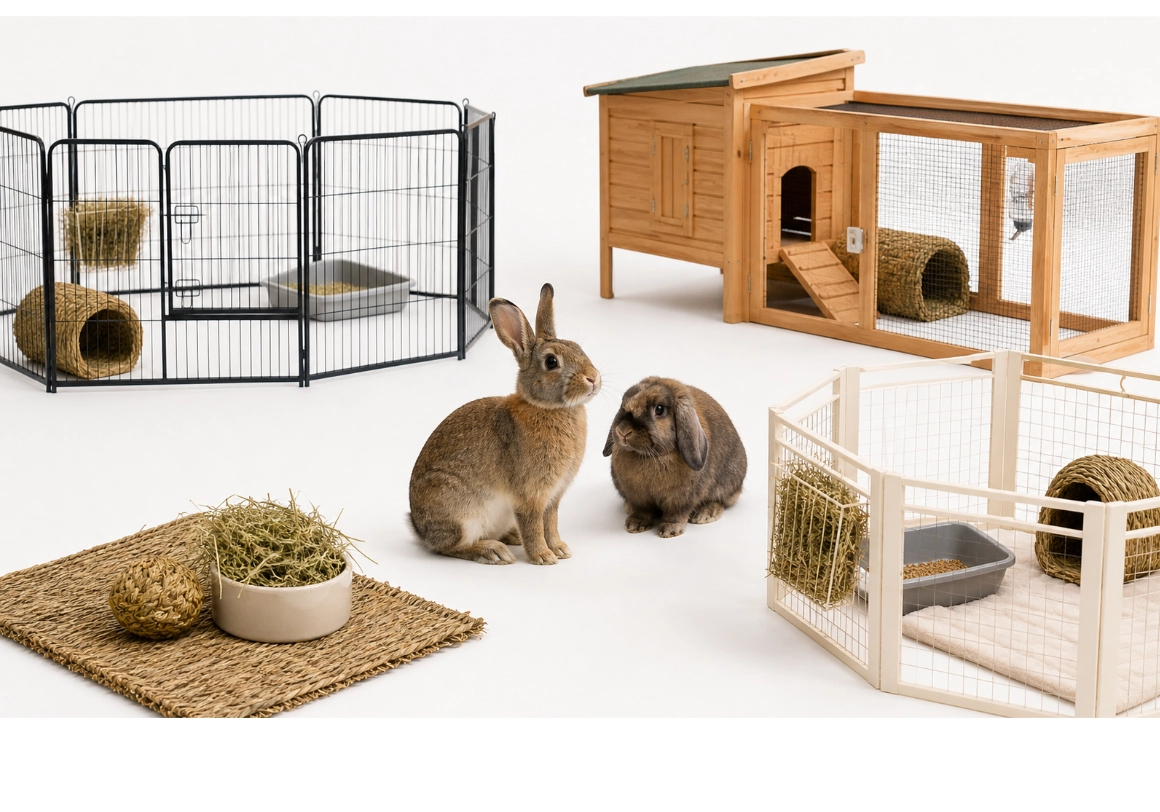 A rabbit run often makes the difference between “a hutch” and a real living space. Rabbits need space to move, rest, pass each other, lie together, and exhibit natural behavior. Therefore, you choose a good run not only based on size, but also on safety, surface, placement, shelter, and how you intend to use the run.
This page is part of our Rabbit Information . Here you can read how to choose a rabbit run for indoors or outdoors, what to look for regarding panels, roof, height, ground surface, and predators, and how to logically combine the run with hay, a toilet, hiding places, tunnels, and enrichment.
✓ In short: choose a rabbit run that provides sufficient permanent living space, not just a temporary run.
✓ Safety is especially important outdoors: watch out for escapes, digging, cats, predators, roof/covering, shade, and ground surface.
✓ For indoors, pay particular attention to grip, cables, floor protection, cleanliness, panels, walking space, and practical cleaning.
Quick links:
Why a run? · Indoor or outdoor run · Size & space · Safety · Surface · Setup · Checklist · FAQ
More living space
A run increases the permanent living space, allowing your rabbits to move around, retreat, rest, and explore.
Secure barrier
With a run, you create a clear boundary, inside the house or outside in the garden.
Flexible setup
You can combine panels, tunnels, small houses, hay, a toilet, and foraging areas into a logical living space.
Why a rabbit run is so important
A rabbit run gives your rabbits more space than a hutch alone. Rabbits need to be able to walk, turn around, run, jump, lie down stretched out, rest together, and avoid each other. A run helps to safely fence off that living space, both indoors and outdoors.
Therefore, view a run not as an extra, but as part of the enclosure. A hutch can serve as a sleeping area, shelter, or toilet zone, but the run makes the living space truly usable. Especially for a rabbit pair, space to pass each other and move out of the way is important.
Useful information pages: How much space do rabbits need? · Rabbit hutch selection guide · Bonding rabbits
Choose an indoor or outdoor rabbit run
An indoor and an outdoor run share the same basic function: fencing off space. However, the points of attention differ. Indoors, the focus is primarily on grip, floor protection, cables, plants, furniture, cleanliness, and cleaning. Outdoors, you pay extra attention to predators, escapes, digging, shade, rain, wind, heat, frost, and drinking water.
So choose not only the run that fits the space, but the run that suits the use. A lightweight panel run can be very practical indoors, while outdoors sturdiness, cover, and security are more important.
Indoor run
✓ Handy for rabbit room, living room, or temporary enclosure.
✓ Pay attention to grip, ground mats, and floor protection.
✓ Cables, plants, and furniture remain out of reach.
✓ Practical to combine with toilet, hay corner, and foraging.
Outdoor run
✓ Sturdy, stable and seals well.
✓ Protection against escaping, digging out, and predators.
✓ Shade, rain shelter and safe ground.
✓ Daily check on water, hay, droppings, closures, and floor.
Useful information pages: Keeping rabbits indoors · Keeping rabbits outdoors
Which size rabbit run do you choose?
It is better to choose a run that is too spacious than too small. For an average pair of rabbits, you can use approximately 4 to 5 m² of permanent living space as a practical starting point. Larger, more energetic, or multiple rabbits require more space. When doing so, consider not only the bare dimensions but also what needs to be placed inside the run.
A run may sometimes look large on paper, but it quickly becomes smaller once you add a toilet, hay rack, drinking area, house, tunnel, digging box, and enrichment items. There must always be plenty of room to move around so that your rabbits can take multiple hops and pass each other safely.
Assessing size in practice
✓ Can your rabbits make multiple hops in a row?
✓ Can they lie stretched out without blocking the walking route?
✓ Can they pass each other without pushing?
✓ Can a toilet, hay, water, and shelter fit in without everything being full?
✓ Is the space permanently available, even when you are not at home?
View now: Rabbit racing .
Safety: height, roof, panels and predators
For a rabbit run, safety is at least as important as space. Rabbits can jump, push, gnaw, and dig. Outdoors, predators, cats, birds, martens, and the elements are added to this. Therefore, check that the panels are stable, the latches work properly, and that the run does not shift easily.
An outdoor run is safest when it is also well protected from above. An open run is only suitable under supervision and must be high enough to prevent escape. Outdoors, an enclosed or well-covered run is often the safer choice, because you are considering not only your own rabbits but also animals from outside.
Safety check for a run
✓ Are the panels sturdy and stable?
✓ Can your rabbits not jump over the run?
✓ Are the fastenings closed properly and not easy to push open?
✓ Is an outdoor run protected against cats, birds of prey, foxes, and martens?
✓ Was excavation along the edges prevented?
✓ Are there no sharp edges, loose hooks, or damaged panels?
Substrate under the rabbit run
The right surface depends on where you use the run. Indoors, you want grip and floor protection. Outdoors, you want safety, dryness, hygiene, and control against digging. Grass, tiles, ground mats, or a solid surface can all serve a purpose, as long as you consider practical use and safety.
Grass is natural and interesting, but can become wet, bare, or muddy. Tiles are practical to clean and help prevent digging, but can get hot in the summer. Indoors, ground mats are often useful for creating grip and distinct zones.
Choosing a surface
✓ Indoors: choose grip, floor protection, and easy cleaning.
✓ Outdoors on grass: check for wet, bare, dirty, or dug-up spots.
✓ Outdoors on tiles: practical against excavation, but watch out for heat in the sun.
✓ For toilet areas: use a clear toilet bowl and matching toilet bedding.
✓ Always ensure dry resting places and sufficient grip.
Useful shopping routes: Rabbit floor mats · Rabbit toilets · Rabbit toilet bedding
Fixed run or flexible panel run?
A fixed run is useful when you want to create a permanent living space. This is often the best choice for outdoors or for a permanent rabbit room. A flexible panel run, on the other hand, is handy when you want to adjust the shape, expand it temporarily, or safely fence off an indoor area.
When choosing flexible panels, prioritize stability. The panels must remain stable and not shift easily when your rabbits push against them. For outdoor use, extra securing is often necessary, as wind, the ground, and external animals affect the run.
Fixed run
✓ Strong for permanent housing.
✓ Handy for outdoor enclosures and large rabbit rooms.
✓ Easier to secure against escape and predators.
Flexible rent
✓ Practical for indoors or temporary expansion.
✓ Shape and size are easier to adjust.
✓ Pay extra attention to stability, height, and fastening.
Setting up a rabbit run: what do you put in it?
A run works best when you divide it logically. Don't place everything in the middle of the run area. Instead, create clear zones: a toilet and hay corner, a resting spot, a free-roaming zone, and an enrichment area. This keeps the run organized and allows your rabbits to choose where they want to be.
Hiding places are important, but ensure they are not dead ends or too cramped when there are multiple rabbits. Tunnels, houses with multiple openings, and sheltered edges make the run more interesting without reducing the running space.
Basic setup for a rabbit run
✓ Toilet tray with suitable toilet bedding.
✓ Hay in a dry and easily accessible place.
✓ Clean drinking water, possibly in multiple locations for multiple rabbits.
✓ Shelters, small houses, or tunnels with sufficient escape routes.
✓ Chewing material, foraging toys, or a digging/sniffing area.
✓ Free walking space that is not cluttered with accessories.
Handy shopping routes: Rabbit houses · Rabbit tunnels · Chewing material · Play & foraging
Use rabbit run when bonding
A run can be useful for creating a neutral bonding area. Use a spot that does not clearly belong to one of the rabbits. Ensure the space is easy to see, that you can keep a close eye on them, and that there are no narrow, dead-end hiding places where one rabbit can be trapped.
In the bonding area, primarily place basic items: hay, water, and possibly several small feeding spots. It is best to avoid one rabbit's favorite items during the initial phase. After a successful bonding, you can rearrange the run or living space to make it clean and logical again.
Useful information page: Pairing rabbits .
Maintenance and daily inspection of the run
A rabbit run remains pleasant only if you check it regularly. Look at latches, panels, the floor, the litter box, water, hay, droppings, and the fur around the hindquarters. Outdoors, pay extra attention to the weather, wind, predators, digging spots, flies, and wet areas.
Indoors, pay extra attention to the floor, gnaw marks, loose wires, shifting panels, and whether the toilet area is being used properly. Remove broken, sharp, wet, or heavily soiled parts in a timely manner.
Daily run check
✓ Are your rabbits eating well and do they have normal droppings?
✓ Is drinking water clean and accessible?
✓ Is the toilet area clean and dry enough?
✓ Are the panels, fasteners, and connections still sturdy?
✓ Are there no sharp edges, loose parts, or gnawing damage?
✓ Are the hindquarters of both rabbits clean and dry?
Checklist: choosing a rabbit run
Check these points before you choose
✓ Is the run used indoors, outdoors, or both?
✓ Is the run intended as a permanent living space or only a temporary enclosure?
✓ Is there enough room for both rabbits to move, rest, and retreat?
✓ Is there free roaming space remaining after toilet, hay, water, shelters, and enrichment?
✓ Are the height, panels, and fasteners safe enough?
✓ Is an outdoor run protected against escaping, digging, and predators?
✓ Is the surface suitable, with sufficient grip and good cleaning options?
✓ Is there shade, shelter, and drinking water in a logical place?
✓ Can you easily check and clean the run daily?
Important to know
A run is not a decoration, but part of the basic living space. Therefore, choose based on space, safety, and daily use, not just on what fits compactly or looks nice.
Is one of your rabbits not eating, is one of your rabbits not pooping, is tension developing between your rabbits, or does the enclosure seem unsafe? Then look at health, group dynamics, space, layout, and safety.
Frequently asked questions about choosing a rabbit run
Which rabbit run do I need?
That depends on indoor or outdoor use, the number of rabbits, the available space, and the desired safety. Choose a run that provides enough permanent living space and suits the ground surface, layout, and supervision.
How big should a rabbit run be?
For an average pair of rabbits, you can use approximately 4 to 5 m² of permanent living space as a practical starting point. Larger, more energetic, or multiple rabbits require more space.
Is a rabbit run better than a rabbit hutch?
A run does not always replace the night shelter, but it does make the enclosure much more usable. A hutch is primarily a sheltered base; the run provides room for movement and escape routes.
Can a rabbit run be used indoors?
Yes, an indoor run is handy for a rabbit room, living room, or as a temporary enclosure. Indoors, pay particular attention to grip, ground mats, cables, plants, floor protection, and cleanliness.
Can a rabbit run be used outdoors?
Yes, but the run must be extra safe outdoors. Pay attention to sturdy panels, roof or covering, protection against predators, digging, shade, rain, wind, and daily checks.
Does a rabbit run need a roof?
Outside, a roof or good covering is highly recommended, because you not only want to prevent escapes but also want to keep cats, birds of prey, foxes, and martens out of the run.
Which surface is suitable under a rabbit run?
Indoors, ground mats are useful for grip and floor protection. Outdoors, you can work with grass, tiles, or a solid surface, as long as you pay attention to safety, dryness, cleaning, heat, and excavation.
What do you put in a rabbit run?
Think of a litter box, litter bedding, hay, water, hiding places, tunnels, gnawing material, and enrichment. In addition, ensure that enough free movement space remains.
Continue reading within Rabbit Information
Do you want to know how much space your rabbits need first? Then read How much space do rabbits need? . For indoor use, you can read more at Keeping rabbits indoors and Setting up a rabbit room . For outdoor use, see Keeping rabbits outdoors . Or go back to the Rabbit Information .
Rabbit runs at DRD Knaagdierwinkel®
At DRD Knaagdierwinkel®, you will find rabbit runs and matching products to furnish your rabbits' living space practically. Think of runs, floor mats, litter boxes, litter box bedding, hay racks, houses, tunnels, gnawing material, and foraging toys. This way, you don't just choose a run, but build an enclosure that is truly right for your rabbits.
✓ Rabbit runs and furnishings neatly organized together
✓ Practical shopping routes for indoor run, outdoor run, grip, toilet, hay, and enrichment
✓ Specialist since 2011
✓ Delivered from our own stock
View now: Rabbit runs · Rabbit room · Floor mats · Rabbit toilets · Hay racks · Rabbit houses · Play & foraging .
