Polski

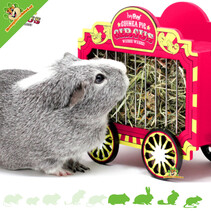
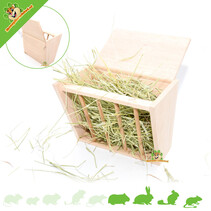
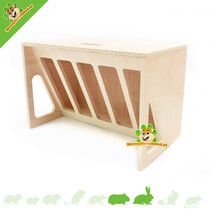
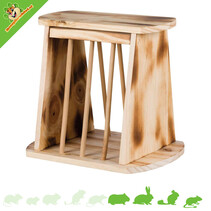
Hay rack for rodents & rabbits!



- Voor 17 uur besteld, dezelfde dag verzonden!
- Specialist sinds 2011
- Delivery from our own stock




- Voor 17 uur besteld, dezelfde dag verzonden!
- Specialist sinds 2011
- Delivery from our own stock



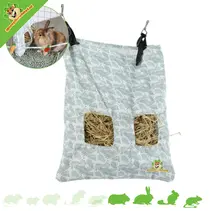
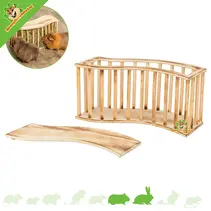

Hay racks for rodents and rabbits
 A hay rack makes feeding easier: hay stays drier and cleaner, you can more easily see what's actually being eaten, and you have less "loose hay" scattered throughout the enclosure. This is especially useful for rabbits and herbivores like guinea pigs , rabbits , chinchillas , and degus . In this category, you'll find hay racks in various materials and models, tailored to your pet, your enclosure, and your routine. Specialist since 2011.
Hay stays dry and neat for longer.
Less hay in bedding or toilet area.
Useful links within Hay & Ruiven
Why a hay rack?
- Tidier hay spot: hay is less likely to end up in bedding or toilet areas.
- Better control: it’s easier to see whether something is actually being eaten.
- Peace of mind: a fixed location = faster refilling, faster cleaning.
- Enrichment: some models (for example a hay ball or “search manger”) make eating more active.
Types of hay racks: material and model
- Wooden hay racks: a natural look, often pleasant in the enclosure; suitable if your animal isn't excessively destructive.
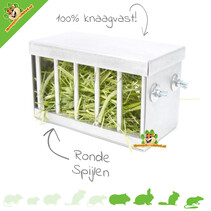
- Metal/gnaw-proof troughs: useful for strong rodents or fanatical gnawing behavior.
- Wall-mounted or corner rack: space-saving and tidy; ideal for compact enclosures.
- Standing trough: useful for larger enclosures or multiple animals eating at the same time.
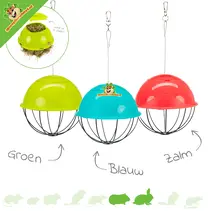
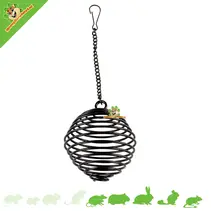
- Hay ball / hay play rack: extra challenge, especially as a change (not as the only hay spot).
How to choose the right hay rack
- Animal species and size: the larger the animal, the larger the manger and opening must be.
- Gnawing behavior: If your pet destroys wood or fasteners, choose a more robust material.
- Consumption: Heavy users benefit from a spacious model or a fixed, refillable hay place.
- Your routine: if you want to refill quickly or feed extra neatly, then a different model is suitable.
Tip: combine a fixed feeder with a stock or bulk option such as hay bales & chunks , so you can more easily keep track of what is actually being used.
Openings & bars: what should you pay attention to?
A safe hay rack allows your animal to reach for hay with its snout, without its head or shoulders getting through an opening. Animals vary in build and age, so always use the measurements as a guideline and verify in practice.
- Avoid “piercing”: it is better to have several smaller openings than one large opening.
- Be careful with young animals: what seems safe now can change as they grow (and vice versa).
- Check daily during the first week: see whether packing goes smoothly and whether there is no risk of pinching.
- Not sure? Choose a model with smaller openings or opt for a hay bag with a secure fastening.
Placement in the enclosure
- Not above the toilet area: this keeps the hay usable for longer.
- Stable and accessible: prevent wobbling and ensure your pet can reach it calmly.
- Create a permanent hay spot: this helps enormously with overview and cleaning.
Questions about your situation? We're happy to help via our service page .
Checklist: the right hay rack in 1 minute
- The size is correct: your animal can easily grab hay without having to force it.
- Openings secure: snout in, head out (check in practice).
- Material suitable: wood or gnawing-proof, depending on gnawing behaviour.
- Smart placement: not near damp or toilet areas, yet stable.
- Routine works: easy to refill and clean.
Maintenance
- Refresh daily: remove damp or soiled hay and refill with clean hay.
- Regular cleaning: frequency depends on use and material.
- Check attachment: especially with hanging models or busy animals.
Safety
- Stable mounting: hang or place mangers securely and check regularly.
- No sharp parts: check edges, hooks and wear.
- Moisture = replace: remove wet hay immediately and dry the hay area.
- Not sure? Ask us for advice through our service .
FAQ Hay racks
Is a hay rack really necessary?
It's not mandatory, but many customers notice an immediate difference in cleanliness and hay consumption. Especially with a permanent hay area, it saves a lot of cleanup.
Wood or Metal: Which is Better?
That depends on the gnawing behavior and habitat. Wood fits nicely and often works well; for aggressive demolition or strong gnawers, a gnawing-resistant material is more practical.
What if my pet pulls hay out of the manger and drops it?
Place the feeder over a hay area (e.g., a trough or mat) or choose a model that offers a more compact hay area. Refresh the feeding area daily.
When do I choose a hay bag?
If you want to save space or feed extra neatly, check out hay bags for alternatives and combinations.