Polski

Chewing Material for Rabbits – Responsibly Sourced Chewing Wood, Branches & Toys

- Voor 17 uur besteld, dezelfde dag verzonden!
- Specialist sinds 2011
- Delivery from our own stock

- Voor 17 uur besteld, dezelfde dag verzonden!
- Specialist sinds 2011
- Delivery from our own stock
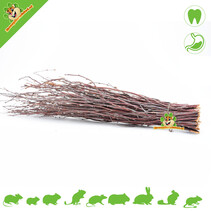

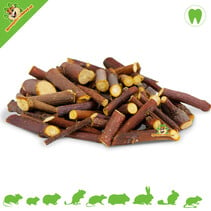
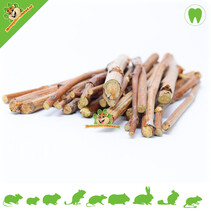

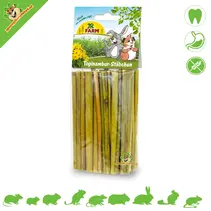

Chewing material for rabbits – wood, branches and natural enrichment
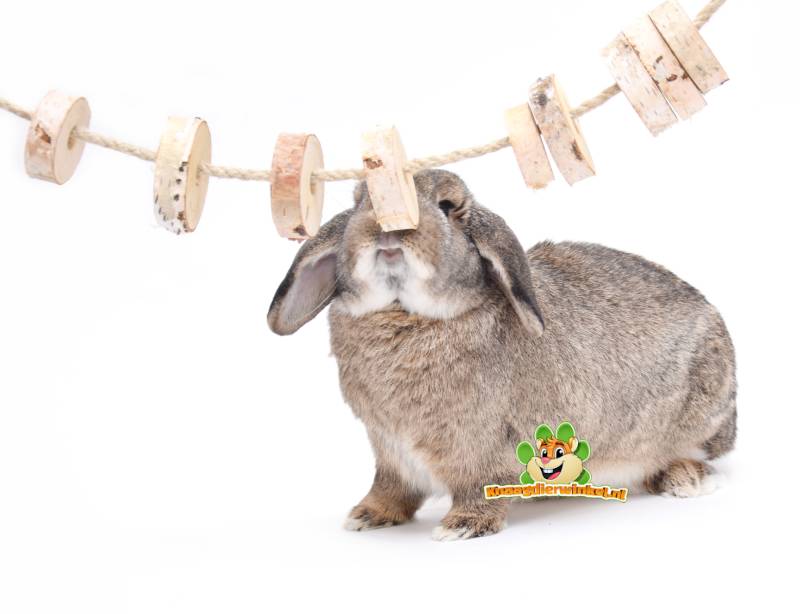 Chewing material for rabbits gives your rabbits something natural to nibble on, explore, and keep themselves occupied. Although rabbits are not rodents, they do have continuously growing teeth and a strong need to chew, nibble, and explore. In this category, you will find responsibly sourced gnawing wood, branches, willow, birch, hazelnut, apple wood, pear, and raspberry branches, gnawing toys, gnawing rolls, balls, and natural enrichment.
At DRD Knaagdierwinkel®, we view gnawing material as part of the daily setup. Hay remains the most important basis for chewing and the daily diet, but suitable gnawing material provides extra variety and activity. Combine gnawing wood and branches with rabbit hay , play & foraging , rabbit houses , and a logically arranged rabbit room or run.
✓ In short: gnawing material gives your rabbits a natural way to nibble, explore, and be occupied.
✓ Hay remains the most important foundation; gnawing wood, branches, and gnawing toys are valuable additional enrichment.
✓ Prefer responsibly selected gnawing material over just branches from the garden, park, or roadside.
Quick links:
Why gnawing material? · What can you find here? · Wood types & branches · Which gnawing material is suitable? · Responsible use · Gnawing on furniture · Combining · Inspection & maintenance · Handy shopping routes · FAQ
Natural snacking
Chewing wood and branches align with the natural behavior of rabbits to explore, pull, and nibble.
Enrichment
Varying shapes, wood types, and textures keeps the interior more interesting.
Smart alternative
Suitable gnawing material gives your rabbits a better choice than baseboards, furniture, cables, or the edges of the enclosure.
Why do rabbits need gnawing material?
Rabbits have a need to chew, nibble, and explore. Hay is the most important daily staple for this, as rabbits chew on it for a long time and it should be available all day long. Chewing material is also a valuable addition: it provides variety, activity, and something suitable to nibble on.
Not every rabbit gnaws with the same enthusiasm. Some rabbits immediately grab willow branches or apple wood, while others are mainly interested in gnaw balls, herb-rich products, or foraging toys. Therefore, variety is important. By offering different shapes and types of wood, you discover what your rabbits enjoy using.
Chewing material helps with
✓ Offer natural nibbling behavior.
✓ Variety and activities during the stay.
✓ Offer safe alternatives for furniture, skirting boards, or edges.
✓ Stimulate foraging, pulling, sniffing, and exploring.
✓ Make the interior more interesting without taking up much extra space.
What can you find in this Rabbit Chewing Material category?
This category contains various types of gnawing material for rabbits. Think of branches, gnawing wood, wooden toys, chew rolls, filled products, willow balls, herb-rich gnawing products, and natural materials that combine gnawing and foraging.
Assortment in this category
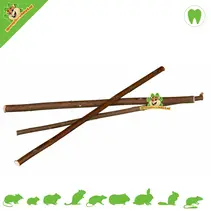
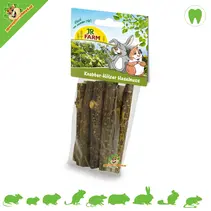
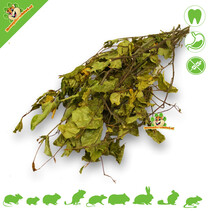
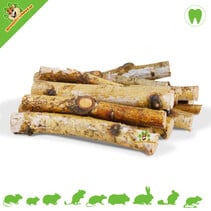
✓ Chewing wood and branches: for example willow, birch, hazelnut, apple, pear, raspberry, and other suitable types of wood.
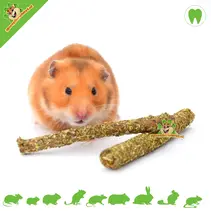
✓ Chewing toys: wooden toys, chew shapes, rolls, balls, and products to grasp or move.
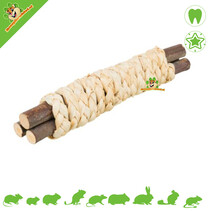
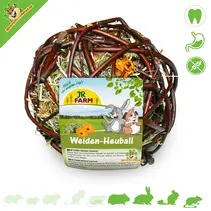
✓ Willow products: willow branches, willow balls, and woven products for gnawing and exploring.
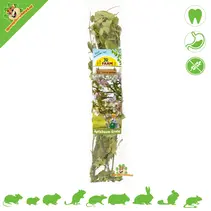
✓ Herb-rich chew products: wood or natural shapes combined with herbs, flowers, leaves, or vegetables.
✓ Foraging and snack products: products that combine searching, nibbling, and rewarding.
✓ Natural fiber products: grass, hay, straw, hemp, or other natural structures that provide extra variety.
Types of wood and branches for rabbits
Many rabbits find natural branches and wood interesting. The scent, texture, and hardness vary by type of wood. Willow is often popular, but birch, hazelnut, applewood, pearwood, and raspberry branches can also be interesting, depending on what your rabbits like to play with.
Vary the types, shapes, and textures of wood. Some rabbits prefer gnawing on thin twigs, while others prefer thicker pieces of wood or products with leaves, herbs, or flowers. By varying the selection, you will see more quickly which products are actually being used.
Willow
Popular as a branch, ball, roll, or woven product. Willow is often attractive due to its texture and chewable bark.
Birch
Sturdy gnawing wood that fits well in a natural interior and serves as variety alongside softer branches.
Hazelnut
Branches and sticks with a natural look. Interesting for rabbits that like to pull and nibble on branches.
Apple, pear and raspberry
Fruit tree and shrub branches can be particularly attractive due to scent, texture, and natural variation.
Which gnawing material suits your rabbits?
The best gnawing material is material that your rabbits actually use. Observe their behavior: do they like to gnaw on twigs, roll balls, pull on braided products, or do they prefer searching for herbs and leaves? By trying different shapes, you will discover what suits them best.
Also pay attention to the placement in the enclosure. Do not place gnawing material on a wet litter area, but in a dry, easily accessible place. In a rabbit room, gnawing material can help shift the focus from baseboards, furniture, and floor edges to products intended for that purpose.
Pay attention to when choosing
✓ Does your rabbit like to gnaw on branches, wood, balls, or woven products?
✓ Do you mainly want to gnaw, forage, or provide distraction?
✓ Is the size right for your rabbits and the space?
✓ Does the product remain dry and clean in the chosen spot?
✓ Can you easily check for wear, sharp pieces, or loose parts?
Responsibly sourced gnawing wood: preferably not just from the garden
Branches from the garden, the park, or the roadside may seem natural, but you don't always know what they have come into contact with. Think of pesticides, exhaust fumes, fungi, bird droppings, pollution, or plant debris that you would rather not have in the enclosure.
Therefore, choose gnawing material intended for animals and always inspect the product during use. Even responsible gnawing material must remain dry, clean, and free of sharp or broken parts.
Use responsibly
✓ Provide gnawing material in a dry place.
✓ Check for sharp pieces, breakage, and loose parts.
✓ Remove products that are wet, dirty, moldy, or severely damaged.
✓ Offer variety, but prevent the pen from being cluttered with loose products.
✓ Use snack- or herb-rich chew products as a supplement, not as a replacement for hay.
Rabbits that gnaw on furniture, baseboards, or edges
Chewing on furniture, baseboards, carpet edges, or run edges can have various causes. Sometimes it is curiosity, sometimes boredom, and sometimes simply because the material is in an attractive spot. Just saying “no” is usually not enough; your rabbits need a better alternative.
Make the space rabbit-proof and offer gnawing material in logical places. For example, place branches or gnawing toys along runways, near resting spots, or close to places where they would otherwise gnaw on edges. Combine this with plenty of hay, tunnels, hiding places, and foraging products.
Smart approach to unwanted gnawing
✓ Cover cables, plants, baseboards, and fragile furniture.
✓ Place attractive gnawing material in places where your rabbits like to play.
✓ Alternate branches, chew balls, willow products, and foraging products.
✓ Ensure enough space, tunnels, houses, and safe activities.
✓ Check if your rabbits are eating enough hay and are normally active.
Combine gnawing material with hay, tunnels, and foraging
Chewing material works best as part of a complete setup. Think of hay as a base, a hay corner, tunnels for routes, houses for rest, and chewing material in places where your rabbits like to be active. This way, you turn the space into a logically arranged enclosure, rather than a collection of loose items.
Chew products with herbs, flowers, or vegetables can be particularly interesting. However, use such products consciously as a supplement and keep the daily basics simple: plenty of hay, appropriate food, water, a toilet area, resting places, and safe enrichment.
Smart combination
✓ Hay + gnawing wood for a strong daily foundation with extra variety.
✓ Tunnel + gnawing material for an active route.
✓ Small house + branches for a quiet activity area.
✓ Foraging toys + herb-rich chewing products for searching and nibbling.
✓ Rabbit room + gnawing material to shift the focus to suitable products.
Inspection and maintenance of gnawing material
Chewing material is used, moved, moistened, gnawed on, and sometimes placed in the toilet area. Therefore, check regularly whether it is still clean and usable. Products containing herbs, flowers, or vegetables, in particular, can become less fresh more quickly if stored damp.
Natural products are allowed to wear out, but remove them when they become sharp, dirty, moldy, wet, or unstable. With wooden toys and braided products, pay particular attention to splinters, loose parts, and places where your rabbits could injure themselves.
Daily gnawing check
✓ Is the gnawing material dry and clean?
✓ Are there sharp splinters or broken parts?
✓ Are herb-rich products still fresh?
✓ Is the product being used, or is alternation needed?
✓ Is the product still suitable for the size and behavior of your rabbits?
Good to know
Chewing material is a supplement to the daily diet. Is one of your rabbits noticeably eating less, eating less hay, drooling, losing weight, or producing abnormal droppings? Then contact a veterinarian specializing in rabbits.
Handy shopping routes for gnawing material
Chewing material performs best in an enclosure with sufficient hay, space, shelter, and activity. Therefore, combine gnawing wood with the right basic products and enrichment.
Learn more about gnawing, teeth, and enrichment
Would you like to better understand how gnawing material fits in with teeth, hay, foraging, and indoor decor? Then read our information pages. This is how you choose gnawing material as part of a complete care routine.
Chewing material for rabbits · A rabbit's teeth · Rabbit hay selection guide · Foraging for rabbits · Setting up a rabbit room
Frequently asked questions about gnawing material for rabbits
Do rabbits need gnawing material?
Chewing material is a valuable addition to the daily routine. Hay remains the most important, but gnawing wood, branches, and gnawing toys provide extra activity and natural nibbling behavior.
What is suitable gnawing material for rabbits?
Suitable gnawing material consists of products intended for animals, such as gnawing wood, branches, willow, birch, hazelnut, apple wood, gnawing balls, rolls, and natural gnawing toys.
Are rabbits allowed branches from the garden?
It is better not to simply use branches from the garden, park, or roadside. You do not always know if they have come into contact with pesticides, pollution, fungi, or other unwanted substances.
Which types of wood do rabbits often find interesting?
Many rabbits respond well to willow, birch, hazelnut, applewood, pearwood, and raspberry branches. Preference varies from rabbit to rabbit, so variety is helpful.
Why does my rabbit gnaw on furniture or baseboards?
This can be due to curiosity, boredom, habit, or because the material is in an attractive spot. Make the space rabbit-proof and offer suitable gnawing material in logical places.
Is gnawing material enough for the teeth?
No, hay remains the most important basis for prolonged chewing. Gnawing material is a supplement for variety and natural nibbling behavior. A rabbit-specialist veterinarian should examine the rabbit if there are signs of dental problems.
How often do you give new gnawing material?
That depends on how vigorously your rabbits gnaw. Check daily that the material is clean, dry, and safe. Replace products that are wet, dirty, sharp, or severely damaged.
What if my rabbits don't use any gnawing material?
Try other shapes, types of wood, or textures. Some rabbits prefer thin twigs, others willow balls, herb-rich products, or foraging toys.
Can you combine gnawing material with foraging?
Yes, that often works very well. Think of chew products with herbs, willow balls, gnaw rolls, or products that combine searching, pulling, and gnawing.
Chewing material for rabbits at DRD Knaagdierwinkel®
At DRD Knaagdierwinkel®, you will find gnawing material for rabbits in many forms: gnawing wood, branches, willow, birch, hazelnut, apple wood, pear, raspberry branches, wooden toys, willow balls, gnawing rolls, and herb-rich gnawing products. This way, you can choose what suits your rabbits, their enclosure, and their way of being occupied.
✓ Chewing wood, branches, willow, birch, hazelnut, apple wood, and natural gnawing products neatly organized together
✓ Practical to combine with hay, tunnels, houses, rabbit room, herbs, and foraging
✓ Selection guide for wood types, use, variety, safety, and unwanted gnawing
✓ Internal routes to teeth, hay, foraging, and rabbit room setup
✓ Specialist since 2011
✓ Delivered from our own stock