Polski

Vole information – care, housing, nutrition & selection guide
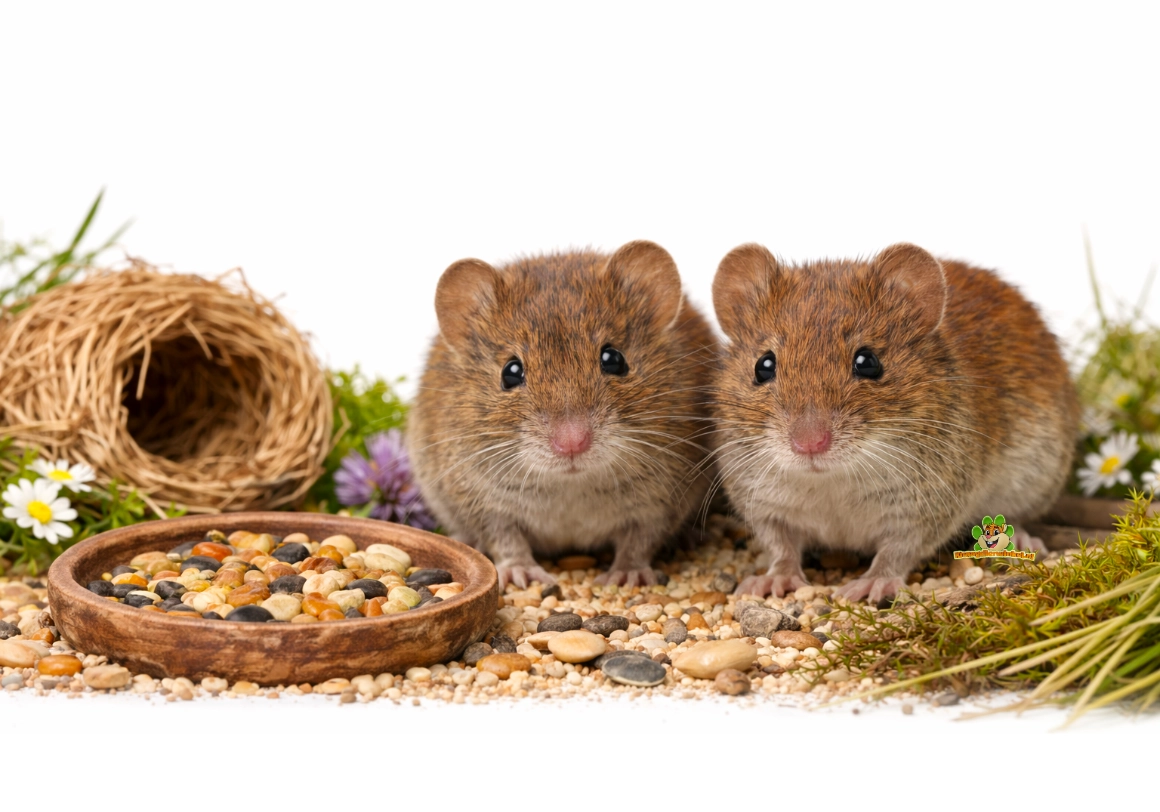 Voles (such as the Mediterranean vole and the steppe vole) are curious, active, and especially appreciative of a well-equipped enclosure: they dig, forage, create established routes, and build a safe nesting zone. They can get used to being handled, but are generally not cuddly. This comprehensive information page explains how to keep voles responsibly: group composition, terrarium/glass container and furnishings, substrate and nest, diet (with a focus on low-sugar options), handling, and hygiene. DRD Rodent Shop® has been a specialist since 2011 and helps you choose based on welfare, safety, and a well-designed enclosure.
Directly to the Mouse shop:Mice (all) · Mouse cages & enclosures · Mouse bedding · Mouse food · Playing & foraging · Gnawing material
Quick to:
Vole checklist (quick, good basic)
- ✓ Keep voles social (not solitary) and provide multiple hiding places, routes and at least two food/water points.
- ✓ Preferably choose a glass tank/terrarium with plenty of floor surface; for two animals , at least approximately 80 × 40 × 40 cm is a practical starting point (bigger = better).
- ✓ Create a deep digging layer : at least 10 cm, preferably 20 cm, with a tunnel-resistant mix (low-dust bedding + hay/straw).
- ✓ Set up safely: heavy stones/houses on the ground (not "floating"), shelters (wood/stone), buried tunnels, gnawing material and simple enrichment.
- ✓ Feed low-sugar : small daily portions of seed mix + plenty of greens (grass/herbs/leaves). Be careful with sweet/root vegetables and avoid fruit.
- ✓ Smart hygiene: remove leftovers/damp spots daily, spot clean the toilet corner, and only partially refresh it periodically (not everything at once).
✓ Digging = well-being
Voles naturally live in burrow systems. A deep, solid substrate and buried routes make their habitat truly logical.
✓ Low-sugar feeding
Basics: seeds + greens (grass/herbs/leaves). Keep treats small and choose primarily herbaceous rather than sweet options.
✓ Handle gently
No stuffed animals: let them walk in a potty or climb onto your hand on their own. This reduces stress and often increases trust.
Mouse species – information pages
"Mouse" is a collective term. The species, behavior, and size determine what makes sense for housing, feeding, and furnishings. Also see our species pages:
- Colored Mouse – Information
- African Harvest Mouse – information
- Dormouse – information
- Spiny mouse – information
- Field mouse – information
- Vole – information
Vole as a Pet – Is It Right for You?
Voles are especially suitable if you enjoy observing : tunneling behavior, foraging, nest building, and "family peace" in a social group. They can get used to your presence and sometimes eat from your hand, but don't expect an animal that enjoys being picked up. A vole habitat is therefore all about space, digging depth, and structure , not about "heavy handling."
Also useful to know: voles dig a lot, so a habitat with deep bedding is more important than height or climbing frames. They are also sensitive to heat ; a cool, stable location (out of direct sunlight) is essential.
Behavior & keeping together
Voles naturally live in burrows and communicate extensively through scent and sound. A good enclosure will show established routes, a nesting chamber, and a clearly defined toilet area. They are often active at dusk, but can also be active during the day (especially if the house is quiet).
Social care: voles are social animals. Therefore, don't keep them alone, but in a suitable pair or group. Group tranquility is achieved through sufficient space, multiple entrances/hiding routes, and more than one of each (houses, feeding stations, and watering stations).
To prevent unwanted litters, keep groups of animals of the same sex, or seek advice beforehand about a safe combination (and consult an experienced veterinarian if you are considering a mixed combination).
Housing & furnishings (terrarium-oriented)
A glass tank/terrarium usually works best for voles, as this allows you to create a truly deep digging layer without everything being dug out. Pay particular attention to floor space and a stable layout. A starting point for two animals is approximately 80 x 40 x 40 cm ; bigger is always better.
Cage or cage? Wire cages are often less suitable because the bottom tray isn't deep enough and voles can make themselves surprisingly flat. If you do choose wire cages, make sure everything is escape-proof and that there are no drafts in the enclosure.
Design that actually works:
• Buried tunnels (cardboard, PVC pipe or stone pipes) + lots of digging equipment.
• Shelters made of wood or stone (preferably not plastic).
• Platforms (e.g. stone/wood) to raise food and water bowls so that they are less likely to become covered in dust.
• Gnawing material (willow/hazel) and simple enrichment (toilet rolls, foraging material).
• Place heavy items on the bottom so they cannot be “dug over”.
Wheel (optional): A wheel can provide additional exercise, but always choose a closed wheel without spokes and a size that doesn't arch the back. For multiple animals, it's best to use more than one wheel and position it so it's not directly buried.
Temperature & cooling: Voles do not tolerate heat well. Never place the enclosure in direct sunlight. On hot days, you can provide cooling with a cool rock (put in the refrigerator for a while) or a frozen bottle (wrapped in a cloth). Remove wet areas and ensure adequate ventilation.
Practical starting points: Mouse cages & enclosures · Cage accessories · Platforms & ladders · Tunnels · Houses · Play & foraging · Gnawing materials
Water & feeding: Use a heavy stone bowl or a chew-resistant bottle and check daily. Links: Food bowls · Drinking bottles & water bowls
Ground cover & nest (deep, tunnel-proof, dust-free)
A vole enclosure depends entirely on the bedding. Choose a dust-free bedding mix with hay and straw to help maintain burrows. Make the layer at least 10 cm deep, but preferably 20 cm. In part of the enclosure, you can (if you prefer) create a natural "ground zone" with a mix of unfertilized soil and sand.
Extra tip: lay (parts of) tunnels in advance and dig them in. Voles often quickly adopt routes and then continue building.
Nesting material: Provide safe, easy-to-use nesting material. Avoid "cotton wool," synthetic nesting material, and long fibers that can entangle animals. Choose your route here: Mouse bedding · Mouse nesting material
Food & snacks (low sugar is the basis)
Voles naturally eat mainly grass, moss, root parts, shoots, seeds, herbs and leaves , sometimes berries and occasionally animal food (such as insects). They are accustomed to a diet low in sugars . Therefore, as a pet, it is best to work with: (1) a small portion of seed mix, (2) daily greens, (3) always fresh water, and (4) occasional animal protein.
Practical feeding schedule (handy starting point):
• Seed mix: approximately 1 teaspoon per day per animal (e.g. canary/parakeet/tropical finch seed, possibly combined with a suitable rodent food).
• Greens: grass, herbs, and vegetables. Think of leafy greens like endive and chicory, plus (dried) herbs.
• Extras: 1x per week a mealworm/cricket or a small piece of cat food (very limited).
• Avoid (usually): fruit (quickly too much sugar). Treats should be small and "herbal"; perhaps occasionally a sunflower seed or raisin.
Hay & gnawing: Hay should always be available (also for nibbling and nest building). Also provide safe branches, such as willow or hazel.
Useful categories: Mouse food · Hay, herbs & seeds · Mouse snacks · Foraging & enrichment
Handling & getting used to hands (gentle step-by-step plan)
Voles aren't usually tame enough to be picked up comfortably. The goal, therefore, is to move them safely and without stress, and to gradually get used to your presence.
- Week 1: Rest and routine. Place the enclosure in a quiet place, talk softly, and feed at set times.
- Week 2: Reward your hand. Hold your hand still in the enclosure with a small, suitable treat.
- Next: let them climb onto your hand. Need to move? Let them walk into a small box or jar and pick that up (usually the least exciting).
Biting/Nibbling: Don't be afraid of "test bites." This often reflects uncertainty or curiosity. Stay calm, avoid grabbing from above, and build trust with repetition.
Handy for quiet travel or a visit to the vet: Mouse transport boxes .
Health & prevention
Voles don't always readily indicate a problem. A quick daily check is best: food/drink, activity, fur, eyes/nose, breathing, and feces. If in doubt, it's wise to consult a (rodent-savvy) veterinarian early on.
Prevention in a nutshell: keep the enclosure out of the sun (heat!), avoid drafts, use dust-free materials, remove wet/decaying remains daily, and only change part of the bedding periodically to keep the group calm.
Practical categories: Mouse health · Mouse care
Read more (extra depth)
Want even more background information and practical examples? See also:
Useful Mouse Shopping Links (Most Relevant)
Accommodation & furnishings:
Mouse cages · Cage accessories · Houses · Tunnels · Platforms & ladders · Play & forage · Gnawing material
Bottom & nest:
Ground cover · Nesting material
Power supply:
Mouse food · Hay, herbs & seeds · Snacks
Practical:
Feeding bowls · Drinking bottles & water bowls · Transport boxes · Packages
For independent background information you can also consult the LICG on voles .
FAQ – Vole
Is a vole a cuddly toy?
Usually not. Voles can get used to being handled and will sometimes climb onto your hand, but picking them up or cuddling them is often stressful. Observing and enriching them are usually the most enjoyable.
Can you keep voles alone?
Preferably not: they are social animals. A compatible pair or group usually works more calmly, provided there's enough space and several hiding places.
What is a good habitat for voles?
A glass tank/terrarium with ample substrate and a deep digging layer. For two animals, approximately 80 x 40 x 40 cm is a practical starting point; bigger is better. Digging depth and structure are more important than height.
How deep should the ground cover be?
At least 10 cm, preferably 20 cm, with a tunnel-resistant mix (low-dust bedding + hay/straw). This allows them to create stable tunnels and nesting zones.
What do voles eat, and is fruit allowed?
The base is low-sugar: small portions of seed mix + daily greens (grass/herbs/leafy vegetables). Fruit is usually not a good choice because it tends to be too sugary.
How to clean your stay without stress?
Use a "spot clean" method: regularly remove the toilet area and wet areas, remove any spoiled material daily, and periodically replace only a portion of the bedding to ensure that some of the familiar smell remains.
Tip: Want to quickly choose from the selection? Start with the main Mice category:Mice .
✓ Carefully selected range for responsible farming
✓ Selection assistance and in-depth information from a specialist since 2011
✓ Practical tips for a deep, dust-free and safe excavation operation