 Polski

Play & foraging for rodents and rabbits
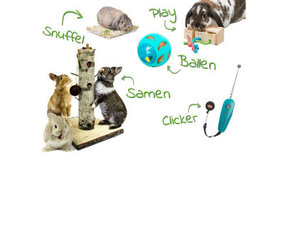


Play & foraging for rodents and rabbits
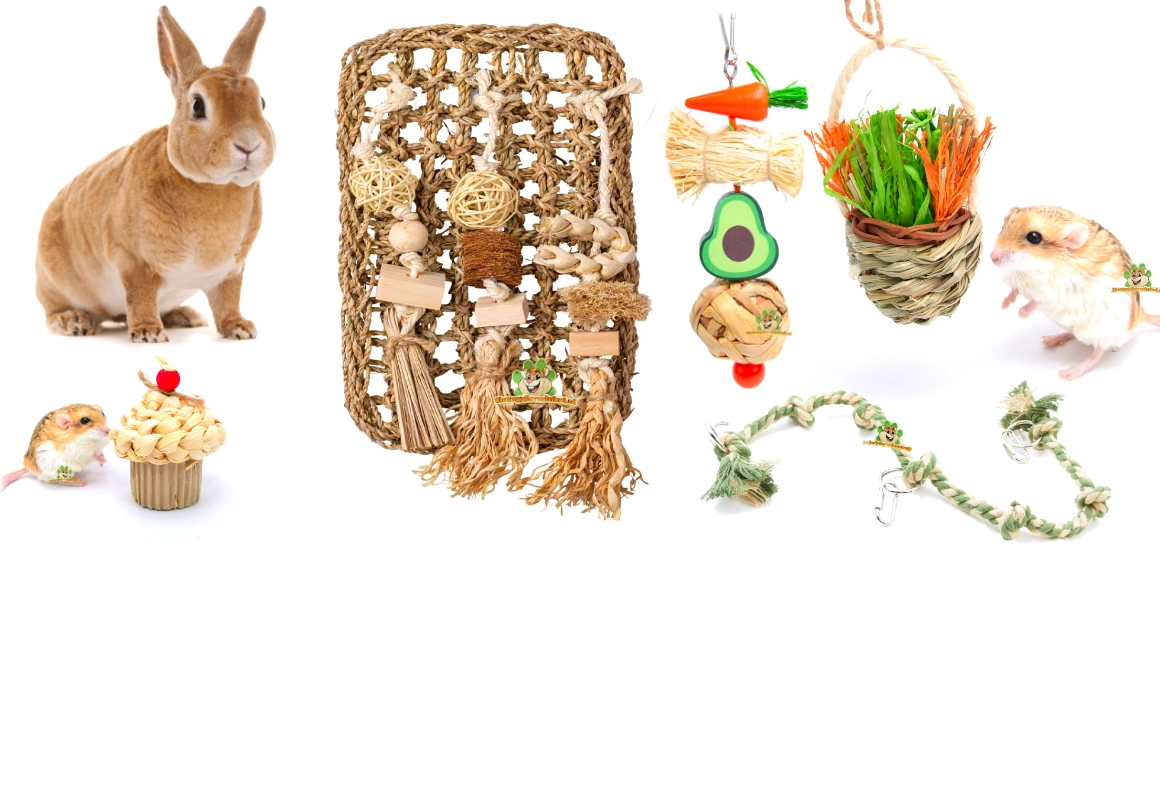 Do you want your rodent or rabbit to search, explore, gnaw, roll, pull, or destroy more? In the Play & Foraging category, you will find toys and enrichment for various animal species: from training & foraging and hanging toys to destroying toys , balls, and rolling .
When it comes to toys, DRD looks not only at “nice for the cage,” but primarily at what the product does for the animal. Foraging toys make searching for food more interesting, shredding toys accommodate gnawing and pulling behavior, hanging toys utilize height, and balls or rolls can stimulate movement and exploration. In this way, play becomes not a separate extra, but an integral part of a richer enclosure.
In short
✓ Playing & foraging helps animals to search, discover, destroy, roll, pull, and of course, be active.
✓ Choose toys based on animal species, size, material, use, and location in the enclosure.
✓ The best enrichment aligns with behavior: foraging, gnawing, digging, climbing, rolling, or playing together.
Quick links
Subcategories | Why forage? | By species | How to use it? | Combining | Checklist | Good to know | FAQ
Training & foraging
For searching, puzzling, rewarding, and engaging in activities together. Ideal for not just serving food in a bowl, but offering it as an activity.
Hanging toys
For animals that like to stretch, pull, climb, or discover something from above. Especially interesting for enclosures with height or hanging options.
Demolition toys
For animals that like to gnaw, pull, tear, or destroy. Great for entertainment and as a designated spot for natural destructive behavior.
Balls and rollers
For rolling, pushing, sniffing, and searching for food. Especially fun when your animal is allowed to move on its own to get to food or herbs.
Why is foraging so valuable?
Foraging means that an animal actively searches for food. In an enclosure, you can easily mimic this by not always placing food, herbs, hay, snacks, or small portions of vegetables ready-made in a bowl, but by hiding, scattering, or offering them in a suitable toy.
This enriches the daily routine. Your animal has to sniff, search, pull, roll, push, or think. As a result, mealtimes often take longer and the enclosure becomes more interesting. Especially for smart, curious, or active animals, this can make a big difference in their daily activities.
Foraging doesn't have to be complicated. Scattering a little food through the bedding, mixing herbs into hay, using a treat ball, or filling a safe shreddable product with a little tasty treat can be enough to turn eating into an activity.
Playing & foraging by animal species
Hamsters and dwarf hamsters
Hamsters love to search, hoard, dig, and sniff. Hide small portions of food in the bedding, in a foraging toy, or among natural decorations. Combine this with hamsterscaping , tunnels, and a well-furnished enclosure.
Gerbils
Gerbils are active diggers and destroyers. Destruction toys, cardboard, tunnels, foraging rolls, and sturdy natural materials suit their behavior well. Also check out gerbilscaping and gerbil play & foraging .
Mice
Mice love small routes, sniffing, searching, and lightweight toys. Foraging works well with small amounts of food, seeds, or herbs scattered throughout the bedding or hidden in safe, small toys. See also mice playing & foraging .
Rats and pygmy rats
Rats are smart and thrive on challenges. Consider foraging toys, hanging toys, digging boxes, shredding materials, puzzles, and searching. Sizes can vary among dwarf rats, so always choose toys based on size, strength, and intended use. Also check out rat play & foraging and Ratscaping .
Guinea pigs
Guinea pigs forage primarily using hay, herbs, snuffle mats, treat balls, treat rolls, and low search games. Don't make it too complicated: guinea pigs are ground animals and work best with low, stable products. See also guinea pig play & foraging .
Rabbits
Rabbits can have a lot of fun sniffing, digging, pushing, rolling, pulling, and searching for herbs or food. Think of treat balls, foraging rolls, digging boxes, hay enrichment, and low puzzles. Also check out rabbit play & foraging and rabbit training & foraging toys .
Chinchillas and degus
Chinchillas and degus are active animals that enjoy gnawing, foraging, and climbing. Choose sturdy toys that match their strength, size, and gnawing behavior. For chinchillas, a cool, dry environment remains important. For degus, pay extra attention to low-sugar treats and sturdy materials.
How do you use foraging toys?
Start simple. Don't put all the food in a difficult toy right away, but use small portions. For example, scatter some of the food through the bedding, tuck some herbs in with the hay, or fill a treat roll with a small amount of suitable food. This way, your animal learns gradually that searching pays off.
Alternate between easy and slightly more challenging. An animal that still needs to learn to forage can become frustrated if the reward is too hard to reach. Therefore, build it up step by step and see how your animal reacts. Some animals enjoy rolling, while others prefer pulling, digging, or searching through hay.
Use foraging primarily as part of the daily routine. Hiding a small amount of food, scattering herbs, or offering treats in a safe puzzle is often enough. However, ensure that extras are appropriate for your animal's diet and use snacks as a supplement, not as the main food.
Great to combine with playing and foraging
Hay
For guinea pigs and rabbits, hay is the perfect basis for sniffing and searching.
Natural design
Tunnels, cork, bridges, and natural routes make searching even more fun.
Checklist: choosing toys and foraging
✓ Does the toy suit the animal species and size of your pet?
✓ Does it align with natural behavior: searching, gnawing, rolling, pulling, destroying, digging, or climbing?
✓ Is the material suitable for your animal's chewing power and use?
✓ Can your animal start easily enough, without the toy being too difficult right away?
✓ Does the toy remain stable, even when your pet pulls, pushes, or chews?
✓ Can you remove food residue and thoroughly inspect the product?
✓ Does the reward fit with your pet's normal diet?
Good to know about playing & foraging
Start easy
An animal needs to learn that searching pays off. Therefore, start with simple hiding places and only make it more difficult when your animal understands what the goal is.
Use appropriate rewards
Choose food, herbs, or snacks that suit the animal species. For degus, for example, choose extra carefully and low-sugar. For guinea pigs and rabbits, hay and herbs can be used very effectively as a basis for foraging behavior.
Check for wear
Toys are used, pulled, rolled, chewed, or destroyed. Therefore, check regularly for sharp edges, loose strings, or damaged parts.
Vary your approach, but maintain an overview
You don't have to put everything in the enclosure at once. A few well-chosen activities and variety per day or per week often works better than an overcrowded cage.
Frequently asked questions about playing & foraging
What is foraging in rodents and rabbits?
Foraging means actively searching for food. In the enclosure, you can encourage this by hiding, scattering, or offering food, herbs, hay, or small snacks in a suitable toy.
Why is foraging good for rodents?
Foraging provides activity, stimulates natural searching behavior, and makes the daily feeding time more interesting. Your animal must sniff, search, push, roll, or pull to get to the food.
What toys are suitable for hamsters?
For hamsters, small foraging toys, tunnels, shredding material, natural decorations, and hiding food in the bedding are often very suitable. Always choose based on size and safety.
What toys are suitable for guinea pigs?
Low and stable products work best for guinea pigs, such as snuffle mats, treat rolls, low puzzles, and hay with herbs. Guinea pigs are ground animals, so high-hanging or complicated toys are not always logical.
Which toys are suitable for rabbits?
Rabbits often find digging boxes, treat balls, foraging rolls, tunnels, hay enrichment, and shredding material interesting. Choose sturdy products that suit the size and strength of your rabbit.
Is hanging toy suitable for all animals?
Hanging toys are particularly suitable for animals that use height, stretching, pulling, or climbing. For ground-dwelling animals such as guinea pigs and rabbits, low products are often more logical, unless the toy hangs low and is easily accessible.
Can I just use regular food in foraging toys?
Yes, often a portion of the normal daily diet is actually very suitable. This makes foraging for food more fun without immediately giving extra snacks.
How often do you rotate toys?
There is no fixed rule for this. Switch things up when you notice your animal showing less interest, or use toys in rounds: a few days of this, then something else. This keeps the enclosure interesting and manageable.
Buy toys & foraging at DRD Knaagdierwinkel®
At DRD Knaagdierwinkel®, you will find toys and foraging products for rodents and rabbits that help make their enclosure more active, richer, and more interesting. We select based on application: searching, training, destroying, rolling, hanging, gnawing, digging, and of course, being active.
Do you want to look further specifically? Then go to Training & Foraging , Hanging Toys , Destructible Toys , Balls and Rolls , or combine with Herbs and Snacks .
✓ Specialist since 2011 in enrichment, foraging, and species-specific activities
✓ Carefully selected assortment: DRD chooses what is truly right for the animal, enclosure, and use
✓ Delivered from our own stock and shipped from the Netherlands to the Netherlands, Belgium, Germany, and other EU countries
