 Polski

Training and Foraging for Rodents and Rabbits




- Voor 17 uur besteld, dezelfde dag verzonden!
- Rodent specialist since 2011
- Dispatched from our own stock



- Voor 17 uur besteld, dezelfde dag verzonden!
- Rodent specialist since 2011
- Dispatched from our own stock
Training & Foraging for Rodents & Rabbits
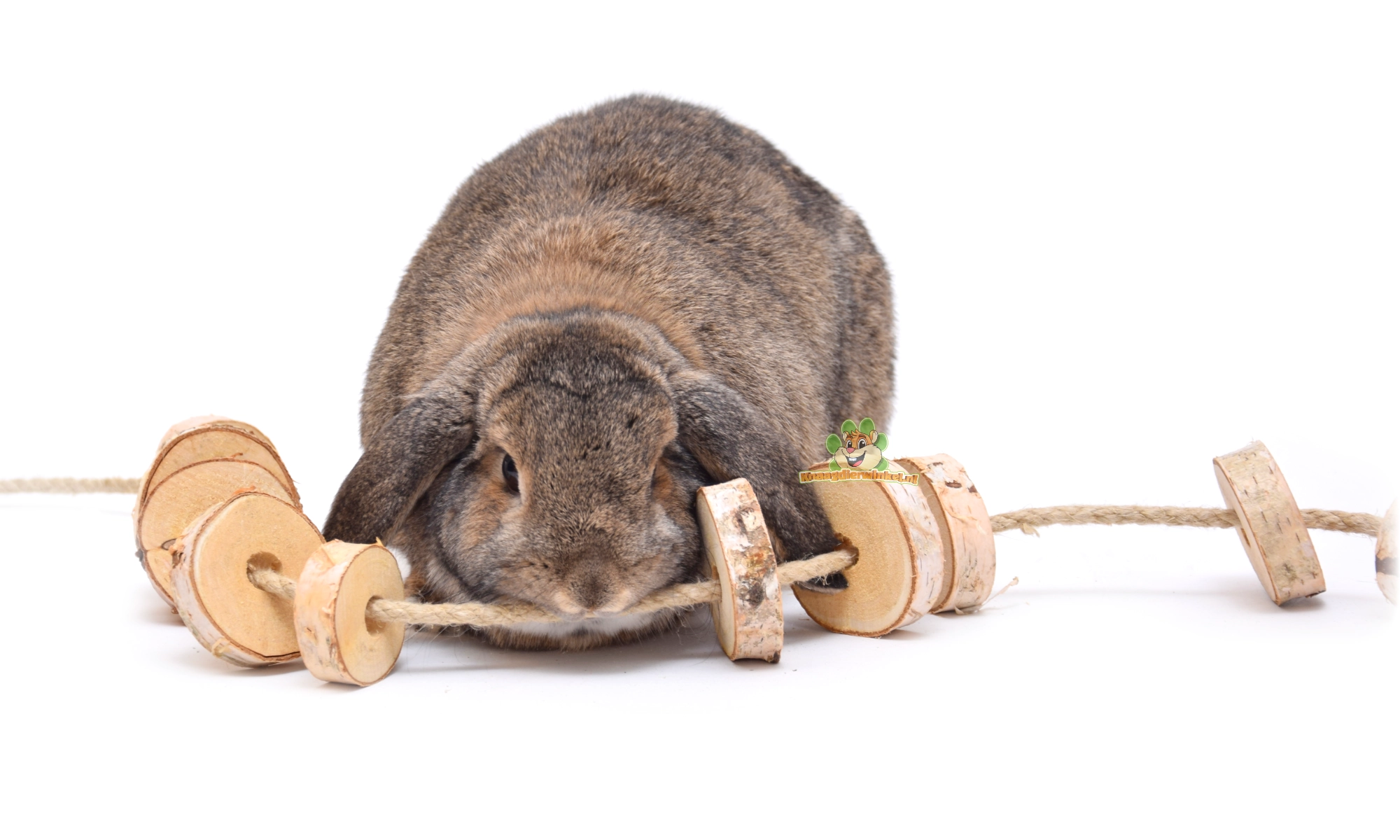 Training and foraging are great ways to spend time together and make daily feeding time more interesting. Many animals enjoy searching, pushing, pulling, or solving a "puzzle" for a reward. With the right level of difficulty, you can work on variety and attention, without it having to be complicated. Specialist since 2011.
Finding food becomes an activity.
From easy to more challenging.
Puzzles, snack balls and sniffing mats.
Training & foraging in brief
- Foraging makes your animal work for (part of) its daily food: searching, pushing, pulling or sniffing.
- Training is cooperation with clear rewards at the right time.
- Best start : 2–3 minutes, easy task, small reward, then a break.
- Helpful : A fixed “reward marker” (e.g. clicker or short word) helps with timing.
How does reward training work?
Training works best when you keep it small. You reward the behavior you want to see, so your pet understands what's expected. This can be done with a mini-snack, but often a small portion of their daily food is also suitable.
- Step 1: Choose 1 easy goal (e.g., touching a target, following quietly, or nose-to-nose with a ball).
- Step 2: Mark the right moment (click or short word) and give a reward immediately afterwards.
- Step 3: Repeat 3–6 times and stop while it's still fun.
- Step 4: Only make it harder when it becomes easy.
A clicker can help because the sound is very recognizable and comes at just the right time. For example, check out our clicker .
Types of foraging toys
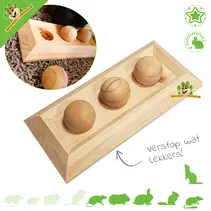
- Snack balls & food balls: animal rolls/pushes to get food out.
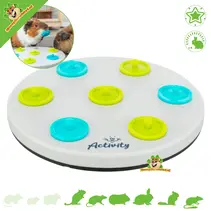
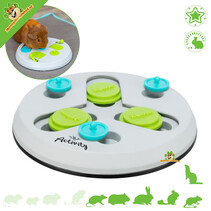
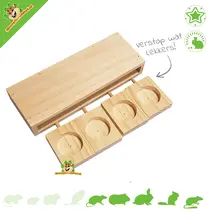
- Brain games: slide, lift or open flaps for a reward.
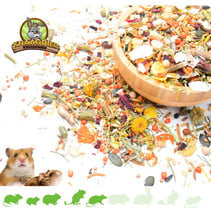
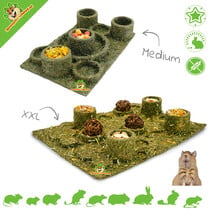
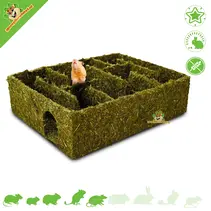
- Snuffle mats: hide small portions and let your pet search for them.
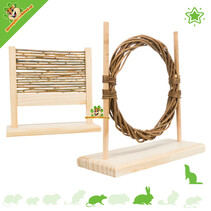
- Agility & Targets: Working together and practicing steps (e.g. following, touching target).
Which animals is training and foraging suitable for?
- Rabbits: Often very suitable for target and clicker training, plus brain games.
- Guinea pigs: generally enjoy quiet puzzles, sniffing mats, and easy-to-dispense food balls.
- Rats: Smart and curious; puzzles and training can be a lot of fun.
- Hamsters: primarily foraging and searching in/through materials; choose a low, stable environment.
- Chinchillas & degus: foraging is great, but choose sturdy materials and check for wear and tear.
Helpful addition: choose rewards appropriate for your pet. For rabbits, you can find treats here: rabbit treats .
Checklist: How to choose a good start
- Difficulty: start easy, build up later.
- Reward: small and immediate (preferably also part of the daily diet).
- Size: Toys should fit your pet and its habitat.
- Material: suitable for gnawing behaviour and easy to clean.
- Frequency: Short sessions work better than long ones.
Practical tips
- Keep it short: 2–5 minutes is often enough for a nice session.
- Stop on a success: this will keep your animal motivated for the next time.
- Vary: Change toys each week to keep things interesting.
- Observe: some animals like to sniff, others like to push/roll.
Maintenance
- Check weekly: loose parts, cracks, splinters or rough edges.
- Cleaning: plastic/metal according to product information, always allow to dry thoroughly.
- Wood/cardboard: wet or sticky? Replace.
Safety
- No long loops/cords: choose safely designed toys and fasten them securely.
- Hamsters: prefer low and stable, no high structures as their main activity.
- Reward: Small portions; extras remain supplementary.
- Wear and tear: check more often for strong rodents (degu/chinchilla).
FAQ Training & Foraging
My pet doesn't understand the game. What now?
Make it easier: a larger opening, fewer steps, or hide food "half-visible." If your animal is successful, you can build up the number of steps.
How often can I train?
Short sessions (a few minutes) a few times a week work well for many animals. Look for attention and motivation.
Do I always need snacks?
No. You can also use a portion of the daily feed. This is often practical and helps delay mealtimes.
