Polski

Hamster information: care, housing, food & behavior (hamster and dwarf hamster)

























Hamster information (hamster & dwarf hamster) – care, housing, food & behavior
 This hamster information page provides everything you need to know as a hamster owner: which species is right for you, how to logically structure an enclosure, important feeding practices, and how to approach taming, care, and cleaning. It's practical, clear, and focused on daily life with a hamster. DRD Rodent Shop ® has been a specialist since 2011.
Directly to the Hamster shop: Hamster (all) · Hamster cages & terrariums · Hamsterscaping · Ground cover · Sand & sand bath · Exercise wheels · Houses · Nesting material · Hamster food · Snacks
Short answer: what does a hamster really need?
- ✓ A spacious enclosure with plenty of floor space and a logical layout (sleeping, digging, running, sand bath).
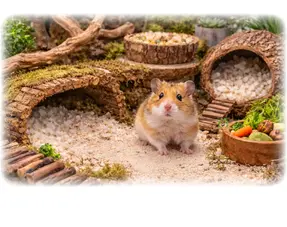
- ✓ A deep, diggable substrate (for tunnels and hiding) that suits your species.
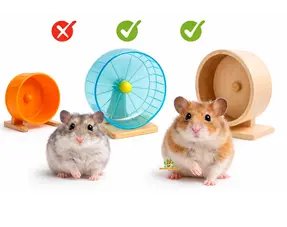
- ✓ A running wheel with a closed running surface in the right size, so that the back remains straight.
- ✓ Hiding routes: multiple houses/tunnels so your hamster can move around safely.
- ✓ Food appropriate for species and age, plus foraging as enrichment.
- ✓ A quiet routine (do not wake up during the day) and maintenance that is primarily “spot-clean”.
Get started quickly with the most important selection aids: cage · bedding · wheel · taming .
Quick to:
- Which hamster is right for me?
- Hamster species (information per species)
- Selection aids: cage, floor, furnishings, wheel, food
- Hamsterscaping (for beginners)
- Behavior & Handling (taming, biting, sleep)
- Care & routine (cleaning, nails, condition)
- Checklist for beginners
- Safety (run-out & common mistakes)
- FAQ
✓ Get started right faster
You build it step by step: habitat, digging zone, hiding places, wheel, and food. No unnecessary items, just a solid foundation.
✓ Selection aid per subject
Cage, bedding, furnishings, wheel, food, snacks and sand bath clearly explained with practical tips.
✓ Calm, practical approach
Focus on natural behavior: digging, hiding, foraging, and running safely. This is often the most relaxing.
Which hamster is right for me?
The best match usually lies in expectations: do you want to see active behavior primarily in the evening and gently establish contact? Or are you looking for a smaller, faster animal that you primarily observe? The basic rule is:
- Golden hamster (Syrian hamster): larger, often somewhat calmer to approach, but not active. Solitary.
- Dwarf hamsters: smaller and faster. Often primarily active at dusk/dawn; some are awake for short periods throughout the day.
You read a lot of different things online about keeping hamsters together. In practice, hobbyists often experience problems due to stress, territorial issues, and tension between them. Therefore, one hamster per enclosure is the most stable base in most situations (always for golden hamsters and Chinese dwarf hamsters).
Hamster species: information per species
Click through to the species page for characteristics, daily rhythm, basic setup and species-specific tips.
Larger size, late active, solitary. Tips for cage, wheel, substrate, and hamster scaping.
Small and lightning-fast; primarily an observation animal. Design revolves around hiding places and safety.
Popular species; often lends itself well to gentle contact.
Active and curious. In practice, the layout and choice of food often make a big difference.
Slender body and relatively long tail; keeping it solitary is the safest option.
Species confusion? See also: difference between Russian dwarf hamsters and Campbell's dwarf hamsters · difference between Russian dwarf hamsters and Chinese dwarf hamsters
Interested in the wild hamster (corn wolf)? It's a very different animal than the hamster species kept as pets. Read: Hamster (corn wolf) – background information
Selection aids: from cage to food (logical progression)
A good hamster start is primarily a logical structure: first the substrate, then the digging layer, then the hiding places, and only then the details. Use our selection guides by topic:
- Hamster cage selection guide (size, type of enclosure, ventilation & zones)
- Ground cover selection aid (diggable, tunnel-resistant, combinable)
- Design selection aid (shelter routes, zones, materials)
- Running wheel selection guide (size, closed running surface, safe running)
- Hamster food selection guide (golden hamster)
- Dwarf hamster food selection guide
- Snack selection guide (reward & foraging)
- Animal protein choice guide (when, which types & how much)
- Sand bath selection guide (sand, tray, placement)
Hamsterscaping: Natural Behavior as a Foundation (for Beginners)
Hamsterscaping is essentially simple: you build the enclosure so your hamster can dig, hide, forage, and run safely. Just starting out? Start with zones: sleeping zone (dark & quiet), digging zone (deep), running zone (wheel), and grooming zone (sand bath).
Read the complete hub: Hamsterscaping for beginners and then tackle the design practically via: Hamsterscaping (shop) · Play & foraging · Gnawing material
Behavior & Handling: Taming, Biting, Sleeping Patterns and Outdoor Access
- Taming a hamster – building trust slowly
- Preventing hamster biting – signals, pace and safe handling
- Hamster Sleep & Wake – What Works/What Doesn't
- Hamster Run Safely – Practical Checklist for a Safe Run
Care & routine: cleaning, nails and condition
Hamsters often do best with a consistent, calm routine. Not too much fuss, but carefully maintained. Helpful information pages:
- Cleaning a hamster cage – spot cleaning & periodic maintenance
- Hamster nail clipping – when and how safe
- Hamster weight & condition – practical observation and adjustment
Checklist for beginners: get the basics right the first time
- ✓ Choose a suitable enclosure (floor space first, then arrange) – start with the hamster cage selection guide
- ✓ Create a deep digging zone with excavatable ground cover – ground cover selection guide
- ✓ Build shelter routes (multiple shelters) – design selection aid
- ✓ Choose a running wheel that fits (size + closed running surface) – running wheel selection guide
- ✓ Set up a sand bath and keep it clean – sand bath selection guide
- ✓ Choose basic food that suits your species and use food as enrichment – hamster food / dwarf hamster food
Safety: Common Mistakes (and How to Avoid Them)
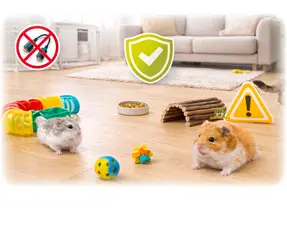
- Hamster ball: preferably not. A hamster orients itself differently than we do, and in a ball, it lacks control and hiding places. Read: Hamster ball: a good idea?
- Run: Only in a safe space or enclosure, without cracks or height differences. Check: Hamster Run Safe
- Insufficient bedding: hamsters are diggers. Provide a proper digging zone. Start with: bedding selection guide
- Clean everything "sterilely" at once: use spot cleaning and always leave some familiar scents untouched. Read: Cleaning a hamster cage
FAQ – Hamster information
Which hamster is best suited to establish calm contact?
This varies depending on the animal and the approach. Many people gradually establish contact with a Syrian hamster, but dwarf hamsters can also get used to it easily if you respect the pace and rhythm. Start with: hamster taming .
Can I wake up my hamster during the day?
Preferably not. Hamsters are most active in the evening/night. If you must check something: speak softly, dim the lights, and keep them short. See: sleeping & waking them .
How often should I clean the cage?
Spot clean (remove wet spots) and periodically do a more thorough cleaning, without sterilizing everything. This keeps things fresh and calm. Read: cleaning your hamster cage .
What's a good start if I want to get into hamster scaping?
Start simple with zones and hiding places and expand from there. Hub: Hamsterscaping for Beginners .
I'm unsure about food and snacks. Where do I start?
First, choose a suitable base, then add snacks/protein for enrichment. See: hamster food selection guide and snack selection guide .
Do you have a question that isn't listed here? Feel free to contact us via our service page: Customer Service .
✓ Specialist since 2011 ✓ Clear selection aids ✓ Practical, well-thought-out range