Polski

Spiny mouse information – as a pet, care, terrarium, food & selection guide
Spiny mouse information – as a pet, care, terrarium, food & selection guide
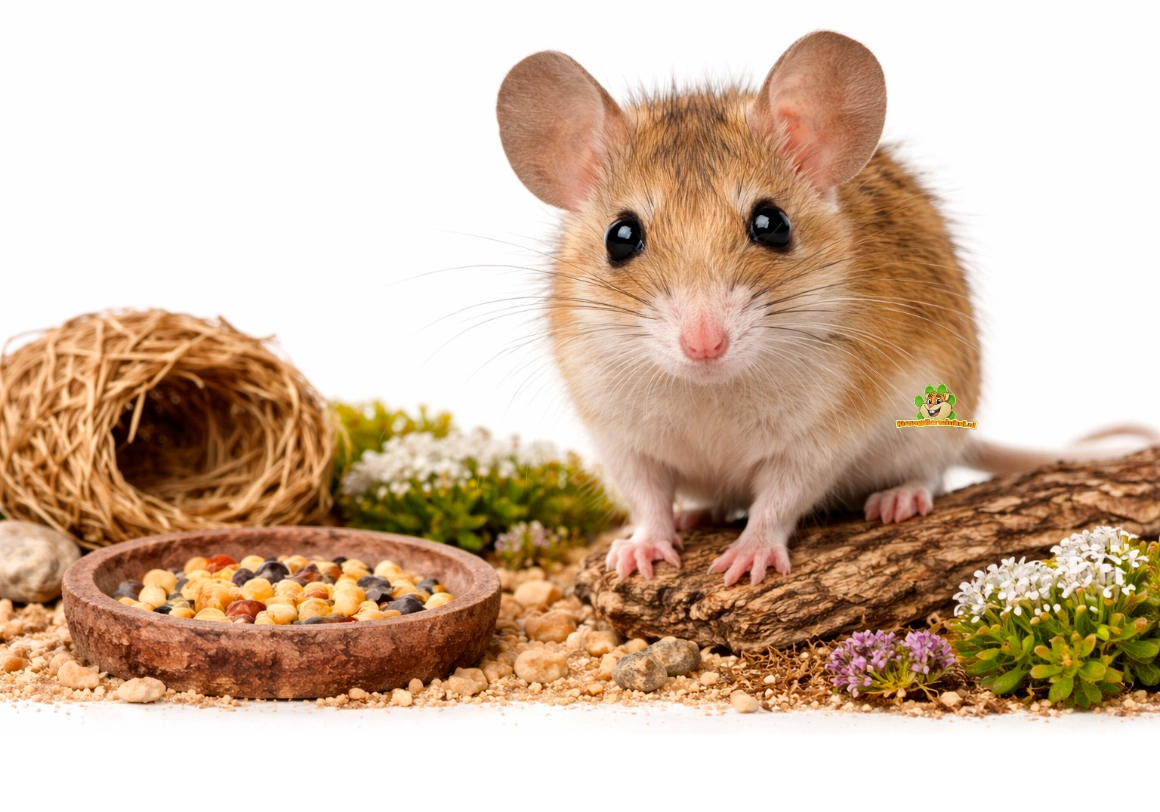 The spiny mouse (Acomys – "spiny mouse") is an interesting small rodent with a distinctive, firm, and straight coat on its back. It's generally a spectator animal: spiny mice don't often become truly tame and don't enjoy being handled frequently. In return, you do get to see beautiful, natural behavior: foraging, climbing, building routes, sleeping together, and curious exploration (often especially at dusk and night). This comprehensive information page explains how to keep spiny mice responsibly: group composition, safe terrarium/aquarium, warmth & humidity, substrate & nest, diet with animal protein, moving/transport, and health. DRD Rodent Shop® has been a specialist since 2011 and helps you choose based on well-being, safety, and a logically designed habitat.
Directly to the Mouse shop:Mouse (all) · Mouse cages & enclosures · Mouse bedding · Mouse food
Quick to:
- Mouse species (information pages)
- Spiny Mouse Checklist (Quick, Good Basic)
- Spiny Mouse as a Pet: Character & Suitable for Whom
- Behavior & keeping together
- Housing & furnishings (terrarium/aquarium + heat)
- Ground cover & nest
- Food & snacks (not too fatty, with proteins)
- Handling & moving (safe)
- Health & prevention
- Useful shopping links (Mouse)
- FAQ
Spiny Mouse Checklist (Quick, Good Basic)
- ✓ Always keep spiny mice social : a small, stable group with multiple hiding places and “more than one” of everything.
- ✓ Choose a safe terrarium/aquarium (glass is ideal) with a sturdy lid/mesh and good ventilation.
- ✓ Provide comfortable warmth and control (thermometer); avoid drafts and direct sunlight.
- ✓ Use low-dust bedding and provide safe nesting material (no “cotton wool”, no long fibers).
- ✓ Do not feed too much fat : a good basic diet + controlled extras and animal proteins (insects) in moderation.
- ✓ It is better to move with a container/box than to pick up the dog; never pick up the dog by the tail or scruff of the neck.
✓ Viewing animal with character
Spiny mice are curious and active, but not usually cuddly. Rich furnishings equal fun behavior to observe.
✓ Warm & dry comfort
This species generally thrives in stable heat and moderate humidity. Avoid drafts and temperature fluctuations.
✓ Feed smart (non-greasy)
Overly fatty snacks and seeds are a pitfall. A good foundation, foraging, and protein supplements will keep your diet balanced.
Mouse species – information pages
Not every mouse is "the same." Species, temperament, and size determine what makes sense for housing and feeding. See also:
- Colored Mouse – Information
- African Harvest Mouse – information
- Dormouse – information
- Spiny mouse – information
- Field mouse – information
- Vole – information
Spiny Mouse as a Pet: Character & Suitable for Whom
Are you looking for an animal you can observe quietly and that's primarily active at night? Then a spiny mouse might be a good fit. If you're expecting a "tame" cuddly toy, this usually isn't the right choice. Spiny mice can get used to people and sometimes eat from your hand, but they often find being picked up frequently a biting and can also bite when stressed.
Who does it work for? For enthusiasts who enjoy looking, decorating, enriching (foraging), and calmly caring for them. Who doesn't? For (young) children or if you like to handle a lot. In that case, a different, more domesticated species often makes more sense.
Behavior & keeping together
Spiny mice are social, group animals . A good enclosure demonstrates cooperation, shared sleeping arrangements, and clear routes. Group tranquility is fostered by sufficient space, multiple hiding places, and more than one food and water station.
Practical tip for group stability: start with animals that have already grown up together (e.g., littermates). Changes in a group often cause unrest, so ensure a stable composition and a setup with plenty of alternatives.
Watch for signs: persistent hunting, trapping, bite wounds, animals that are reluctant to eat or constantly "stuck." Often, more space, additional hiding places, additional feeding areas, and a more relaxed maintenance routine help.
Housing & furnishings (terrarium/aquarium + heat)
A glass habitat (aquarium/terrarium) often works best for spiny mice: it keeps the climate more stable, and glass is more resistant to gnawing than many plastics. Choose a model with a sturdy lid and good ventilation (e.g., sturdy mesh), and avoid gaps through which they can crawl.
Size (practical guideline): For a small group, a large surface area is important. A minimum of about 80 × 40 × 40 cm is often suggested for a small group, but bigger is always better (more routes, less stress, more enrichment).
Heat & Climate: Spiny mice generally thrive in a somewhat warmer , stable environment. It's best to use a thermometer (and possibly a hygrometer) to maintain control. Place the enclosure draft-free and out of direct sunlight. Always ensure that animals can choose between "warmer" and "cooler" in the enclosure (no forced heat without alternatives).
Furnishings: Make it exciting and safe: multiple hiding places, tunnels, wooden bridges, ropes/climbing opportunities, and sturdy platforms. Always place heavy items securely. A running wheel is an option, but choose a safe, closed model with sufficient diameter (so the back doesn't arch). Enrichment through foraging and varied furnishing is equally important.
Practical starting points: Mouse cages & enclosures · Cage accessories · Houses · Tunnels · Platforms & ladders · Exercise wheels · Play & foraging · Gnawing materials
Water & feeding: Use sturdy bowls and check daily. Multiple feeding stations create a calm environment within a group. Links: Feeding bowls · Drinking bottles & water bowls
Ground cover & nest
Choose substrate that is dust-free and comfortable for paws. Spiny mice thrive on (depending on your setup) clean sand or other dust-free, absorbent materials. Avoid very dusty substrates and choose materials that keep the enclosure fresh.
Nesting material: Provide safe, easy-to-use nesting material. Avoid cotton wool, synthetic fibers, and long threads that can entangle animals. Also, provide plenty of hiding places (tunnels/houses) so they always have a place to retreat.
Choose your route here: Mouse ground cover · Mouse nesting material
Be smart about hygiene: it's better to frequently "spot clean" (wet areas, food scraps) than to sterilize everything every time. Always leave some of the familiar, clean bedding in place to reduce stress for the group.
Food & snacks (not too fatty, with proteins)
Spiny mice naturally eat both plants (seeds/greens) and animals (insects). A good foundation is therefore a complete mouse diet, supplemented with small amounts of protein (e.g., insects) and a controlled variety.
Important: Spiny mice can be sensitive to foods that are too fatty or too sugary . Keep treats small and opt for "smart" enrichment (foraging) rather than too many extras.
Practical feeding tips: Scatter some of the food throughout the enclosure (foraging). This provides challenge, exercise, and prevents selective eating. See also: Playing & foraging .
Useful categories: Mouse food · Hay, herbs & seeds · Mouse snacks · Dried fruit & vegetables
Gnawing needs: provide safe gnawing material (e.g. suitable branches/gnawing items) to keep the teeth active: Mice gnawing material .
Handling & moving (safe)
Spiny mice are fast animals that usually don't like being picked up. Therefore, choose safe transport instead of "handling": let them walk in a box or small jar and move them gently.
- Approach calmly and predictably; no quick hand movements from above.
- Use a jar/box as a “shuttle” when cleaning or going to the vet.
- Never grab the animal by the tail or the scruff of the neck; the skin can easily become damaged.
- Keep moving low above the ground (risk of falling) and close the enclosure immediately.
- Wash hands before and after contact (food odor/fear can trigger biting; hygiene).
Handy for traveling and visits to the vet: Mouse transport boxes .
Health & prevention
Spiny mice are often hardy animals, but symptoms can escalate quickly in small mammals. Briefly observe daily: appetite, activity, breathing, fur/eyes/nose, and feces. If in doubt, consult a (rodent-savvy) veterinarian early on.
Common points of interest:
- Diarrhea/wet bottom: can quickly lead to dehydration. This can be caused by food (too much water/suddenly) or infection; don't wait too long.
- Overweight: Eating too much fat can cause problems (including sugar sensitivity). Be sparing with fatty seeds and fatty snacks.
- Teeth: gnawing material helps; always have your dog's teeth checked if he or she has difficulty eating.
- Respiratory tract: drafts, cold, and dust increase the risk. Choose a dust-free environment and place the enclosure draft-free.
- Behaviour: Stereotypical behaviour (circling, somersaulting, tail chewing) often indicates stress, an enclosure that is too small or too little enrichment.
Practical categories: Mouse health · Mouse care
Read more (extra depth)
Want even more background information and practical examples? See also:
Useful Mouse Shopping Links (Most Relevant)
Accommodation & furnishings:
Mouse cages · Cage accessories · Houses · Tunnels · Platforms & ladders · Exercise wheels · Play & forage · Gnawing material
Bottom & nest:
Ground cover · Nesting material
Power supply:
Mouse food · Hay, herbs & seeds · Snacks · Dried fruit & vegetables
Practical:
Feeding bowls · Drinking bottles & water bowls · Transport boxes · Packages · Winter products
For general background information you can also consult the LICG , including the species page: Spiny Mice .
FAQ – Spiny Mouse
Is a spiny mouse a suitable "cuddly toy"?
Usually not. They're quick observers. They can get used to it and sometimes eat from your hand, but handling them frequently is stressful, and they can bite.
What is the best way to keep spiny mice: alone or together?
Together. Spiny mice are social animals and generally do best in a small, stable group with plenty of space and hiding places.
What is the best housing?
A secure terrarium/aquarium (glass) with a sturdy lid/mesh and good ventilation. Provide a draft-free location and a stable, comfortable temperature.
What is a common nutritional mistake?
Too much fat or sugar. Keep snacks small, offer a varied but lean diet, and add proteins (e.g., insects) in a controlled manner. Foraging also helps prevent overeating.
Why should I never pick up a spiny mouse by its tail?
The skin can easily become damaged. It's best to transport it with a container or box. This is safer and more restful for the animal. See: Transport boxes .
Tip: Want to quickly choose from the selection? Start with the main Mice category:Mice .
✓ Carefully selected range for responsible farming
✓ Selection assistance and in-depth information from a specialist since 2011
✓ Practical tips for a dust-free, rich and safe interior